Creating a new Courage

by Jerica Arents

Editor’s Note: American peace activists Kathy Kelly, Jerica Arents and David Smith-Ferri are part of a 3 person delegation currently travelling in Afghanistan. Find more entries from their travelogues on PULSE.

Kabul, Afghanistan – After an exhausting day trekking through the dirt roads of the city of Bamiyan and outlying settlements, three Americans were guided by a dozen Afghan boys to a tent packed with overstuffed pillows and comforters. After the boys served them a delicious meal cooked over a small outdoor stove, they affixed their flashlights to the spine of the tent and invited the Americans to enter. Unlike the forts I made in my parents’ living room when I was little, this tent had a pressing message: a group of youngsters in a central province of Afghanistan want peace, not war.

The Afghan Youth Peace Volunteers, a group of ethnically diverse young men from a city one hundred miles northwest of Kabul, have been actively speaking out against the U.S- and NATO occupation for the last four years. The boys have endured grave opposition and community ridicule. However, through the help of networking sites and YouTube, this group of young men want to ask the world, “Why not love?”

“Our life is a life of the poor”, reflected the mother of one of the boys as we sat in her simple village home. With Afghanistan now being the worst country a child can be born into, alongside the challenges of building life in a country that has been fraught with thirty years of war, the very existence of this group of gentle spirits is miraculous. Many of these boys have lost one or both of their parents to infectious disease or conflict. Their city of 60,000 has no running water, little internet access, and a few hours of generated electricity a night. A barrage of cars, bicycles, donkeys, motorcycles and vans share the single-lane paved road that bisects the city – and over and over again we experienced the striking hospitality of this tense land.

Continue reading “Creating a new Courage”

Howl

Allen Ginsberg on Pacifica Radio radio reading his banned poem “Howl” followed by a discussion with publisher Lawrence Ferlinghetti.

An interview with graphic artist Eric Drooker who has produced a graphic novel based on his friend Allen Ginsberg’s “Howl”. The full text of the poem is over the fold.

Download program audio (mp3, 47.85 Mbytes)

Few poems have been as celebrated or reviled as Allen Ginsberg’s ‘Howl,’ which was penned in Berkeley at the height of the Cold War, andwas the subject of a famous obscenity trial against publisher Lawrence Ferlinghetti. Renowned painter and graphic novelist Eric Drooker speaks about his friend Allen Ginsberg, whose poem he has animated, and discusses why ‘Howl’ still can’t be read in full on the radio today.

Allen Ginsberg and Eric Drooker, Howl: A Graphic Novel Harper Perennial, 2010
Continue reading “Howl”

The Iraq War Logs: Torture and Complicity

It is the largest classified military leak in history. Released by WikiLeaks, the 391,832 reports (‘The Iraq War Logs‘) document the war and occupation in Iraq, from 1st January 2004 to 31st December 2009 (except for the months of May 2004 and March 2009) as told by soldiers in the United States Army. Each is a ‘SIGACT’ or Significant Action in the war. They detail events as seen and heard by the US military troops on the ground in Iraq and are the first real glimpse into the secret history of the war that the United States government has been privy to throughout.

The reports detail 109,032 deaths in Iraq, comprised of 66,081 ‘civilians’; 23,984 ‘enemy’ (those labeled as insurgents); 15,196 ‘host nation’ (Iraqi government forces) and 3,771 ‘friendly’ (coalition forces). The majority of the deaths (66,000, over 60%) of these are civilian deaths.That is 31 civilians dying every day during the six year period.

For the past ten weeks Al Jazeera has had complete access to those files. As part of its forthcoming coverage, Al Jazeera reveals how the US military gave a secret order not to investigate torture by Iraqi authorities discovered by American troops.

Continue reading “The Iraq War Logs: Torture and Complicity”

Tea party, Big money, Twisted maps

Al Jazeera: Ahead of the US midterm elections, Fault Lines presenter Avi Lewis travels to Nevada and Florida — two states gripped by political division and economic uncertainty.

“War does this to your mind”

by Kathy Kelly

Editor’s Note: American peace activists Kathy Kelly, Jerica Arents and David Smith-Ferri are part of a 3 person delegation currently travelling in Afghanistan. Find more entries from their travelogues on PULSE.

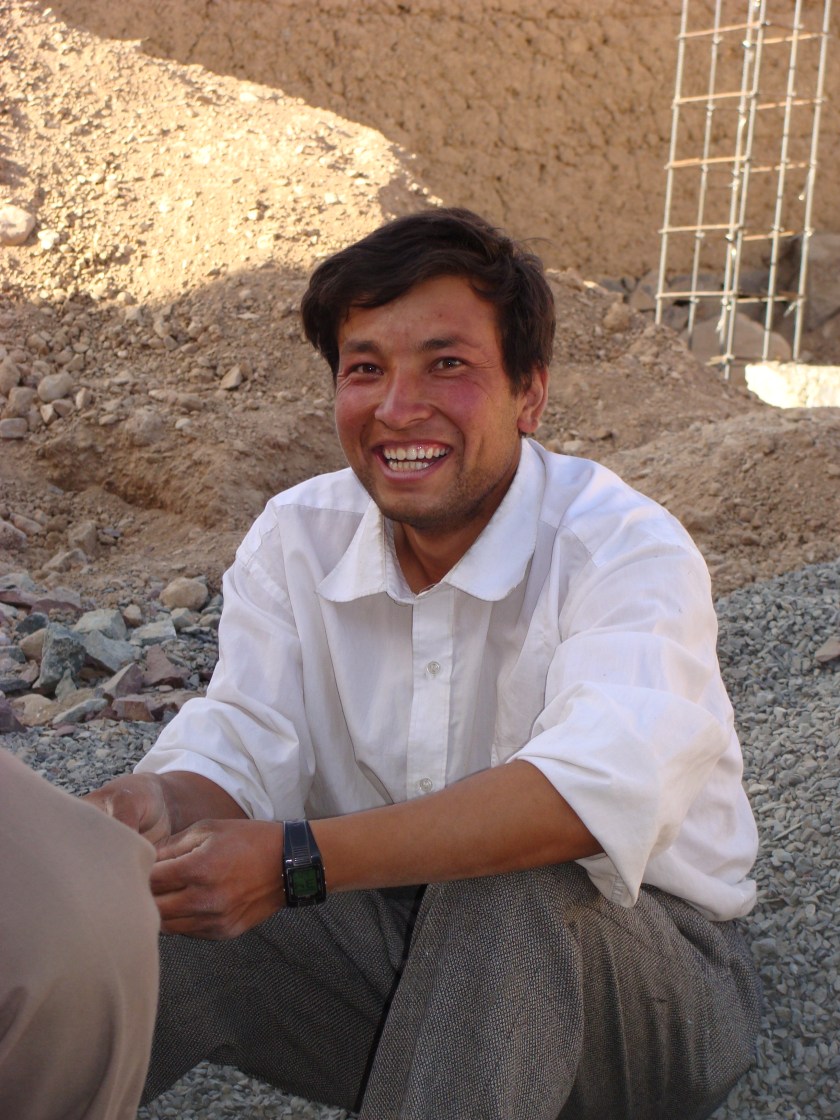
Khamad Jan at a construction site in Bamiyan, Afghanistan

Kabul– Khamad Jan, age 22, remembers that, as a youngster, he was a good student who enjoyed studying.  “Now, I can’t seem to think,” he said sadly, looking at the ground.  There was a long pause. “War does this to your mind.”

He and his family fled their village when Taliban forces began to attack the area. Bamiyan Province is home to a great number of Hazara families, and Khamad Jan’s is one of them. Traditionally, other Afghan ethnic groups have discriminated against Hazaras, regarding them as descendants of Mongolian tribes and therefore inferior.

During the Taliban attacks, Khamad Jan’s father was captured and killed.  As the eldest, Khamad Jan bore responsibility to help provide for his mother, two brothers and two sisters. But he struggled with debilitating depression, so much so that villagers, anxious to help, talked of exorcism. One day, he said he felt ready to give up on life.  Fortunately, community members and his friends in a local youth group, the “Afghan Youth Peace Volunteers,” have helped him come to terms with the pain he feels, assuring him that he can find a meaningful future.

Khamad Jan’s village is a particularly hard place in which to build houses, roads or farms. He and his family own a small plot of land which produces potatoes and wheat. The family works hard, but they only grow enough to feed themselves for seven months of the year. For a few months of every year, they must depend heavily on bread and potatoes, a carbo-diet which leads to malnutrition.  Like other women in the village, Khamad Jan’s mother and sisters are chronically anemic, suffering from headaches and leg cramps.

Continue reading ““War does this to your mind””

Bamiyan Diaries – Day Two

by David Smith-Ferri

Editor’s Note: American peace activists Kathy Kelly, Jerica Arents and David Smith-Ferri are part of a 3 person delegation currently travelling in Afghanistan. Read Smith-Ferri’s first piece on their experiences here.

Building Bamiyan Peace Park

The city of Bamiyan, with a population of roughly 60,000, has only one paved street, a wide, two-kilometer road without lanes that is a site of constant activity from 5 a.m. to curfew, at 10 p.m., and is referred to as the “Bazaar” because it is lined on both sides with shops.

In our short time here, we’ve been struck by how hard people, both in town and in the outlying villages, have to work to make a meager living. Children clearly work hard, too, seeming to participate fully in the livelihood of the family. At almost anytime of the day they can be seen at all manner of enterprise – helping set up the family street stall early in the morning, riding a donkey to fetch water in five-gallon plastic jugs, helping harvest potatoes, herding sheep or goats, collecting leaves for fuel, washing clothes in a creek, caring for younger siblings; and of course, they also attend school. Their work is as much a part of the landscape as the cottonwood trees and the red-rock cliffs which stand above the rivers.

Having had a chance to talk with members of the Afghan Youth Peace Volunteers (AYPV) and learn something about their significant commitments to home, family, and school, it was with delight and astonishment that we visited Bamiyan Peace Park today with nine proud members of the group and learned about their role in its development and use.

Continue reading “Bamiyan Diaries – Day Two”

Bamiyan Diaries – Day One

by David Smith-Ferri

Editor’s Note: American peace activists Kathy Kelly, Jerica Arents and David Smith-Ferri are part of a 3 person delegation currently travelling in Afghanistan. This is Smith-Ferri’s article written about their first day in Bamiyan province.

Bamiyan Province in Afghanistan, a stunningly beautiful mountainous region, is located in the center of the country, roughly 100 miles from Kabul. Most people here live in small, autonomous villages tucked into high mountain valleys, and work dawn to dusk just to scratch out a meager living as subsistence farmers, shepherds, or goatherds. The central government in Kabul and the regional government in Bamiyan City exercise little or no control over their lives. They govern themselves, and live for the most part in isolation.

Given this, who would imagine that Afghan youth from small villages across Bamiyan Province would come together to form a tight-knit, resilient, and effective group of peace activists, with a growing network of contacts and support that includes youth in other parts of the country and peace activists in the U.S. and in Palestine? I certainly wouldn’t have. In the United States, we may find it hard to believe that anything good can actually come out of Afghanistan, or we may have fallen into a trap of thinking that Afghans cannot accomplish anything useful without foreign aid and assistance. I confess that I struggle to live outside the shadow of this narrow-mindedness and ethno-centrism. Certainly, if the scope of our imaginations is limited by CNN and Fox News, we would not be likely to imagine an indigenous peace group forming in Bamiyan Province. But this is exactly what has happened.

Calling themselves the Afghan Youth Peace Volunteers (AYPV), they range in age from eight to twenty, and they have been active for over two years, translating their camaraderie and the horror of their families’ experience of war and displacement into a passionate and active pacifism. At an invitation from AYPV, three American peace activists from Voices for Creative Nonviolence have arrived in Bamiyan for five days to build bridges of friendship and support with these youth and their families. Over this time, we will write a daily diary of our experiences and interactions with the Afghan Youth Peace Volunteers.

Continue reading “Bamiyan Diaries – Day One”

Zionism: Two Deficits

M. Shahid Alam

“We do not fit the general pattern of humanity…”

David Ben-Gurion

“…only God could have created a people so special as the Jewish people.”

Gideon Levy

The fecundity of the Zionist project in producing claims of exceptionalism is not in doubt. Anyone who scans the voluminous Zionist literature will be suitably impressed by its repeated resort to claims of Jewish and Israeli exceptionalism. There is scarcely any aspect of Israeli or Jewish history that has not been embellished with some claim to uniqueness.

Israeli exceptionalism has many uses. It defends, obscures, explains away the ‘abnormal’ character of the Zionist nationalist project. When the Irish sought national liberation, their goal was straightforward. They wanted to regain national control over their lives and their country from a foreign power. No one had to convince the Irish that they are descended from the gods; that they possessed a unique essence which set them apart from all other peoples; or that their history, religion, race, language, morality or culture set them above their colonial masters. Occasionally, driven by exuberance or hubris, nationalists have advanced exceptionalist claims, but the success of their movement has not depended on their acceptance. The Irish claimed sovereignty because they knew that they are a nation with their own territory. In order to create their own state, they did not have to establish that they are exceptional.

The Zionists confronted two handicaps that Irish nationalists did not face. The diverse and scattered Jewish communities of Europe – and even more so, the world – did not constitute a single people. Instead, the Jews of the world were loosely united by their religious heritage, but they shared their languages, cultures and genes with their neighboring communities. Moreover, no Jewish community had its own country, a substantial and contiguous territory where it formed a majority of the population. Despite these twin Jewish deficits – the absence of a nation and a national territory – the Zionists were determined to ‘liberate’ the Jews of Europe and endow them with their own state.

The Zionists would remedy the first deficit by denying its existence. They knew that the Jews were not a nation, but it would be unwise to begin their ‘nationalist’ movement with the admission that a Jewish nation did not yet exist. They also did not think that this deficit was a serious hindrance to their movement. With help from anti-Semites, whose attacks had been growing in recent decades, the Zionists were convinced that they could quickly convince enough frightened Jews that they are a nation. Instead of constructing a nationalism based on a common religion, however, the Zionists chose to cultivate a racial basis for Jewish nationalism. They embraced the anti-Semitic accusation that Jews of Europe are an alien race, not Germans or Russians, descended from the ancient Hebrews.

Continue reading “Zionism: Two Deficits”

Syria’s Diversified Options

Note French bullet holes in roof

This was written six months ago and recently published in Political Insight.

A sigh of relief blew across Syria when the Bush administration was retired. Bush had backed Israel’s reoccupation of West Bank cities, described Ariel ‘the Bulldozer’ Sharon as “a man of peace”, given Syria two million Iraqi refugees and an inflation crisis, and blamed Syria for the assassination of Lebanese prime minister Rafiq al-Hariri. Veiled American threats of “regime change” scared the Syrian people – who observed the blood rushing from neighbouring Iraq – almost as much as they scared the regime itself.

Obama’s re-engagement signalled an end to the days of considering Syria – in the predatorial neo-con phrase – “low-hanging fruit”, but American overtures have remained cautious, the new administration’s policy severely limited by its commitments to Israel and the domestic Israel lobby. Obama nominated Robert Ford as the first American ambassador to Damascus in five years, but the appointment has since been blocked by the Senate. In May, Obama renewed Bush-era sanctions, citing Syria’s “continuing support for terrorist organizations and pursuit of weapons of mass destruction and missile programs,” which, “continue to pose an unusual and extraordinary threat to the national security, foreign policy, and economy of the United States.”

So not much has changed. The neoconservative language is still in place, the same elision of distance between American and Israeli interests, and between anti-occupation militias and al-Qa’ida-style terrorists, plus a flat refusal to understand that the countries really under unusual and extraordinary threat of attack are Syria, Lebanon, and – Netanyahu’s “new Amalek” – Iran.

Continue reading “Syria’s Diversified Options”