According to a new report by Who Profits, a research project that exposes Israeli and international corporate involvement in the occupation:
“The banks are well aware of the activities carried out with their financial assistance.”
According to a new report by Who Profits, a research project that exposes Israeli and international corporate involvement in the occupation:
“The banks are well aware of the activities carried out with their financial assistance.”
by Larbi Sadiki — An Al Jazeera Excerpt
Excluding Hamas from current and future Palestinian-Israeli peace negotiations is an exercise in futility.
Sidelining Hamas in any process to craft genuine peace between Israelis and Palestinians is a glaring omission tantamount to ignoring an elephant in the room. Whether it is Obama’s or the UN’s negotiating room, pretending something of that size absent is an exercise in futility. Hamas is definitely an elephant with many tales. Telling some of these tales recounts the Islamist movement’s rise to power against all odds.
A movement under ‘siege’
Like Hezbollah in Lebanon, Hamas exists in a world that does not want it and in which it is ‘wanted’, a world some might argue it does not also want. It is lumped with the bogeymen and ‘demons’ of world politics on whom are blamed ‘terror’ and the state of ‘structured chaos’ in the Middle East, Pakistan, and Afghanistan, amongst other hotspots. Hamas is no angel and there are no angels in politics. Indeed, part of the problem lies not only in the political strategies Hamas occasionally deploys, but also in the excessive secrecy surrounding most of the movement’s activities.

Media scholar Robert W. McChesney lectures on the collapse of American journalism at the University of Illinois YMCA on October 24th, 2010. Listen as Bob discusses the political implications and his solutions to the crisis. Sunday, 1pm central on Media Matters with Bob McChesney.
The lecture begins at 6:00.
Palestinian author Susan Abulhawa, whose debut novel, Mornings in Jenin, is an international sensation, confronts Zionist bully Alan Dershowitz, known for fictions of a different variety, at the Boston Book Festival. The discussion is moderated by Director of the Harvard Negotiation project, James Sebenius and sponsored by the Jewish Community Centers of Greater Boston.
Israel’s Channel 10 shows excerpts from Hagai Levi’s documentary about the wonderful folks behind Breaking the Silence.
If a thing’s delayed, there’s a thing delaying it.
Not you, your suitors slowed you down a bit.
It wasn’t right, pinning my troubles on you.
The furies, fate, kismet, each had a hand in it.
If you can’t remember, let me jog your memory.
I was your prized quarry: you grew fond of it.
Captive, I stay awake, thinking of you all night.
It’s true my shackled feet also hurt a bit.
I hadn’t asked for this blinding flash of light.
I wish He’d speak to me: my heart aches for it.
I bared my neck for her. She backed out of it.
She is a sharp shooter. An arrow too could do it.
Wrongly, we are tried on the report of angels.
Is there a man like us to say he saw us do it?
Ghalib, you do not have the crown of the ghazal.
It’s rumored there was Meer, with better claim to it.
First published in Beloit Poetry Journal, Fall 2001.
For more ghazals from Ghalib, click here.
M. Shahid Alam is professor of economics at Northeastern University. He is the author of Israeli Exceptionalism (Palgrave, 2009) and Challenging the New Orientalism (IPI, 2007). Visit his website at http://qreason.com. Write to him at alqalam02760@yahoo.com.
by Aun Ali
 Pakistan’s massive floods destroyed not only standing crops of the season but also vast proportions of arable land and capacities of numerous farmers to cultivate crops in the upcoming seasons. The consequences are far reaching for an impoverished country that relies heavily on its agricultural productivity and employs two-thirds of its population in this sector.
Nearly 20 million people have been directly affected, most of whom are from the rural agricultural areas and depend on agriculture to meet their food and income needs. A great number of them have been uprooted from their lands, with their household assets, investments in farm tools and animals, and food stocks all destroyed by the floods. Submerged roads and fallen bridges have disconnected access of thousands other to the rest of Pakistan. They all lack proper shelter, food, clean water, medicine, and other basic supplies. At least six million are at risk of waterborne diseases, including an estimated 3.5 million children according to U.N.
However, if the situation is terribly bad now, the worst is yet to come.
With major crops damaged or destroyed over 3.6 million hectares of cultivated land and variable food supply expected from the unaffected regions, a famine-like food crisis is imminent in many parts of the country that could be in full swing by coming spring when Pakistan’s current food stocks will start to run out. The shockwaves will be so far reaching that even the unaffected regions will not be spared.
Continue reading “Pakistan’s Food Crisis Expected to Worsen”
From El Alto to Cochabamba, Detroit to Dar Es Salaam, A World Without Water documents the human costs of water privatisation and the systemic denial of access to safe drinking water through its commodification. According to the World Health Organisation, 1.1 billion people has no access to any type of improved drinking source of water, 2.6 billion people lack even a simple ‘improved’ latrine, and, as a direct consequence, 1.6 million people die every year from diarrhoeal diseases (90% of these are children under 5).

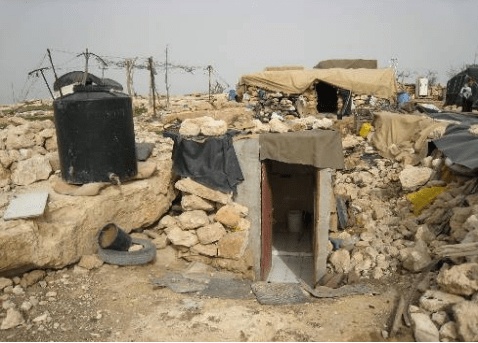
Water in Israel is probably one of the most blatant faces of apartheid. As reports like the Amnesty International report of 2009, “Troubled Waters” and the B’tselem website coverage of the issue, “The Water Crisis” show us, Israel’s resources are invested in water theft/access denial from Palestinians. But water in Israel is not just a substance of life, for those who can’t have it, it’s a tradable commodity, for those who’ll never miss it.
Water resources in Israel are all state-owned. Naturally- as is usually the case within the militaristic, nationalistic Israel- the state will allocate these resources to serve its “national needs”. Water theft is a good example of “negative” policy, which is so obviously discriminatory, violent and inexcusable, that the only way to sell it to the public is not to mention it at all. True to form, when cave- dwelling Palestinians are kicked out of their caves and their harvesting canisters (on the cave roof?) are destroyed [“Troubled Waters”, p.2], there’s no Israeli media around to record it, spin it and dish it. “Positive” policy, however, is always easy to sell. After all, we “dried the swamps and made the wilderness bloom”, and the environmental devastation of swamp drying still isn’t being taught in schools.
by Flynt Leverett and Hillary Mann Leverett
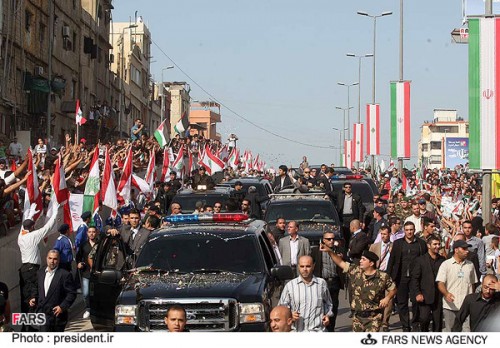
Twenty years ago, Harvard’s Joseph Nye famously coined the term “soft power” to describe what he saw as an increasingly important factor in international politics—the capacity of “getting others to want what you want”, which he contrasted with the ability to coerce others through the exercise of “hard” military and/or economic power. The question of soft power, when it comes to Iran, is contentious. Most analysts seem prepared to acknowledge that the Islamic Republic’s soft power in the Middle East rose significantly in the first several years of this decade. But many Western analysts now argue that Tehran’s regional soft power has declined over the last couple of years, following the election of Barack Obama as President of the United States, the fallout from the Islamic Republic’s June 2009 presidential election, and the imposition of new sanctions against Iran over its nuclear activities.
Others—including the two of us—argue that Iranian soft power remains strategically significant and is perhaps even still growing. In this regard, we are struck by two developments today. First, Iranian President Mahmoud Ahmadinejad traveled to Beirut—the first visit by an Iranian president to the Lebanese capital since President Mohammad Khatami went there in 2003. Although White House spokesman Robert Gibbs said the visit demonstrated that Ahmadinejad was continuing his “provocative ways” and that Hizballah “values its allegiance to Iran over its allegiance to Lebanon”, the Iranian president received what the Christian Science Monitor’s Nicholas Blanford described as a “rapturous” welcome from tens of thousands of Lebanese who turned out to greet him on his drive into Beirut from the airport. We include photographs of Ahmadinejad’s reception in Beirut today at the end of our text below.
During his trip to Lebanon, Ahmadinejad is scheduled to visit Dahiya, a heavily Shi’a southern suburb of Beirut, and tour southern Lebanon. We would anticipate strongly positive and enthusiastic reactions from populations in both settings. As Rami Khouri aptly put it today, see here, in The Daily Star,
If Ahmadinejad, as planned, goes to south Lebanon and visits Hizbullah-controlled villages near the Israeli border, we should expect political emotions to go through th roof in both the pro-Iranian and anti-Iranian camps. This will not be a surprise, because Ahmadinejad overlooking the northern border of Israel in the company of his Hizbullah allies is a nightmare for most Israelis and many of their friends in the West, while for Hizbullah and its allies in the region this would be a prize-winning moment of defiance to be savored for a long time.
We do not believe that any Western leader—or even any Arab leader—could travel to Beirut today and move about in an open motorcade, as Ahmadinejad did, let alone do so and attract crowds of tens of thousands of eager well-wishers. Security concerns alone would preclude such a scenario. And this is the reality even though the United States and its European and Arab allies have put significant sums of money and political capital into trying to consolidate a “pro-Western” political order in Lebanon.
Continue reading “Iran’s “Soft Power” Increasingly Checks US Power”