The tireless and wonderful Kathy Kelly is visiting refugee camps in Pakistan with Dan Pearson. Here is her first dispatch (Mahmood Mamdani recently told me that apparently Arundhati Roy is also in Swat these days):
In Pakistan’s Swabi district, a bumpy road leads to Shah Mansoor, a small village surrounded by farmland. Just outside the village, uniform size tents are set up in hundreds of rows. The sun bores down on the Shah Mansoor camp which has become a temporary home to thousands of displaced Pakistanis from the Swat area. In the stifling heat, the camp’s residents sit idly, day after day, uncertain about their future. They spoke with heated certainty, though, about their grievances.As soon as we stepped out of the car, men and children approached us. They had all arrived from Mingora, the main city of Swat, 15 days prior. One young man, a student, told us that bombing and shelling had increased in their area, but, due to a government imposed curfew, they weren’t allowed to leave their homes. Suddenly, the Pakistani Army warned them to leave within four hours or they would be killed. With the curfew lifted long enough for them to get out of Mingora, they joined a mass exodus of people and walked for three days before reaching this camp.
Caryl Churchill’s play, Seven Jewish Children: A Play for Gaza, is due to be performed in Israel and directed by Samieh Jabbarin. Jabbarin is a Palestinian citizen of Israel political prisoner, and he will direct the play via telephone. Seldom one hears about the conditions of the Palestinians living in what is considered to be Israel. Jabbarin’s case illustrates the fraud implied by the term “Israeli democracy” or, even worse, “Jewish democracy”.
Jabbarin was imprisoned because he was demonstrating against the appointment of a notorious Jewish fascist as election observer in Um al Fahm, a Palestinian city in Israel. A petition on Jabbarin’s case demonstrates the Kafkaesque nature of what passes for “democracy” and “justice” in Israel: Continue reading “The Israel democracy fraud”
Antiwar.com brings us news that Israeli minister Yossi Peled is seeking sanctions and regime change… against the USA!
Peled is calling for the Israeli government to seek to influence American elections and cutting trade ties with America. This, let’s remember, is coming from a minister of the country that has received more aid from the US than all of Sub-Saharan Africa combined. Israeli politicians are now so comfortable with their relationship with America they talk about America in the same way America talks about minor Latin American rogue states.
For those, like me, who are skeptical of whether the Obama Administration is going to offer any real change on US policy towards Israel, stories like this offer cause for optimism.
Team Obama may not do enough to pressure Israel, but with fundamentalist misanthropes filling every cabinet post in Israel, there is every chance that it is the Israelis who will bring about an Israeli-American split with their antagonism.
Two videos highlight the plight of Palestinians whose homes have been destroyed. The first features the courageous activism of israeli Ezra Nawi, who had tried to stop military bulldozers from destroying the homes of Palestinian Bedouins in the South Hebron region. (Yes, those are IOF soldiers callously laughing in the aftermath of home demolitions). Nawi, a Jewish Israeli of Iraqi descent, is viewed as a threat because he has brought international attention to efforts to illegally remove Palestinians from the Hebron region. He will be sentenced in July and a campaign is underway to rally to his cause. The second clip is from the Guardian’s Inigo Gilmore who visits the devastated neighbourhoods in Gaza to find that families are still living among the rubble, in tents.
One slide of the photo essay Prof. Robinson sent to his students
The Anti-Defamation League and the Israel advocacy group “Stand With Us” are leading an aggressive, direct campaign to pressure UCSB administrators and faculty to investigate and discipline Professor of Sociology William I. Robinson for having introduced materials critical of Israel in a course on global affairs. The UCSB academic senate opened an official inquiry alleging “academic misconduct” and “anti-semitism”, following complaints by two students in response to an email Robinson sent out to his class during Israel’s war on Gaza. The email consisted of an article published in the Kansas City Jewish Chronicle by Judith Stone, who had recently returned from the occupied territories (the editor responsible was fired the next day), a photo essay which juxtaposed Nazi atrocities against Jews in WWII and Israeli atrocities against Palestinians in Gaza and the following commentary:
If Martin Luther King, Jr. Were alive on this day of January 19, 2009, there is no doubt that he would be condemning the Israeli aggression against Gaza along with u.s. military and political support for Israeli war crimes, or that he would be standing shoulder to shoulder with the Palestinians. I am forwarding some horrific, parallel images of Nazi atrocities against the Jews and Israeli atrocities against the Palestinians. Perhaps the most frightening are not those providing a graphic depiction of the carnage but that which shows Israeli children writing “with love” on a bomb that will tear apart Palestinian children.
Perhaps dismayed by the cabinet’s decision to reject Lieberman’s ‘loyalty oath’ proposal, Jewish communities in the central Galilee are taking matters into their own hands. Call it grassroots fascism. Jonathan Cook reports:
A community in northern Israel has changed its bylaws to demand that new residents pledge support for “Zionism, Jewish heritage and settlement of the land” in a thinly-veiled attempt to block Arab applicants from gaining admission.
Critics are calling the bylaw, adopted by Manof, home to 170 Jewish families in the Galilee, a local “loyalty oath” similar to a national scheme recently proposed by the far-right party of the government minister Avigdor Lieberman.
Other Jewish communities in the central Galilee — falling under the umbrella of a regional council known as Misgav — are preparing similar bylaws in response to a court petition filed by an Arab couple hoping to build a home in Misgav.
Editor’s note: In 2009 when I read Mahmood Mamdani’s book, I accepted many of its arguments uncritically. Since then I’ve had occasion to reappraise my position and regret many of the things I wrote. Darfur was not my specialisation and I should not have passed confident judgments on it. I should not have doubted the good faith of the many people trying to bring attention to Darfur’s tragedy. Nor should I have been so eager to accept the geopolitical arguments to downplay the real atrocities being committed on the ground. The Bashir regime’s actions in Darfur were unjustifiable, tantamount to genocide, and I should have rejected any argument that downplayed the crimes. The years since 2011 have been an education and I am glad to be rid of the infantile contrarianism that defined my past politics. I am immensely grateful to the influence of the late Tony Judt who guided me towards what is hopefully a more humane and reflective politics. I hereby repudiate this piece and offer my unreserved apologies to the people of Darfur.
Saviors and Survivors: Darfur, Politics and the War on Terror by Mahmood Mamdani, Verso, 2009.
“Saviors and Survivors: Darfur, Politics and the War on Terror” by Mahmood Mamdani
In Errol Morris’s 2004 film The Fog of War, former US Defense Secretary Robert McNamara recalls General Curtis LeMay, the architect of the fire-bombings of Japan during WWII, saying that “if we’d lost the war, we’d all have been prosecuted as war criminals.” LeMay was merely articulating an unacknowledged truism of international relations: power bestows, among other things, the right to label. So it is that mass slaughter perpetrated by the big powers, from Vietnam to Iraq and Afghanistan, is normalized as “counterinsurgency,” “pacification” and “war on terror,” while similar acts carried out by states out of favor elicit the severest of charges. It is this politics of naming that is the subject of Mahmood Mamdani’s explosive new book, Saviors and Survivors: Darfur, Politics and the War on Terror.
Like the Middle East, parts of Africa have been engulfed in conflict for much of the post-colonial period. While the media coverage in both cases is perfunctory, in the case of Africa it is also sporadic. To the extent that there is coverage, the emphasis is on the dramatic or the grotesque. When the subject is not war, it is usually famine, disease or poverty—sometimes all together, always free of context. The wars are between “tribes” led by “warlords,” that take place in “failed states” ruled by “corrupt dictators.” Driven by primal motives, they rarely involve discernible issues. The gallery of rogues gives way only to a tableau of victims, inevitably in need of White saviors. A headline like “Can Bono save Africa?” is as illustrative of Western attitudes towards the continent as the comments of Richard Littlejohn, Britain’s highest-paid columnist, who wrote at the peak of the Rwandan genocide “Does anyone really give a monkey’s about what happens in Rwanda? If the Mbongo tribe wants to wipe out the Mbingo tribe then as far as I am concerned that is entirely a matter for them.”
Hundreds of muezzin called believers to Lebanon’s mosques at 3:35 a.m. this morning for the Al Fajr (the Dawn) prayer. The haunting and beautiful strains of Allahu Akbar (God is great) and Ash-‘hadu ana la elaha ella Allah (I bear witness that there is no God by Allah) wafted from minarets and flowed softly, pushed by the morning sea breezes, along Beirut’s sandy, but trash-strewn beaches at Ramlet al Baida. Drifting along the Corniche Mazzra and Raouche, below the American University of Beirut, they swirled around the silent and narrow streets and alleys of Lebanon’s capital and drifted east and up along her mountains. Caressing the mountain tops they embraced the majestic Basilica at Harissa, high above Jounieh, topped by its 15-ton bronze statue of Saydet Libnan or Notre Dame du Liban.
Proclaimed the “Queen of Lebanon” by the Patriarch of Antioch at the beginning of the last century, this Blessed Virgin is a shrine with claimed healing powers for Pilgrims, and the patron saint of Lebanon’s Christians. She is held in the highest esteem by Shia and Sunni Muslims, as well as Druze. The Koran contains 253 references to Mary, two hundred more than in the New Testament.
We welcome Saifedean Ammous to PULSE. Saif occasionally blogs at The Saif House and is a busy scholar and keen football aficionado.
President Hosni Mubarak and President Barack Obama
The real problem with Obama’s speech, simply, is that everyone is talking about it.
The PR geniuses who ran the greatest presidential campaign since FDR seem to have now been handed the reins of Obama’s foreign policy. PR campaigners are an improvement over the warmongers of the Bush Administration, but that, obviously, is not saying much.
For almost a month, everyone everywhere has been talking about Obama’s speech in Cairo as if it actually matters for anything. Obama’s PR/Foreign Policy team have built it up to be such a giant spectacle that people seem to have forgotten that at the end of the day, it is nothing but a speech by a man who has given several hundred speeches over the last two years. It is a collection of sounds coming out of a man’s mouth. It matters for nothing. He said nothing new, added nothing new, and affected nothing real in any real way.
If there was anything important in this speech, he could have announced it at any point in the last few weeks of build-up and gotten it over with. But creating this giant spectacle turned this speech into a global quasi-religious interpretation-fest where everyone and their dog analyzed, with ridiculous detail, every last word Obama said, how he said it, and how he looked when he said it.
So we now know what Obama’s new foreign policy is going to be: talk, speeches, platitudes, oratory and rhetoric. The good news, as Churchill would have it, is that “to jaw-jaw is always better than to war-war”. I’d gladly sit through 12 Obama speeches a day over one of Bush’s wars. The bad news, however, is that this jaw-jaw-fest has very sneakily turned everyone’s attention from what the US Government does, to what its talismanic leader says. There is no better recipe for stalling, doing nothing and maintaining the status quo.
Terry Eagleton, John Edward Taylor Professor of English Literature at the University of Manchester, has been a Fellow of four Oxford and Cambridge colleges and has held the Thomas Warton Chair of English Literature at the University of Oxford. Professor Eagleton has authored scores of studies of literary, cultural, and political criticism and written plays for both stage and television in Britain and Ireland, as well as a screenplay for Derek Jarman’s film Wittgenstein. Terry Eagleton is a Fellow of the British Academy.
Faith and Fundamentalism: Is Belief in Richard Dawkins Necessary for Salvation?


 Hundreds of muezzin called believers to Lebanon’s mosques at 3:35 a.m. this morning for the Al Fajr (the Dawn) prayer. The haunting and beautiful strains of Allahu Akbar (God is great) and Ash-‘hadu ana la elaha ella Allah (I bear witness that there is no God by Allah) wafted from minarets and flowed softly, pushed by the morning sea breezes, along Beirut’s sandy, but trash-strewn beaches at Ramlet al Baida. Drifting along the Corniche Mazzra and Raouche, below the American University of Beirut, they swirled around the silent and narrow streets and alleys of Lebanon’s capital and drifted east and up along her mountains. Caressing the mountain tops they embraced the majestic Basilica at Harissa, high above Jounieh, topped by its 15-ton bronze statue of Saydet Libnan or Notre Dame du Liban.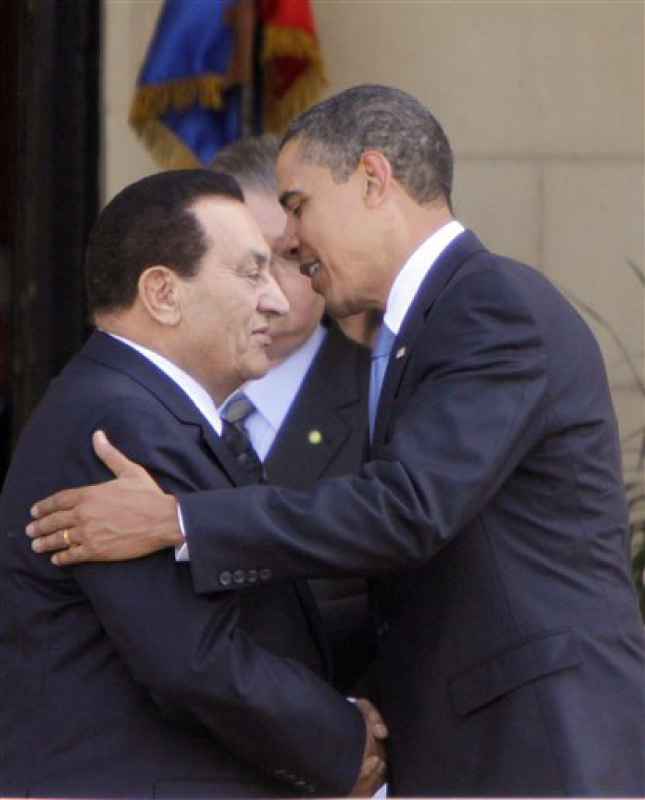

 P U L S E