Resisting Genocide

The International Jewish Anti-Zionist Network released the following statement for Holocaust Remembrance Day:

How does the city sit solitary, that was full of people! How is she become as a widow!…
She weeps sore into the night, and her tears are on her cheeks:
among all who loved her she has none to comfort her.

(Book of Lamentations)

Last week, after murdering 1400 people – of whom 400 were children – after bombing hospitals and mosques, schools, universities and humanitarian supplies, and tens of thousand of homes, Israel declared a cease-fire. A shameful parade of European leaders immediately went to Jerusalem to embrace the mass murderers and to pledge their support for the continuing siege of Gaza.

Continue reading “Resisting Genocide”

Israeli army used flechettes against Gaza civilians

Latest report from Amnesty International’s fact-finding team in Gaza:

A flechette embedded in a wall in a Bedouin villlage in Gaza

Monday January 26: The Israeli army’s use of white phosphorus in densely populated civilian areas of Gaza has captured much of the world’s media interest. However, the Israeli forces also used a variety of other weapons against civilian residential built-up areas throughout the Gaza Strip in the three-week conflict that began on 27 December.

Among these are flechettes – tiny metal darts (4cm long, sharply pointed at the front and with four fins at the rear) that are packed into120mm shells. These shells, generally fired from tanks, explode in the air and scatter some 5,000 to 8,000 flechettes in a conical pattern over an area around 300 metres wide and 100 metres long.

Continue reading “Israeli army used flechettes against Gaza civilians”

Disasters Emergency Committee Gaza Appeal

The Disasters Emergency Committee Gaza Appeal TV advert that the BBC refused to broadcast.

Jimmy Carter: ‘Peace is possible’ in Holy Land

In his new book “We Can Have Peace in the Holy Land,”  former President Jimmy Carter explains the controversy over his previous book on the Israeli-Palestinian conflict and offers a plan for attaining peace in the Middle East. An excerpt significant for Carter reinforcing that Hamas adhered to the ceasefire, and that peace is not possible without Hamas’s involvement. Full Interview on MSNBC Today (Thanks to Annie).

Emperor Obama

Obama is certainly a good diplomat. He’s given an interview to a fawning journalist from the Saudi-owned Arabiyah channel (as opposed to the more credible Jazeera) in which he talks nice. Examine his words, however, and you see that the basic parameters have not budged an inch. ‘Israel’s security’ remains paramount; Hamas and Hizbullah are implicitly labelled terrorist (Iran supports terrorist organisations); the liberation of Palestine is reduced to an issue of economic development. On the ground, meanwhile, Obama’s first week was marked by the imperial murder of tens of civilians in Pakistan. Richard Seymour  provides an excellent analysis here:

The first Democratic president in the modern era to be elected on an anti-war ticket is also, to the relief of neocons and the liberal belligerati, a hawk. Committed to escalation in Afghanistan, his foreign policy selections also indicate bellicosity towards Sudan and Iran. During his first week in office he sanctioned two missile attacks in Pakistan, killing 22 people, including women and children. And his stance on Gaza is remarkably close to that of the outgoing administration. The question now is how Obama will convince his supporters to back that stance. Bush could rely on a core constituency whose commitment to peace and human rights is, at the very least, questionable. Obama has no such luxury. In making his case, he will need the support of those “liberal hawks” who gave Bush such vocal support.

Continue reading “Emperor Obama”

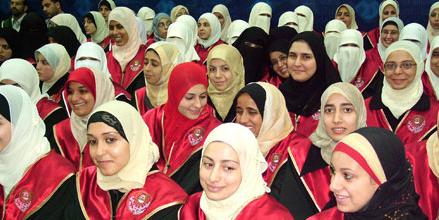
The Islamic University of Gaza

Photographs from the Islamic University of Gaza:

Before

islamic university gaza
Continue reading “The Islamic University of Gaza”

Further BBC Collaboration

This House believes that political Islam is a threat to the West

In the aftermath of one of the most appalling massacres perpetrated by Zionism against the Palestinian people, the BBC’s ‘Doha Debates‘ arranged discussion of the resolution “This House believes that political Islam is a threat to the West“. The Palestinian people, of course, at this stage in their six-decade-old struggle against ethnic cleansing and apartheid, happen to have voted for an Islamist party. The Doha Debates are broadcast on the BBC’s international service throughout the Middle East. The Canadian Voice of Palestine have written this open letter:

January 25, 2009:

After the devastation in Gaza that lasted over three weeks, you decided to put to your scripted House, who had no qualms in attending your debate while the BBC refuses to broadcast a humanitarian appeal to Gaza, the following resolution: “This House believes that political Islam is a threat to the West.”

This choice of wording is extremely suspect and contributes nothing to informed debate; in fact, it looks like a page from the Israeli propaganda machine (Hasbara).  It hijacks the agenda and diverts the attention from fresh Israeli atrocities, while putting the blame on the shoulders of the victim by opening the door to debate whether Hamas as a political Islamic movement (and the Palestinian people it represents) is a threat to the “West.”
Continue reading “Further BBC Collaboration”

Obama’s Vietnam?

‘Friday’s airstrikes are evidence Obama will take the hard line he promised in Pakistan and Afghanistan,’ writes Juan Cole. ‘But he should remember what happened to another president who inherited a war’. Like most western commentators Cole reproduces uncritically claims about the deaths of ‘foreign fighters’ (unconfirmed, for the record). Pakistani officials are usually just as eager to conjure up foreign fighters in order to mitigate the backlash that the extrajudicial murder of innocent tribals would elicit.

On Friday, President Barack Obama ordered an Air Force drone to bomb two separate Pakistani villages, killing what Pakistani officials said were 22 individuals, including between four and seven foreign fighters. Many of Obama’s initiatives in his first few days in office — preparing to depart Iraq, ending torture and closing Guantánamo — were aimed at signaling a sharp turn away from Bush administration policies. In contrast, the headline about the strike in Waziristan could as easily have appeared in December with “President Bush” substituted for “President Obama.” Pundits are already worrying that Obama may be falling into the Lyndon Johnson Vietnam trap, of escalating a predecessor’s halfhearted war into a major quagmire. What does Obama’s first military operation tell us about his administration’s priorities?

Continue reading “Obama’s Vietnam?”

BBC’s Mark Thompson Soft on Israel?

In 2005 the Independent reported speculation in the Israeli press that BBC director general Mark Thompson intended to build bridges with the Israeli political class.  This could help to explain Thompsons position on aid to Gaza, after all, they’ve broadcast appeals for victims of other conflicts without worry about impartiality.  Could Marks personal interest be what makes this one special?

BBC chief defends Gaza decision (11:59) | MP3

The BBC is often accused of an anti-Israeli bias in its coverage of the Middle East, and recently censured reporter Barbara Plett for saying she “started to cry” when Yasser Arafat left Palestine shortly before his death.

Fascinating, then, to learn that its director general, Mark Thompson, has recently returned from Jerusalem, where he held a face-to-face meeting with the hardine Prime Minister Ariel Sharon.

Although the diplomatic visit was not publicised on these shores, it has been seized upon in Israel as evidence that Thompson, who took office in 2004, intends to build bridges with the country’s political class.

Continue reading “BBC’s Mark Thompson Soft on Israel?”

At the heart of BBC row, the homeless of Gaza

Safaa Salam, 10, with her brother Salman Salam
Safaa Salam, 10, with her brother Salman Salam in the ruins of their family home in the Jabal Rayas area of eastern Gaza.

Peter Beaumont reports from Jabal Rayas, describing the plight of the children of Gaza, whose fate has been, perhaps irredeemably, compromised by the BBC management’s spineless decision not be broadcast the humanitarian appeal.

Safaa Salam is scared and cold. Last night the 10-year-old girl slept in the ruins of her family house in the Jabal Rayas area of eastern Gaza. So did her four-year-old niece Ghavad. It is not so much a ruin as a cave, the top a tented slab of crumbling concrete, cracked and buckling in the middle.

Continue reading “At the heart of BBC row, the homeless of Gaza”