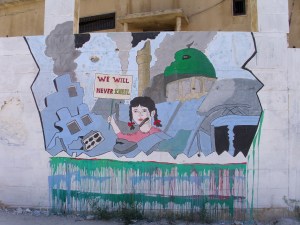
 This was published by the National. If you’d prefer to read my tense choices, before the subediting process, read this version here.
I live in Scotland, where I am witness to the continuing legacy of Protestant-Catholic communal hatred, despite the theological indifference and general irreligiosity of the populace.
The hatred is most commonly activated by the Rangers-Celtic football game. (In his great novel “Kieron Smith, Boy”, James Kelman brings it viscerally alive through the mouth of a Glaswegian child.) It is manifest too in Orange Order marches and schoolyard slurs. It intersects with the gang violence of the ‘schemes’. Most of the time, of course, it’s absent, or it emerges as friendly competitiveness rather than actual conflict, but you can bet your last communion wafer that it would blossom into something much fiercer if, in the event of political crisis, a divide-and-rule tyrant were to send Catholic militia in to pacify restive Protestant areas, or vice versa.
Like Scotland’s sectarians, Syria’s Alawis are usually largely secular and ignorant of their own theology (at least they were – a war-driven religious revival is touching them as well as the Sunnis). Over the last four decades Alawi religious scholars have been assassinated or otherwise silenced by the Assad regime as it sought to render the community entirely dependent on the Ba‘athist state. Most Alawis (by no means all) continue to support Assad because they have no other community leadership. Add to this that many have relatives working in the security forces, and so fear a loss of privileges and even violent revenge when the regime falls. Alawis also remember their historical marginalisation by the Sunni majority, and therefore fear majority rule.
As in Iraq, Palestine-Israel, or Northern Ireland, the conflict in Syria is not about theology but about group fears and resentments. Ultimately, it’s about power. Communal tensions are the result not of ancient enmities but of contemporary political machinations. And nothing is fixed in time. Syria’s supposedly ‘Sunni rebellion’ (which contains activists and fighters of all sects) becomes more or less Islamist in response to rapidly-changing political realities. A few months ago, for example, Islamist black flags dominated demonstrations in Raqqa, in the east of the country; now Raqqa’s demonstrations are as likely to protest Jabhat an-Nusra, the extremist militia which nominally controls the city, as the regime. This isn’t an Islamist rebellion but a popular revolution. As in Egypt, if the Islamists oppress the people or fail to deliver, they too will be revolted against.
Continue reading “Politics not Theology”
 Racan Alhoch: I love orientalist solutions. They are always a modified version of the Sykes-picot. The best solution would be for people like Landis to fuck off.
 Joshua Landis: Rocan, I am not sure what is orientalist about these possible outcomes. If Assad hangs on to the south is Syria and the rebels hold the north it will not be because of the west. It will be a Syrian solution. If the rebels are able to conquer Damascus it will probably be thanks to help from the West.

 The picturesque valleys of Pakistan’s Gilgit-Baltistan are overlooked by the immense snowcaps of Nanga Parbat. At more than 26,000 feet, it is the world’s ninth tallest mountain, but for alpinists it is a challenge far greater than Everest. It’s a rare mountaineer who is unaware of its reputation as “the killer mountain.” The notoriety derives from its deadly avalanches and crevasses, but the death that was visited on a group of climbers last month took a much different form. Eleven mountaineers were killed when militants affiliated with the Pakistani Taliban entered their basecamp and unleashed a deadly fusillade.
