The Tax Justice Network‘s latest TaxCast is out. In this month’s show: the crisis in Cyprus and the risk tax havens pose to the global economy, a surprise earthquake for UK-affiliated tax havens and a frustrated corporate tax inspector speaks out on the corrupting of the tax system.
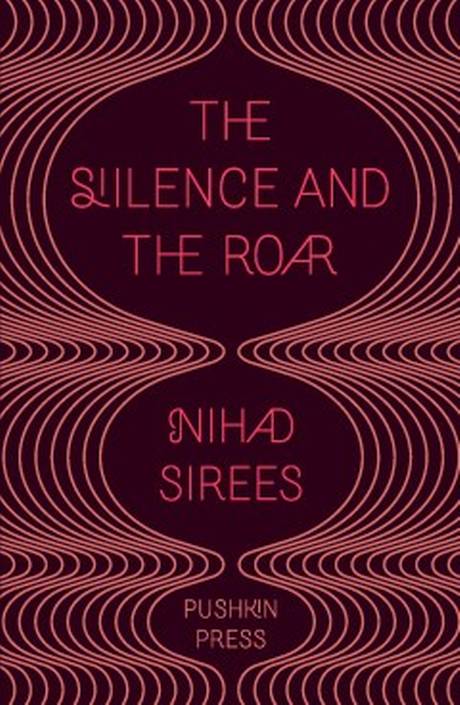
“The Silence and the Roar” by Syrian novelist and screenwriter Nihad Sirees was written in 2004, long before the roar of revolutionary crowds, and the countervailing roar of gunfire and warplanes, filled Syrian skies.
The pre-revolutionary roar of the title is that of the (capitalised) Leader speaking, and of the crowd celebrating the Leader speaking, and of those being beaten because they aren’t celebrating loudly enough; a roar relentlessly repeated by radios and televisions throughout the city, accompanying the protagonist almost everywhere he goes.
Counterposed to the roar there are two forms of silence: of imprisonment and of the grave. The first holds an ironic allure, for “the most beautiful thing in the entire universe is the silence that allows us to hear soft and distant sounds.”
The narrator is Fathi Sheen, a writer fallen out of favour with the regime, silenced only to the extent that he doesn’t write any more. He’s very pleasant company, amusing and straightforward, his digressions into Aristotle and Hannah Arendt notwithstanding. Over the course of a day Fathi struggles against the flow of celebrant crowds and regime thugs to visit first his mother and then his lover. He’s been content thus far to continue not to write in return for being left alone, but it becomes clear as the hours pass that the Leader’s friends plan to drive a different sort of bargain. The novella is in part a parable of the artist surviving under dictatorship. How does he make space for creation between silent and roaring states of mind? How does he avoid the regime’s Faustian temptations? More generally, how should one resist?
One answer for Fathi and his lover Lama, as for Winston Smith and his Julia, is through sex, which they find to be “a form of speech, indeed, a form of shouting in the face of the silence.”
A slightly edited version of this review was published at the Guardian.
Hassan Blasim, author of the acclaimed debut collection “The Madman of Freedom Square”, returns with fourteen more stories of profane lyricism, skewed symbolism and macabre romanticism. The qualities which distinguished the “Madman” are all here again in the opening pages of “The Iraqi Christ”: the sly self-referentiality of the frame – a story-telling competition hosted by a Baghdad radio station – the black comedy, the unexpected twists, and the sharp, disturbing images (a man “with no arms and a beard that almost reached his waist… deep in thought, like a decrepit Greek statue.”)
Like the “Madman”, this collection contains tales of war and migration, but these are more abstract, more difficult than the first, if possible stranger still. Treating casual cruelty, rape and murder, and common insanity, these sour cries from a land of generalised trauma don’t make easy bedtime reading. The processing of trauma, or the impossibility of such processing, is the collection’s central theme. Not only are stories dedicated to the dead, they are also narrated by the dead, concerned with death and the echoes of death in the souls of the living.
The subject matter is not exclusively Iraqi. Europe’s forests – with echoes of Grimm – loom as large as Baghdad’s broken streets. The title story, grimly ironic, is about a Christian soldier possessing uncanny powers of prediction who sacrifices himself so his mother may live. An extremist leader marches through with Purge The Earth of Devils tatooed on his forehead. Elsewhere, a narrator falls into a hole alongside a flesh-eating jinn who used to teach poetry in Baghdad. Another helps his brother bury a stranger alive. Characters slip into criminal perversity unwittingly, almost by accident, as spontaneously as the poisonous trees which, in “Sarsara’s Tree”, sprout from a bereaved woman’s gaze.
Blasim’s work is so unusual it’s hard to place. “A Thousand and One Knives”, as the title suggests, owes something to the heritage of the Nights and the ancient fantastic tradition of Arabic writing, now revived by the pains of Arab modernity, particularly in post-invasion Iraq. But “The Iraqi Christ” also seems to belong with the literature of Latin America, likewise struggling with contesting cultures, political violence and overbearing religion.
Dan Snow travels to Syria, for the BBC’s This World series, to see how the country’s fascinating and tumultuous history is shaping the current civil war.
In the following interview, recorded in 1983, Salman Rushdie speaks about his book Midnight’s Children, winner of the Booker Prize in 1981 and the Best of Booker award in 2008.
Life and Debt is a 2001 American documentary film directed by Stephanie Black. It examines the economic and social situation in Jamaica, and specifically the impact thereon of the International Monetary Fund and the World Bank’s globalization policies. Its starting point is the essay A Small Place by Jamaica Kincaid.*