Highlights from the trip organized by SAC, where a group of young activists visited parts of liberated Syria in December 2012 to deliver aid and form relationships with civilian activists on the ground.
Negotiations?

This was published at The National.
On January19th Syrian foreign minister Walid al-Moallem gave an apparently conciliatory interview to state TV. “I tell the young men who carried arms to change and reform, take part in the dialogue for a new Syria and you will be a partner in building it. Why carry arms?” In the southern and eastern suburbs of Damascus his voice was drowned out by the continuing roar of the regime’s rocket, artillery and air strikes.
The UN and parts of the media have also called for negotiations. Until late January this year, however, the Syrian National Coalition – the widely-recognised opposition umbrella group – opposed the notion absolutely. But then SNC leader Moaz al-Khatib announced that he would talk directly to regime representatives (not Bashaar al-Assad himself) on condition that the regime releases 160, 000 detainees and renews the expired passports of exiled Syrians.
In the context of Moallem’s media offensive (and in the absence of concerted international financial or military support for either the SNC or the revolutionary militias) al-Khatib’s announcement calls the regime’s bluff. It doesn’t, of course, mean that negotiations are about to be launched. For a start, the regime only intends to negotiate with, as it puts it, those “who have not betrayed Syria”. Like successive Israeli regimes, it will only talk with the ‘opposition’ it chooses to recognise. This includes, as well as pro-regime people posing as oppositionists, Haytham Manaa’s National Coordination Committee for Democratic Change, a group which has no influence whatsoever on the revolutionary fighters setting the agenda. The SNC – which does have some influence on the ground, and would have far more if it were sufficiently funded – is definitely not invited.
Archaeology of Revolutionary Knowledge
 My review of Pankaj Mishra’s From the Ruins of Empire which first appeared in Guernica.
As tsar Alexander III sat down for an evening’s entertainment at the St. Petersburg opera in late 1887, he little knew that the performance would be upstaged by one far more dramatic. Shortly after the curtains rose, a slender, goateed man with azure eyes, dressed in robe and turban, got up from a box nearby and proclaimed loudly: “I intend to say the evening prayer—Allah-u-Akbar!” The audience sat bemused and soldiers waited impatiently as the man proceeded unperturbed with his evening prayers. His sole companion, the Russian-born intellectual Abdurreshid Ibrahim, squirmed in fear of his life.
Jamal ud-Din al-Afghani was determined to recruit Russian support in his campaign against the British. Having failed to secure an audience with the tsar, he had decided to use his daring as a calling card. The tsar’s curiosity was duly piqued and Afghani had his hearing.
This could be a scene out of Tolstoy or Lermontov; but so extraordinary a figure was Afghani (1838-97) that inserting him into fiction would have compromised verisimilitude. So, renowned essayist and novelist Pankaj Mishra has opted for the genres of historical essay and intellectual biography to profile the lives of Afghani and other equally remarkable figures in From the Ruins of Empire: The intellectuals who remade Asia.
The book is a refreshing break from lachrymose histories of the East’s victimhood and laments about its past glories. It concerns a group of intellectuals who responded to the threat of western dominance with vigour and imagination. Together they engendered the intellectual currents that have shaped the last century of the region’s history. Continue reading “Archaeology of Revolutionary Knowledge”
World Service Twice

Last night I was at London’s Purcell Room, honoured to be in the presence of novelist and screenwriter Nihad Sirees and poet Golan Hajji. The event was chaired by the BBC’s Lyse Doucet. We were talking about writing in the context of the Syrian revolution. Then I participated in the morning edition of the BBC World Service’s World Have Your Say, discussing Syria, and I joined the WHYS in the evening too, discussing Syria and Mali (on which I’m no expert) at greater length.
Here is the morning edition.
And here is the longer evening programme.
Obama’s New Strategy in Afghanistan
On Fault Lines, Josh Rushing embeds with US troops on the front lines of Obama’s war and asks: What is the US trying to achieve in Afghanistan, and will it really make the US safer?
‘Google Capitalism’; Indian surrender; and Spanish accountability in January TaxCast
 A significant ruling against Dell in Spain, India shelves rules that would have tackled corporate tax abuse until 2016, the EU threatens to blacklist Switzerland and we take a look at ‘Google Capitalism.’
The Tax Justice Network‘s latest TaxCast is out. Hosted by Naomi Fowler, each 15 minute podcast follows the latest news relating to tax evasion, tax avoidance and the shadow banking system. The show features discussions with experts in the field to help analyse the top stories each month.
What I saw in the war
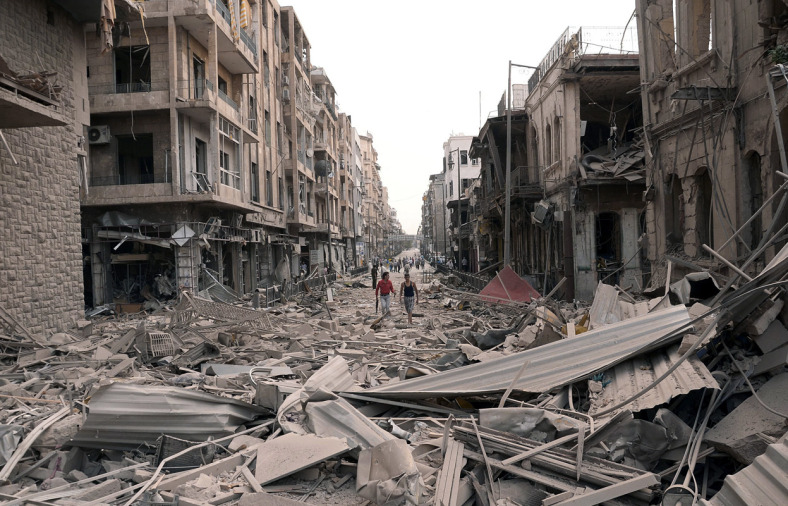
Reporter Janine di Giovanni has been to the worst places on Earth to bring back stories from Bosnia, Sierra Leone and most recently Syria. She tells stories of human moments within large conflicts — and explores that shocking transition when a familiar city street becomes a bombed-out battleground.
The Revolution Armed Itself
 This piece, a rebuttal to Marc Lynch, was published at Foreign Policy under the title Fund Syria’s Moderates.
In response to non-violent protests calling for reform, the Baathist regime in Damascus has brought Syria bloodshed, chaos, and created the conditions in which jihadism thrives. The now partially armed revolution is doing its best to roll back the bloodshed and to eliminate the regime that perpetrates it.
Yet Foreign Policy’s Marc Lynch, one of the more perceptive analysts of the Middle East, argues that after more than 60,000 lives have been lost, “the last year should be a lesson to those who called for arming the rebels.” In a previous article, Lynch noted, “Syrian armed groups are now awash with weapons.”
Anyone laboring under the delusion that pro-revolution foreign powers have flooded Syria with hi-tech weaponry should scroll through the blog of New York Times correspondent C.J. Chivers or peruse the web pages displaying improvised catapult bombs and PlayStation-controlled armored cars. These are hardly the tools of a fighting force that has been armed to the teeth.
While it’s true that some armed groups — particularly the al Qaeda-linked Jabhat al-Nusra — have sometimes found themselves in possession of plenty of weaponry, the resistance remains overwhelmingly dependent on the weapons it can buy, steal, or seize from captured checkpoints and bases.
Simply put, the assumptions of those who called for arming the rebels have not been tested because the rebels have not been armed — except in irrelevant, sporadic and, in Lynch’s words, “poorly coordinated” ways. For instance, an ammunition shortage slowed the original rebel advance in Aleppo to a destructive halt.
Obama’s torture policy
Al Jazeera’s excellent Fault Lines returns:
As a candidate for president, Barack Obama promised a new direction. Just days after taking office, the new US president issued a series of executive orders banning all acts of torture, discontinuing the use of CIA black sites, and calling for the US detention centre at Guantanamo Bay to be closed.
Cornel West on Obama and MLK’s Bible
Cornel West Explains Why It Bothers Him That Obama Will Be Taking The Oath With MLK’s Bible

