Syrian National Mess

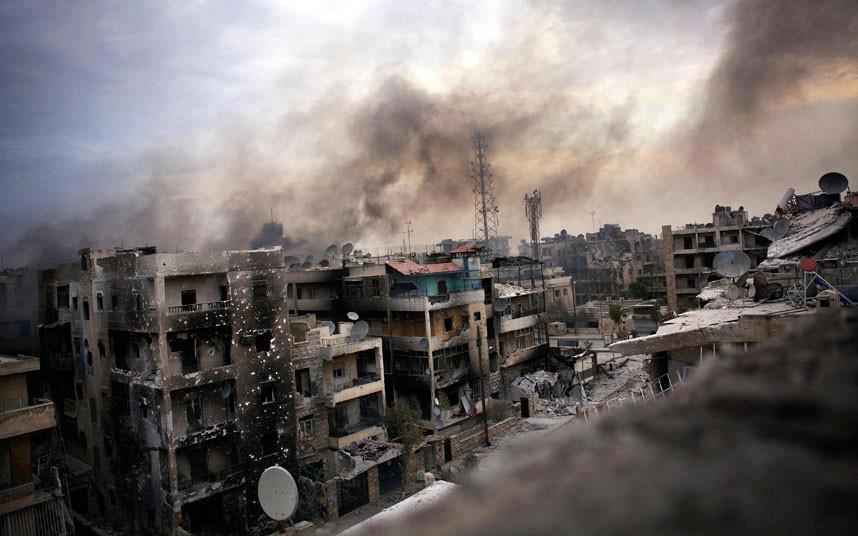
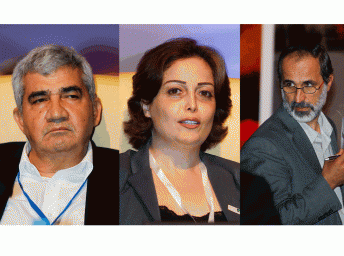
George Sabra has been elected new head of the Syrian National Council. He seems like a good man and his first interviews suggest he’s an effective talker. But his election comes as the SNC loses the last of its relevance. Despite the gravity of its historic responsibility, the Council failed to connect properly with revolutionaries on the ground, it failed to do enough to reassure minorities, or to aid refugees, it put all its eggs in the basket of a foreign military intervention which was never going to happen, it overrepresented the Muslim Brotherhood, it was bedevilled by factional and ego-based conflict, and its self-renewal process ended up with no women in the leadership. Foreign governments have lost interest in it. Crucially the grassroots Local Coordination Committes say the SNC no longer represents them. Other opposition bodies and individuals outside the SNC (some of them doubtless secretly backed by the regime) have added to the sniping and backstabbing.

Today the news is that a new, broader body has been formed to coordinate the fight against Asad, to implement law in liberated areas, and to oversee the post-Asad transition. It’s called the National Coalition of the Syrian Revolutionary Forces and the Opposition, or the Syrian National Coalition. Perhaps this initiative will be more successful than others; we’ll see. Very sadly, it took Qatari and American badgering and perhaps promises of better weaponry (at this late stage with the country in flames and the resistance finally capturing heavy weaponry for itself) to force the ‘opposition’ to coalesce. You’d think Syria’s elite politicians would have been self-motivated to compromise and act by the destruction and mass slaughter in their homeland, by the urgency of the tragedy, by the vacuum allowing nihilists and potential warlords to call shots. But no. While Syria’s grassroots revolutionaries are unparalleled heroes, seemingly capable of endless self-sacrifice, Syrian political elites have failed their people massively.

Continue reading “Syrian National Mess”

Assassination of Julius Caesar: A People’s History of Ancient Rome

Michael Parenti giving a talk on his, Pulitzer Prize nominated, book Assassination of Julius Caesar: A People’s History of Ancient Rome. For an excellent Booknotes interview see here and for an audio lecture click here.

Peter Linebaugh: The Magna Carta Manifesto

In the following interview, Peter Linebaugh speaks about his book, The Magna Carta Manifesto. Linebaugh explains how Magna Carta contained two charters: the Charter of Liberties and the Charter of the Forest. The most important aspect of Linebaugh’s book is that it brings new light to the largely forgotten Charter of the Forest. While the Charter of Liberties existed to protect people’s rights the Charter of the Forest existed to protect the commons, which guaranteed the subsistance of the people, against a tyrannical, privitising king.

[youtube http://www.youtube.com/watch?feature=player_embedded&v=of3pDXFHJwA]

Hawking Women’s Rights

Considering the amount of uninformed commentary that has been proliferating on Pakistan, readers might want to check out Tanqeed, an important new initiative started by a group of progressive Pakistani academics, writers and journalists. The trigger was a typically obtuse ‘debate’ on New York Times about the recent assassination attempt on a school-girl in Swat. In response Tanqeed (which means ‘criticism’) asked 6 Pakistani writers to present a less ideologically skewed take on the same event (and its broader context). You can find the result here. The following is my contribution:

Ten year old Nadia, whose family was incinerated in a drone strike.

For advocacy to be successful, it has to come from a place of empathy rather than superiority. Many of the most vocal advocates of women’s rights in Pakistan today are also known for their sanguine views on the “war on terror.” It is, therefore, doubtful that their new self-image as the deliverers of women from patriarchal tyranny will gain much purchase among the sufferers.

Women have doubtless borne the brunt of the dislocation and insecurity occasioned by the “war on terror.” But, to treat women’s rights in isolation from the general malaise merely serves to put the concern under a pall of suspicion. Women’s rights have been long used as a pretext for imperial aggression. Far from bringing relief, their invocation by the apologists for war merely helps obscurantist criminals, like the TTP, elevate misogyny into an anti-imperial expression.

The situation in Pakistan’s troubled northwest is no doubt ugly. From the indiscriminate violence of the Taliban, the gratuitous butchery of sectarian criminals, the bombing of girls’schools, the targeting of children, to the threats against the media, it is a predicament that is begging for a visionary political solution.

Continue reading “Hawking Women’s Rights”

Nod

Books which are published by small publishing houses are rarely reviewed by big newspapers, and this is a shame, because small publishing houses often publish excellent work. One example is “The Madman of Freedom Square” by the brilliant Hassan Blasim, published by Comma Press. Another is “Nod”, by Adrian Barnes.

The plot is a grand metaphor worthy of Jose Saramago. For no apparent reason (though people scramble for political and spiritual explanations) people stop sleeping. Only about one in ten thousand people are spared the insomnia plague, and these quickly become victims of an anti-sleeper mass frenzy. The Awakened, as they become known, suffer gradual degeneration through irritability and clumsiness, detachment and madness, to death. Our narrator, a writer of obscure books on obscure words and phrases, is one of the remaining sleepers. Being an expert on words, he reminds us that ‘Nod’ has two somewhat contradictory meanings – both the pleasant sleepy land we send children to, and the land of Nod, the barren desolation to which God sent Cain. The narrator has to watch as his long-term girlfriend and just about everyone else around him degenerate.

Continue reading “Nod”

The Revolution Becomes More Islamist

Like ‘armed gangs’, armed Islamists are one of the Syrian regime’s self-fulfilling prophecies. Most grassroots organisers and fighters are secularists or moderate Islamists, but the numbers, organisational power and ideological fervor of more extreme and sectarian Islamists are steadily rising. So why is the revolution taking on an increasingly Islamist hue? Here are some points in order of importance.

First, the brute fact of extreme violence. As the saying goes, “there are no atheists in foxholes.” Not only is faith intensified by death and the threat of death, and by the pain and humiliation of torture, but tribal and sectarian identities are reinforced. We want to feel like we when in death’s presence, not like I, because I is small and easily erased. So in Syria at the moment many Sunnis are identifying more strongly as Sunnis, Alawis as Alawis, Kurds as Kurds, and so on. This is very sad and it immeasurably complicates the future task of building a civil state for all, but it is inevitable in the circumstances. The violence was started by the regime, and the regime is still by far the greatest perpetrator of violence, including aerial bombardment of villages and cities, and now the liberal use of child-killing cluster bombs.

Second, beyond patriotic feelings for Palestine and Iraq and an unarticulated sense that their government was corrupt, two years ago most men in the armed resistance were apolitical. Finding themselves having to fight, and suddenly entered onto the political stage, they search for an ideology within which to frame their exciting and terrifying new experience. At present, the most immediately available and simplest ideology on offer is Salafism. As well as for their stark message, Salafists are winning recruits because of their organisational and warfaring skills honed in Iraq and elsewhere, and because of their access to private funds from the Gulf. If this were the sixties, the revolutionaries growing beards would have had Che Guevara in mind (and if much of the ‘left’ in the world were not writing off the revolution as a NATO/Saudi/Zionist conspiracy, the left might have more traction). At present, Salafism is in the air. It’s unfortunate, but it’s the historical moment. And why were all these young men apolitical before the revolution? Why hadn’t they learned more of debate and compromise? Simply put: because politics was banned in Asad’s Syria.

Continue reading “The Revolution Becomes More Islamist”

Ground Zero: Syria

Ground Zero Syria is a series where we’ve compiled photojournalist and videographer Robert King’s footage into a series of raw, largely unedited vignettes that present a snapshot of the ancient city as it crumbles and burns while its citizens are killed indiscriminately. Watch them here over the next month and a half, culminating in the release of VICE’s Syria Issue in November.

Assad’s Child Victims

VICE commissioned renowned photojournalist and videographer Robert King to embed on the front lines with the Free Syrian Army in Aleppo. War-zone chaos ensued. In this episode, Assad forces hit Al Qusayr with a rocket attack while Robert is filming – it was targeted directly.

Burning of The Old Souk

Amid a fierce battle between Assad’s security forces and Free Syrian Army insurgents, fire swept through the old Souk of Aleppo, a historic covered market and World Heritage site. Rebel fighters and activists have reported that the blaze was sparked by the use of incendiary mortar rounds by Assad’s forces.

Diana Buttu: Russell Tribunal on Palestine

A speech on the US’s role in Palestine & the Middle East by Diana Buttu, at the Russell Tribunal on Palestine.

In Praise of Hatred

I was honoured to be asked to write the introduction to the English translation of Khaled Khalifa‘s third novel, In Praise of Hatred– set in Syria in the 1980s and essential background reading for the current tragedy. Four paragraphs of the introduction are reprinted below, and then Maya Jaggi’s review in the Guardian.

So how brave and necessary it was to write a fiction of the events. In our narrator’s harsh euphemism, Alawis are “the other sect” and the Ba‘ath Party is “the atheist party”, but the historical references are unmistakeable. Khalifa plays one of the noblest roles available to a writer: he breaks a taboo in order to hold a mirror to a traumatised society, to force exploration of the trauma and therefore, perhaps, acceptance and learning. He offers a way to digest the tragedy, or at least to chew on its cud. In this respect he stands in the company of such contemporary chroniclers of political transformation and social breakdown as Gunter Grass and JM Coetzee.

In purely literary terms as well as politically, the novel rises to a daunting challenge: how to represent recent Syrian history, which has often been stranger and more terrible than fiction.

For a start, it’s a perceptive study of radicalisation understood in human rather than academic terms. It accurately portrays violent Islamism as a modernist phenomenon, a response to physical and cultural aggression which draws upon Trotsky, Che and Regis Debray as much as the Qur’an, and contrasts it with the more representative Sufism of Syrian Sunnis.

Next, it examines the dramatic transformations of character undergone by people living under such strain, the bucklings and reformations, the varieties of madness. The characters here are fully realised and entirely flexible, even our bitter narrator, and their stories are told in a powerfully rhythmed prose which is elegant, complex, and rich in image and emotion. There is musicality too in the rhythm of the episodes, the subtle unfolding of the plot.

  Continue reading “In Praise of Hatred”