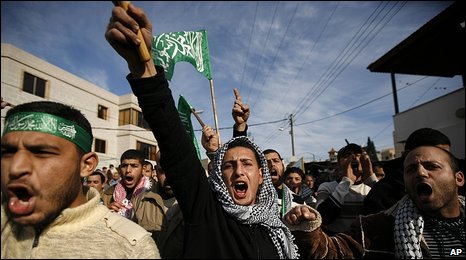
Israeli Ministers to be Dispatched on Propaganda Missions Abroad

The National Information Directorate is a new Israeli spin body set up less than a year ago following the recommendations of the  Winograd inquiry into Israel’s failures in Lebanon.  According to Israel’s Prime Minister’s Office website the directorate is coordinating a new campaign of lobbying and spin across Europe, directed at politicians and the media, focussing on Israeli “security” issues.

15/01/2009

The National Information Directorate and the Cabinet Secretariat, in cooperation with the Foreign Ministry, have decided to dispatch Government ministers on information missions abroad, starting in the coming days.  In the framework of the information efforts, it was decided to send ministers on diplomatic and media activity in various European countries.  Each minister will go on a short mission to one or two countries, including Belgium, Austria and Ireland.  The possibility of sending abroad residents of the south in order to give firsthand accounts of the security reality in which they have lived for years.  Israeli embassies will formulate agendas for the ministerial visits, including meetings with political officials and media interviews.

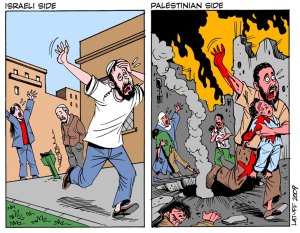
An Attack too Close to Home

More from Safa Joudeh who describes the targeting of the United Nations Relief and Works Agency (UNRWA) Headquarters and the evacuation of her home.

We WON’T be victimized: An attack too close to home

La Repubblica, January 17th 2009

I thought I was dreaming, or still hearing explosions. After all I’d only been asleep for an hour and a half, and it wasn’t far fetched that the tanks may be firing from outside our front door. Wednesday night into Thursday morning had seen the most intense bombardment of Gaza city so far, and last I’d heard before drifting off was that the Israeli forces had advanced as far as the end of our streets, into the Tel al Hawa neighborhood. They’d already seized buildings there, so what’s to prevent them from making their way a little further in.
Continue reading “An Attack too Close to Home”

Palestinian Resistance

This was written a couple of days ago so while things have progressed since then the essence still holds true, Safa Joudeh in Gaza:

The truth will come out
La Repubblica, January 15th 2008

“Common knowledge” is a term with subjective reference to the general information widely known within a particular environment/location. This information is readily available to people through direct exposure to, and everyday encounters with the forms in which it presents itself. In reference to my situation as a resident of Gaza for example, it’s common knowledge among the Gaza community that Israel is an occupying power that aims at undermining Palestinian self determination and autonomy. It’s also common knowledge that during this attack Israeli forces strike blindly while assuming political justifications that bare no relevance to the situation on the ground. Another piece of common knowledge is that the Palestinian resistance is not a group of crazed Hamas gorillas brandishing their M16 and launching rockets into southern Israel for the sake of maintaining their presence and authority over the people of Gaza.

Continue reading “Palestinian Resistance”

Children suffer in Israel’s war on Gaza

More Al Jazeera: Gaza Babies Born into War

Continue reading “Children suffer in Israel’s war on Gaza”

Why the Gaza Calm Crashed

Israel gaza protest

Alistair Crooke, of the Conflicts Forum, has written three articles over the course of the ongoing massacre in Gaza, the best of which, Why the Gaza Calm Crashed, is included below. In it Crooke explains, more clearly than any other commentator, how the Israeli cease-fire was really designed to illegally collectively punish the Gazan people until they rejected, their democratically elected leadership, Hamas.

When Israel therefore offered a renewal of this “cease-fire” agreement, rejecting Hamas’ terms for lifting the blockade on the people of Gaza, Hamas had a difficult choice: continue a brutal siege collectively punishing 1.5 million Gazans, designed to oust Hamas themselves from power, or reject it. Cooke paints a nuanced and bleak picture of, US backed, Israeli aggression or what others call the “cease-fire.”

It’s worth noting that the world view, mentioned by Crooke, of “moderates” versus “extremists” is championed and promoted in the West by the Neocon Israel firsters and is designed to best serve Israel’s interests in the region.  You have to be pro-Israel, or exceptionally ignorant, or like Blair, possess both these qualities, to see the country as “moderate” in the first place.

Many have asked in the wake of Israel’s attack on Gaza, how Hamas, if it saw the consequences of ending the ceasefire — and Hamas did foresee the likelihood of disproportionate Israeli military action — nonetheless could have acquiesced to the inevitable bloodshed — bloodshed that an Israeli army, fixated on restoring its deterrence after its failed 2006 war with Hesballah, would visit on the citizens of Gaza. Some may read into this decision the cynicism of a movement that prioritises resistance; but to do so would be to misread how Hamas analyses their situation and understands the nature of resistance.

Continue reading “Why the Gaza Calm Crashed”

LRB contributors react to events in Gaza

Contributors to the London Review of Books — the best publication out there — react to events in Gaza.

Tariq Ali

A few weeks before the assault on Gaza, the Strategic Studies Institute of the US Army published alevelheaded document on ‘Hamas and Israel’, which argued that ‘Israel’s stance towards the democratically-elected Palestinian government headed by Hamas in 2006, and towards Palestinian national coherence – legal, territorial, political and economic – has been a major obstacle to substantive peacemaking.’ Whatever their reservations about the organisation, the authors of the paper detected signs that Hamas was considering a shift of position even before the blockade:

It is frequently stated that Israel or the United States cannot ‘meet’ with Hamas (although meeting is not illegal; materially aiding terrorism is, if proven) because the latter will not ‘recognise Israel’. In contrast, the PLO has ‘recognised’ Israel’s right to exist and agreed in principle to bargain for significantly less land than the entire West Bank and Gaza Strip, and it is not clear that Israel has ever agreed to accept a Palestinian state. The recognition of Israel did not bring an end to violence, as wings of various factions of the PLO did fight Israelis, especially at the height of the Second (al- Aqsa) Intifada. Recognition of Israel by Hamas, in the way that it is described in the Western media, cannot serve as a formula for peace. Hamas moderates have, however, signaled that it implicitly recognises Israel, and that even a tahdiya (calming, minor truce) or a hudna, a longer-term truce, obviously implies recognition. Khalid Mish’al states: ‘We are realists,’ and there is ‘an entity called Israel,’ but ‘realism does not mean that you have to recognise the legitimacy of the occupation.’ Continue reading “LRB contributors react to events in Gaza”

Hamas and the Arab world

Part 2 of an inteview with Eric Margolis.  View part 1: who or what is Hamas or watch the The Real News report on Israeli troops attacking Gaza city.

The following is a comment on the Real News website:

“Hamas asked for it? I found, the normally rational and intelligent Jay Walker falling short of my expectations. Even CNN reported that Israel broke the truce on several occasions, not to speak of the many month long blockade. So how exactly did Hamas ask for it? Numerous peaceful attempts to block the blockade by international peace activists were attempted, but like everything else it was hardly covered in the mainstream press. Yes, non-violent resistance is wonderful, but it requires a media whose reach is far and wide, something that the Palestinains have never had at their disposal. I’m also been surprised by how little the real news has covered the crisis in Gaza. I would have expected them to have had several of these types of interviews already. It is Day 19 of this genocide. And its remarkable how we can sit around and say, yeah Hamas asked for genocide. How exactly does one do that?” Husaini

Continue reading “Hamas and the Arab world”

Finkelstein: Seeing Through the Lies

In The Facts About Hamas and the War on Gaza Norman Finkelstein lucidly demonstrates that Israeli rejectionists are blocking peace in the Middle East.  With his focus on the international consensus for a two state solution, and Hamas’ adoption of this position, it becomes obvious which agent is refusing to compromise in finding a resolution to the conflict.   While this is a useful argument in understanding the nature of the conflict it, conveniently for Israel, ignores the core injustice perpetrated against the Palestinians, namely the ethnic cleansing of 1948.  What makes the borders drawn in blood in 1948 any more legitimate than those drawn in 1967?  Or if that is too radical why not the borders drawn up by the UN partition plan?  What about that disputed territory?  A one state solution seems the only logical solution, and the main stumbling block to that is the ethnocentricity and racism of Zionism.

The record is fairly clear. You can find it on the Israeli website, the Ministry of Foreign Affairs website. Israel broke the ceasefire by going into the Gaza and killing six or seven Palestinian militants. At that point—and now I’m quoting the official Israeli website—Hamas retaliated or, in retaliation for the Israeli attack, then launched the missiles.

Continue reading “Finkelstein: Seeing Through the Lies”

Greek govt under fire over U.S. arms to Israel

U.S. weapons destined for Israel have been blocked from passing through Greece due to opposition protest.

A Pentagon spokesman said on Tuesday the transport had been cancelled at the request of the Greek government. Reports of the shipment had provoked a media outcry in Greece, where Israel’s 18-day-old offensive in Gaza is deeply unpopular.

“I think the Greek government has some issue with the offloading of some of that shipment in their country and we are finding alternative means of getting that entire shipment to its proper destination in Israel,” said Pentagon press secretary Geoff Morrell.

Continue reading “Greek govt under fire over U.S. arms to Israel”