Resigning from Cohen and Amnesty

Activists leafletting a Leonard Cohen concert in Liverpool

Renowned Irish composer and novelist Raymond Deane on the reasons why he has chosen to resign from Amnesty International. We encourage readers to follow Deane’s example.

When I first – and belatedly – began fretting about human rights and political injustice in the wake of the 1990-91 Gulf War, I joined Amnesty International and started writing letters and cards to political prisoners and to a variety of Embassies.

Although I was subsequently drawn deeply into activism of a more explicitly political nature – particularly on the Israel/Palestine issue – I retained my Amnesty membership out of residual respect for the organisation, but also because I wished to be in a position to say “as an Amnesty member myself, I completely disagree with the organisation’s stance on…” (fill in the dots as appropriate).

Continue reading “Resigning from Cohen and Amnesty”

All roads lead to Palfest

An edited version of this article was published in The National.

Palestine 045We entered Palestine from Jordan, across the Allenby Bridge and over the trickle which is what’s left of the diverted, overused, and drought-struck river. The Dead Sea glittered in the hollow to our left. Jericho, the world’s oldest city, shimmered through heat haze to our right. The site where Jesus was baptised was a stone’s throw away. Palestine is most definitely part of bilad ash-Sham, in the same cultural zone as Syria, Lebanon and Jordan, but it is also most definitely like nowhere else on the planet. Suddenly the superlatives were coming thick and fast.

Palestine feels as large as a continent – but one that’s been crushed and folded to fit into the narrow strip of fertile land between the river and the sea. The Jordan Valley depression is the lowest point on earth, part of the Rift Valley which stretches from east Africa, and it’s as hot as the Gulf. But only a few miles up from the yellowed, cratered desert into the green hills before Jerusalem, and the weather is very different. As we left our performance in Ramallah a couple of nights later, gusts of fog blew in on an icy wind. If a Palestinian in the West Bank manages to find an unoccupied hilltop – which isn’t at all easy – he can look all the way to the forbidden Mediterranean, and perhaps he’ll pick out the fields of his ancestral village.

Continue reading “All roads lead to Palfest”

Michael Jackson, the bookworm

I saw this news item on Jeffrey St. Claire’s Facebook just as I returned from one of my (at least) twice weekly visits to an old bookshop (with a haul that includes works by Adam Smith, Gramsci, Fromm, Koestler, Steinbeck, C. Wright Mills, Albert Hourani and Eric Hobsbawm–all for a mere £10!). I like browsing for books and I am always heartened when I hear about other kindred spirits since the book reading culture appears to be on fast decline. I didn’t expect Michael Jackson to be one, but Carolyn Kellogg’s piece in the Los Angeles Times suggests otherwise. “Owners of local bookstores, including Dutton’s, recall encountering the late pop star perusing their shelves”, she writes. (Also see Democracy Now’s excellent coverage on Michael Jackson’s life and work).

Michael Jackson buying books

When news broke in early 2009 of Michael Jackson’s return to Los Angeles, it was not via reports of him being spotted dining at the Ivy or dancing at the hottest new Hollywood club but book-shopping in Santa Monica.

“He was a longtime and valued customer,” a store representative of art and architecture bookstore Hennessey + Ingalls said Thursday. “We’ll miss him.”

If Jackson’s bookstore appearance surprised his pop fans, it was nothing new for booksellers. A few years ago, Doug Dutton, proprietor of then-popular Dutton’s Books in Brentwood, was at a dinner with people from Book Soup, Skylight and other area bookstores.

“Someone mentioned that Michael Jackson had been in their store,” Dutton said by phone Thursday, “And everybody said he’d shopped in their store too.”

Continue reading “Michael Jackson, the bookworm”

Illuminated Pages

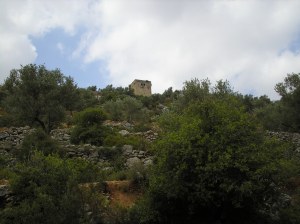
Michael Palin, Robin Yassin-Kassab and Jeremy Harding in a 'qasr' near Ain Qenya, Ramallah

Another fine LRB diary piece by Palfest participant Jeremy Harding. A visit to the al-Khalidi library leads Jeremy to consider “the war for control of East Jerusalem that Israel has been waging, slowly but surely, by non-military means.” More pieces by Jeremy are here , here, here, and here.

Haifa al-Khalidi says that she’s not a librarian. Fine. But the al-Khalidi collection on 116 Bab al-Silsilah Street in the old city of Jerusalem doesn’t pretend to be anything other than a library so maybe Haifa simply means she’s not a scholar, even if she’s now acquainted with a thousand rare manuscripts and many more works in print that are housed here. One of the first she shows us is a beautifully decorated Arabic translation of a work on poisons and remedies by a 12th-century Indian physician. (Later I learn it contains a tale about metabolic resistance and how it’s possible, carefully and slowly, to administer a poison to a subject whose antibodies enable him to survive, even though someone else who touches him will die. Actually, that ‘he’ in the story is a her, tanked up to become a poison pie and set before a king.) 

Continue reading “Illuminated Pages”

Ending Apartheid

A great piece by best-selling crime writer and Palfest participant Henning Mankell, originally published in the Swedish paper Aftonbladet. Mankell was tremendously moved by what he saw in Palestine, and we hope he is able to transmit this passion to his millions of readers. Mankell is informed enough to realise that the two-state solution is no solution. He concludes, “The fall of this disgraceful Apartheid system is the only thing conceivable, because it must be.”

Henning Mankell (right) responds to Banksy's wall art

About a week ago, I visited Israel and Palestine. I was part of a delegation of authors with representatives from different parts of the world.

We came to participate in the Palestinian Literary Festival. The opening ceremony was supposed to take place at the Palestinian National Theatre in Jerusalem.

We had just gathered when heavily armed Israeli military and policemen walked in and announced that they were going to stop the ceremony.

When we asked why, they answered: You are a security risk.

Continue reading “Ending Apartheid”

More from Palfest

Palfest writer Deborah Moggach negotiates a checkpoint

Jeremy Harding writes of the crossing into Palestine that I wrote about here. Then Rachel Holmes describes her impressions of the Palfest week, and is reminded of South Africa in the 70s. Jeremy first:

After the defeat of the Arabs in June 1967, many Palestinians who’d been driven east over the Jordan River by the fighting tried desperately to return to their homes by slipping back across. The bridges, including the Allenby Bridge, had been damaged, but the patched-up remains were serviceable. The Allenby Bridge crossing was closely guarded, however, and used by the soldiers on Israel’s newest frontier to put people out, rather than allow them in. Palestinian refugees trying to get home from Jordan, as well as groups of fedayeen, preferred to ford the shallow river at dead of night, although 50 IDF ambush parties were stationed along the west bank, instructed to fire on shadows in the water. By September, more than a hundred people had been shot dead trying to return and a thousand had been deported back to Jordan.

On the Jordanian side of the river journalists were counting up to 80,000 refugees in tents, with more being driven in from the west bank as Israeli soldiers fired over their heads to hurry them along. To avoid what was clearly an international scandal in the making, the Israeli government decided to stage a televised return of several thousand Palestinians. There was disagreement among the ministries about how to select the fortunate few. A Foreign Ministry official argued that the key point was demographic: children and women of childbearing age should be kept to a minimum; but in the prevailing view, the older refugees of 1948 were far more undesirable.

Continue reading “More from Palfest”

The Green Still Resists

In one of the most contentious sections of his thoroughly contentious Cairo speech, Obama declared:

Palestinians must abandon violence. Resistance through violence and killing is wrong and does not succeed. For centuries, black people in America suffered the lash of the whip as slaves and the humiliation of segregation. But it was not violence that won full and equal rights. It was a peaceful and determined insistence upon the ideals at the center of America’s founding. This same story can be told by people from South Africa to South Asia; from Eastern Europe to Indonesia. It’s a story with a simple truth: that violence is a dead end. It is a sign of neither courage nor power to shoot rockets at sleeping children, or to blow up old women on a bus. That is not how moral authority is claimed; that is how it is surrendered.

It’s difficult to know where to start with this. Perhaps by registering just how insulting it is for the representative of the imperial killing machine – responsible directly and indirectly for millions of deaths in Iraq, Afghanistan, Pakistan, Lebanon, Somalia – to lecture the dispossessed and massacred Palestinians on their occasional attempts to strike back. We can be sure that the sleeping children Obama is concerned with here are the Israeli children who live on the stolen land of Palestine, not the unsleeping, traumatised children of Gaza, several hundred of whom were burnt and dismembered six months ago. Then it’s worth remarking how the erudition and intelligence shown in Obama’s pre-presidential book ‘Dreams from my Father’ have been immediately crushed on his assumption of the presidency. How otherwise could his historical vision be so partial and simplistic? There was certainly a key non-violent aspect to the struggle for civil rights in the United States, but pretending that violence played no role in the process makes it necessary to ignore the American Civil War (half a million dead), Nat Turner, Malcolm X, the Black Panthers and rioting Chicago. Violence, or the threat of violence, was important in South Africa and India too, and certainly in Obama’s ancestral Kenya, and was the dominant anti-imperial strategy in Vietnam and Algeria.

Continue reading “The Green Still Resists”

Entering Palestine

I love it when Arab Christians have names like Omar. It shows, on their fathers’ part, a rejection of the sectarianism which cripples us. I know of a Christian family in Beirut which named its eldest son Jihad, and Muslim families with sons called Fidel and Guevara. Omar is not merely a specifically Muslim name; it’s more particularly a Sunni name, disliked by some Shia for theological-historical reasons. Omar is not a good name to have written on your ID card while driving through a Shia-militia-controlled area of Baghdad. But I know an Iraqi Shia woman whose brother is called Omar, because her father rejected the whole sorry sectarian business.

By and large, the Palestinians have avoided the curse. It’s still the case that if you ask a Palestinian whether he’s Muslim or Christian he responds, “Palestinian!” I mention this because our guide from Amman to the Allenby Bridge was a Palestinian Christian called Omar, and because the Palestinians, unlike their enemies, are proud of their diversity and pluralism.

Swaying in the bus aisle, Omar explained that Jordanian officers would check our passports but would not stamp them. “The Jordanian government has recognised Israel, but not Israeli control over the West Bank. Why are there Israeli police on the border and not Palestinians? Jordan recognises this as a crossing, but not a border.”

Surely Omar was pleased that, since the peace agreement, he could visit his family in Bethlehem? Not really: “Jordan allows every Israeli to come here. They get visas automatically when they come in. But we have to apply at the Israeli embassy, where they treat us badly, and 95% of applications are refused. I tried to go in for my uncle’s funeral, but they wouldn’t let me. This is the balanced peace we have with our neighbours.”

The Jordanian side of the crossing takes less than ten minutes. Omar collects our passports to flash at an officer while we drink water in the shade. Then back onto the bus, without Omar, and over the bridge.

Continue reading “Entering Palestine”

Is Belief in Richard Dawkins Necessary for Salvation?

Terry Eagleton
Terry Eagleton

Terry Eagleton delivers the 2008 Dwight H. Terry Lectures at Yale on Faith and Fundamentalism.

Terry Eagleton, John Edward Taylor Professor of English Literature at the University of Manchester, has been a Fellow of four Oxford and Cambridge colleges and has held the Thomas Warton Chair of English Literature at the University of Oxford. Professor Eagleton has authored scores of studies of literary, cultural, and political criticism and written plays for both stage and television in Britain and Ireland, as well as a screenplay for Derek Jarman’s film Wittgenstein. Terry Eagleton is a Fellow of the British Academy.

Faith and Fundamentalism: Is Belief in Richard Dawkins Necessary for Salvation?

April 1, 2008     Christianity: Fair and Foul

Continue reading “Is Belief in Richard Dawkins Necessary for Salvation?”

Like Cattle in an Abbatoir

Debborah Moggach and Suheir Hammad respond to conditions in Hebron/al-Khalil

More on Palfest. Deborah Moggach, author of 16 novels and the screenplay for ‘Pride and Prejudice’, describes her week on the West Bank, below. It is important that this is on the Books pages, rather than the news pages, of the Guardian – culture offers an opportunity to reach people beyond the usual channels. Read to the end for Sousan Hammad’s beautifully-written piece on the literature festival.

I’m still recovering from a tumultuous week in Palestine where, between 23 and 28 May, 16 writers from around the world took part in the Palestine Festival of Literature (Palfest). It was started last year by Ahdaf Soueif as a way of bringing poets, journalists, publishers and novelists to the occupied territories to celebrate, in Edward Said’s words, “the power of culture over the culture of power”. There’s nothing else quite like it: due to the restrictions on movement, it is we, the visitors, who bring the mountain to Muhammad, travelling around in a bus visiting towns in the West Bank to do readings with Palestinian writers, stage music and poetry events, conduct workshops with students and visit refugee camps. This year’s group included Michael Palin, Henning Mankell, Claire Messud, Jamal Mahjoub, Abdulrazak Gurnah and the dazzling poet/performer Suheir Hammad.

Continue reading “Like Cattle in an Abbatoir”