Nordic Noir: The Story of Scandinavian Crime Fiction

Another episode from the BBC’s excellent Time Shift series.  (Also see the earlier installment about Italian crime fiction).

Draw the curtains and dim the lights for a chilling trip north for a documentary which investigates the success of Scandinavian crime fiction and why it exerts such a powerful hold on our imagination.

The Girl with the Dragon Tattoo is a literary blockbuster that has introduced millions of readers to the phenomenon that is Scandinavian crime fiction – yet author Stieg Larsson spent his life in the shadows and didn’t live to see any of his books published. It is one of the many mysteries the programme investigates as it travels to Denmark, Sweden, Norway and Iceland in search of the genre’s most acclaimed writers and memorable characters.

Continue reading “Nordic Noir: The Story of Scandinavian Crime Fiction”

Italian Noir: The Story of Italian Crime Fiction

It is programming like this that makes the BBC such an outstanding cultural institution. Don’t miss.

Timeshift profiles a new wave of Italian crime fiction that has emerged to challenge the conventions of the detective novel. There are no happy endings in these noir tales, only revelations about Italy’s dark heart – a world of corruption, unsolved murders and the mafia.

The programme features exclusive interviews with the leading writers from this new wave of noir, including Andrea Camilleri (creator of the Inspector Montalbano Mysteries) and Giancarlo De Cataldo (Romanzo Criminale), who explains how his work as a real-life investigating judge inspired his work. From the other side of the law, Massimo Carlotto talks about how his novels were shaped by his wrongful conviction for murder and years spent on the run from the police.

Continue reading “Italian Noir: The Story of Italian Crime Fiction”

Adam of Lost Eden

by Najeeb Mubarki

(This article first appeared in The Economic Times, May 19, 2007, while the Palestinian poet, Mahmoud Darwish, was still alive.  Darwish was born exactly seventy-one years ago in the Western Galilee village of al-Birwa on March 13, 1941.)

Mahmoud Darwish (13 March 1941 – 9 August 2008)

In his 2004 film Notre Musique [Our Music], a journalese-philosophical meditation on war and reconciliation, Jean-Luc Godard gave pride of place to Palestinian poet Mahmoud Darwish. In the film, repeating what he had once told an Israeli journalist, Darwish inverts the relationship with the ‘other’: “Do you know why we Palestinians are famous? Because you are our enemy. The interest is in you, not in me…” By saying that he was important because Israel is important Darwish wasn’t just referring to the erasure of identity and history the Palestinians have had to struggle against, but perhaps more to the continuum of suffering, of that erasure, that has been passed down, as it were, to the Palestinians by the Jews. Not that Darwish now needs to affirm his self as an inversion of his ‘enemy’, or that he needed a Godard to affirm his being. In fact, it is quite the other way round, he was in the film because one cannot make a film on reconciliation without him, and his is a poetry of love, loss, of memory and exile that is more a challenge to the occupier than slogans and bombs ever can be.

Continue reading “Adam of Lost Eden”

Reading Sebald

by Manash  Bhattacharjee

G. W. Sebald  (1944-2001)
G. W. Sebald (1944-2001)

World, take a backseat.
Do not disturb.
I am reading Sebald.
Hush.

Trees with eyes flit by
My blind face.
I hurriedly drink
Evanescence.

Continue reading “Reading Sebald”

Wislawa Szymborska, R.I.P

The great Polish poet and Nobel laureate is no more. Katha Pollit of The Nation pays tribute

In the way that you can be surprised when someone dies, no matter how rationally foreseeable the death is, I was startled to open my New York Times on February 2 and find an obituary for Wislawa Szymborska, the great Polish poet who won the Nobel Prize in 1996. Only 88, I wanted to say. Much too young.
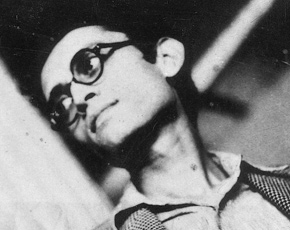
Szymborska’s poems are mostly short, and her output was not voluminous—only around 400 published poems. And yet, she is one of the few contemporary poets you can call beloved and not have it be a condescension or an insult. In The New York Review of Books Charles Simic called her poems “poetry’s equivalent of expository writing,” which captures their accessibility, their logical clarity and their interest in facts (especially odd ones), stories, things and people, but doesn’t convey their charm or vitality. Expository writing is, after all, a required class for college freshmen—the opposite of fun, dazzle, originality, pathos. For me, Szymborska’s signature quality is the way she puts tragedy and comedy, the unique and the banal, the big and the little, the remembering and the forgetting, right next to each other and shows us that this is what life is:

After every war
someone has to tidy up.
Things won’t pick
themselves up, after all.

Someone has to shove
the rubble to the roadsides
so the carts loaded with corpses
can get by.

—from “The End and the Beginning”

Continue reading “Wislawa Szymborska, R.I.P”

The Trouble with Tolstoy: In Search of Happiness

This is part two of the BBC documentary about the greatest writer that ever lived. (Part 1 is here.)

Alan Yentob continues his train ride through Tolstoy’s Russia, examining how Russia’s great novelist became her great troublemaker.

Continue reading “The Trouble with Tolstoy: In Search of Happiness”

The Trouble with Tolstoy: At War with Himself

This is part one of a must see BBC documentary on the world’s greatest writer, Lev Tolstoy. (Part 2 is here.)

Alan Yentob takes an epic train ride through Tolstoy’s Russia, examining how Russia’s great novelist became her great troublemaker.

Continue reading “The Trouble with Tolstoy: At War with Himself”

Hardtalk with Gore Vidal

This one is from 2008. Gore Vidal on the BBC’s Hardtalk.

Continue reading “Hardtalk with Gore Vidal”

Fighting a Forbidden Battle: How I Stopped Covering Up for a Hidden Wrong

by Jesse Lieberfeld

I once belonged to a wonderful religion. I belonged to a religion that allows those of us who believe in it to feel that we are the greatest people in the world—and feel sorry for ourselves at the same time. Once, I thought that I truly belonged in this world of security, self-pity, self-proclaimed intelligence, and perfect moral aesthetic. I thought myself to be somewhat privileged early on. It was soon revealed to me, however, that my fellow believers and I were not part of anything so flattering.

Although I was fortunate enough to have parents who did not try to force me into any one set of beliefs, being Jewish was in no way possible to escape growing up. It was constantly reinforced at every holiday, every service, and every encounter with the rest of my relatives. I was forever reminded how intelligent my family was, how important it was to remember where we had come from, and to be proud of all the suffering our people had overcome in order to finally achieve their dream in the perfect society of Israel.

Continue reading “Fighting a Forbidden Battle: How I Stopped Covering Up for a Hidden Wrong”

Re-Membering Toba Tek Singh: Looking for Manto

Between works censored for “obscenity” and those pirated and then censored for nationalism, which censorship is more obscene?

by Huma Dar

Sa'adat Hasan Manto
Sa’adat Hasan Manto

In today’s edition of Dawn.com, Jan 1, 2012, the renowned feminist poet, Fahmida Riaz has an article, “Understanding Manto,” about Urdu literature’s enfant terrible, Sa’adat Hasan Manto.  This year will mark Manto’s birth centenary.  Thank you, Fahmida Apa, for writing this moving tribute!  Sad indeed is the day when Pakistan cannot or does not publish Manto’s work, uncensored, unedited.  Despite justified indignation, knowing our “guardians of morality and piety,” it aches my heart to confess, I am not surprised.

Ironically, the “Indian pirated edition”—even if we overlook the immense ethical difficulties with the issue of piracy, and the direly-needed resources that were (and are) thus withheld from Manto and his family—is still no guarantee of accessing the “original, uncensored text.”  Christine Everaert in her book, Tracing the Boundaries between Hindi and Urdu: Lost and Added in Translation (Brill, 2009) painstakingly records many elisions, omissions, and additions in just a few of Manto’s stories as they’re carried from their original Urdu to the [pirated] Hindi versions.  Some of these transformations are, of course, to ease the transmission of the literary register in Urdu to Hindi; others to simply make things more palatable for Indian nationalism.  (Please especially see the Chapter II of this book for many examples…)