The BDS Movement Wishes to Thank the Following Zionists

There are many people, from many different countries busting their ass in order to move the BDS (Boycott Divestment Sanctions) movement forward. These people are human rights activists, concerned citizens, people of conscious.

Sometimes, however, the propellers of the BDS movement are not what you’d expect. They are hard-core fascist, self-righteous Zionists, so unable to see beyond their own ideology that they actually hurt themselves. I’d like to take a moment to thank them all.

The BDS Movement Wishes to Thank the Israeli Mainstream Media

In the past 3 months, the Israeli media went from irresponsibly ignoring the BDS movement, to at least 6 articles a day, among the online media, focusing on the fear of Israel’s deteriorating image, in the world. Though articles about actual news (like the Dexia Bank disinvestment) are missing from the mainstream media, we can witness the fear and loathing in the Zionist state, all over the main three media outlets:

Left warns of global boycott over Ariel U. [Yediot Acharonot/Ynet]

World isn’t buying Israel’s explanations anymore [Ha’aretz]

[Israel’s] image is at an all time low. International pressure is mounting, and the calls for ostracism and boycotts are multiplying. All this was fueled by the Goldstone report, which was in itself fueled by Israeli sources. The funding for these sources is provided by, amongst others, the NIF. The question is whether the New Israeli Fund is indeed for Israel… Israel is bleeding, IDF officers are closed up in the Kiriya, leaders are canceling visitations abroad, Israeli produce is taken of the shelves and this is just the beginning. [Ma’ariv/nrg, limited by my translation]

Continue reading “The BDS Movement Wishes to Thank the Following Zionists”
Open-Mindedness on Independence Day

The following piece is one of the twelve essays in Steven Salaita’s latest book, The Uncultured Wars:  Arabs, Muslims, and the Poverty of Liberal Thought.  To find more of his work, visit his facebook page here.  To purchase The Uncultured Wars, please go here or here.

Of course, not all African Americans are lazy.  Of course, not all Indians are alcoholics.  Of course, not all Jews are stingy.  Of course, not all Russians are whores.  Of course, not all Mexicans are dirty.  Of course, not all Pakistanis smell.  Of course, not all Africans are bestial.  Of course, not all Eskimos use 250 words for snow.

Friedman: Sage of the Elite

Of course, not all Asians are craven.  Of course, not all Americans are ignorant.  Of course, not all Japanese are kamikazes.  Of course, not all Indians are stoic.  Of course, not all African Americans are criminal.  Of course, not all Arabs are angry.  Of course, not all Maoris are premodern.  Of course, not all Hawaiians are hula dancers.  Of course, not all Aborigines are backward.  Of course, not all Thai are gamblers.  Of course, not all women are too emotional.

Of course, not all Mexicans are laborers.  Of course, not all South Asians are swindlers.  Of course, not all Appalachians are backwoods rapists.  Of course, not all poor folk are tasteless.  Of course, not all women are mentally inferior.  Of course, not all Poles are stupid.  Of course, not all Italians are Mafiosi.  Of course, not all Spaniards are sleazy.  Of course, not all Afghans are filthy.  Of course, not all Hispanics are greasy.  Of course, not all homosexuals are child molesters.  Of course, not all Africans are nude and pagan.  Of course, not all Sri Lankans deserve it.

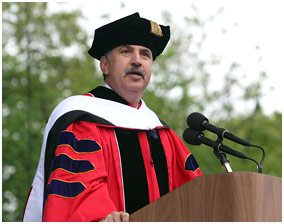
“Of course, not all Muslims are terrorists”—Thomas Friedman, New York Times, July 4, 2007.

Oprah’s Neoliberal Empire

Following on from last week’s discussion about the tyranny of positive thinking here is Janice Peck, author of the excellent The Age of Oprah: The Making of a Cultural Icon for the Neoliberal Era speaks about the place of Oprah Winfrey’s media enterprise in the last quarter century of U.S. culture and politics. The first interview was conducted by Bruce Dixon of Black Agenda Report, the latter by Bob McChesney of Media Matters. (Update: The first mp3 appears to have vanished from the internet. I have reproduced a transcript of Dixon’s interview with Peck below).

(Also don’t miss the excellent piece, ‘The selling of “Precious”‘ by Ishmael Reed.)

Janice Peck  Associate Professor at the University of Colorado, her research interests include critical theory, the relationship of media and society, the social meanings and political implications of mediated popular culture, communication history and theories of media and culture. She has also authored a book on the history and politics of religious television in the U.S.,The Gods of Televangelism: The Crisis of Meaning and the Appeal of Religious Television (1993).  She has published articles and book chapters on the theoretical and intellectual history of cultural studies, issues in media theory, the family and television, TV talk shows, Oprah’s Book Club and issues of literacy, religion and advertising, and representations of race in media.

Continue reading “Oprah’s Neoliberal Empire”

The Conquest of Cool II

Douglas Rushkoff was once an enthusiast of the revolutionary potential of cyberculture. During the ’90s the increasing conglomeration of the internet business led him to temper his enthusiasm. But I think his prophecies had more substance than he was given credit for. The internet truly came into its own with Web 2.0 technologies and from blogging to Twitter, its true democratizing potential is only now being recognized. It has already succeeded to a certain degree in holding MSM accountable, though it hasn’t quite levelled the playing field as some optimists like to imagine.

Like Neil Postman, however, an important aspect of Ruskhkoff’s work has been the effect of media and advertising on culture. Every other year I teach an undergraduate course in Globalization and Resistance in which I show students this excellent documentary which Rushkoff made for PBS’s Frontline. It illustrates the ersatz nature of alternative culture, the process of its manufacture, in a manner than leaves many of them flabbergasted. It also illustrates the feedback loop through which businesses steal from youth the fruits of their creativity, stamp it with their label, mass produce it, and then sell it to everyone else until it has lost its ‘cool’ — much as Thomas Frank argued in The Conquest of Cool. As the culture degenerates, the ideal female and male types are reduced to the ‘midriff’ and the ‘mook’. (According to the BBC, two-thirds of all teenage females in the UK aspire to be models). Youths, as Rushkoff shows in The Merchants of Cool, have become one of corporate America’s largest sources of revenue.

A People’s History of Gaza in Cartoons

by Paul de Rooij

The launch of a new book by Joe Sacco is a major event, and with considerable expectation a crowd recently gathered in London to hear the great Maltese-American cartoonist and author discuss his latest book: Footnotes in Gaza. [1] Sacco spent seven years researching and drawing about two sordid events that took place in November 1956 when Israeli forces invaded Gaza as part of the joint British-French attack against Egypt. The Israeli army conducted two massacres where hundreds of Palestinians were murdered, and Sacco set out to collate the oral histories of the Palestinians who witnessed or were the victims of the events. Sacco engaged in a detailed investigative work finding the witnesses who could credibly recollect what happened, sifted through the accounts to eliminate the factual inconsistencies due to the deteriorated memories, and then spent four years bringing these histories to life in his inimitable style. The book doesn’t only focus on the past, but the present is also very much part of his account; in present day Gaza giant armoured bulldozers flatten houses in Rafah and where the ongoing siege affects everybody’s lives. Sacco says: “… the past and the present cannot be so easily disentangled; they are part of a remorseless continuum…”

Contemporary history is usually written by academics with access to the main protagonists, usually politicians or military commanders, inert archives, and press accounts. This history is usually antiseptic – there are no piles of corpses to embarrass the generals. It is also imbued with certainty – historians usually don’t question the politician’s say-so. It is rare for mainstream historians to listen to victims; their accounts are seldom incorporated into the victor’s history. What sets Joe Sacco apart is that not only is he a great artist, but also a peoples’ historian who is willing to listen to the victims; his historiography is imbued with sympathy and respect for the these victims; their history is worthwhile recording. Sacco also focused on a usually-ignored slice of history. In 2001, he travelled in Gaza with Chris Hedges, the American journalist, to research an article about the 1956 massacres for an article for Harper’s magazine. When the article finally appeared, the history of the massacres had been editorially expunged; not all histories are treated equally. Perhaps it was this incident that piqued his interest to write about the neglected massacres.

Continue reading “A People’s History of Gaza in Cartoons”

Eyeless in Tehran

Press TV should be ashamed of running such crude and embarrassing propaganda. The channel couldn’t have found a better way to insult its audience. Neda Agha Soltan’s killing was an outrage; to try to cover it up in such a shoddy manner merely adds insult to the injury. Press TV has provided excellent coverage in Gaza and elsewhere. If it is to remain credible, it will have to assert its independence and put a distance between itself and its sponsors.

Viva Palestina breaks Gaza siege

The Viva Palestina aid convoy has broken the siege of Gaza despite Egyptian attempts to violently disrupt their progress.

Continue reading “Viva Palestina breaks Gaza siege”

Stephen Walt chooses five books on US-Israel relations

A few weeks back The Browser interviewed British author Ziauddin Sardar for its Five Books section. Among the books he selected on the theme of Travel in the Muslim World was one, The Road from Damascus, by PULSE editor Robin Yassin-Kassab. When Robin was in turn asked to choose his five on the theme of the Israel-Palestine Conflict, he chose among others John Mearsheimer and Stephen Walt’s The Israel Lobby and the US Foreign Policy. In its current interview The Browser turned to Stephen Walt — one of PULSE’s 20 top global thinkers for 2009 — to present his selection of the five most important books on the US-Israel relationship. In the following interview Walt presents his selection and explains why he chose these particular books.

Stephen M. Walt

So, we’re trying to understand how the US has come to identify so closely with Israel in recent decades, and your first book is The Israel Lobby and US Foreign Policy, which you wrote along with John Mearsheimer. Why is that on the top of your list?

The only way to understand the special relationship that now exists between the United States and Israel is to understand the critical role that a number of organisations have played in actively promoting that relationship over the last 60 years. The US has supported Israel since its founding in 1948, but it did not have the same sort of special relationship for the first 20 or so years after Israel’s creation. The US backed it in certain ways, but was also willing to put lots of pressure on it in other circumstances and didn’t provide a lot of economic or military assistance until after 1967. But today the US backs Israel no matter what it does and American politicians are careful never to say anything that is very critical of Israel, even when it is acting in ways that are contrary to US interests and values. The key to understanding this ‘special relationship’ is the operation of various groups in the Israel lobby, and our book lays out in great detail how that works, and why it’s not good for the US or Israel.

Continue reading “Stephen Walt chooses five books on US-Israel relations”

PULSE: 20 Top Global Media Figures of 2009

After we published our list of 20 Top Global Thinkers, we thought we would be remiss if we did not also honor those who bring these voices to us in the first place. With the goal of recognizing those individuals and institutions responsible for exemplary reportage and awareness-raising in 2009, we asked our editors and writers to name their choices for the top 20 media figures, be they journalists, publications or publishers.  We aggregated these nominations into the following list. Like our 20 Top Global Thinkers, our criteria for choosing media figures included individuals/publications/publishers who have shown a commitment to challenging power, holding it to account, highlighting issues pertaining to social justice and producing output that bucks conventional wisdom and encourages critical thinking.

Amy Goodman

A media institution in her own right, Amy Goodman has shown the true potential of independent media over the past 12 years by turning Democracy Now! into the largest public media collaboration in the US and around the world. Free of corporate sponsorship, DN’s hard-hitting daily broadcast rejects the soundbite format of mainstream media to provide in-depth coverage of the world’s most important issues. Unlike the MSM, Democracy Now! gives less emphasis to official voices than to those affected by the abuses of their offices. Goodman relentlessly pursues her stories, and often follows them long after the mainstream media has moved on to chase new headlines. Iraq and Afghanistan have therefore remained part of DN’s coverage for all the years that they were absent in the MSM. Policy-makers may have lost interest in the story, but for Goodman, the people on the receiving end continue to live the story. Her interviewees include voices that the MSM frequently excludes, including scholars, activists, heads of states out of favor with the United States, opposition leaders, and organizers. Through her journalism, writings and lectures, Goodman continues to set the bar for what every journalist should be aspiring to.

Sherine Tadros/Ayman Mohyeldin

Al Jazeera has long set the bar for war reporting; Sherine Tadros and Ayman Mohyeldin have raised it even higher with their coverage of the conflict in Gaza in 2008- 2009. Tadros and Mohyeldin were the only two journalists working for an international English-language television network reporting from inside Gaza. They braved the dangers of Israel’s indiscriminate assault to bring hour-by-hour reporting the tragedy as it unfolded. Their courage was matched by the quality of their journalism. In 2009, Tadros continued to report from the region, covering the creeping ethnic cleansing of occupied Palestine.  Mohyeldin, likewise, continues to report on issues such as the network of tunnels between Egypt and Gaza which are vital for the transfer of food, medicine and fuel supplies into Gaza.

Continue reading “PULSE: 20 Top Global Media Figures of 2009”