Politics not Theology

DSCI0206This was published by the National. If you’d prefer to read my tense choices, before the subediting process, read this version here.

I live in Scotland, where I am witness to the continuing legacy of Protestant-Catholic communal hatred, despite the theological indifference and general irreligiosity of the populace.

The hatred is most commonly activated by the Rangers-Celtic football game. (In his great novel “Kieron Smith, Boy”, James Kelman brings it viscerally alive through the mouth of a Glaswegian child.) It is manifest too in Orange Order marches and schoolyard slurs. It intersects with the gang violence of the ‘schemes’. Most of the time, of course, it’s absent, or it emerges as friendly competitiveness rather than actual conflict, but you can bet your last communion wafer that it would blossom into something much fiercer if, in the event of political crisis, a divide-and-rule tyrant were to send Catholic militia in to pacify restive Protestant areas, or vice versa.

Like Scotland’s sectarians, Syria’s Alawis are usually largely secular and ignorant of their own theology (at least they were – a war-driven religious revival is touching them as well as the Sunnis). Over the last four decades Alawi religious scholars have been assassinated or otherwise silenced by the Assad regime as it sought to render the community entirely dependent on the Ba‘athist state. Most Alawis (by no means all) continue to support Assad because they have no other community leadership. Add to this that many have relatives working in the security forces, and so fear a loss of privileges and even violent revenge when the regime falls. Alawis also remember their historical marginalisation by the Sunni majority, and therefore fear majority rule.

As in Iraq, Palestine-Israel, or Northern Ireland, the conflict in Syria is not about theology but about group fears and resentments. Ultimately, it’s about power. Communal tensions are the result not of ancient enmities but of contemporary political machinations. And nothing is fixed in time. Syria’s supposedly ‘Sunni rebellion’ (which contains activists and fighters of all sects) becomes more or less Islamist in response to rapidly-changing political realities. A few months ago, for example, Islamist black flags dominated demonstrations in Raqqa, in the east of the country; now Raqqa’s demonstrations are as likely to protest Jabhat an-Nusra, the extremist militia which nominally controls the city, as the regime. This isn’t an Islamist rebellion but a popular revolution. As in Egypt, if the Islamists oppress the people or fail to deliver, they too will be revolted against.
Continue reading “Politics not Theology”

China Radio International

Follow this link to hear me and Stephen Zunes discussing the situation in Syria on China Radio International. (Due to a timezone confusion, I was asleep until two minutes before this hour-long broadcast, which took place between 3 and 4 in the morning, my time.)

Burning the Mosques

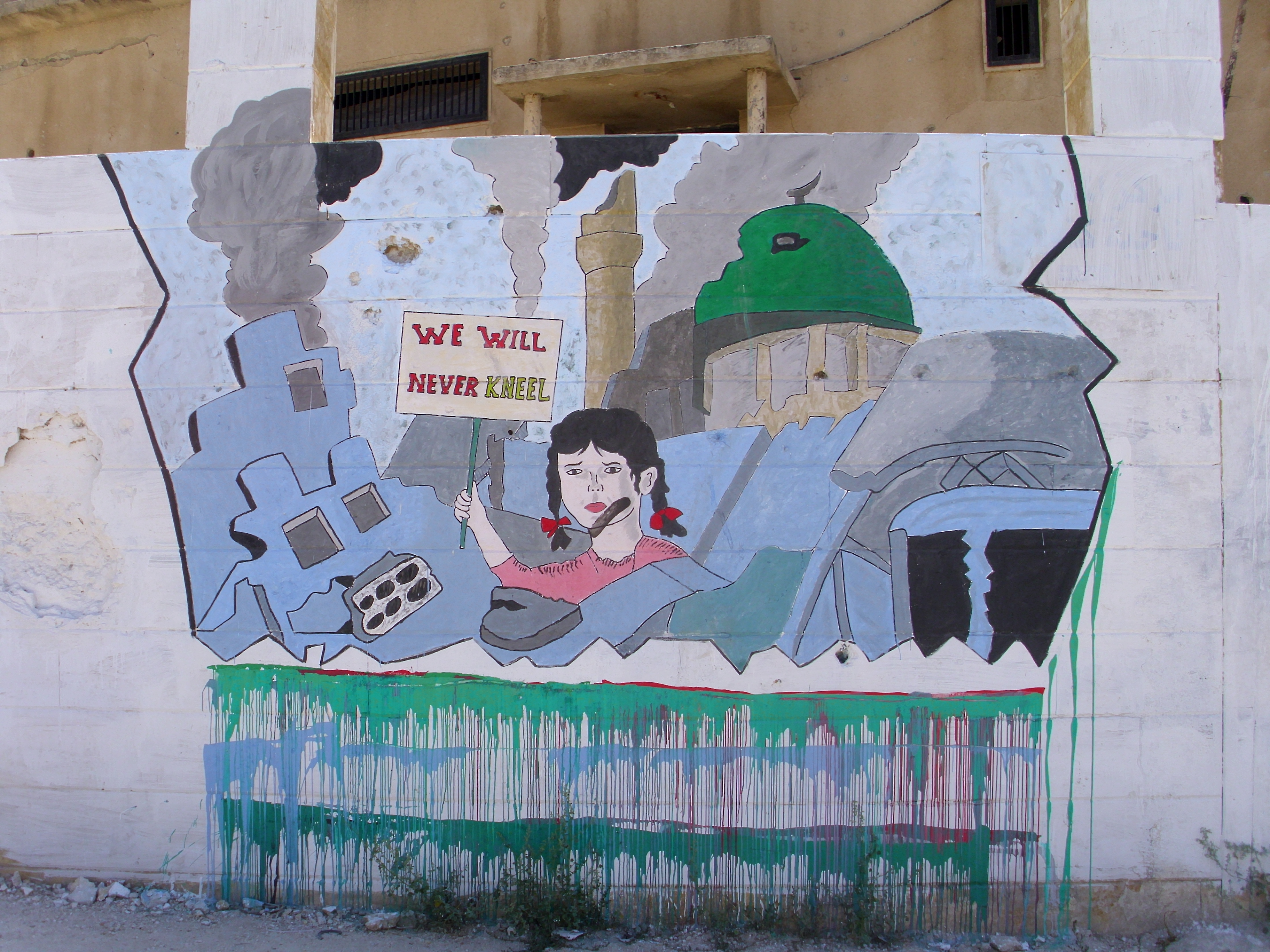
The Umawi mosque in Aleppo has burnt. Its thousand-year-old minaret has fallen. The minaret of Dera‘a’s Omari mosque, built in the seventh Century by Caliph Omar ibn al-Khattab, has been destroyed. And today the Khalid ibn al-Waleed mosque in Homs, built around the mausoleum of the famous Muslim general and companion of the Prophet, was shelled and burnt. These are ancient mosques of enormous significance to Muslims, and they are world heritage. They were. They survived the Mongols, but not Assad.

It’s clear the Western media does not understand the religious, cultural and historical importance of these sites. Assad’s cultural vandalism and civilisational provocations are worse than the Taliban’s assault on the Bamiyan Buddha. Am I wrong to think that an attack by rogue elements of the Syrian resistance on a major Shia shrine would raise a far greater noise?

Many Muslims too are strangely quiet. If the Israelis were to hit a mosque of such vast symbolic resonance, you can bet there’d be furious demonstrations from Casablanca to Jakarta, from London to Lahore.

What’s happening is no secret. The shabeeha write it on the walls: “Al-Assad or We’ll Burn the Country.” The world worries about Islamists, about hypothetical future persecutions, about the chess game between America and Russia, Israel and Iran. Meanwhile the country burns. The people and their history burn. And the flammable poison of sectarian hatred seeps out from Syria, to east and west.

https://www.youtube.com/watch?feature=player_embedded&v=i1JT_H0xffc

Help the Syrian People

People are asking me how they can help the victims of the genocidal repression in Syria. Those who engage in political debate can struggle against the orientalist, Islamophobic, or statist-ideological misinterpretations of the media which have obscured the reality of the revolution and convinced large swathes of public opinion that the Syrians should be left to face Assad’s war machine unarmed. Those who don’t do politics, or who are honestly confused about the rights and wrongs of the crisis, can donate money.

I have worked with three charities on Syria. I can vouch that all three are honest and efficient, run by intelligent people, and that they do immediate work on the ground in Syria helping displaced people and those holding out in their bombed towns and villages. Syria Relief is UK-based. The Karam Foundation and the Maram Foundation are US-based. I’m sure all three can receive donations from anywhere in the world. Please remember that the Syrian tragedy is unsurpassed in contemporary history, worse than the Iraqi crisis in 2006/2007. The daily death toll is equally high; the numbers of displaced – well over a quarter of the country’s population – are much higher.

Soriyat for Humanity Development is a great project which I saw at work on the ground. It was set up by novelist and revolutionary Samar Yazbek, and is based in Paris. To donate:RIB de la banque LA BANQUE POSTAL. ASSOCIATION SORYAT POUR LE DEVELOPPMENT HUMANITAIRE – NATIONAL 20041-00001-5773792S020-25 – INTERNATIONAL IBAN FR30-2004-1000-0157-7379-2S02-025. CODE BANCK PSSTFRPPPAR

Here’s a short film on the work of Camp Zeitouna, a project of the Karam and Maram Foundations.

On the Fall of Qusair

I participated on BBC World’s World Have Your Say to discuss the fall of Qusair and the spread of sectarian war as Hizbullah invades Syria in force. Sara Assaf, Kenan Rehmani and Elizabeth Tsurkov also contribute.

Pictures from Syria

DSCI0105I’ve just returned from a brief trip to Syria, which I’ll be writing about. In the meantime, please follow this link to see some photographs, with comments.

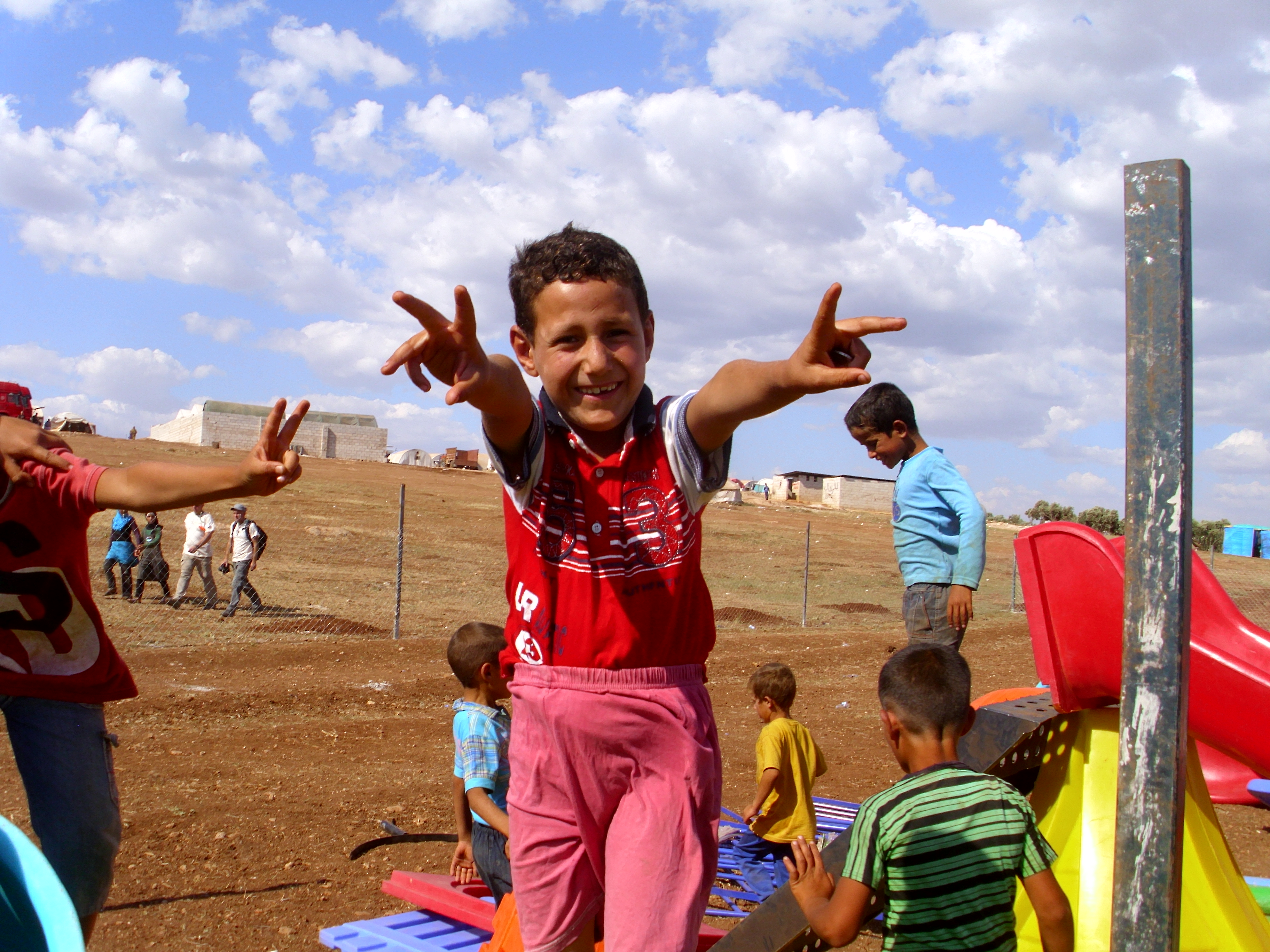
The Atmeh camp is just inside Syria near the Turkish town of Reyhanli (Reyhaniyeh in Arabic). 22,000 people live in the camp, refugees from the regime’s shelling, aerial bombardment, gunfire, torture and rape. They come mainly from the Idlib, Hama and Aleppo regions. Many are rural people, but there are middle class urban residents too.
This album also contains pictures of a trip to liberated Kafranbel in southern Idlib province.

A Leftist Response to Leftist Delusions on Syria

This excellent piece was written by Shiar in response to Stop the War’s Lindsey German (who can’t even get the Syrian president’s first name right) and was first published at the Syria News Wire.

“Being anti-imperialist yet West-centric,” writes Shiar, “just does not work: it is still Orientalism. This Orientalist (and statist) world view is so dominant within the Western Left that even a mass, popular uprising is reduced to a Western-manufactured conspiracy (which is, incidentally, the same line as that the Syrian regime has been repeating). It not only ignores facts on the ground and the complex political dynamics at play in those countries, but also overlooks those people’s agency and reduces them to either some inferior and stupid stereotype (Islamist terrorists) or some romanticised mythical version that is compatible with the dominant Western values (pro-democracy, peaceful, etc.).”

I have no idea where you get your news about Syria from, but it strikes me that it’s probably mostly from the Guardian, BBC and other establishment mouthpieces (when it comes to foreign policy anyway). For how else can one explain your sudden realisation that Syria is only now “descending into hell”? Really?! All this death and destruction over the past 26 months has not been hellish enough for you? Only now, when your beloved mainstream media start to recycle some state propaganda nonsense about the conflict in Syria taking (yet another) dangerous turn or crossing some ‘red line’, do your alarm bells start to ring?

You see, information sources are not just about information; they also shape your perspective. As a Leftist activist, one would have thought you would mention – at least once, in passing – the popular uprising or the revolution, what Syrians think and want, or anything remotely related to people. Instead, all you obsess about is big politics from a statist perspective: regime change, foreign intervention, regional war, Israel, Iran, bla bla bla. Continue reading “A Leftist Response to Leftist Delusions on Syria”

Azmi Bishara on Syria

The subtitled last few minutes of a Jazeera Arabic interview with the great Palestinian thinker, in which Azmi expresses his disgust with those who fail to recognise the incredible revolutionary spirit of the Syrian people.  “The Syrian people are the ones who turned out to be strong!” he exclaims. “An admirable, heroic, great people! In the face of planes and tanks and artillery. I salute the people of al-Qusair! … This is what we ought to be impressed by!”

Immediate Responses to Israel’s Attack

qassioun burningIsrael’s attack on Assad’s military bases on Mount Qassioun above Damascus have provoked mixed feelings amongst Syrians. On the one hand, Syrians have been well aware for over two years that Assad’s army is designed not to confront Zionism but to slaughter the Syrian people. For a year and a half Mount Qassioun has been the launching pad for for artillery and missile attacks on civilian areas of Damascus and its suburbs. On the other hand, hatred and mistrust of Israel rightly runs very deep indeed among the people, far deeper than among the regime which, despite all its rhetoric, has not once (since 1973) responded to Israeli violations of Syrian sovereignty. Syrians know that Israel’s attack is an attempt to exploit the revolutionary situation for Israel’s own ends, that it is part of Israel’s confrontation with Iran – something Syrians want no part of, however much they may hate Iran’s criminal support of the genocidal Assad regime – and that it offers grist to Assad’s propaganda mill.

Here are some immediate responses to Israel’s attack. The Syrian National Coalition released this statement, including this line: “The Coalition holds the Assad regime fully responsible for weakening the Syrian Army by exhausting its forces in a losing battle against the Syrian people.” Many Arabic language Youtube videos show various Free Army and Salafist militias condemning both Israel and Assad’s regime.

I wrote this on Facebook:

Assad responds to the Israeli attack by escalating his sectarian massacres on the coast and his bombardment of Syrian cities, including the Palestinian refugee camp at Yarmouk. Infantile so-called ‘anti-imperialists’ everywhere cheer on Assad’s ‘heroic resistance’.

By ‘sectarian massacres on the coast’ I was referring specifically to the ongoing slaughter of Sunnis in al-Bayda and other areas of Banyas, causing thousands to flee the area.

Continue reading “Immediate Responses to Israel’s Attack”

Thomas Pierret on the Syrian Revolution

a scene from the sectarian massacre in al-Bayda, May 2013

I hate to link to the Angry Arab for various reasons. This is the man who, on the one hand, was only able to mention Juliano Mer Khamis, the martyred Palestinian founder of Balata refugee camp’s Freedom Theatre, in the context of slandering his mother’s ethnicity (yes, she was an Israeli Jew, but one who chose to marry a Palestinian – and Juliano was a man who could have used his mother’s identity to live between the bars and beaches of Tel Aviv, but chose to live and work in occupied Nablus instead). On the other hand he slanders serious scholars like Mearsheimer and Walt, men who have done such important work on exposing the machinations of the Israel Lobby in the US, by accusing them of anti-semitism. (I wonder why he, an American-based academic, has had so much less trouble with people like Campus Watch than real intellectuals like Edward Said and Norman Finkelstein, who made much less dramatic anti-Israel statements). His coverage of the Syrian Revolution has been appalling. He has relied on informants such as ‘an American friend’ to inform his readership that the revolutionary suburbs of Damascus are ‘like Kandahar’ (usually he is overquick to accuse Western commentators of Islamophobia). He has consistently exaggerated the barbarism and sectarianism of elements of the Syrian resistance while consistently underestimating or ignoring the sectarianism and barbarism of the Syrian regime. The questions he poses in this interview with Syria expert Thomas Pierret expose his sectarian bias, but Pierret’s responses are so clear and well-informed that the post deserves reposting here.

“1) You and I have disagreed on Syria, do you think that Syria experts have been wrong in the last years especially with the regular and constant predictions of the imminent fall of the regime?

The generalisation is problematic. Such predictions were rather made by journalists, who have the good excuse of not being Syria experts, and Western officials, who often did so for a bad reason, i.e. in order to justify their inaction: if Asad is about to fall, then there is no need to do anything to stop him.
 
“Experts” did not collectively agree upon the imminent fall of the regime. In early April 2011, I published an op-ed in the French newspaper Le Monde. The last sentence said this: “Nothing guarantees the success of the Syrian revolution, and if it happens at all, it will certainly be long, and painful” . I was not the only one to think that way. I clearly remember a conversation I had at the same time with Steven Heydemann, who was even more pessimistic than I was: he predicted that the regime would use its full military might against the opposition, and that none would act to stop it.
 
I must admit that later developments made me over-optimistic at times, but overall, I do not think I have seriously under-estimated the solidity of the regime.