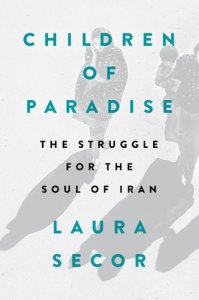
 I have an essay in the new issue of Democracy: A Journal of Ideas in which I review Laura Secor’s excellent new book Children of Paradise: The Struggle for the Soul of Iran and also examine Tehran’s role in the changing political landscape of the Middle East—especially in the Syrian catastrophe. You can read the essay here.
Category: Uncategorized
Why Assad Can’t Win

This is fascinating. Robert Fisk, Patrick Cockburn and other commentators dressed up as reporters tell us the only coherent force in Syria is the Syrian ‘government’ and its army, and that the Free Army doesn’t exist. Here a Russian imperialist officer, addressing his own, explains that the Syrian army is only good for extortion, that it can’t recruit any more fighters, and that the Free Army and Islamist resistance far outweighs it in morale and combat ability. He concludes that a victory for Assad is impossible, and that Russia should therefore pull out. Original text here.
The following is a translation of a scathing article on the state of the Syrian Arab Army that appeared in an online outlet Gazeta.ru, which is Kremlin-controlled but sometimes critical of the Russian authorities online. The author is a retired Russian officer with 8 years of experience working in the General Staff and 5 years as an editor of an established military magazine. The article, originally titled “It would be easier to disband the Syrian army and recruit a new one”, mirrors the emerging Syria fatigue sentiments in the Russian military circles and reportedly was confirmed by a serving Russian colonel, who added “Everything is like it’s written but worse”. The expert notably omits mentioning regime war crimes even when describing the use of barrel bombs. Throughout the text, he calls Syrian rebels “militants” and “illegal armed groups” — terms widely used by Russian military and media to describe Chechen fighters during the wars. This anti-rebel stance perhaps lends even more credibility to the author’s assessment of their capabilities versus those of the SAA.
While militias, Iranian volunteers, Hezbollah and PMCs fight in lieu of the Syrian army, Bashar Assad’s soldier busy themselves with collecting bribes at checkpoints. This view becomes more and more widespread among military experts aware of the actual situation in Syria. The country’s air force is worn down and uses home-made bombs, the soldiers dig moats to protect from terrorists’ tunnels, while the militants enjoy tactical and moral superiority, says Mikhail Khodarenok, Gazeta.ru’s military observer.
The pro-government forces are likely to capture the city of Aleppo soon. However, it remains doubtful if this will bring the end of the Syrian war closer. In Middle Eastern wars, there is no single building to plant a flag on that would make the enemy surrender unconditionally.
Indeed, it is quite hard to say which side is currently winning the military conflict. Bashar al-Assad, the president of the Syrian Arab Republic, still does not control about half the country’s territory and a majority of towns and villages.
The Syrian volunteers who rush to bombed buildings to save victims
PBS News Hour on the White Helmets. (Please ensure that this year the Nobel Peace Prize goes to real heroes).
Once tailors, bakers, pharmacists, some 3,000 ordinary Syrians are now the unwitting heroes of the Syrian war. Nicknamed “the White Helmets,” members of the Syrian Civil Defense work under the harshest conditions to claw through the remains of buildings flattened by barrel bombs, the Syrian regime’s weapon of choice. Special correspondent Marcia Biggs reports from Turkey.
Syria’s White Helmets
Nagieb Khaja’s film for Al Jazeera’s Witness on Syria’s immensely courageous White Helmets.
Life under the bombs with a team of White Helmet rescue workers in Syria’s most dangerous city, Aleppo.
Exodus: Our Journey to Europe
n 2015, we gave cameras to some of the people who smuggled themselves into Europe, to record where no-one else can go. The result is a terrifying, intimate, epic portrait of the migration crisis.
All three episodes of Exodus: Our Journey to Europe are available on the BBC iPlayer here.
Versus: The Life and Films of Ken Loach (Watch Here)
Versus: The Life and Films of Ken Loach is now available on the iPlayer here. Once it’s available on Youtube you’ll find it posted here on Pulse. The following video, for the time being, is the trailer.
Biographical documentary. Ken Loach reflects on his often controversial career, with comments from colleagues, friends and family.
Continue reading “Versus: The Life and Films of Ken Loach (Watch Here)”
Revolution, Reform or Restoration? Nadia Marzouki on Tunisia Today
Tunisia has been very dear to my heart since I went there in the spring of 2013, just two years after its uprisings, an event that shook the world. Although I’ve not been back in the three years since that memorable visit, I’ve followed Tunisian events with great interest from afar. I was thus thrilled to have the opportunity to interview the Tunisian scholar Nadia Marzouki when she was in Denver last month.
Marzouki, a Research Fellow at the Centre national de la recherche scientifique (CNRS) in Paris, is the author of L’Islam, une religion américaine? (Islam, An American Religion?) and co-editor of two books: Religious Conversions in the Mediterranean World (with Olivier Roy) and the forthcoming Saving the People: How Populists Hijack Religion (with Roy and Duncan McDonnell). Continue reading “Revolution, Reform or Restoration? Nadia Marzouki on Tunisia Today”
Syria’s Medical and Humanitarian Nightmare: Interview with Dr. Zaher Sahloul
Since their days as medical school classmates, Bashar al-Assad and Zaher Sahloul have followed rather different paths: one became a war criminal; the other, a humanitarian advocate.
Dr. Sahloul is the immediate past president of and a senior advisor to the Syrian American Medical Society (SAMS), a humanitarian and advocacy organization that provides medical relief to Syrians and Syrian refugees. Last year, SAMS served 2.5 million patients in five different countries. (The organization’s vital work is featured in the recent documentary film 50 Feet from Syria, which is available on Netflix.)
Dr. Sahloul is also the founder of the American Relief Coalition for Syria, a coalition of 14 US-based humanitarian organizations working in Syria. He is an Associate Clinical Professor at the University of Illinois College of Medicine and is a practicing physician in pulmonary and critical care medicine. He has written about the medical and humanitarian crisis in Syria for Foreign Policy and the Huffington Post, among other outlets.
I conducted this interview with Dr. Sahloul for the Middle East Dialogues series produced by the University of Denver’s Center for Middle East Studies on April 26 — less than 48 hours before the Assad regime’s airstrike on the MSF-supported pediatric hospital in Aleppo that killed dozens of patients and doctors, including one of the city’s last remaining pediatricians.
Go here to volunteer with the Syrian American Medical Society (you do not need to be a doctor or medical professional) and here to donate to the organization.
In Syria, Rebuilding Bombed Hospitals Is an Act of Resistance
Re-posted from Truthout
Saturday, 14 May 2016
By Charles Davis, Truthout | Report
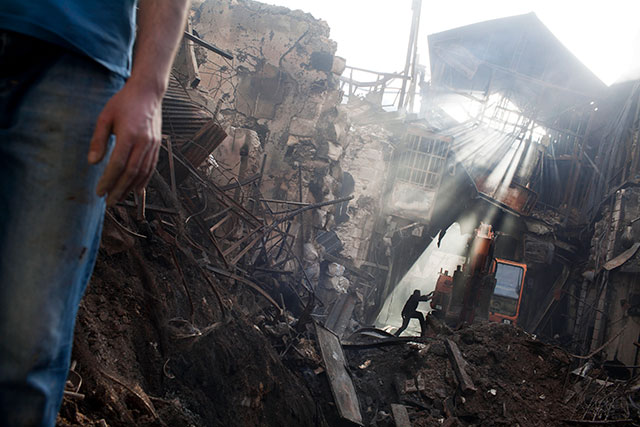
The horror of the conflict in Syria, which began in March 2011, can be measured with statistics: over 400,000 people dead; half the population displaced; the life expectancy of a newborn child dropping from 76 years in 2011 to under 56 years in 2016. But the grotesque absurdity of this revolution turned civil war is perhaps best captured by the fact that today Syrians are forced to crowdsource money online to rebuild and fortify bombed hospitals.
“In our worst dreams — in our worst nightmares — we never thought we would have to fortify hospitals.”
Continue reading “In Syria, Rebuilding Bombed Hospitals Is an Act of Resistance”
A Farewell to Veterans for Peace
Re-posted from Andy Berman: Threads of My Time, the blog of longtime antiwar activist and Veterans for Peace member Andy Berman
A Farewell to Arms: Till We Meet Again
By Andy Berman
May 11, 2016

Preface:
As a longstanding member of Veterans for Peace, I often contributed to internal online VFP discussion groups over the last few years. With Syria the bloodiest war on the planet, and thus a topic that nominally should be high on VFP’s agenda, I often wrote about developments in Syria.
My contributions frequently clashed with the self-identified “anti-imperialists” in VFP who blame the Syria conflict entirely on the United States and either defend or ignore the criminal role of Assad, Russia, Iran and Hezbollah in Syria.
While my prose was always exceedingly civil, I was relentlessly attacked by a handful of angry and disturbed VFP members using extremely vile personal diatribe against me. Continue reading “A Farewell to Veterans for Peace”
 P U L S E