In Cuba, the revolution continues, softly, as times change

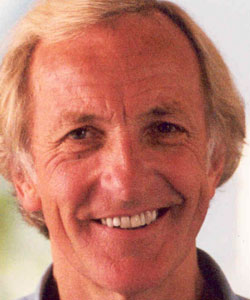
The great Australian journalist and documentary filmmaker John Pilger writes from Cuba:

On my first day in Cuba, in 1967, I waited in a bus queue that was really a conga line. Ahead of me were two large, funny females resplendent in frills of blinding yellow; one of them had an especially long bongo under her arm. When the bus arrived, painted in Cuba’s colours for its inaugural service, they announced that the gringo had not long arrived from London and was therefore personally responsible for this breach in the American blockade. It was an honour I could not refuse.

The bus was a Leyland, made in Lancashire, one of 400 shipped to Cuba in defiance of Washington, which had declared war on the revolution of Fidel Castro. With the Internationale and Love Me Do played to a bongo beat – the Beatles having been “admitted to the Revolution” – we lurched through Havana’s crooked streets. Such a fond memory now accompanies me on my return to Cuba; yet looking back at what I wrote then, I find I used the word “melancholy” more than once. For all the natural warmth of Cubans, the hardship of their imposed isolation left smiles diminished and eyes averted once the music had stopped.

Beyond the nationalised American department stores – the windows empty except for electric fires from China of which Cubans had no need – and the flickering necklace of lights of an almost deserted port, there was the silhouette of an American spy ship, USS Oxford, policing Cuba’s punishment. In 1968, the revolution added its own folly by summarily banning all small businesses, including the paladares, Havana’s lively bars and restaurants. The Soviet era had begun.

Continue reading “In Cuba, the revolution continues, softly, as times change”

The US and the New Middle East: The Gulf

Al Jazeera’s excellent Fault Lines on the US role in the Gulf, particularly its deliberate support for the repressive Bahraini monarchy.

Fault Lines’ Seb Walker travels to the Gulf to look at US policy in the region, and to explore why the United States has taken an interventionist policy in Libya, but not in Bahrain, where there has been a brutal crackdown on protesters. Why does the White House strongly back democracy in one Arab country, but not another?

Continue reading “The US and the New Middle East: The Gulf”

Romancing the Drone: The Unravelling

In a series of articles for Al Jazeera I had questioned the improbably low casualty figures being cited by the US and Pakistani authorities and endorsed in the bogus statistics produced by the New America Foundation. Gen. Petraeus’s former counterinsurgency advisors David Kilcullen and Andrew Exum had already suggested that up to 98 percent of those killed in the drone strikes may be civilians. Recently, the Bureau of Investigative Journalism had conclusively debunked the CIA’s claims about success of its policy. Today none other than the former Director of National Intelligence Admiral Dennis Blair has called for an end to the drone strikes because he believes the tactic is dangerous and a complete failure which only kills some mid-level militants [in other words it kills a whole lot of civilians since over 2,500 Pakistanis have been killed so far].

Naseema Noor of IPS reports on the recent Bureau of Investigative Journalism study:

Led by British investigative journalist Chris Woods and Pakistani journalist Rahimullah Yusufzai, the study found that at least 45 civilians, including six children, have been killed in 10 drone strikes since August 2010 alone, while another 15 attacks between then and June 2011 likely killed many more.

According to the study, civilians die in one out of every five Central Intelligence Agency (CIA)-operated drone attacks in the tribal region, located on the border with Afghanistan, a statistic that the Bureau says can no longer be denied by the U.S. government.
Continue reading “Romancing the Drone: The Unravelling”

Declaration of Thingamajig

Animator Mark Fiore on Obama’s linguistic derring-do.  (via Rae Abileah)

Barack Obama holds forth on the legality of various conflicty thingamajigs. Take a closer look at Libya, Yemen and Pakistan after the president delivers his address on Afghanistan and Iraq. A Mark Fiore political animation.

Gunboats and gurkhas in the American Imperium

My new piece on the complicity of the Pakistani elite in the US drone war is up on Al Jazeera‘s website.

Pakistanis are enraged by ongoing US drone strikes in their country

Meet Resham Khan. The 52-year-old shepherd was brought on a stretcher to a psychiatric hospital in Islamabad in January, traumatized and unable to speak. The father of six witnessed 15 members of his extended family perish last June when a US drone attacked a funeral procession in his native North Waziristan. The atrocity has left him mute and emotionally paralyzed, his vacant eyes staring into the distance. He gave up on food and drink in the months following the attack; shortly afterward, the pious Muslim gave up on prayer too. His condition also prevented him from looking after his ailing mother who died soon thereafter. And his surviving children have suffered. When the Reuters journalist finally got him to talk, one of the few things he said was ‘Stop the drone attacks.’

Kareem Khan, too, has suffered. On December 31, 2009, his son Zaenullah Khan and his brother Asif Iqbal were among the three people killed in a US drone attack which destroyed their home in Mir Ali, North Waziristan. Kareem’s absence spared him the sight of his mutilated family; and unlike the helpless shepherd, he had the wherewithal to demand justice. In November 2010, his lawyer, Barrister Shahzad Akbar served legal notices to the CIA station chief Jonathan Banks, former Defence Secretary Robert Gates, and former Director of Central Intelligence Leon Panetta for $500 million in damages.  Banks, who was in Pakistan on a business visa, took fright and soon fled the scene, and the US government was so terrified of the legal challenge that last month it denied a visa to Barrister Akbar to travel to the US. More survivors have since come forward demanding justice.

Continue reading “Gunboats and gurkhas in the American Imperium”

Why Bradley Manning Deserves a Medal, Not a Prison Cell

First published by TomDispatch.

We still don’t know if he did it or not, but if Bradley Manning, the 24-year-old Army private from Oklahoma, actually supplied WikiLeaks with its choicest material — the Iraq War logs, theAfghan War logs, and the State Department cables— which startled and riveted the world, then he deserves the Presidential Medal of Freedom instead of a jail cell at Fort Leavenworth.

President Obama recently gave one of those medals to retiring Secretary of Defense Robert Gates, who managed the two bloody, disastrous wars about which the WikiLeaks-released documents revealed so much.  Is he really more deserving than the young private who, after almost ten years of mayhem and catastrophe, gave Americans — and the world — a far fuller sense of what our government is actually doing abroad?

Bradley Manning, awaiting a court martial in December, faces the prospect of long years in prison.  He is charged with violating the Espionage Act of 1917.  He has put his sanity and his freedom on the line so that Americans might know what our government has done — and is still doing — globally.  He has blown the whistle on criminalviolations of American military law.  He has exposed our secretive government’s pathological over-classification of important public documents.

Here are four compelling reasons why, if he did what the government accuses him of doing, he deserves that medal, not jail time.

Continue reading “Why Bradley Manning Deserves a Medal, Not a Prison Cell”

The Virtue-less war of the nintendo bomber

My second article in the drones series is now online at Al Jazeera.

Drone pilots pilot the craft from an air conditioned office thousands of miles away. War has never before been so like a video game.(GALLO/GETTY)

In April, the British Ministry of Defence published a study which for the first time gave serious consideration to the moral, ethical and legal aspects of the drone wars. The study advises defense planners that ‘before unmanned systems become ubiquitous’ they must ‘ensure that, by removing some of the horror, or at least keeping it at a distance we do not risk losing our controlling humanity and make war more likely.’ The report is particularly concerned that the low risks of using drones were enabling policy makers to consider military action in places where they would otherwise be hesitant: ‘the use of force is totally a function of the existence of an unmanned capability,’ it suggests.

The conclusions of the report are sobering. So is the fact that it was produced by a British military think tank rather than a US Congressional committee. In the US, the media and political establishment are still romancing the drone with the kind of giddy attention that sometimes borders on the inappropriate. In a May 10, 2009 segment on the Predator drone, Lara Logan of CBS’s 60 Minutes was positively breathless. Two years later, at a New America Foundation conference on drones, Professor Thomas Nachbar of the University of Virginia School of Law declared drones ‘fun’ and argued ‘against more transparency’ in their use.

Drones are attractive to US militarists and their courtiers because they are politically liberating. In their battle against public opinion and institutional inertia, politicians have often found technology an ally. The drones must therefore be understood in the context of a long-standing US desire to develop the technological means for achieving global Pax Americana. And for a century, airpower has been a key component of this vision.

Continue reading “The Virtue-less war of the nintendo bomber”

Private Contractors Making a Killing off the Drug War

by Cyril Mychalejko

As tens of thousands of corpses continue to pile up as a result of the US-led “War on Drugs” in Latin America, private contractors are benefiting from lucrative federal counternarcotics contracts amounting to billions of dollars, without worry of oversight or accountability.U.S. contractors in Latin America are paid by the Defense and State Departments to supply countries with services that include intelligence, surveillance, reconnaissance, training, and equipment.

“It’s becoming increasingly clear that our efforts to rein in the narcotics trade in Latin America, especially as it relates to the government’s use of contractors, have largely failed,”said U.S. Senator Claire McCaskill, chair of the Subcommittee on Contracting Oversight which released a report on counternarcotics contracts in Latin America this month. “Without adequate oversight and management we are wasting tax dollars and throwing money at a problem without even knowing what we’re getting in return.”

Continue reading “Private Contractors Making a Killing off the Drug War”

Obama’s Foreign Policy and the End of the American Era

Steve Walt, co-author of the ground-breaking The Israel Lobby and US Foreign Policy, gave a keynote address on “Obama’s Foreign Policy and the End of the American Era” at an event is co-hosted by the IIEA and UCD’s Clinton Institute for American Studies. You can download the Post Event Notes from this event here.

Continue reading “Obama’s Foreign Policy and the End of the American Era”

Between a Rock and a Hard Country

My review of Anatol Lieven’s must-read book, originally published at IPS.

It is almost obligatory these days to subtitle books on Pakistan with some conjunction of ‘failed’, ‘dangerous’, ‘lawless’, ‘deadly’, ‘frightening’ or ‘tumultuous’. Pakistan is a ‘tinderbox’, forever on the brink, in the eye of the storm, or descending into chaos. It is an ‘Insh’allah nation’ where people passively wait for Allah. In the narrow space ‘between the mosque and the military’, there is much ‘crisis’, ‘terrorism’, ‘militancy’ and ‘global jihad.’

British author and policy analyst Anatol Lieven’s refreshingly understated title Pakistan: A Hard Country eschews emotion for description, which is fitting because the book is a 519-page myth- busting exercise.

Lieven, currently a fellow at the New America Foundation, argues that some of the alarmist claims about Pakistan are indeed true – it is a corrupt, chaotic, violent, oppressive and unjust country. But it is also a remarkably resilient one. It is not nearly as unequal as India or Nigeria, or for that matter the United States. Its security is beset by multiple insurgencies but they affect a smaller proportion of its territory than the ones India faces. Its cities are violent, but no more so than those of comparable size in Latin or even North America. It has an abysmally low rate of tax collection, but, at five percent of the GDP, it also has one of the world’s highest rates of charitable donations. It is no doubt corrupt, but this is due less to the absence of values than to the enduring grip of the old ones of loyalty to family and clan.

Continue reading “Between a Rock and a Hard Country”