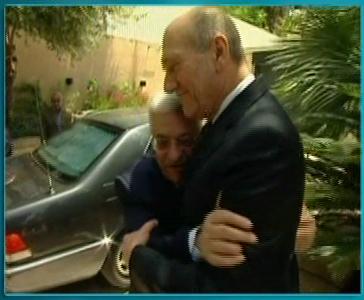
Chas Freeman: US no longer qualified to mediate Middle East Peace

Ambassador Chas Freeman at a New America Foundation talk, moderated by Steve Clemons. Amb. Freeman’s current book is America’s Misadventures in the Middle East.

Vodpod videos no longer available.

The U.S. should not enable Israel’s self-destructiveness

“I don’t believe that playing the role of enabler to an alcoholic is an act of kindness and I don’t believe playing the role of enabler to a country that is setting itself for catastrophe is responsible either.  I think we have a very sad situation in this country in which any criticism of whatever it is that the current government of Israel is doing is immediately cited as evidence of anti-Israel bias or as evidence of antisemitism.” (Video: 21:46)

The U.S. is no longer qualified to mediate Mideast peace

“The United States essentially has disqualified itself as a mediator. I say that with great sadness because I believe on many occasions in the past we had opportunities to broker peace. I think there has been the implicit promise of peace on many occasions and we did not do that. We cannot play the role of mediator because of the political hammerlock that the right wing in Israel through its supporters here exercises in our politics. We’re simply biased. We’re not capable. If you doubt that read the so-called Palestine Papers and see what we were doing.”  (Video 22:38)
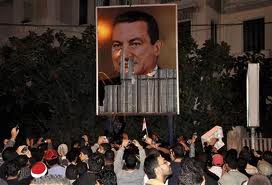
People Power in the Middle East

M. Shahid Alam

From his weekly perch at CNN, Fareed Zakaria, speculated last Sunday (or the Sunday before) whether George Bush could take credit for the events that were unfolding in Tunisia, whether this was the late fruit of the neoconservative project to bring ‘democracy’ to the Middle East.

It is quite extraordinary watching Zakaria – a Muslim born and raised in India, and scion of a leading political family – mimic with such facility the language of America’s ruling classes, and show scarce a trace of empathy for the world’s oppressed, despite his propinquity to them by reason of history and geography. He does have a bias for India, but here too he only shows a concern for India’s strategic interests, not the interests of its subjugated classes, minorities and ethnicities. This I offer only as an aside about how easy it is for members of the upper classes in countries like India, Pakistan or Egypt to slip into an American skin whenever that dissimulation offers greater personal advantages.

As a cover for deepening US control over the Middle East – here is the latest civilizing mission for you – the neoconservatives in the Bush administration argued that the Islamic world produces ‘terrorists’ because it lives under autocracies. To solve the ‘terrorist’ problem, therefore, the US would have to bring democracy to the Middle East. This demagoguery only reveals the bankruptcy of America’s political class. It is a shame when the President of the United States and his neoconservative puppet-masters peddle such absurdities without being greeted by squeals of laughter – and shouted down as hypocritical, as farcical.

Who has been the leading ally and sponsor these past decades of nearly all the despotisms in the Middle East – those of royal pedigree and others seeking to become royalties?

Regardless, the real plan of United States failed miserably. It was dispatched to its grave by a people’s resistance in Iraq, Afghanistan and Pakistan.

Continue reading “People Power in the Middle East”

Shihab Rattansi lays bare US hypocrisy on Egypt

Al Jazeera International is head and shoulders above all competitors in the MSM and Shihab Rattansi is by far the best news anchor currently on air. There is much journalists could learn from him. In the following interview with PJ Crowley watch Rattansi straitjacket the usually slick US State Department spokesman with relentless questions about the difference in US responses to Tunisia and Egypt and the applicability of pronouncements made in one instance to the other. Crowley appears disappointed that Rattansi is unwilling to abide by the convention of Western MSM which requires a newsman to take an evasion as a cue for moving on to a different subject.

Total Capitulation

by Tariq Ali

The ‘Palestine Papers’ being published this week by al-Jazeera confirm in every detail what many Palestinians have suspected for a long time: their leaders have been collaborating in the most shameful fashion with Israel and the United States. Their grovelling is described in grim detail. The process, though few accepted it at the time, began with the much-trumpeted Oslo Accords, described by Edward Said in the LRB at the time as a ‘Palestinian Versailles’. Even he would have been taken aback by the sheer scale of what the PLO leadership agreed to surrender: virtually everything except their own salaries. Their weaknesses, inadequacies and cravenness are now in the public domain.

Now we know that the capitulation was total, but still the Israeli overlords of the PLO refused to sign a deal and their friends in the press blamed the Palestinians for being too difficult. They wanted Palestine to be crushed before they would agree to underwrite a few moth-eaten protectorates that they would supervise indefinitely. They wanted Hamas destroyed. The PLO agreed. The recent assault on Gaza was carried out with the approval of Abbas and Hosni Mubarak in Egypt, not to mention Washington and its EU. The PLO sold out in a literal sense. They were bought with money and treated like servants. There is TV footage of Ehud Barak and Bill Clinton at Camp David playfully tugging at Arafat’s headgear to stop him leaving. All three are laughing. Many PLO supporters in Palestine must be weeping as they watch al-Jazeera and take in the scale of the betrayal and the utter cynicism of their leaders. Now we know why the Israel/US/EU nexus was so keen to disregard the outcome of the Palestinian elections and try to destroy Hamas militarily.

Continue reading “Total Capitulation”

Andrew Bacevich on US Presidential History

Susan Modares of Press TV’s excellent Autograph interviews Andrew J. Bacevich, one of PULSE’s top 10 global thinkers of 2010.

Americans mostly tend to divide their history into presidential terms. Thus, they think there are great differences between the presidents. Many, however, believe there is a national security policy consensus which continues through all presidencies without any change. The same issue is discussed with author and Boston University Prof. Andrew J. Bacevich in this edition of The Autograph.

Continue reading “Andrew Bacevich on US Presidential History”

The Net Delusion

In this brilliant lecture Evgeny Morozov asks if free information means free people? The event was recorded on 19 January 2011 in LSE’s Sheikh Zayed Theatre. It was moderated by Alison Powell.

Available as: mp3 (38 MB; approx 82 minutes)

At the start of the twenty-first century we were promised that the internet would liberate the world. We could come together as never before, and from Iran’s ‘twitter revolution’ to Facebook ‘activism’, technological innovation would spread democracy to oppressed peoples everywhere. We couldn’t have been more wrong. Morozov destroys this myth, arguing that ‘internet freedom’ is an illusion, and that technology has failed to help protect people’s rights. Not only that – in many cases the internet is actually helping authoritarian regimes. From China to Russia to Iran, oppressive governments are using cyberspace to stifle dissent: planting clandestine propaganda, employing sophisticated digital censorship and using online surveillance. We are all being manipulated in more subtle ways too – becoming pacified by the net, instead of truly engaging. This event marks the publication of Evgeny Morozov’s new book The Net Delusion: How Not to Liberate The World.

Continue reading “The Net Delusion”

The Special Tribunal for Lebanon (STL): Prerequisites for Injustice?

Omar Nashabe delivers the LSE Global Governance public lecture.

This event was recorded on 18 January 2011 in Hong Kong Theatre, Clement House
The indictment of the STL in the Hariri assassination case is expected to be filed soon. However there are suspicions that the judicial process has been politically manipulated. This lecture will attempt to show that there have been serious flaws in the STL as an international mechanism for achieving justice. Omar Nashabe received a PhD in Criminal Justice; he serves as editor of the justice section of al-Akhbar newspaper and advisor on human rights and prisons to the Lebanese government. In 2007 he published The Roumieh Prison, if it could speak [in Arabic] with Dar as-Saqi, Beirut/London. The event was chaired by  Professor Susan Marks.
Available as:
mp3 (51 MB; approx 112 minutes)
Editor’s note: Unfortunately the first few minutes of the lecture are missing from the podcast.
Event Posting: The Special Tribunal for Lebanon (STL): Prerequisites for Injustice?

A Case of Exploding Absurdities

Christopher Lydon of the excellent Radio Open Source interviews Mohammed Hanif, the acclaimed author of A Case of Exploding Mangoes on the wars in Afghanistan and Pakistan, the murder of Salman Taseer and the sociology of extremism.

Salman Taseer Remembered

by Tariq Ali

Mumtaz Hussain Qadri smiled as he surrendered to his colleagues after shooting Salman Taseer, the governor of the Punjab, dead. Many in Pakistan seemed to support his actions; others wondered how he’d managed to get a job as a state bodyguard in the carefully screened Elite Force. Geo TV, the country’s most popular channel, reported, and the report has since been confirmed, that ‘Qadri had been kicked out of Special Branch after being declared a security risk,’ that he ‘had requested that he not be fired on but arrested alive if he managed to kill Taseer’ and that ‘many in Elite Force knew of his plans to kill Salman Taseer.’

Qadri is on his way to becoming a national hero. On his first appearance in court, he was showered with flowers by admiring Islamabad lawyers who have offered to defend him free of charge. On his way back to prison, the police allowed him to address his supporters and wave to the TV cameras. The funeral of his victim was sparsely attended: a couple of thousand mourners at most. A frightened President Zardari and numerous other politicians didn’t show up. A group of mullahs had declared that anyone attending the funeral would be regarded as guilty of blasphemy. No mullah (that includes those on the state payroll) was prepared to lead the funeral prayers. The federal minister for the interior, Rehman Malik, a creature of Zardari’s, has declared that anyone trying to tamper with or amend the blasphemy laws will be dealt with severely. In the New York Times version he said he would shoot any blasphemer himself.

Taseer’s spirited defence of Asiya Bibi, a 45-year-old Punjabi Christian peasant, falsely charged with blasphemy after an argument with two women who accused her of polluting their water by drinking out of the same receptacle, provoked an angry response from religious groups. Many in his own party felt that Taseer’s initiative was mistimed, but in Pakistan the time is never right for such campaigns. Bibi had already spent 18 months in jail. Her plight had been highlighted by the media, women had taken to the streets to defend her and Taseer and another senior politician from the Pakistan Peoples Party, Sherry Rehman, had demanded amendments to the blasphemy laws. Thirty-eight other women have been imprisoned under the same law in recent years and soon after a friendly meeting between Yousaf Gillani, the prime minister, and the leader of the supposedly moderate Jamaat-e-Islami, a member of the latter offered a reward of ten thousand dollars to whoever manages to kill Bibi.

Continue reading “Salman Taseer Remembered”

Taliban can fight forever

Rahimullah Yusufzai: Negotiations must take place now, Taliban fighting for religion and country, can fight forever