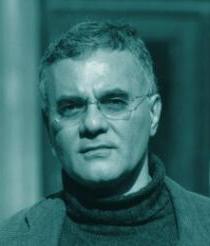
You (and I) got Darfur Wrong

 Mahmood Mamdani
Mahmood Mamdani

From Open Source with Chris Lydon:

Who can imagine that a Save Darfur coalition vocally including Al Sharpton (”we know when America comes together, we can stop anything in the world”), Mia Farrow, the US Conference of Catholic Bishops, Elie Wiesel (”Darfur today is the world’s capital of human suffering”), Nat Hentoff, Bob Geldof, George Clooney, Angelina Jolie, Harold Pinter, Oprah Winfrey, the gold-medal speed skater Joey Cheek, Tony Blair and Dario Fo might be profoundly shallow in its reading of the brutal warfare in Sudan five years ago… and just as wrong-headed in its drum beat for an American intervention?

Mahmood Mamdani can. We are talking here about his book Saviors and Survivors and his argument that the Darfur rescue campaign, which became a sacred cause of our civil religion, was not so much the moral alternative to Iraq, the Bush “war on terror,” and Cheney-think as it was a variation and extension of the same toolkit. I begin with a sort of confession that I may be a sample of Mamdani’s problem — having drenched myself in Nicholas Kristof’s New York Times columns and largely absorbed the common framework that Darfur was about Arabs slaughtering Africans, and that somebody had to something about it.

Continue reading “You (and I) got Darfur Wrong”

In Pakistan, an exodus that is beyond biblical

Saima is one of 37 refugees now sharing the house of a stranger. Their host, Rizwan Ali, 59, says: 'It would be easier to die than to ask displaced people to leave for the camps'

‘Locals sell all they have to help millions displaced by battles with the Taliban’, Andrew Buncombe reports. This is in stark contrast to how Punjab and Sindh reacted. Both have restricted entry of refugees into their territory. In the latter MQM organized two strikes, the first one with the support of the ruling PPP, and Pakhtun property was destroyed, two people burnt alive. It is already generating resentment in the NWFP with more and more coming to see this as a war on the Pukhtuns, as Rustum Shah Mohmand argues here. The response of the non-Pakhtun provinces to the refugee crises has done little to disabuse them. Meanwhile this displaced mass of humanity survives on the generosity of the type described in the caption above. I avoid indulging in any type of group chauvinism but for once, I’m proud of my people.

The language was already biblical; now the scale of what is happening matches it. The exodus of people forced from their homes in Pakistan’s Swat Valley and elsewhere in the country’s north-west may be as high as 2.4 million, aid officials say. Around the world, only a handful of war-spoiled countries – Sudan, Iraq, Colombia – have larger numbers of internal refugees. The speed of the displacement at its height – up to 85,000 people a day – was matched only during the 1994 genocide in Rwanda. This is now one of the biggest sudden refugee crises the world has ever seen.

Continue reading “In Pakistan, an exodus that is beyond biblical”

‘These colours don’t run’

From Colombian painter Francisco Boteros series depicting US abuse of Iraqi detainees.
From Colombian painter Fernando Botero's series depicting US abuse of Iraqi detainees.

Guantanamo, Abu Ghraib, and Bagram are well known. Less so the police detention centers where the innocents caught in the ‘war on terror’ dragnet were subjected to similar abuses. Inigo Thomas reveals:

In his remarks to the American Enterprise Institute last week, Dick Cheney said that inmates at Guantánamo should remain imprisoned on Cuba because they are too dangerous to be incarcerated in American jails. What about the Americans arrested and jailed under the terms of the war on terror? Should they be incarcerated on Cuba, or does Cheney suppose that Americans are, regardless of what they have done, inherently less dangerous than other people and therefore don’t need to be jailed at Guantánamo?

Nor – surely – can Cheney have forgotten that immediately after 9/11, hundreds of men were rounded up by the FBI and other police forces in the US and imprisoned in high security American jails: 760 in total, 184 of whom were considered especially interesting by the authorities. Just over half of them were interred at the Metropolitan Detention Center in Brooklyn, a former warehouse on the waterfront overlooking the harbour and the Statue of Liberty. The story was covered by the New York Times, but it was treated, mostly, as local news and carried in the ‘New York Region’ section of the paper.

Continue reading “‘These colours don’t run’”

The Darfur Debate


This debate between Mahmood Mamdani and John Prendergast took place on April 14, 2009 at the School of International and Public Affairs and the Institute for African Studies, Columbia University. I recently finished Mamdani’s new book Saviors and Survivors, which I will be reviewing for The Electronic Intifada shortly. The book is a tour de force brimming with political, historical, and anthropological insights. I would highly recommend it to anyone with interest in the subject.

(Also see James North’s review of the debate, and this follow up post.)

Terrorism Reexamined

(New Press, 2008)

C. S. Soong is one of the best radio interviewers, erudite and articulate, and on his show Against the Grain you will always find some of the most stimulating discussions on politics, philosophy, literature and activism.

Terrorists, we are told, threaten our freedom and democracy. What does this kind of rhetoric ignore, and what kind of governmental violence does it justify? Matthew Carr calls attention to a tradition, beginning in the 19th century, of using violence against symbolic targets to achieve a political victory. He also discusses the Mau Mau in Kenya and the counterterrorism initiatives of the Reagan era.

Matthew Carr, The Infernal Machine: A History of Terrorism The New Press, 2008

The Taliban bogeyman

Swabi, Pakistan: Buner refugees travel by road as they flee fighting (Daniel Berehulak/Getty Images)

UNHCR warns that the human exodus from the war-torn Malakand division is turning into the most dramatic displacement since the 1994 crisis in Rwanda. The Guardian reports:

Almost 1.5 million people have registered for assistance since fighting erupted three weeks ago, the UNHCR said, bringing the total number of war displaced in North West Frontier province to more than 2 million, not including 300,000 the provincial government believes have not registered. “It’s been a long time since there has been a displacement this big,” the UNHCR’s spokesman Ron Redmond said in Geneva, trying to recall the last time so many people had been uprooted so quickly. “It could go back to Rwanda.”

Meanwhile, it appears the story has all but disappeared from international media. It had fallen out of the headlines within the first week, now it barely makes the news. The Pakistani english language press (on which most Western ‘experts’ rely) is on most days about as distant from the realities of the North-West frontier as the hacks bloviating in Washington and London. They even have their native Ann Coulter in the execrable Farhat Taj who is given frequent platform to slander anyone who fails to see the virtues of the US regional agenda. In her latest installment she informs readers that there is ‘very little collateral damage’, and that most of the 1,000 dead are ‘confirmed Taliban’. As Gerald Kaufmann would say, these are the words of a Nazi; the woman appears bent on matching the military’s assault on Swat with her own on reality. Continue reading “The Taliban bogeyman”

Reinstatement of military commissions a ‘war crime’

Francis Boyle
Francis Boyle

Obama’s outrageous decision to reinstate military commissions at Guantanamo has come as a hard blow to human rights campaigners in the US. Professor Francis A. Boyle of the University of Illinois puts the legal implications of the reinstatement of these “kangaroo courts” in stark terms: “The laws of war would permit (Guantanamo detainees) to be prosecuted in either a U.S. Federal District Court organised under Article III of the United States Constitution or in a military court-martial proceeding organised under the Uniform Code of Military Justice. To do otherwise would be a war crime.” William Fischer of IPS reports.

Human rights advocates are furious at President Barack Obama’s decision to prosecute some Guantanamo detainees through the same military commissions he criticised during his campaign as a “flawed” system that “has failed to convict anyone of a terrorist act since the 9/11 attacks”.

The White House said Friday that the commissions would be used to prosecute terrorism suspects who can’t be tried in the civilian criminal justice system, but added that detainees would have expanded legal rights to make the proceedings fairer. The military commission system, rebuked several times by the Supreme Court as unconstitutional, was a centrepiece of the George W. Bush administration’s strategy for fighting “the global war on terror”.

Continue reading “Reinstatement of military commissions a ‘war crime’”

U.S. stirs a hornet’s nest in Pakistan

Eric Margolis presents an overly idealized portrait of the Pakhtun but is otherwise astute in his analysis. One thing however needs to be made clear: while Margolis is right to point out that the government fails to make a distinction between Taliban and Pakhtun, the actual Taliban constitute a very small and radical minority within the larger Pakhtun nation. In the past they were completely marginal. If today they have turned into a political force requiring large scale military operation to tame them it testifies to the fact that the grievances run deeper and the way this operation has been conducted it will only confirm the view that this is a war on the indigent Pakhtuns, and is a war wage for the US. Despite the Pakistani elite’s embrace of the war as ‘our war’, let us not forget that it has taken the US invasion of Afghanistan, the drone attacks across the border, and the Pakistani military’s indiscriminate operations to turn a domestic nuisance into a national predicament.

PARIS — Pakistan finally bowed to Washington’s angry demands last week by unleashing its military against rebellious Pashtun tribesmen of North-West Frontier Province (NWFP) — collectively mislabelled “Taliban” in the West.

The Obama administration had threatened to stop $2 billion US annual cash payments to bankrupt Pakistan’s political and military leadership and block $6.5 billion future aid, unless Islamabad sent its soldiers into Pakistan’s turbulent NWFP along the Afghan frontier.

The result was a bloodbath: Some 1,000 “terrorists” killed (read: mostly civilians) and 1.2 million people — most of Swat’s population — made refugees.

Continue reading “U.S. stirs a hornet’s nest in Pakistan”

Rumsfeld’s roving band of executioners

Afghan villagers sift through the rubble of destroyed houses after the coalition air strikes in the Bala Baluk district of Farah province, Afghanistan

The Independent reports that US Marines Corps’ Special Operations Command, or MarSOC, which was created three years ago on the express orders of Donald Rumsfeld, was behind at least three of Afghanistan’s worst civilian casualty incidents, including the recent bombing in Bala Baluk, in Farah  which killed up to 147 people including more than 90 women and children. This news comes just days after the Special Forces Lieutenant-General Stanley McChrystal, who was himself involved in the coverup of the death of Pat Tillman, was named to take over as the top commander of US and Nato troops in Afghanistan. His has prompted speculation that commando counterinsurgency missions will increase in the battle against the Afghan resistance.

According to the paper MarSOC faces opposition from within the Marine Corps and the wider Special Forces community with an article in the Marine Corps Times accusing the unit of bringing shame on the corps. The US Army commander in Nangahar likewise said he was “deeply ashamed” of the units behavior which is “a stain on our honour”. Apparently at the first sign of danger, these ‘special forces’ pansies panick and call in the airforce to bomb everything within sight. These are apparently the same skills that they are now imparting to the Pakistani military with, as we have noted, very similar consequences.

Continue reading “Rumsfeld’s roving band of executioners”

Caught in the crossfire – the Swat valley’s fleeing families

Farhad Bibi survived the jet attack on her home, but her one-year-old daughter, Hassina, was one of 11 people killed (Declan Walsh)

Declan Walsh seeks out the refugees trapped in a brutal war between Pakistan’s army and the Taliban after an uneasy and short-lived truce.

Army footage shows laser-guided missiles slamming into mountain buildings that explode into a fountain of fragments. Warplanes blast away at Taliban targets in the Swat valley and ground troops push towards the main town, Mingora. When Pakistani forces kill the Taliban, few complain – this is a popular war, for now.

“We are progressing well,” a spokesman, Major General Athar Abbas, said.

Sometimes, though, they hit the wrong target. Jan Nawab, a slightly-built man with a scraggly beard, stood outside the house where he has taken refuge, and sobbed softly under the weight of the calamity that had befallen him.

Last Monday morning a fighter jet screamed over Matta, a Taliban-overrun district in the heart of Swat. Its first bomb landed on Jan Nawab’s home, where his wife, four children, his sister-in-law and two other children, were sheltering. All were killed.

The plane curled in the sky, two witnesses said, and turned for a second pass. The second explosion crushed his neighbour’s house, where a woman and two children were killed. “Eleven people in total,” he said, in a faltering voice, knotting his fingers. Continue reading “Caught in the crossfire – the Swat valley’s fleeing families”