
Precedents of cruelty can rarely, if ever, be left in the past. This psychodynamic is a rule in any relationship that’s presumably based on mutual trust. “The past never dies,” as Faulkner would remind us. Humans are hardwired to believe that if something has occurred once, it likely will happen again.
But how does this rule apply to large subsets of individuals? Particularly for a group of organized individuals who define their existence as one of a Promethean toiling for definite egalitarianism in every social and economic domain, i.e. the historic project of the Left. What happens when large segments of this group engage in widespread apologia for terror and murder? That is in fact what has happened over the past decade. Yet this transgression of values and principles for which the Left stands receives virtually no comment from its own intelligentsia.
After all, the spectacle of seeing comrades come to barbarize themselves in apologia for terror is a perturbing one. We marched with those people, organized with them and thought with them, only to see them go down in the flames of self-inflicted indignity. How does one deal with this fact? Some have dealt with it by unambiguous condemnation yet most have simply decided to look away from this unseemly sight. Why is that?
Analogizing this with another nation of strangers, France, is instrumental. As Eugene Weber argued, France had to stand for Patrie, as well as Progress, to transform its peasants into Frenchmen. Likewise, the Left had to stand for the universal emancipation of mankind and internationalism in order to transform an army of thick-skulled syndicalists, merely utopian pamphleteers and chauvinistic union organizers into socialists and communists. This is where both the Left and France draw most of their historic larger-than-life quality in the public’s imagination.
What happens when those values for which those groups stand for comes to clash with reality? A decade after the French State had ruthlessly massacred thousands of its own citizens in the streets of Paris during an uprising, Ernst Renan noted that, “Forgetting . . . is an essential factor in the creation of a nation.”
That, I believe, accounts for the conspicuous lack of engagement with the question of Left-wing apologia for terror on the part of leftist public intellectuals. The Left, after all, isn’t above history. Like every other nation or group, there’s a degree of trust and loyalty that must be safeguarded among its members. The more Left public intellectuals engage with this question, and the more leftists acknowledge the great crime of betrayal committed against Syrian leftists and democrats, the more difficult it will be to imagine a Left at all. If your comrades have betrayed leftists on the other side of the globe, what makes one think they won’t betray you? This must be brushed aside. In a strange reversal of Robespierre’s maxim, “The King must die so that the country can live,” Syrians and what has been said about them in the name of the Left must be forgotten in order for the Left to live. Without perceived loyalty and trust in the cadres, so to speak, the historic project of the Left and its raison d’etre is no more.
A reckoning may not bring redemption, but destruction, so the logic goes. And that may well all be correct. Yet that one too many Left public intellectuals think this actually will work should give us all pause on the question of whether the Left will continue exist.
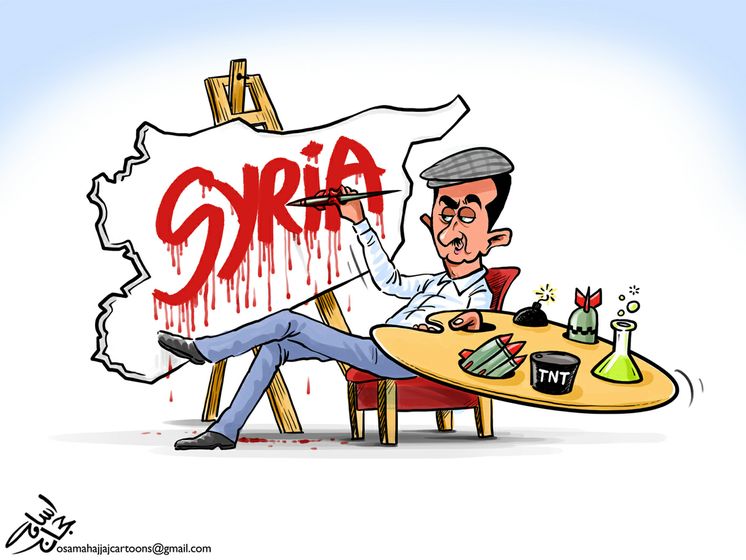
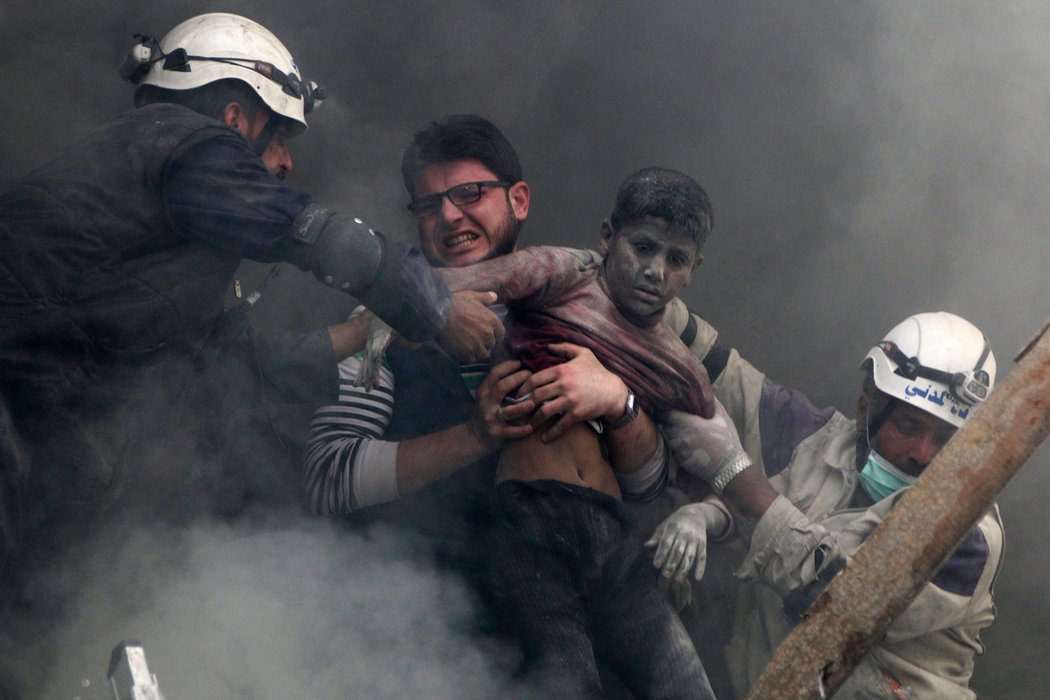
 In 2011, people in the eastern Ghouta (and throughout Syria) protested for freedom, dignity and social justice. The Assad regime replied with gunfire, mass arrests, torture and rape. The people formed self-defence militias in response. Then the regime escalated harder, deploying artillery and warplanes against densely-packed neighbourhoods. In August 2013 it choked over a thousand people to death with sarin gas. Since then the area has been besieged so tightly that infants and the elderly die of malnutrition.

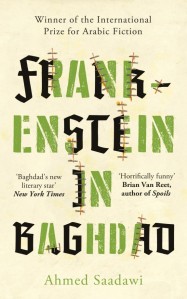 Baghdad, 2005. Occupied Iraq is hurtling into civil war. Gunmen clutch rifles “like farmers with spades” and cars explode seemingly at random. Realism may not be able to do justice to such horror, but this darkly delightful novel by Ahmed Saadawi – by combining humour and a traumatised version of magical realism – certainly begins to.
 The Rohingya Muslims are currently the world’s most persecuted minority. Since last year at least 625,000, over half the total population, have fled slaughter in Myanmar (also known as Burma). This is only the latest wave in a series of killings and expulsions starting in 1978. The UN calls it a ‘textbook example’ of ethnic cleansing.
 It just so happens that two friends of mine have new books out on hope — one fiction, one nonfiction. And both are doing readings in Chicago this month:
 P U L S E