Bradley Manning Heads for Trial; No One Charged for Murdered Civilians

December 15th, 2011 § 2 Comments

Ray McGovern introduces a short documentary deconstructing events revealed by Wikileaks.

Bombing Savages in Law, in Fact, in Fiction

December 15th, 2011 § 1 Comment

Professor Paul Gilroy chairs this event with Sven Lindqvist, the great Swedish author of over 30 widely translated books including A History of Bombing.

This lecture marks the centenary of aerial bombardment. More than just a military revolution, this development redrew the legal and moral boundaries between civilians and combatants and spread the theatre of war into cities and domestic spaces.

The lecture is part of a joint initiative of LSE Sociology and the Sociology Department at Goldsmiths, University of London.

UPDATE: In case you are having trouble listening to the whole lecture, you can hear it on the LSE website instead.

Are there any winners of the Iraq war?

December 13th, 2011 § 3 Comments

With Inside Story Americas, Shihab Rattansi has really elevated the quality of the show. Rattansi is in my view Al Jazeera’s best anchor and the following is a rather superb show with an excellent selection of guests. Don’t miss.

Hearts and Minds

December 13th, 2011 § Leave a Comment

Armed US drones have been blamed for more than 300 missile attacks in seven years in Pakistan’s tribal areas. Residents of Pakistan’s tribal areas say that they feel terrorised by the strikes, and doctors say that those who survive them often suffer from post-traumatic stress disorder (PTSD). Al Jazeera’s Kamal Hyder met with the survivors of one such strike at a hospital in the Pakistani city of Peshawar.

Philip Levine: A Workingman’s Voice

December 12th, 2011 § 7 Comments

By Feroz Rather

With a serene and distant view of the hills of Sierra Nevada, on 9 August, 2011, I sat in a library at California State University Fresno, reading The Simple Truth, a collection of poems by Philip Levine. The day after, Mr. Levine, 83, was being nominated by the Library of Congress the next poet laureate of the United States. The felicitations, however, had made their way to the poet’s home here in Fresno and thrilled the entire community of writers in the Central Valley of California. Brandi Spaethe, a friend and fellow writer in our MFA program, broke the news to me. And while walking this beautiful campus dotted with maple trees, with an ecstatic gusto of a poet-in-the-making, she fell into long recitations of many touching poems from the book.

Philip Levine was born in Detroit, Michigan, to Russian-Jewish immigrant parents in 1928, a year before the Great Depression started paralyzing the economy of the US. Levine was educated in Detroit public schools and at Wayne State University, Michigan’s only urban public research university. After graduation, Levine worked a number of industrial jobs, including the night shift at the Cheverolet Gear and Axle factory in 1953, working on his poems in his off hours.   In the fall of the same year, he journeyed to the University of Iowa to attend a poetry workshop. In his autobiographical account, The Bread of Time, he recalls: “The attraction at Iowa was Robert Lowell, whose Lord’s Weary Castle had received the Pulitzer Prize.”Afterwards, he became Stegner Fellow at Stanford University. And then in 1958, he came to Fresno and began teaching English and writing at California State University and which went on for 34 years.

« Read the rest of this entry »

Shahid: A Ghazal

December 12th, 2011 § 6 Comments

by Manash Bhattacharjee

To Najeeb Mubarki

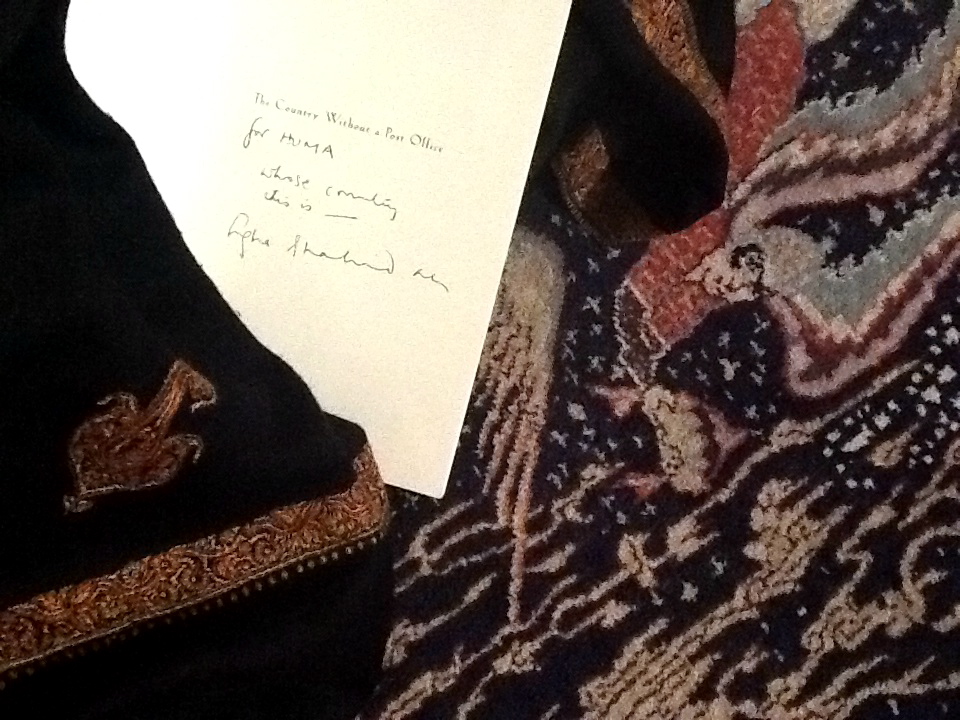
Agha Shahid Ali (1949-2001)

Agha Shahid Ali (1949-2001)

Kashmiris will murmur the blessed word, Shahid,
when the Beloved no longer has to witness Shahid.
 
The day Paradise was lost, who was at the gates?
We only know boots of Hell marched in Shahid.
 
Rizwan couldn’t return to console his father –
he found refuge for days in your nightmares Shahid.
 
The Beloved left behind growing nights of sand    
and stars never slept in your deserted eyes Shahid. 
 
Mother’s death flung you into longing’s hollow arms.
Love’s ironic fate earned you her illness Shahid.
 
« Read the rest of this entry »

Liberty

December 11th, 2011 § 1 Comment

An artist’s take on the revolution in Syria.

Kargas

December 11th, 2011 § 1 Comment

The following is cross-posted from Lobelog.com. 

Iran’s Zahedan airport is located on a road named for Allama Iqbal, the great Indian philosopher whom Pakistan after partition adopted as its national poet. The shaheen, or eagle, features prominently in Iqbal’s poetry, as a symbol of vigour, dignity and daring. It is contrasted against the figure of the kargas, or vulture, which represents cunning, cowardice and ignobility. It is the latter appellation that the region frequently applies to the CIA drones which today menace the skies from Waziristan, Kandahar to Zahedan. But shaheen or kargas, they are both ferocious; and it is a feat to capture either. Small wonder then, that some in Iran see cause for celebration in the capture of CIA’s RQ-170 Sentinel drone, a stealth surveillance craft manufactured by Lockheed Martin.

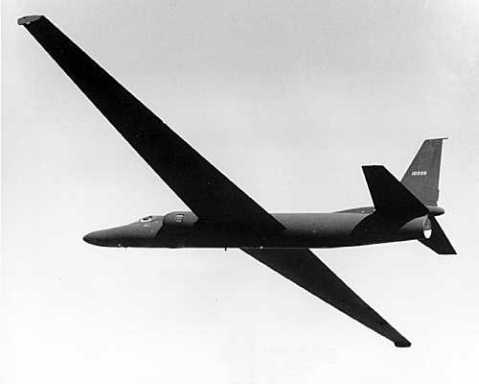
This is not the first time the CIA has delivered one of its most advanced aircraft for inevitable reverse engineering to its putative enemy. On April 9, 1960, people at the Zahedan airport watched anxiously as an aircraft with unusually wide wings approached from the north-east. The Lockheed U-2C was on a top-secret spying mission for the CIA, but its target was not Iran. Indeed, it was coming in to land after being chased by several fighter planes. Over the previous 8 hours, the plane had photographed four strategic Soviet military sites from an altitude of 70,000 feet, well out of the reach of the Russian MiGs and Sukhois. It embarked on its mission from the Badaber air force base 10 miles to the south of Peshawar.

« Read the rest of this entry »

The Terrible Beauty of Wikileaks

December 10th, 2011 § 5 Comments

Following are excerpts from my long essay on Wikileaks and the Palestine Papers which appears in The Arabs Are Alive, the first issue of Critical Muslim, edited by Ziauddin Sardar and PULSE’s own Robin Yassin-Kassab. 

British journalist Gary Younge once quipped that the English nation only exists for 90 minutes during a game of football. As the webs of social relations that tied nations together have frayed under the neoliberal assault, societies have fragmented, existing only as imagined communities in spectacles, especially war and sport. The Wikileaks cables revealed little about Tunisia or Egypt that the individual citizen did not already know. But it was the spectacular manner of the revelations that turned a mass of atomised and jaded individuals into an angry nation clamouring for dignity. As witnesses to the spectacle of the global phenomena that was Wikileaks and the local tragedy that was Mohamed Bouazizi, the Tunisians had coalesced into a community around the common source of their humiliation.

If Mohamed Bouazizi’s spectacular act was born of desperation, Wikileaks founder Julian Assange’s was born of ingenuity. By using the prestige and resources of five of the world’s leading news organizations, Assange ensured a global audience for his revelations. In his earlier experiments he had discovered that dumping a mass of data online, however sensational, generated little public interest. Information, like any commodity, is also subject to the laws of supply and demand.  Truth has never been in short supply, but it needs amplification to have an impact. An obscure website might draw those actively pursuing a story, but masses who are mere passive consumers of news will have little reason to upset the bliss of their ignorance. For it to have an impact the information will have to be thrust into people’s faces.

« Read the rest of this entry »

Sarmada

December 9th, 2011 § 1 Comment

A slightly shorter version of this review appeared in The Independent.

Places have moods, this novel reminds us. Sometimes Sarmada, a mountain village rising from the Hauran plain of southern Syria, is all “oblivion, dust and tedium”; at other times it’s a shimmering delight, each rock, tree, spring, cliff and cave owning rich meanings and histories. Sarmada is also “a Sheherazade”, a generator of tales, so many tales we can’t possibly hear them all. “I thought about telling her the joke about the overweight fortune-teller,” Azzam writes, “but..”

Like the Arabian Nights, “Sarmada” contains stories within a frame story. The frame and trigger is a meeting with Azza Tawfiq, an expert in chaos theory at the Sorbonne who (following the Druze tenet of transmigration) believes she lived in Sarmada in a past life as a murdered girl called Hela Mansour. Bemused, disbelieving, the narrator returns from “chasing dreams in Paris and delusions in Dubai” to excavate the village’s memories, at first on Azza’s behalf.

« Read the rest of this entry »

Where Am I?

You are currently viewing the archives for December, 2011 at P U L S E.

Follow

Get every new post delivered to your Inbox.

Join 404 other followers