Editor’s note: In 2009 when I read Mahmood Mamdani’s book, I accepted many of its arguments uncritically. Since then I’ve had occasion to reappraise my position and regret many of the things I wrote. Darfur was not my specialisation and I should not have passed confident judgments on it. I should not have doubted the good faith of the many people trying to bring attention to Darfur’s tragedy. Nor should I have been so eager to accept the geopolitical arguments to downplay the real atrocities being committed on the ground. The Bashir regime’s actions in Darfur were unjustifiable, tantamount to genocide, and I should have rejected any argument that downplayed the crimes. The years since 2011 have been an education and I am glad to be rid of the infantile contrarianism that defined my past politics. I am immensely grateful to the influence of the late Tony Judt who guided me towards what is hopefully a more humane and reflective politics. I hereby repudiate this piece and offer my unreserved apologies to the people of Darfur.
Saviors and Survivors: Darfur, Politics and the War on Terror by Mahmood Mamdani, Verso, 2009.
The Electronic Intifada, 8 June 2009
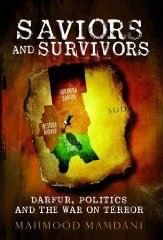
In Errol Morris’s 2004 film The Fog of War, former US Defense Secretary Robert McNamara recalls General Curtis LeMay, the architect of the fire-bombings of Japan during WWII, saying that “if we’d lost the war, we’d all have been prosecuted as war criminals.” LeMay was merely articulating an unacknowledged truism of international relations: power bestows, among other things, the right to label. So it is that mass slaughter perpetrated by the big powers, from Vietnam to Iraq and Afghanistan, is normalized as “counterinsurgency,” “pacification” and “war on terror,” while similar acts carried out by states out of favor elicit the severest of charges. It is this politics of naming that is the subject of Mahmood Mamdani’s explosive new book, Saviors and Survivors: Darfur, Politics and the War on Terror.
Like the Middle East, parts of Africa have been engulfed in conflict for much of the post-colonial period. While the media coverage in both cases is perfunctory, in the case of Africa it is also sporadic. To the extent that there is coverage, the emphasis is on the dramatic or the grotesque. When the subject is not war, it is usually famine, disease or poverty—sometimes all together, always free of context. The wars are between “tribes” led by “warlords,” that take place in “failed states” ruled by “corrupt dictators.” Driven by primal motives, they rarely involve discernible issues. The gallery of rogues gives way only to a tableau of victims, inevitably in need of White saviors. A headline like “Can Bono save Africa?” is as illustrative of Western attitudes towards the continent as the comments of Richard Littlejohn, Britain’s highest-paid columnist, who wrote at the peak of the Rwandan genocide “Does anyone really give a monkey’s about what happens in Rwanda? If the Mbongo tribe wants to wipe out the Mbingo tribe then as far as I am concerned that is entirely a matter for them.”
 Hundreds of muezzin called believers to Lebanon’s mosques at 3:35 a.m. this morning for the Al Fajr (the Dawn) prayer. The haunting and beautiful strains of Allahu Akbar (God is great) and Ash-‘hadu ana la elaha ella Allah (I bear witness that there is no God by Allah) wafted from minarets and flowed softly, pushed by the morning sea breezes, along Beirut’s sandy, but trash-strewn beaches at Ramlet al Baida. Drifting along the Corniche Mazzra and Raouche, below the American University of Beirut, they swirled around the silent and narrow streets and alleys of Lebanon’s capital and drifted east and up along her mountains. Caressing the mountain tops they embraced the majestic Basilica at Harissa, high above Jounieh, topped by its 15-ton bronze statue of Saydet Libnan or Notre Dame du Liban.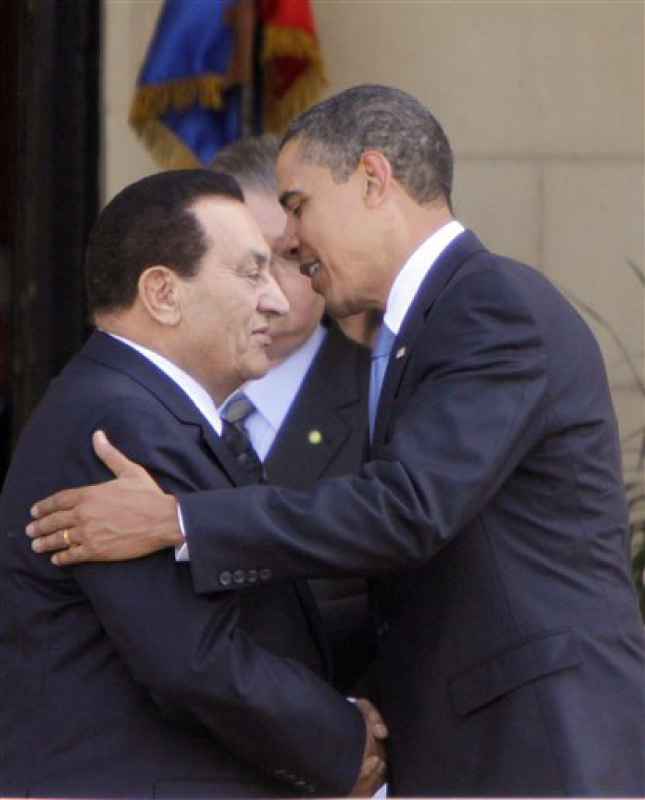


 Benjamin Netanyahu and Barack Obama have one thing very much in common: both of them have nearly the same vision for the future of “Palestine”. They may not recognize it yet, but sooner or later, whether Netanyahu remains in power or is replaced by someone who speaks Dove-Liberalese better, they will shake hands and agree that the only thing that really separated them in the early months of President Obama’s administration was semantics: the language each man used to describe what he saw for the future of Palestine, or “the Israeli-Palestinian conflict” – a phrase that suggests there are two sides each with a grievance that equals or cancels out the other’s and that makes a just resolution so difficult to formulate.

![[Attribution 2.5 UK: Scotland]](https://i0.wp.com/i.creativecommons.org/l/by/2.5/scotland/88x31.png "[Attribution 2.5 UK: Scotland]")

 P U L S E