Washington, DC is the most powerful capital city in the world. But it’s also a city that is deeply divided between a wealthy and extremely influential minority and an impoverished and largely disenfranchised African American majority. The seat of global power is also home to a population that remains largely invisible to the politicians, journalists, lawyers, lobbyists and contractors around Capitol Hill. This other Washington, DC maintains the dubious distinction of having the highest rate of child poverty, the highest mortality rate from HIV/AIDS, and the lowest life expectancy in the country.
John Holmes, the United Nation’s humanitarian chief, has revisited the Gaza Strip, a year after Israel’s assault on the territory ended.
He told Al Jazeera that it was disappointing how little has changed since the war and that there has been no real possibility of reconstruction, mainly because of Israel’s siege of the Strip.
He said the blockade resulted in misery for the Palestinians.
“They’re living in a kind of open-air prison. They’re still suffering this kind of collective punishment they’ve been suffering for three years now.”
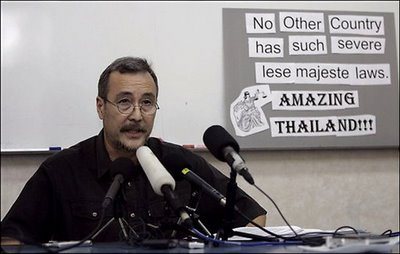
"The situation has similarities to Honduras and Turkey and even Haiti (the latter in terms of how the NGOs reacted to the military coup). It is a sort of distorted class struggle, lead by capitalist politicians like Taksin, but developing its own momentum in a time of deep crisis."
On Friday, Thailand’s Supreme Court ruled to seize over $1B in assets from former Prime Minister Thaksin Shinawatra who was deposed in a coup in 2006 on the pretext that he used his position to benefit his private businesses. The ruling prompted a few protests lead by the overthrown government’s red-clad supporters but the coup regime used the ruling to turn Bangkok into something of a police state.
Last week, Thai politics worked its way back onto Western newscasts when the supreme court in Bangkok convicted Thaksin Shinawatra on corruption charges and ordered the seizure of his assets. His conviction ostensibly lent legitimacy to the coup which forced him from power but as we all know, the first casualty of any war is the truth. What should we really know about Thaksin’s trial, its predictable conclusion, and the recent actions of the government?
The trial was supposed to “prove” that Taksin had used his position as Prime Minister to bring in regulations favouring his mobile phone company. Yet it was merely a political trial to give legitimacy to the illegal 2006 coup. A trial held in a society with double standards in applying the law and a judiciary eager to serve the generals.
Thursday was an international day of action to re-open Shuhada street in Hebron city, and mark the Cave of the Patriarch Massacre. A group of friends, from the Tel Aviv area, spontaneously decided we should go, so the five of us hopped in a car, hoping to join our friends from Jerusalem, who filled up a bus. We’ve all heard about Hebron, but nothing can prepare you for it, and nothing I can write, here, can truly depict what it means to be there.
Hebron City of the Patriarchs
Hebron Partition Schemes
In order to understand the technicalities of what is known as the Occupied Territories, you have to know about their inner control and administration divisions, set at the Oslo Accords. The occupied territories are divided into areas A, B and C. Area C is officially under Israeli control and administration. It covers the majority of settlements and cuts through and around areas A and B (creating 227 A/B islands) and keeps miraculously growing. That said, it doesn’t stop the Israeli army (and deportation unite) to come into oficially-Palestinian-controlled area A and abducting Palestinians and Internationals. Area B is the epitome of long-term occupation; A land where Palestinian Authority has “civil control” and the Israeli army has “security control”.
Hebron is in area B, but it gets even messier; In 1979, 40 settlers from the adjacent Kiryat Arba settlement (home to the ethnic cleansing advocate, Meir Kehana) took over a building known as Beit Hadassah, in the center of the city. Ever since then the population of Jews in Hebron reached the not-so-astonishing number of around 500, about 0.03% of the population. In 1994, after American born, Kiryat Arba settler , Kach party member, Baruch Goldstein, massacred between 29-52 (depends who you ask) people in the Mosque of the Cave of Patriarchs, Shuhada street, a main market street in Hebron was closed off to Palestinians. In 1997, then and now Prime Minister, Binyamin Netanyahu, redivided this area B city into areas H1 (=area A), which inhabited around 120,000 Palestinians and H2 (= area C), which inhabited around 40,000 Palestinians, half of which have fled after the redivision, for rather obvious reasons.
What does it mean to live in a city so technically divided?
After a recent talk about the struggle for social justice and the threats to the ecosystem, a student lingered, waiting to talk to me alone, as if he had something to confess.
“I feel so overwhelmed,” he finally said, wondering aloud if political organizing could really make a difference. The young man said he often felt depressed, not about the circumstances of his own life but about the possibilities for change. Finally, he looked at me and asked, “Once you see what’s happening — I mean really see it — how are you supposed to act like everything is going to be OK?”
I hear such concerns often, from young and older people alike. Perhaps the questions are rationalizations for political inaction for some people, attempts to persuade themselves that there’s no reason to join left/progressive movements. But most of the people I meet who struggle with this question are activists, engaged in all kinds of worthy projects. They aren’t looking for a reason to drop out but are trying to face honestly the state of the world. They want to stay engaged but recognize the depth of multiple crises — economic, political, cultural, and ecological.
Some organizers respond to such concerns with upbeat assurances that if we just get more people on board and work a little bit harder, the problems will be solved — if not tomorrow, certainly within some reasonable period of time. I used to say things like that, but now I think it’s more honest, and potentially effective, to acknowledge how massive the obstacles that need to be overcome really are. We must not only recognize that the world’s resources distributed in a profoundly unjust way and the systems in which we live are fundamentally unsustainable ecologically, but also understand there’s no guarantee that this state of affairs can be reversed or even substantially slowed down. There are, in fact, lots of reasons to suspect that many of our fundamental problems have no solutions, at least no solutions in any framework we currently understand.
Forgive an outsider and staunch atheist like myself who, on reading the recent French press comments relating to Ilhem Moussaid the hijab-wearing NPA candidate in Avignon, gets the impression that something is rotten in French political culture. Let’s take the debate at face-value. A young Muslim woman joins the NPA [New Anti-Capitalist Party]. She obviously agrees with its program that defends abortion, contraception, etc, i.e. a woman’s right to choose. She is then told that despite this she does not have the right to choose what she wears on her head. It’s astonishing. There is no Koranic injunction involved. The book says: “Draw their (women’s) veils over their bosoms and not display their beauty”, which can be interpreted in several ways but is disregarded most blatantly by hijab-wearing Egyptian women I see in Cairo and Karachi wearing tight jeans and T-shirts that contradicted the spirit of the Koranic message.
Patriarchal traditions, cultural habits and identity are what is at stake here and they vary from generation to generation. Pushing people back into a ghetto never helps.
A European country that scapegoats a Semitic people, persecutes defenders of human rights by stripping them of employment, and denies freedom of speech to Jews: surely a description of Germany during the Third Reich?
Yes, but unfortunately also a description of Germany at the outset of the 21st century.
In the wake of German Chancellor Merkel’s craven speech to the Israeli Parliament (the Knesset) two years ago, I wrote: “a penance is being paid for Germany’s past crimes… by the Palestinians to whose plight Merkel is so indifferent…. By scapegoating the victims of its former victims, Germany is compounding its past crimes.” (Scapegoat upon Scapegoat, Electronic Intifada, 20 March 2008).
Just one year later I described the case of Hermann Dierkes, forced to resign his position as representative of Die Linke (The Left Party) on Duisburg city council after tentatively advocating a boycott of Israeli goods. I commented: “It appears that freedom of speech, supposedly one of the proudest acquisitions of post-Fascist Germany, is readily suppressed when exercised to advocate positive action against the racist, politicidal institutions and actions of the Zionist state.” (A public stoning in Germany, Electronic Intifada, March 2009).
Teodoro Obiang Nguema Mbasogo, Equatorial Guinea’s recalcitrant leader, is a very wealthy man. He has amassed such a fortune that he could only get rid of his bank notes by burning them.
Neither does Teodoro Obiang need money to earn a place among the world’s most powerful. He is already a welcome member of this cabal, which often treats him with affection. Welcoming him in Washington back in 2006, erstwhile secretary of state Condoleeza Rice said, ‘You are a good friend, and we welcome you’.
He has been welcomed to Beijing six times by Hu Jintao, who said to him, ‘bilateral relations between our two countries have developed through goodwill’.
This is not what you expect: an accomplished and self-reflective work of history enclosed within a layer of war reportage – in comic book form. But Joe Sacco’s “Footnotes in Gaza” is just that, an unusually effective treatment of Palestinian history which may appeal to people who would never read a ‘normal book’ on the subject. The writing, however, is at least as good as you’d expect from a high quality prose work. Here, for instance, is page nine: “History can do without its footnotes. Footnotes are inessential at best; at worst they trip up the greater narrative. From time to time, as bolder, more streamlined editions appear, history shakes off some footnotes altogether. And you can see why… History has its hands full. It can’t help producing pages by the hour, by the minute. History chokes on fresh episodes and swallows whatever old ones it can.”
The pictures – aerial shots, action shots, urban still lifes, crafted but realist character studies – work as hard as the words. Sacco depicts fear, humiliation and anger very well indeed, and often achieves far more with one picture than he could in an entire newspaper column. The cranes at work on a Jerusalem skyline are worth a paragraph or two of background. So is the fact that almost every Palestinian male has a cigarette in his mouth. And when dealing with historical process – the changing shape of the camps, for example – the pictures are more than useful.
William A. Cook provides an overview of the state of affairs of the zionist affairs of state, in a piece entitled The Unstated Script of the Wiesel Open Letter to President Obama. It is a good summary but by no means definitive: one could add theft of Palestinian tax credits, water, fertile top soil, religious sites, harvesting of human organs, daily humiliations, and much much more …
Let’s draw up the bill of particulars that is hidden from the world, the subtext, the unsaid prayer no one in this American government wants revealed and certainly no one in Israel wants displayed publicly.
What is the true nature of this state of Israel that … is now seeking to enlist the governments of the world against its perceived “existential” enemy, Iran?
* It is a state without mercy, a state without morals, a state premised on racism, a state built on deception and lies;
* a state defiant of international law, the Universal Declaration of Human Rights, and the Geneva Conventions that apply to occupying powers;
* a state, unlike North Korea or Iran, the other identified Axis of Evil states, that has invaded neighboring states and occupies them;




 P U L S E