Rageh Omaar examines how the death of a street vendor led to a wave of uprisings across Arab world. (Also see Part I)
Month: March 2011
On multiculturalism — Mehdi Hasan demolishes a neocon
The BBC recently gave Douglas Murray of the neoconservative Center for Social Cohesion a platform to spew his xenophobic bile, but to its dismay, Murray’s lies were quickly demolished by News Statesmen editor Mehdi Hasan in the subsequent debate.
Rebel Airforce destroys Gaddafi’s ships
The RAF–i.e., the rebel airforce–has destroyed two of Gaddafi’s ships. Reuters reports:
RABAT, March 15 (Reuters) – An opposition Libyan news website reported on Tuesday that rebels flying a MiG 23 warplane and a helicopter sank two pro-Gaddafi warships off the eastern coast near the town of Adjabiyah.
The Brnieq online newspaper quoted an unnamed airforce officer at the Benina airbase in Benghazi as saying the two aircraft also bombed an unspecified number of tanks near Brega and Ajdabiya, two towns that fell to pro-Gaddafi forces on Tuesday.
(Reporting by Souhail Karam, writing by Tom Heneghan; Editing by Matthew Jones)
The US-Saudi-Khalifa Alliance
Following the surprise visit of US Defence Secretary Robert Gates to Bahrain, home of the American Fifth Fleet, tanks and troops of the Saud family dictatorship have crossed the causeway and are now occupying Manama. The film below shows Bahraini police tactics against unarmed protestors before the Wahhabi goons were called in. Meanwhile, the Khalifa regime is urgently recruiting more mercenaries.
Under Control: the Arms of the Lebanese Resistance
 by Brenda Heard
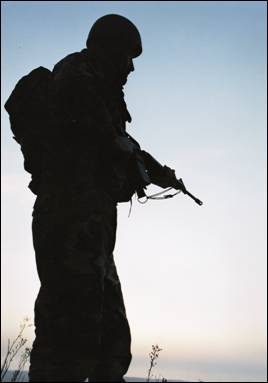
The arms of the Resistance, it has been suggested, should be abandoned as a matter of principle. ‘From now on’, explains Caretaker Prime Minister Saad Hariri, ‘the possession of weapons, decision of war and peace, and defending the country should only be under the state’s control’. Political principles, it would seem, can be slippery. ‘From now on’? Perhaps this disclaimer is meant to ease the turnabout from the Hariri-Ministerial Cabinet Statement issued just over a year ago:
Based on the Cabinet’s responsibility to preserve Lebanon’s sovereignty, its independence, unity and the safety of its land, the government underscores Lebanon’s right through its people, army and resistance to liberate or regain authority of Shebaa Farms, Kfarshouba hills and the occupied part of Ghajar village and defend the country against any aggression’.
For the sake of argument, however, let us set aside the dictates of political expediency. Let us look at the reality of what this stance entails.
Continue reading “Under Control: the Arms of the Lebanese Resistance”
Should the No-Fly Zone Fly?
 For those of you wondering what’s become of our informant in Tripoli, I’ve heard from a member of her family who lives here in Britain that she is physically safe but in a difficult emotional state – terrified and very tired. The internet is properly down now, and Human Rights Watch reports a wave of “arbitrary arrests and forced disappearances” throughout the capital.
To the west of Tripoli, the heroic city of Zawiya has fallen after Qaddafi’s forces bombed schools, hospitals, mosques and private homes. There are reports of random mass arrests there too. We can be sure that executions and torture are continuing on a massive scale. Further east, first Bin Jawad, then Ras Lanuf and now Brega have been reclaimed by the tyrant after heavy aerial bombardment. It seems that my earlier optimism was misplaced. The Libyan revolution risks drowning in blood. If it does, the larger Arab revolution may well grind to a temporary halt.
This worries me far more than the prospect of Western intervention, because the West is currently in no position to occupy or control Libya. The West’s economy is precarious to say the least, partly because of the adventures in Iraq and Afghanistan. In Iraq, the mighty American army was tied down and humiliated although no more than 20% of the people rose against the occupation at any one time, and despite the political incompetence and sectarian divisions of the resistance. In Afghanistan, NATO achieved the amazing feat of making the almost universally hated Taliban popular again. While the West squanders treasure and blood, China has signed the contracts to exploit Afghanistan’s resources.
Terror and Hypocrisy
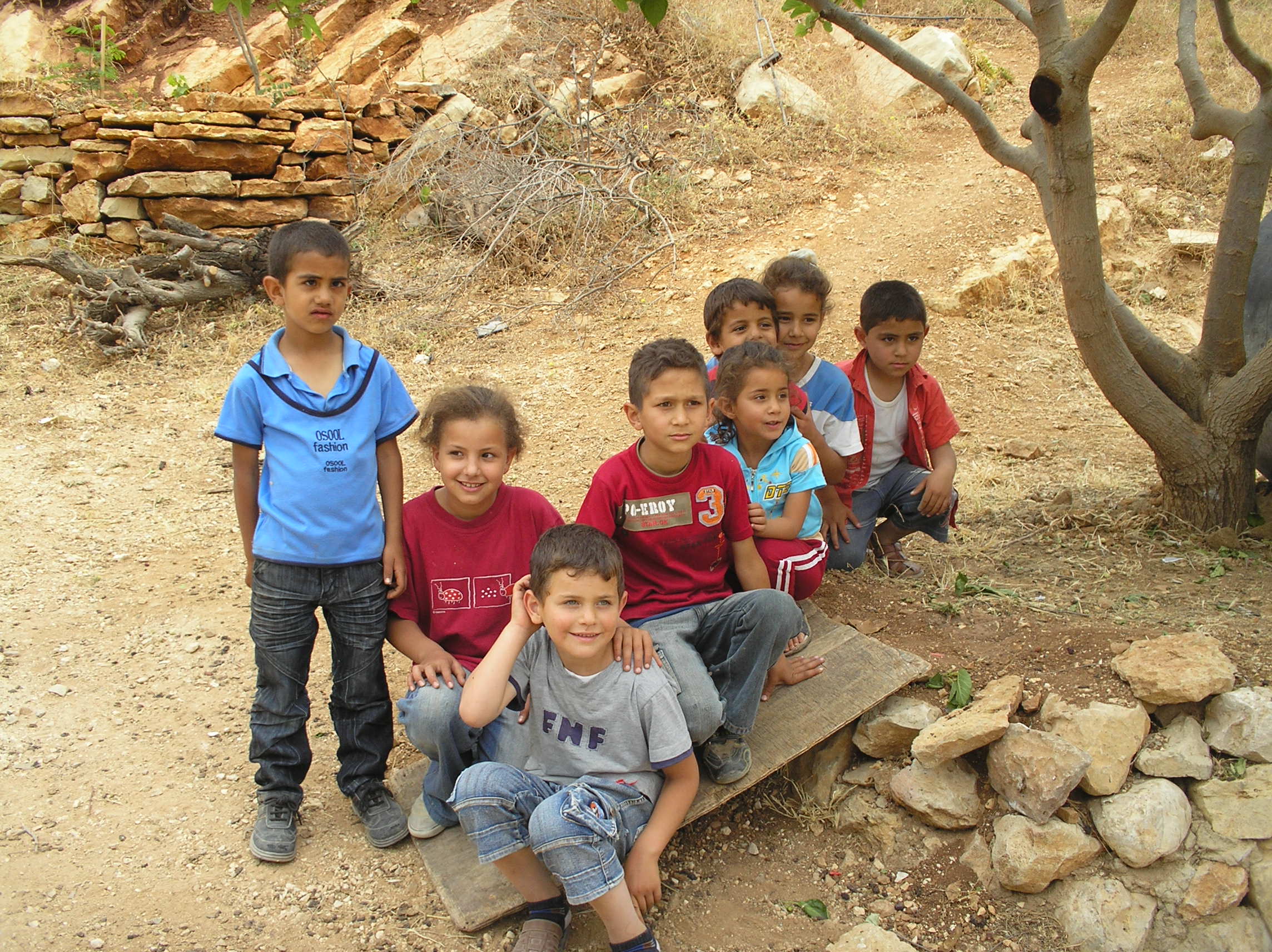
An irate PULSE reader, a Zionist immigrant to Israel from Britain, has written to ask why I haven’t condemned the murder of a family living in the illegal colony of Itamar near Nablus. The reader, by the by, describes himself as a ‘lefty.’ It’s always interesting to see how political terminology entirely loses its meaning when employed by Zionists. Choosing to migrate from a safe, free country to join the side of the masters in an aggressive ethnocracy is not what would normally be called ‘lefty’ behaviour. Here’s another example – a “left-leaning youth movement” is establishing a new settlement in the illegally occupied and ethnically-cleansed Jordan valley. Hooray for the Zionist left.
As it happens, I think the attack on the Itamar family was repulsive. I have no idea how anyone could stab young children to death, even the children of racists and thieves. These murders were immoral and politically counter-productive. They gave Israel an excuse to whine about the bloodthirstiness of the natives and a pretext for building hundreds more homes in the West Bank (although Israel does these things without pretexts too).
Tablet and Pen
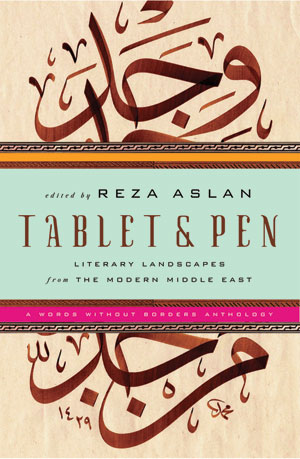 This review appeared in today’s Financial Times.
In his introduction to “Tablet and Pen – Literary Landscapes from the Modern Middle East”, Reza Aslan correctly argues that “from ‘the civilising mission’ to ‘the clash of civilisations’” the West has read the East primarily through a security prism, as something to be managed and contained. Apart from a couple of Nobel winners, an Egyptian feminist, and Sayyid Qutb, the region’s writing – and therefore the human dimension – is absent from our calculations.
With Saidean distaste for grand orientalist categories, Aslan argues the literatures grouped here are linked by themes of “imperialism, colonialism and Western cultural hegemony.” A straightforward civilisational definition might have been more logical; African, Indian and Caribbean writing has engaged the same preoccupations. But we know what Aslan means: these 20th Century poems, short stories, novel extracts and essays come from Pakistan, Iran, Turkey and the Arab world, the old Islamic heartland connected by common experience and similar cultural references.
The presence of the anthologiser is felt throughout – pleasantly so: Aslan’s introductions and chronologies give historical structure and social context to the pieces, and succeed in making this “not an anthology to be tasted in disparate bits but rather a single sustained narrative to be consumed as a whole.” It’s a weighty and physically beautiful book which is also compulsively readable.
Will the two-state solution go the way of the defunct peace process?
by Ben White
This article first appeared in the NewStatesman.
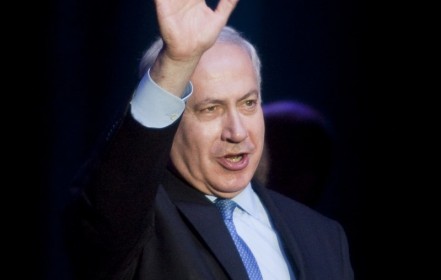
In the last week, press reports have suggested that Israeli PM Benjamin Netanyahu is preparing to give a key speech on the peace process in the next few months, with many flagging up his planned visit to the US in May. Claims of an imminent bold proposal have been met with a good deal of scepticism, from both Palestinians and Netanyahu’s domestic political opponents. Analysts have described the talk of a new plan as a “trial balloon” and a “public relations exercise aimed first and foremost at Washington”.
Netanyahu’s new plan, should it materialise, is rumoured to be based on the “the establishment of a Palestinian state within temporary borders” as part of an “interim peace agreement with the Palestinian Authority”. Other reports have been even vaguer, claiming that Netanyahu is proposing “a phased approach to peacemaking”, but leaving it open if this includes temporary borders.
Continue reading “Will the two-state solution go the way of the defunct peace process?”
Right to intervene?
As Muammar Gaddafi strikes to crush rebel forces in Libya, Empire looks at the case for and against intervention.
 P U L S E