Yemeni security forces have opened fire at a protest in the capital Sanaa, killing at least 30 people.
It is the highest death toll in a single day after weeks of demonstrations calling for Ali Abdullah Saleh, the Yemeni president, to stand down.
Witnesses say armed men opened fire from nearby buildings as protesters gathered in Sanaa’s University Square after Friday prayers
Al Jazeera’s Alan Fisher reports.
Author: alannahpriestley
Get Back in Line
Lemmy takes on the Banksters:
Rebels continue to defy Gaddafi
The death of fear II
Rageh Omaar examines how the death of a street vendor led to a wave of uprisings across Arab world. (Also see Part I)
On multiculturalism — Mehdi Hasan demolishes a neocon
The BBC recently gave Douglas Murray of the neoconservative Center for Social Cohesion a platform to spew his xenophobic bile, but to its dismay, Murray’s lies were quickly demolished by News Statesmen editor Mehdi Hasan in the subsequent debate.
Rebel Airforce destroys Gaddafi’s ships
The RAF–i.e., the rebel airforce–has destroyed two of Gaddafi’s ships. Reuters reports:
RABAT, March 15 (Reuters) – An opposition Libyan news website reported on Tuesday that rebels flying a MiG 23 warplane and a helicopter sank two pro-Gaddafi warships off the eastern coast near the town of Adjabiyah.
The Brnieq online newspaper quoted an unnamed airforce officer at the Benina airbase in Benghazi as saying the two aircraft also bombed an unspecified number of tanks near Brega and Ajdabiya, two towns that fell to pro-Gaddafi forces on Tuesday.
(Reporting by Souhail Karam, writing by Tom Heneghan; Editing by Matthew Jones)
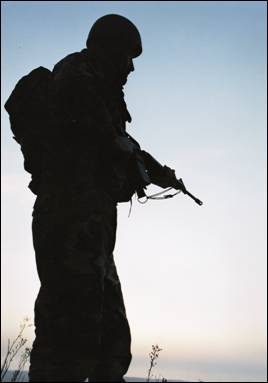
Under Control: the Arms of the Lebanese Resistance
 by Brenda Heard
The arms of the Resistance, it has been suggested, should be abandoned as a matter of principle. ‘From now on’, explains Caretaker Prime Minister Saad Hariri, ‘the possession of weapons, decision of war and peace, and defending the country should only be under the state’s control’. Political principles, it would seem, can be slippery. ‘From now on’? Perhaps this disclaimer is meant to ease the turnabout from the Hariri-Ministerial Cabinet Statement issued just over a year ago:
Based on the Cabinet’s responsibility to preserve Lebanon’s sovereignty, its independence, unity and the safety of its land, the government underscores Lebanon’s right through its people, army and resistance to liberate or regain authority of Shebaa Farms, Kfarshouba hills and the occupied part of Ghajar village and defend the country against any aggression’.
For the sake of argument, however, let us set aside the dictates of political expediency. Let us look at the reality of what this stance entails.
Continue reading “Under Control: the Arms of the Lebanese Resistance”
Will the two-state solution go the way of the defunct peace process?
by Ben White
This article first appeared in the NewStatesman.
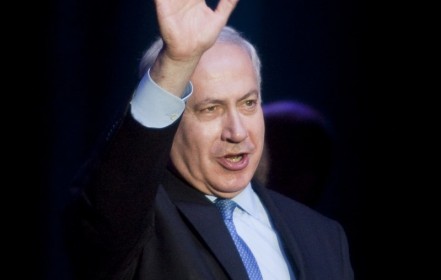
In the last week, press reports have suggested that Israeli PM Benjamin Netanyahu is preparing to give a key speech on the peace process in the next few months, with many flagging up his planned visit to the US in May. Claims of an imminent bold proposal have been met with a good deal of scepticism, from both Palestinians and Netanyahu’s domestic political opponents. Analysts have described the talk of a new plan as a “trial balloon” and a “public relations exercise aimed first and foremost at Washington”.
Netanyahu’s new plan, should it materialise, is rumoured to be based on the “the establishment of a Palestinian state within temporary borders” as part of an “interim peace agreement with the Palestinian Authority”. Other reports have been even vaguer, claiming that Netanyahu is proposing “a phased approach to peacemaking”, but leaving it open if this includes temporary borders.
Continue reading “Will the two-state solution go the way of the defunct peace process?”
Right to intervene?
As Muammar Gaddafi strikes to crush rebel forces in Libya, Empire looks at the case for and against intervention.
The women of Benghazi
With their husbands, sons and brothers at the frontlines, the women of Benghazi are busy supporting them with meals and supplies, preparing thousands of sandwiches and warm meals daily.
Hoda Abdel Hamid reports from Benghazi, where the uprising began.
 P U L S E