Living Under Drones

An important new report from the Stanford and New York University law schools finds drone use has caused widespread post-tramatic stress disorder and an overall breakdown of functional society in North Waziristan. In addition, the report finds the use of a “double tap” procedure, in which a drone strikes once and strikes again not long after, has led to deaths of rescuers and medical professionals. Follow the conversation #UnderDrones

Don’t miss Glenn Greenwald’s commentary on the report.

Pedagogy of the Connected

This was published in the August issue of Learning Curve (India) and republished at Bella Caledonia. (Art: Computer Chaos by Joana Coccarelli)

In Amusing Ourselves to Death, a prophetic work on the impact of television on culture, the late media scholar Neil Postman compared two dystopias. One was George Orwell’s Nineteen Eighty-four, a world of strict thought control and surveillance where dissent was drowned under screams of torture. The other was Aldous Huxley’sBrave New World, a culture of permanent distraction, immobilized by entertainment and diminished by superficiality. One society was watched by Big Brother; the other entertained by it.

Postman found Orwell’s vision irrelevant to western democracies. Modern society, he said, was less a prison than a burlesque. Like Huxley’s nightmare vision, culture was being impoverished by distraction and trivia, and thought devalued. The problem wasn’t so much entertainment as the habit of mind that resulted from being permanently stimulated and amused, leaving little space for reflection.

The case against television may have been overstated. It was after all a passive medium and individuals were free to walk away. Internet too in its first incarnation had limited claim on our lives. But things have changed dramatically with Web 2.0. We no longer just consume information; we also create it. Barriers to entry are lower and technical skills are no longer necessary. Combined with smart phones and wireless technology, we are in the midst of an epochal change. We are dependent on technology in a way we have never been before.

Continue reading “Pedagogy of the Connected”

UKBA vs Education

Last year I had my unpleasant run in with the UKBA. Because my bank balance had fallen below the required minimum of £800 in the final months of my PhD, the UKBA refused to renew my visa and I was asked to leave. The grounds for rejecting my visa were that I couldn’t meet the UK’s ‘maintenance’ requirements, even though I had been in the country for over 7 years, paid taxes, and contributed to the economy in myriad other ways. More importantly, I had just been hired as a senior lecturer at a UK institution of higher learning, so my capacity to earn wasn’t in any doubt. In the end I had to appeal the decision, go through months of uncertainty, and finally have the decision over-turned only after a campaign in my support by leading academics and intellectuals. The Scotsman and BBC Scotland were also immensely helpful in publicising my case. I thought my case was outrageous enough; but now a couple of thousand others find themselves in a similar situation thanks to the UKBA’s decision to withdraw the London Metropolitan University’s license to sponsor foreign students. In the video below you can hear some of them. Worse, Professor John Tulloch, a respected UK academic, a 7/7 survivor, has also been stripped of his British passport because of an absurd technicality.

In pandering to the xenophobic right, the government is gambling with the future of British Higher Education. This is madness at a time when a collapsing economy could really benefit from the money that foreign students bring in. Earlier this year 68 chancellors, governors and university presidents had written to David Cameron, warning him against the strict immigration policies that were going to lead foreign students to go elsewhere, costing the British economy billions. Universities are feeling the strain and the government is trying to place the burden for the lost revenue on home students, who are now made to pay exorbitant fees for degrees. This usually means the diminution of choices for students as they come under pressure to chose profitable disciplines. Social sciences and humanities inevitably suffer. The collapse began under New Labour, when education funding was slashed and top-up fees were introduced. Academic performance became less important than economic viability; highly regarded institutions such as Middlesex University’s philosophy department were shut down because they were no longer seen as being profitable enough. Things are now much worse. Universities spend more time marketing to a dwindling pool of students, academics spend more time chasing grants, managers spend more time searching for superfluous academics to lay off. It’s dog-eat-dog. It is unclear how bad things will get before those in authority reconsider the wisdom of their current policy. Academics have certainly done nothing to engender such reappraisal. The unions are compromised and for now most are just busy fending for themselves.

Also worth reading are Craig Murrays immensely important observations on the LMU scandal.

Continue reading “UKBA vs Education”

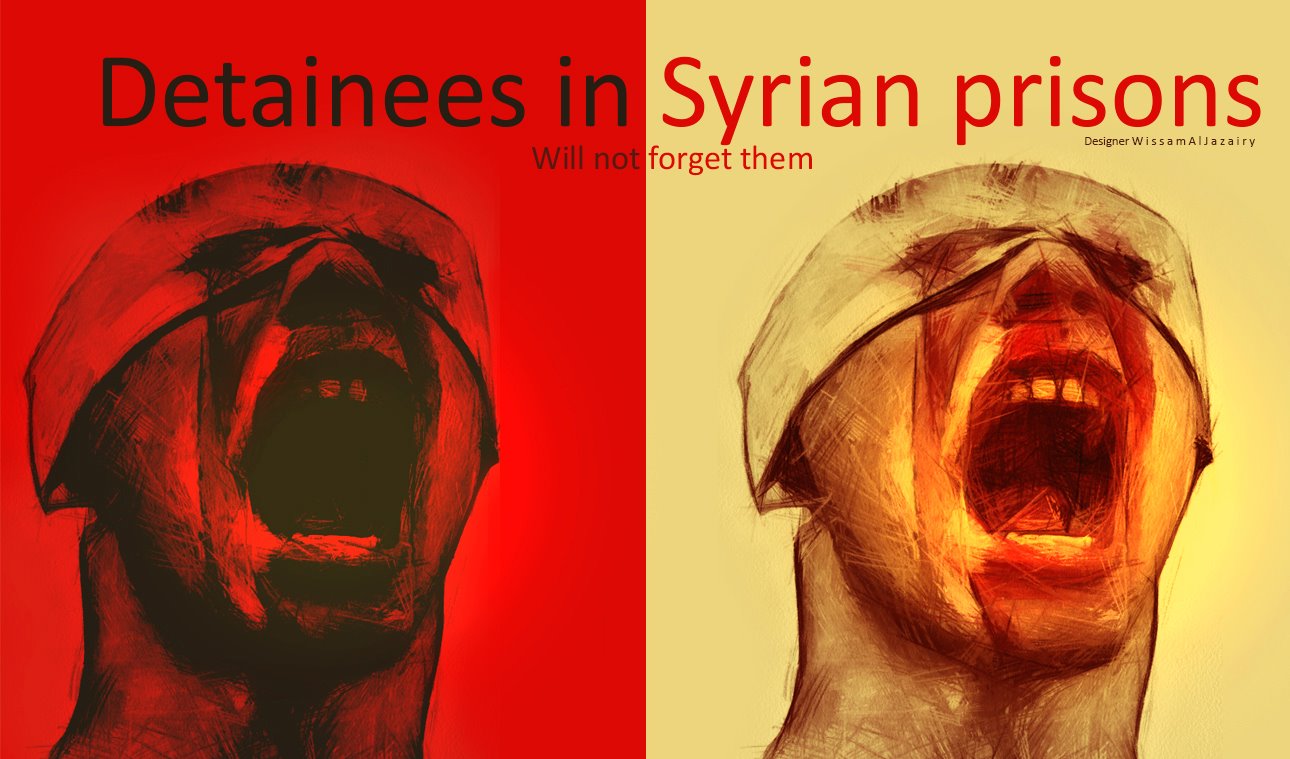
History will not be kind to the Syrian regime…

The great Palestinian philosopher and former MK Azmi Bishara on the Syrian revolution.

1) Let’s suppose that impoverishment of the people and the suppression of their freedoms are marginal when placed in the context of a grander goal, such as defending the homeland. That would only make sense, however, during limited periods of time, such as during wars. Anyway, such claims do not justify the way in which the people have to share out the misery between them, while the rulers enjoy the riches. Nor does such sloganeering justify the institutionalized, systematic denial of the rights of their people. There is no justification for the tyranny and corruption of the rulers, and their appropriation of the fruits of the masses’ labour. Trying to exploit a cause held dearly by both the people and the regime to achieve this is the beginning of demagoguery, and it is a tool used solely to preserve the existence of the corrupt, tyrannical regime. None of this, of course, takes away from the righteousness of the cause being exploited, but it does serve to bestow legitimacy on an illegitimate regime. Rebellion against this tyranny will necessarily place the removal of that regime as its first target, but the sanctity of the just causes which the regime exploits must also be preserved. This applies when the question comes to US plans to dominate our region, seeking to design the policies of Arab states with Israeli interests at heart, as well as the question of Palestine and the duty to resist the occupation at every turn.

2) No people, anywhere in the world, would accept torture, false imprisonment, financial corruption and the muzzling of the media for generation after generation, regardless of the justification. Nor does anybody to have the right that those being persecuted remain quiet for the sake of grander concerns, without hopes for a change, all to placate commentators who seem to think that the suffering of the people is secondary to the “Central Question”, especially as all the evidence that no progress on that same “Central Question” in the first place.

Continue reading “History will not be kind to the Syrian regime…”

Farewell Alexander Cockburn (1941-2012)


One of the greatest journalists, polemicists and prose stylists of our age, Alexander Cockburn, passed away yesterday. Cockburn’s courage as a journalist, his facility with words, and his political intuition were unparalleled. He was what Christopher Hitchens always pretended to be. His provocations were delivered with wit and wisdom and, unlike Hitchens, avoided soft targets. He preferred going after powerful interests and the shibboleths of both right and left. Where Hitchens built his reputation by accommodating power, Cockburn’s work was devoted to discommoding it. He was, as Ralph Nader noted, fearless. Pressing on with the Cockburn/Hitchens comparison, Corey Robin notes:

First, Cockburn was a much better observer of people and of politics: in part because he didn’t impose himself on the page the way Hitchens did, he could see particular details (especially of class and of place) that eluded Hitchens. At his best, he got out of the way of his own story and allowed his readers to see things they never would have seen without him.

Continue reading “Farewell Alexander Cockburn (1941-2012)”

A bad day for torturers


It has been a bad 24 hours for the world’s torturers. First it was Asef Shawkat who oversaw torture in Damascus, now Ayman Mohyeldin is reporting that the Egyptian head of intelligence, the notorious torturer Omer Suleiman has also died in the US. I hope the torturers of Bagram, Guantanamo, Ashkelon, and Chechnya also meet the same fate, not necessarily naturally.

On ‘Colossal Shafts’ and ‘Towering Erections’

Andrew O’Hagan reviews Fifty Shades of Grey by E. L. James.

The Drone Landscape

This is the first part of the ‘Drone Wars’ trilogy produced by Alternative Focus. It features many experts in the field, including Clive Stafford Smith, Peter W. Singer, Marjorie Cohn, and Tom Hayden. It also features my friend John Butler, the genius artists, and me, looking unusually fat and bloated. (Also see Part 2  and Part 3)

The forerunners of drones that are currently targeting people on the ground were once themselves targets. They have since evolved into reconnaissance vehicles, and more recently as weapons platforms. Predator drones are manufactured in Poway, near San Diego, where over 4,000 people are employed at General Atomics at the taxpayers’ expense. We examine the implications of this kind of warfare, and the loop of finance that rewards contractors and the politicians they support.

Muslim anti-Semitism: Myth and Reality

The new issue of the quarterly Critical Muslim is out. The theme is Fear and Loathing. It has my review essay on Gilbert Achcar’s great book Arabs and the Holocaust: The Arab-Israeli War of Narratives. Here are a few excerpts:

The treatment of Jews who have remained in the Muslim world is no better or worse than that of any other minority. Since the founding of Israel their numbers have dwindled. Except for countries like Iran, where a substantial Jewish population still remains, few in the Muslim world ever encounter a Jew. Most know Jews only through scripture or news reporting on the Israeli-Palestinian conflict. All Jews as a result have been cast unwittingly as adversaries by a conflict with which most of them have no connection, which many even oppose.

There is no point denying that anti-Semitism exists in the Muslim world today and that Holocaust denial is not uncommon. This is deplorable. But the anti-Semitism of the Muslim world is an epiphenomenon of a political conflict; it doesn’t have social roots. ‘It is functional and political, not social,’ says Yehoshafat Harkabi, the leading Israeli scholar and former head of the military intelligence, no friend of the Arabs. For most Muslims, anti-Semitism is a function of ignorance and unfamiliarity; it is also an abstract means of participation in a conflict where Jews have been cast as the oppressor by virtue of a state which adorns its instruments of war with Jewish religious symbols.  In this respect it is quite different from European anti-Semitism; it does not involve any actual contact with a Jew. It is also different in so far as it comes from a position of weakness, whereas European anti-Semitism was born of strength and directed against a vulnerable minority. It is comparable less to the racism of the Ku Klux Klan than to the reaction of the Black Panthers. Both kinds of hatred were totalizing, but only the former existed without a stimulus. Harkabi again:
Continue reading “Muslim anti-Semitism: Myth and Reality”

The truth of Syrian opposition is lost in the media’s narrative of hate

As conspiracy theorists of the left and right muddy the waters with lies and half-truths, as they continue their exclusive focus on the peripheral with utter disregard for the actual, the voices of the Syrians themselves are drowned out. Jadaliyya deserves credit for giving space to these voices and shedding light on the human dimension of the conflict. Amal Hanano is the most compelling of these voices. Here’s from ‘One Year of Hope‘. (I’m borrowing the above title from my good friend Phil Weiss).

The enemy was not one man or even his regime. As questionable motives emerged regionally and internationally, it became very clear that there were no real friends of Syria. As we fought each other, we fought a world that insisted on telling us who we were. Suddenly, everyone was an expert on Syria. Opportunistic pundits sucked the Syrian narrative like leeches, dispensing complex conspiracies, warning of the regional and global political interests at stake while belittling the people’s struggle. Opportunism seeped into the Syrian opposition as well: they splintered into rivaling groups, each betraying the other to prove itself worthy of the Syrian street’s loyalty but in the end, their divisiveness rendered the groups unworthy and incapable of defending those blood-soaked streets. The truth of Syria was lost somewhere in the middle of an axis between east and west, right and left, Sunnis and minorities, along fault lines we had never asked to define us, but they did.

Continue reading “The truth of Syrian opposition is lost in the media’s narrative of hate”