Who can imagine that a Save Darfur coalition vocally including Al Sharpton (”we know when America comes together, we can stop anything in the world”), Mia Farrow, the US Conference of Catholic Bishops, Elie Wiesel (”Darfur today is the world’s capital of human suffering”), Nat Hentoff, Bob Geldof, George Clooney, Angelina Jolie, Harold Pinter, Oprah Winfrey, the gold-medal speed skater Joey Cheek, Tony Blair and Dario Fo might be profoundly shallow in its reading of the brutal warfare in Sudan five years ago… and just as wrong-headed in its drum beat for an American intervention?
Mahmood Mamdani can. We are talking here about his book Saviors and Survivors and his argument that the Darfur rescue campaign, which became a sacred cause of our civil religion, was not so much the moral alternative to Iraq, the Bush “war on terror,” and Cheney-think as it was a variation and extension of the same toolkit. I begin with a sort of confession that I may be a sample of Mamdani’s problem — having drenched myself in Nicholas Kristof’s New York Times columns and largely absorbed the common framework that Darfur was about Arabs slaughtering Africans, and that somebody had to something about it.
Jim Lobe interviewed by Scott Horton on Antiwar Radio. His analysis in this particular interview is rather unimpressive. While Lobe’s reporting over the years has been indispensable, he is too optimistic in his analysis. Since at least the autumn of 2003 he has been announcing the demise of the neocons. Here as well his reading of the Obama-Netanyahu summit is overly positive. For a reality check see this interview with Jeff Blankfort.
Jim Lobe, Washington Bureau Chief for Inter Press Service, discusses Hillary Clinton’s emphatic rejection of any kind of Israeli settlement growth, the Obama administration’s (first in a generation) hard-line on Israel, the low probability of a Palestine/Israel 2-state solution even with a settlement freeze and allegations that Netanyahu sees Iran as Amalek – eternal biblical persecutor of Jews.
Thanks to Marcy Newman, who is in attendance and has a great write-up along with audio she’s recorded of Suheir’s always excellent spoken-word performances, we have more of this wonderful poetry as performed in Palestine.
Here are four of Suheir’s poetry readings at the Festival, the first three in English and the fourth short poem mostly in Arabic, as well as a video clip.
C. S. Soong is one of the best radio interviewers, erudite and articulate, and on his show Against the Grain you will always find some of the most stimulating discussions on politics, philosophy, literature and activism.
Terrorists, we are told, threaten our freedom and democracy. What does this kind of rhetoric ignore, and what kind of governmental violence does it justify? Matthew Carr calls attention to a tradition, beginning in the 19th century, of using violence against symbolic targets to achieve a political victory. He also discusses the Mau Mau in Kenya and the counterterrorism initiatives of the Reagan era.
Our guest this week is Chris Hedges. Hedges, who writes a weekly column for Truthdig that is published every Monday, is currently a senior fellow at The Nation Institute and a Lecturer in the Council of the Humanities and the Anschutz Distinguished Fellow at Princeton University. He spent nearly two decades as a foreign correspondent in Central America, the Middle East, Africa and the Balkans. He is the author of several books, including War Is a Force That Gives Us Meaning and most recently When Atheism Becomes Religion: America’s New Fundamentalists.
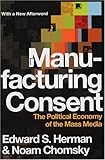
Necessary Illusions is a Noam Chomsky Massey Lecture from 1988, the same year as his groundbreaking text Manufacturing Consent was first published.
The lecture examines “the ways in which thought and understanding are shaped in the interest of domestic privilege” and a year later was developed into a book of the same name.
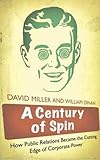
For more on this topic I’d recommend the two texts already mentioned along with with Chomsky’s Media Control and, for a UK perspective, A Century of Spin by David Miller and William Dinan.
Playwright David Hare reads his monologue Wall, an exploration of the impact—on both Israelis and Palestinians—of the barrier built to divide Israel from the West Bank. Hare will be performing Wall, along with a companion monologue, Berlin, at the Public Theater in New York City, May 14-17.
Blowback is a 2004 lecture by Chalmers Johnson on the US Empire. Drawing comparisons with Rome, Johnson describes the end of the Republic through imperialism and militarism.
The core of Johnson speech is on American militarism but discussing Iraq he explains the influence of the neocons as the main reason for war (although perhaps also overstating the case of oil politics too).
There is ample evidence that within this group [the Neoconservatives], and I’m not in any sense trying to be anti-israeli because I’m in fact quite alarmed by the dangers Israel is in today, but that many of these people have very close ties to the right-wing of the likud party, I mean close ties to Benjamin Netanyahu of which they have written papers for him, they’re personal associates of his, and things of this sort, and much of what they stand for does reflect the particular views of the sharonistas, if you will, that it serves their interests to destroy Iraq even if it has not particularly served ours.
Another excellent Guns and Butter interview with economist Michael Hudson. The interview is almost a month old but still well worth listening to. Hudson examines the death of Europe and how neoliberalism, with its favouring of property and finance over labour and industry, is driving society back to feudalism. As Gore Vidal has said, in the future, Europe will just be a big farm for China.
The Way We Were and What We Are Becoming (59:52):MP3
The Way We Were and What We Are Becoming with financial economist and historian, Dr. Michael Hudson. We begin with an analysis of the continuing bailout of insurance giant AIG and Monday’s stock market selloff; price and debt deflation; the two sectors of the economy; two definitions of ‘free markets’; the classical economists; revolution from the right and the former Soviet states; the threat of war; IMF/World Bank resurgence; the dollar versus the euro; analogies to Rome, neo-feudalism.