Financial Barbarians at the Gate

hudson02

The Financial Barbarians at the Gate is a Guns and Butter interview with economist / historian Michael Hudson.  In it he discusses the historical takeover of the economy by the finance sector.

Financial Barbarians at the Gate (59:53): MP3

One point of note is that the illegal war of aggression in Iraq is not a war related to economics but to the strategic interests of Israel.  Hudson, explaining American Imperialism, states that “unlike England the United States didn’t have to invade countries, at least before the oil grab in Iraq” and instead drained countries through the US monetary system.  It’s revealing that he suggests Iraq as a change in economic policy, it was not about economics, the oil lobby in Washington didn’t want a war, they wanted an end to brutal sanctions to gain conventional access to the oil.

Alastair Crooke on BBC Radio 4

Alastair Crooke recently appeared on Start the Week, presented by Andrew Marr, where he discussed his recently published book, Resistance: The Essence of the Islamist Revolution.

Alistair Crooke on BBC Radio 4 (13:10): MP3

The complete broadcast can be heard here (in RealAudio).

Authority And The Individual

bertrandrussellAuthority and the Individual is a Reith lecture given by Bertrand Russell in 1948.  The text of this lecture happens to be a favourite book of mine and I was glad that the BBC put the original audio online (even if it’s only the first two parts of the series).  In his own words “The fundamental problem I propose to consider in these lectures is this: how can we combine that degree of individual initiative which is necessary for progress with the degree of social cohesion that is necessary for survival?”

Authority and the Individual (56:37): MP3

Which is more important, freedom or order? In Authority and the Individual, the first of the BBC’s famous Reith lectures, Russell tackles what is still one of the most hotly debated issues of the twentieth century: the conflict between law, order and authority and the rights of each individual man and woman.

Obama and habeas corpus — then and now

Glenn Greenwald shows that Obama is worse than Bush on state secrets.

It was once the case under the Bush administration that the U.S. would abduct people from around the world, accuse them of being Terrorists, ship them to Guantanamo, and then keep them there for as long as we wanted without offering them any real due process to contest the accusations against them.  That due-process-denying framework was legalized by the Military Commissions Act of 2006.  Many Democrats — including Barack Obama — claimed they were vehemently opposed to this denial of due process for detainees, and on June 12, 2008, the U.S. Supreme Court, in the case of Boumediene v. Bush, ruled that the denial of habeas corpus rights to Guantanamo detainees was unconstitutional and that all Guantanamo detainees have the right to a full hearing in which they can contest the accusations against them.

In the wake of the Boumediene ruling, the U.S. Government wanted to preserve the power to abduct people from around the world and bring them to American prisons without having to provide them any due process.  So, instead of bringing them to our Guantanamo prison camp (where, the U.S. Supreme Court ruled, they were entitled to habeas hearings), the Bush administration would instead simply send them to our prison camp in Bagram, Afghanistan, and then argue that because they were flown to Bagram rather than Guantanamo, they had no rights of any kind and Boudemiene didn’t apply to them.  The Bush DOJ treated the Boumediene ruling, grounded in our most basic constitutional guarantees, as though it was some sort of a silly game — fly your abducted prisoners to Guantanamo and they have constitutional rights, but fly them instead to Bagram and you can disappear them forever with no judicial process.  Put another way, you just close Guantanamo, move it to Afghanistan, and — presto — all constitutional obligations disappear.

Continue reading “Obama and habeas corpus — then and now”

Suicide Bombers and their Families

681686_02Amira Hass speaking at the University of California, Berkeley, in October 2003, on suicide bombers and their families.

Hass has gained a deep understanding of the phenomenon of suicide bombing and explains her intriguing findings; such as that often families of would-be bombers alert the police themselves, jail being preferable to the death of a loved one.

Suicide Bombers and their Families (58:04): MP3


Edward Said – Culture and Imperialism

edwardsaidThe late Edward Said speaking in 1993 on Culture and Imperialism.
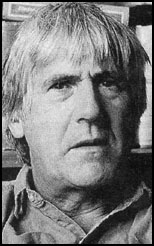
Edward Said – Culture and Imperialism (57:23): MP3

Imperial power is constructed on a bedrock not only of force but of culture as well. Culture provides the underpinning, justification and validation of empire. Its crudest manifestation is perhaps Kipling’s “White man’s burden.” A more refined version is the French “mission civilisatrice,” civilizing mission. Imperialism is often thought of as a European phenomenon of the past. In fact it continues today in new shapes and forms. The US carries out its imperial policies behind the facade of democracy and freedom. Culture and politics produce a system of control that transcends military power to include a hegemony of representations and images that dominate the imaginations of both the oppressor and the oppressed.

Continue reading “Edward Said – Culture and Imperialism”

The Haitian Slave Revolt

paulfootThe following is an illuminating lecture by Paul Foot on the Haitian slave revolt where he challenges the perception that British goodwill ended slavery. The lecture is based on C.L.R. James’ classic study The Black Jacobins. There is also an excellent documentary on this topic titled Egalite for All: Toussaint Louverture and the Haitian Revolution.

Paul Foot – The Haitian Slave Revolt of 1791 (57:27): MP3

Paul Foot vividly describes how the most successful slave revolt in history, which began in 1791, came to be closely allied to the events of the French Revolution and how each in turn influenced the other.

Taking self-emancipation as his main theme, Foot also challenges the idea that it was William Wilberforce, the British Tory MP and factory owner, that brought about the abolition of the most brutal and systematic regime of bondage and exploitation.

Continue reading “The Haitian Slave Revolt”

War as an Addiction

hedges_chris In War as an Addiction Chris Hedges explains the myths around war and the ugly truth that lies behind its seductive veil.

Drawing on a wide variety of sources such as Freud’s Civilisation and its Discontents, the Iliad, Swank and Marchand’s WW2 study of soldier psychology and Hannah Arendt’s The Origins of Totalitarianism this lecture contains not just emotional depth, from Hedges own experiences, but a profoundly detailed analysis of war.

For more see his book War Is a Force That Gives Us Meaning.

War as an Addiction (53:31): MP3

Continue reading “War as an Addiction”

Cindy Sheehan interviews Chris Hedges

Chris Hedges Interview (53:40): MP3

Cindy Sheehan speaks to Chris Hedges, author of the classic War is a Force that Gives us Meaning. (The actual interview begins at 6:30)

The Israel lobby and the fate of Palestine

alexander-cockburnAlexander Cockburn on the Israel lobby and the fate of Palestine recorded in San Francisco on September 29, 2002.

The Israel Lobby and the fate of Palestine (29:04): MP3

On May 2, 2002, barely two weeks after what has become widely described in the international press as a massacre in the Palestinian refugee camp at Jenin, the US Congress took an extraordinary vote.

Continue reading “The Israel lobby and the fate of Palestine”