A Struggler in Context

An edited version of this review appeared at the Electronic Intifada.

“From afar,” writes Ramzy Baroud (founder of the indispensable Palestine Chronicle), “Gaza’s reality, like that of all of Palestine, is often presented without cohesion, without proper context; accounts of real life in Gaza are marred with tired assumptions and misrepresentations that deprive the depicted humans of their names, identities and very dignity.”

Baroud’s “My Father was a Freedom Fighter” is an antidote to the media’s decontextualisation and dehumanisation of Palestinians. It’s also an instant classic, one of the very best books to have examined the Palestinian tragedy.

As the title suggests, Baroud relates the life of his father, Mohammed Baroud. Each step in the story is located in a larger familial, social, economic and political context, one distinguished by eyewitness accounts and made concrete by an almost encyclopedic wealth of detail. But neither the book’s detail nor its deep reflection conflict with its compulsive readability. It’s quite an achievement.

Continue reading “A Struggler in Context”

The Spinning Wheel

This review was written for the Palestine Chronicle.

This is not what you expect: an accomplished and self-reflective work of history enclosed within a layer of war reportage – in comic book form. But Joe Sacco’s “Footnotes in Gaza” is just that, an unusually effective treatment of Palestinian history which may appeal to people who would never read a ‘normal book’ on the subject. The writing, however, is at least as good as you’d expect from a high quality prose work. Here, for instance, is page nine: “History can do without its footnotes. Footnotes are inessential at best; at worst they trip up the greater narrative. From time to time, as bolder, more streamlined editions appear, history shakes off some footnotes altogether. And you can see why… History has its hands full. It can’t help producing pages by the hour, by the minute. History chokes on fresh episodes and swallows whatever old ones it can.”

The pictures – aerial shots, action shots, urban still lifes, crafted but realist character studies – work as hard as the words. Sacco depicts fear, humiliation and anger very well indeed, and often achieves far more with one picture than he could in an entire newspaper column. The cranes at work on a Jerusalem skyline are worth a paragraph or two of background. So is the fact that almost every Palestinian male has a cigarette in his mouth. And when dealing with historical process – the changing shape of the camps, for example – the pictures are more than useful.

Continue reading “The Spinning Wheel”

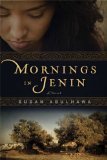
Mornings in Jenin

This review was published in today’s Times.
According to the Zionist story, Palestine before the state of Israel was ‘a land without a people awaiting a people without a land.’ Writers from Mark Twain to Leon Uris, as well as Hollywood studios and certain church pulpits, retell the tale. But Palestinians, in the West at least, lack a popular counter-narrative. Palestinians are reported on, met only on the news.

Perhaps this is changing. As the land disappears from under their feet Palestinians have been investing in culture, and an explosion of Palestinian talent is becoming visible in the West, in films, hip-hop, poetry and novels. And now Susan Abulhawa’s “Mornings in Jenin” is the first English language novel to fully express the human dimension of the Palestinian tragedy.

The story begins with the Abulheja family at home in the village of Ein Hod near Haifa, marrying, squabbling, trading, and harvesting the olives. It’s a touching and sometimes funny portrait of rural life with hints of the city (notably the Jerusalem-based Perlsteins, refugees from German anti-Semitism) and the Beduin tribes.

Then comes the Nakba, or Catastrophe, of 1948. Driven from their shelled village, the family suffers loss, separation, and humiliation, ending up in a camp in Jenin where “the refugees rose from their agitation to the realisation that they were slowly being erased from the world.” By now we care very much about the key characters, and through them we experience “that year without end”, the interminably drawn out Nakba which stretches through some of the bloodier signposts of Palestinian history – the Naksa or Disaster of 1967, the Lebanese refugee camp massacres, until the 2002 Jenin massacre.

Continue reading “Mornings in Jenin”

A Country of Words

“We travel like other people, but we return to nowhere…

We have a country of words.”

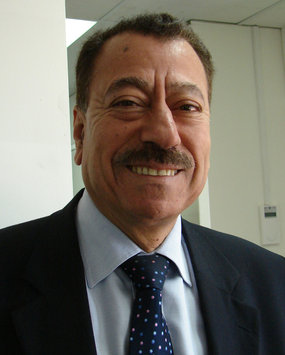
A traditional Arab media operation, according to Abdel Bari Atwan, is “characterised by editorial interference from the owners, slavishness to social hierarchies, backstabbing and nepotism.” It goes without saying that all the Arab local-national press, TV and radio stations are controlled by their respective regimes. Only in the pan-Arab sphere, beyond the control of any single regime, is there a possibility of anything better. Yet of the pan-Arab newspapers, ash-Sharq al-Awsat and al-Hayat are owned by different branches of the Saud family dictatorship, while the smaller-circulation al-Arab is part of the Libyan regime’s propaganda apparatus. Even after the satellite revolution, pan-Arab TV remains tame and partial, fattened and diluted by Gulf money, often providing its viewers a contradictory diet of Islamic and American-consumerist bubble gum. The second most famous channel in the Arab world, al-Arabiyya, is yet another mouthpiece for the Sauds (during last winter’s Gaza massacre it became known amongst Arabs as al-Ibriyya, or ‘the Hebrew’). The most famous channel, al-Jazeera, is of course the model that broke the mould. Its challenging reporting and inclusion of all sides in open debate has had a revolutionary effect on the Arabs.

Al-Jazeera’s print equivalent is the London-based al-Quds al-Arabi, founded in 1989, seven years before al-Jazeera. It may not have the immediate impact or mass audience of al-Jazeera (it’s banned in most Arab countries) but with its cast of excellent writers, its fearless exposure of Arab regime corruption, its scoops (al-Qa’ida chooses to communicate with the world through its pages), its renowned culture section, and its refusal to bury news from Palestine behind the football results, al-Quds al-Arabi is indispensable. Rather than backstabbing, its staff have sometimes worked for no pay to keep the operation afloat. Its founder, editorialist and editor-in-chief Abdel Bari Atwan is as passionate and articulate in speech as on the page, and is admired by the Arabs for his call-a-spade-a-spade style on those TV channels which dare to host him, usually al-Jazeera Arabic and Hizbullah’s al-Manar. Atwan’s “The Secret History of al-Qa’ida” is a book-length account of his meeting with Osama bin Laden and of the development of the al-Qa’ida network. Now Atwan has written an autobiographical memoir titled with a line from a Mahmoud Darwish poem, “A Country of Words.”

Continue reading “A Country of Words”

Stephen Walt chooses five books on US-Israel relations

A few weeks back The Browser interviewed British author Ziauddin Sardar for its Five Books section. Among the books he selected on the theme of Travel in the Muslim World was one, The Road from Damascus, by PULSE editor Robin Yassin-Kassab. When Robin was in turn asked to choose his five on the theme of the Israel-Palestine Conflict, he chose among others John Mearsheimer and Stephen Walt’s The Israel Lobby and the US Foreign Policy. In its current interview The Browser turned to Stephen Walt — one of PULSE’s 20 top global thinkers for 2009 — to present his selection of the five most important books on the US-Israel relationship. In the following interview Walt presents his selection and explains why he chose these particular books.

Stephen M. Walt

So, we’re trying to understand how the US has come to identify so closely with Israel in recent decades, and your first book is The Israel Lobby and US Foreign Policy, which you wrote along with John Mearsheimer. Why is that on the top of your list?

The only way to understand the special relationship that now exists between the United States and Israel is to understand the critical role that a number of organisations have played in actively promoting that relationship over the last 60 years. The US has supported Israel since its founding in 1948, but it did not have the same sort of special relationship for the first 20 or so years after Israel’s creation. The US backed it in certain ways, but was also willing to put lots of pressure on it in other circumstances and didn’t provide a lot of economic or military assistance until after 1967. But today the US backs Israel no matter what it does and American politicians are careful never to say anything that is very critical of Israel, even when it is acting in ways that are contrary to US interests and values. The key to understanding this ‘special relationship’ is the operation of various groups in the Israel lobby, and our book lays out in great detail how that works, and why it’s not good for the US or Israel.

Continue reading “Stephen Walt chooses five books on US-Israel relations”

Lest We Forget

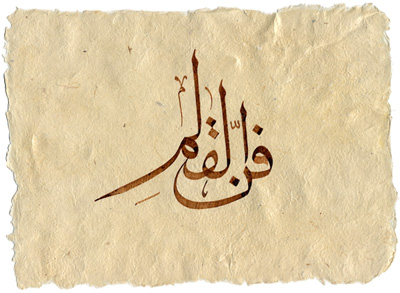
Fann alQalam - the Art of the Pen - by Soraya Syed

by Tam Hussain

On 4th of December, a rainy Friday evening, I visited Al-Khair school in Croydon. The school together with the Muslim Writers Awards were hosting a talk entitled ‘Creativity within Multi-Cultural Britain’. It had attracted me because of its absurdly ambitious vision: To jump start the creative processes which produced the likes of Iqbal, Ghalib and Al-Mutanabbi. The event was opened by Ms. Aisha Choudhry, head of Al-Khair, followed by Irfan Akram, Project Coordinator for Muslim Writers Award, Sufiya Ahmed, author of the Khadijah Academy series, Moazzam Begg, author and spokesperson for Cageprisoners, Zahid Hussain, author of The Curry Mile and Andrew Pelling, MP. The event was chaired by Abdul Fattah Hussain, organiser of the event.

Irfan Akram set the tone by pointing out that whilst Muslims in Britain are facing immense challenges, the positives outweighed the negatives. He brushed aside suggestions that publishers didn’t want to hear the voice of the Muslims; rather he suggested that Muslims should not expect automatic publication just because they have penned something. “If it is good enough it will get published and MWA is here to help.”

Continue reading “Lest We Forget”

Pakistan’s ‘Oral’ Society

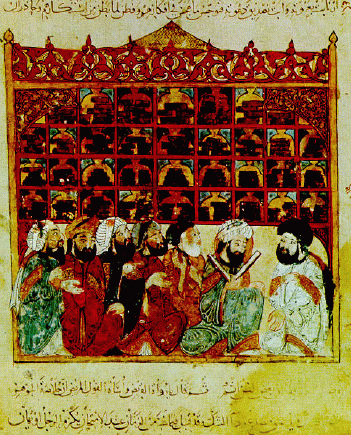
Public library of Hulwan, Baghdad

M. Shahid Alam

(Note: This essay was written nearly twenty years back, in April 1991. A great many changes have come to Pakistan since then, but I am afraid that the observations I had made then about ‘orality’ of Pakistani discourse still hold true. Pakistan’s best young minds do not go where their hearts and their talents lead them. Instead, overwhelmingly, they still pursue job security. Sadly, education – even for the brightest – is still mostly vocational education. With the introduction of multiple private cable channels, however, orality has entered a new age. The oral discourse, previously confined to drawing rooms and campuses, is now led by ‘talking heads’ in television studios. Is this discourse now more solidly rooted than before in the written word, in history and the social and natural sciences? I doubt it: and why should it? Pakistan’s brown Sahibs continue to drag the country deeper into dependency; they work overtime to trap Pakistanis in the most superficial consumerism, without the capital, technology and skills that support this malaise in developed Western societies. In other words, Pakistan is still caught in the disease that Jalal Al-i Ahmad had described in his book, Gharbzadagi Occidentotis: A Plague from the West.)

I first became aware of differences between ‘oral’ and ‘literate’ societies when I returned to Pakistan in 1979 – after an absence of some five years in the United States and Canada – to take up a fellowship at the Applied Economics Research Center, affiliated to the University of Karachi.

Continue reading “Pakistan’s ‘Oral’ Society”

Five Books on Syria; Batatu on the Peasants

Inspired by the Browser interview concerning my five favourite books on Israel-Palestine, I’ve come up with a list of five on Syria. These are all books available in English, so my selection is inevitably skewed. I’ll name them, then talk at length about the first on the list, the Batatu book.

Hanna Batatu

1.  Hanna Batatu. “Syria’s Peasantry, the Descendants of its Lesser Rural Notables, and Their Politics.”

2. Patrick Seale. “Asad: The Struggle for the Middle East.”

As essential for understanding power machinations in the US, the USSR, Palestine, Israel and Lebanon as in Syria, this is a biography of Syria’s ruthless, inscrutable, masterful dictator, Hafez al-Asad. Nation builder or gangster, as you will, but surely the most important Syrian of the 20th century.

3. Samuel Lyde. “The Asian Mystery Illustrated in the History, Religion, and Present State of the Ansaireeh or Nusairis of Syria.”

Continue reading “Five Books on Syria; Batatu on the Peasants”

Five Books on Israel-Palestine

The interview below was published in the Five Books section of The Browser. I chose five books on the Israel-Palestine conflict.

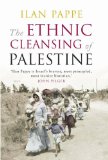
Tell me about the Ilan Pappe book, The Ethnic Cleansing of Palestine.

Pappe has written a great historical work on the ethnic cleansing of Palestine in 1947/8 and he shows that it was organised and planned, called Plan D, or plan Dalit, and he has exploded the myths that were current until his work.

What myths?

Well, for example, that the Arab leaders told the Palestinians to leave, or that the Palestinians were Bedouin people who didn’t really live there anyway, and he showed that they were ordinary people in brick and mortar homes who were intentionally forced out. This is very important because the ethnic cleansing of Palestine is the original sin of Zionism and the root of the current problem.

Continue reading “Five Books on Israel-Palestine”

Islam in the Writing Process

enjoin the good
photo by Rehan Jamil

If all goes well I will be at Notre Dame University in the US later this month for a conference on the role of Islam in contemporary European literature. I wrote the piece below for the conference.

Salman Rushdie once commented that ‘Islam’, in contrast to ‘the West’, is not a narrative civilisation. This, in my opinion, is obvious nonsense. Beyond the fact that human beings are narrative animals, whatever civilisation they live in, and that Islamic civilisation cannot be isolated from, for instance, Christian, Hindu or Arab civilisations, the Muslim world has a history of influential narratives which is second to none. These include Sufi tales, chivalric adventures, fantastical travelogues, romances and spiritual biographies written in several major languages.

Although the Arabic novel is generally considered to have developed in the early twentieth century from the experience of industrial urbanisation and the penetration of European genres and philosophies, Ibn Tufail’s 12th Century “Hayy ibn Yaqzan”, an inspiration for Defoe’s “Robinson Crusoe”, can reasonably stake a claim to being the world’s first novel. The Arabian Nights (via Don Quixote) is surely another source of the European novel tradition. And Islam the religion – as opposed to the even more nebulous ‘civilisation’ – is a text-based faith. The Qur’an is the religion’s only official miracle; the first word revealed to the Prophet was ‘iqra’ – ‘read’. Those who attempt to draw a distinction between literalist scripture and free and playful literature should pay attention to verse 26 of the Qur’an’s second chapter which, immediately after the first description of heaven and hell, proclaims: “Behold, God does not disdain to propound a parable of a gnat, or of something even less than that.” In other words, the Qur’an is a text unashamed to use metaphor, symbol and a whole range of literary devices in order to point to ineffable realities.
Continue reading “Islam in the Writing Process”