A Short Border Handbook

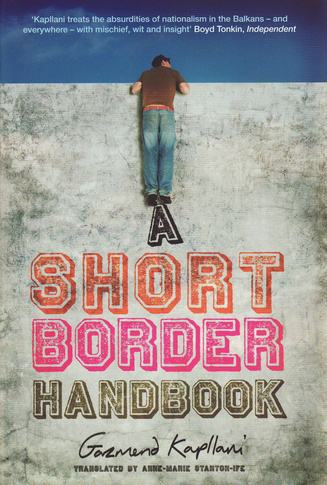
I met Gazmend Kapllani, a Greek of Albanian origin, during a recent visit to Germany (for a British Council ‘Our Shared Europe’ conference). He’s a great conversationalist, so I was pleased when he promised to send me one of his books. A Short Border Handbook arrived this morning. I took it back to bed, planning to read the blurb and perhaps the first chapter before adding it to my enormous pile of books-to-be-read. But I read the whole thing in one go.

It’s not a novel but it feels like one, because it’s so lightly yet densely written, full of stories and humour and therefore with a texture more human than journalistic. Part autobiography, part fiction, part philosophy, Kapllani’s book reminds us that a migrant, unlike a tourist, is the weak pole in relation to his host society, and that the weak are never respected, however hard they work. The Handbook’s general ruminations are applicable to any migrant, but it also addresses very specifically the conditions in Albania in the 1990s which forced so many people to move.

It has the following to say about Enver Hoxha. Examples of other fallen dictators will leap into readers’ minds:
Continue reading “A Short Border Handbook”

On Songs of Blood and Sword

by Saffi Ullah Ahmad

In her latest book, Songs of Blood and Sword: A Daughter’s Memoir, journalist Fatima Bhutto — better known as the niece of the late Benazir Bhutto — takes us through the dark history of one of the world’s best known political dynasties.

Fatima’s grandfather, founder of the Pakistan People’s Party (PPP) and Pakistan’s first democratically elected Prime Minister, Zuliqar Ali Bhutto, was sent to the gallows (1979) following a military coup orchestrated by General Zia Ul-Haq based on what were concocted charges, despite appeals for mercy from across the diplomatic world. As Henry Kissinger had ominously threatened some years earlier, a ‘horrible example’ was made of Mr. Bhutto. As the book’s cover informs us, in the years since Zulfiqar Ali Bhutto’s execution, all but one of his children have died; in circumstances mired in mystery, Shahnawaz Bhutto was poisoned in his flat in France (1985), Mir Murtaza Bhutto – Fatima’s father – was gunned down outside his home in Karachi (1996) and Benazir Bhutto was killed following a suicide attack in the garrison city, Rawalpindi (2007).

Above all, Songs of Blood and Sword is the tale of a grieving daughter’s frantic six year search for the truth surrounding her father’s life and death. Fatima describes a kind spirited and idealistic Murtaza, a man of the people, who had idolised Che Guevara in his youth, fittingly having adorned his bedroom walls with posters of the Cuban revolutionary. After completing studies at Harvard and an unsuccessful diplomatic battle to save his father’s life, Murtaza’s formation of a leftist guerrilla outfit bent on ousting General Zia earned him the title of a terrorist. Following the General’s own mysterious death (1988) and Benazir’s rise to power, Murtaza grew increasingly critical of his sister, who he felt had betrayed the socialist ideals upon which the PPP was founded. He eventually returned to Pakistan with political aspirations – having won a seat in a provincial assembly – only to face an uphill struggle against a hostile PPP government.

Continue reading “On Songs of Blood and Sword”

Epilogue on Tony Benn

Me chewing the fat with Ken Livingstone and Nadifa Mohamed.

More after the break..

Continue reading “Epilogue on Tony Benn”

A History of Significant Moments

How many Britons are aware of the British-Iraq war of May 1941? Not many. Yet such past wars are the producers of today’s reality. People in Iraq remember. If Westerners don’t remember the past they will inevitably fail to understand the present moment.

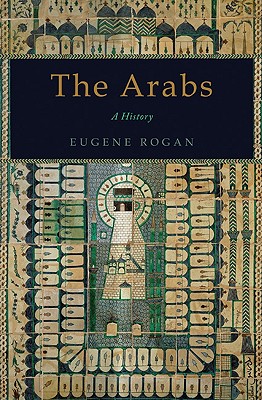
The urge to remind the reader so as to better contextualise the present is the laudable motive energising Eugene Rogan’s “The Arabs. A History,” which covers the last five hundred years.

The history starts in 1516 with the Ottoman defeat of the Mamluk slave-elite, the regime which in previous centuries had repelled Mongols and Crusaders from the Arab heartlands. The Mamluks weren’t Arabs, but they’d ruled from Arab capitals. Now power moved to Istanbul, which makes the moment a good place to begin. From the 1516 collapse in Cairo until the present day, many key decisions governing Arab life have been made in foreign cities. Rogan calls the process “the cycle of subordination to other people’s rules.”

In the early years, Ottoman rule “in the Arab provinces was marked by great diversity and extensive autonomy.” Sulayman’s perspicacious laws, public building projects and reasonable prosperity followed. But the global centre of gravity was shifting, and the long decline set in.

Continue reading “A History of Significant Moments”

Reese Erlich: “Stop using the word ‘terrorist'”

Defining what a terrorist is and isn’t is a major dilemma. What one may consider terrorism, another may consider resistance. So where does one draw the line? Reese Erlich tackles that topic in his latest book “Conversations with Terrorists: Middle East Leaders on Politics, Violence, and Empire.” Erlich is a veteran journalist who has covered U.S. foreign policy for decades. He has freelanced for National Public Radio, Radio Deutsche Welle, the Australian Broadcasting Corp. Radio, the Canadian Broadcasting Corp. Radio, and writes for The San Francisco Chronicle and The Dallas Morning News.

Drawing on firsthand interviews and original research, Erlich argues that yesterday’s terrorist is often today’s national leader and that today’s freedom fighter may become tomorrow’s terrorist. By branding all of American’s opponents as “terrorists,” it makes it more difficult to look beyond the individual or the political group and understand what they are really all about. I caught up with Erlich recently and here’s what he had to say.

Continue reading “Reese Erlich: “Stop using the word ‘terrorist’””

The Obama Syndrome – Booklaunch in DC and NY

Tariq Ali will be in Washington, DC on the 16th and New York on the 17th for the launch of his new book The Obama Syndrome: Surrender at Home, War Abroad. If you are in the vicinity, we strongly encourage you to attend.

Continue reading “The Obama Syndrome – Booklaunch in DC and NY”

Anna Baltzer: Palestinians “come second” at peace talks

This interview first appeared at iBrattleboro.com

Anna Baltzer on "The Daily Show"

A visit to the occupied territories of Palestine can change one’s perspectives forever. Such was the case of Anna Baltzer. Baltzer is a Jewish-American granddaughter of Holocaust survivors. In 2002, she was awarded a Fulbright scholarship to teach English in Ankara, Turkey and soon after volunteered with the International Women’s Peace Service in the West Bank. There she was exposed to the Israeli occupation of Palestine. She documented human rights abuses for the IWPS, returned to Palestine/Israel over the years, and published her experiences in a book called “A Witness in Palestine: A Jewish American Woman in the Occupied Territories.”

Baltzer is a leading human rights activist on the Mideast and travels across the country to raise awareness about the Israeli-Palestine conflict. Her appearance on “The Daily Show” with Palestinian human rights activist Mustafa Barghouti was instrumental in raising awareness about life under the Israeli occupation of the West Bank and Gaza. I caught up with Baltzer and we discussed several topics including her “The Daily Show” appearance; occupation myths; Israeli apartheid and the boycott, divestment, and sanctions campaign; and the Mideast peace talks in Washington, DC.

Continue reading “Anna Baltzer: Palestinians “come second” at peace talks”

Robert O. Paxton’s The Anatomy of Fascism

The Anatomy of Fascism by Robert O. Paxton- now out in Hebrew!

I just came back from a two-week vacation. (I mention this almost completely irrelevant fact because in the field of activism we don’t seem to talk about the perfectly natural human need for rest.) In the throes of contemplating whether to flip over to my backside, or give my ass a bit more quality sun-time, I managed to complete a task I’ve been working at for months (yes, months! That’s how much I needed a vacation): Reading Robert O. Paxton’s ‘The Anatomy of Fascism.’

The Anatomy of Fascism – Mini Book Review

There’s a lot of historical data in The Anatomy of Fascism. Numbers, names- things I’ll never remember because they’re not much use to me, and frankly, they make for a very boring read (with respect to the author’s obvious hard work, dedication and love of his profession). Another thing that makes The Anatomy of Fascism a boring read is that pitfall of most history books: The empire point of view. I couldn’t care less about the Fuhrer and Duce’s political contortions into power, just like I don’t care about the in-house bickering of the Likud and Kadima. Telling me of the empire without any moral stance (except for some small, simplified statement near the end of the book that all this is something we should be repulsed about) is not only uninteresting, it’s also as unethical as the third monkey.

Continue reading “Robert O. Paxton’s The Anatomy of Fascism”

Palestine Reading – FiveBooks Interview

Five Books is a website which asks writers, academics and othersuch to list recommended books on a given topic. The Five Books Israel-Palestine week features interviews with interesting figures like Steve Walt. And me. Here’s a video interview of me making several of my favourite points:

Continue reading “Palestine Reading – FiveBooks Interview”

Beware of Small States

The chaos of Lebanon has thrown up an Arab horror paralleled only in post-invasion Iraq. It has also produced the Arab world’s most urgent intellectual life, and its first victory against Israel. Lebanon is the most contradictory of countries, “a more open, liberal and democratic society than any of its Arab neighbours” precisely because of “its vulnerability to domestic dissension.” So, with its seventeen sects and constantly shifting allegiances, who would dare to explain Lebanon?

No better candidate than David Hirst, whose 1977 book “The Gun and the Olive Branch” was one of the very first to sympathetically present the Palestinian plight in English. Hirst’s latest work “Beware of Small States” is a panoramic study of Lebanon’s difficult history which strikes exactly the right balance between close detail and broad interpretative sweep. The writing is precise, penetrative and elegant. For sober, logical analysis, “Beware of Small States” outstrips even Robert Fisk’s magisterial “Pity the Nation.”

Hirst explains Lebanon, and especially the fifteen-year maelstrom of the civil war, its pogroms, set battles, kidnappings and car bombs, by delineating patterns of cause and effect. The civil war is interpreted as “the intertwining of the socio-economic, the sectarian and the Palestinian, those three characteristics of the whole, ever more noxious brew.”

Continue reading “Beware of Small States”