PULSE Joins Blog Action Day 2010… So Should You!

We ask bloggers to take a single day out of their schedule and focus it on an important issue. By doing so on the same day, the blogging community effectively changes the conversation on the web and focuses audiences around the globe on that issue. ~ Blog Action Day Website

For the past 3 years, every October 15th, Blog Action Day has been marked by tens of thousands of bloggers, discussing the same issue. From the environment, to poverty, to this year’s theme of water, Blog Action Day is a perfect fit for PULSE, which never fails to make the connection between these “social issues” and the politics driving them, 365 days of the year.

To all of us at PULSE that follow world events (or rather “the money”, or rather “the power”) it’s very evident that water, being the very essence of basic needs for sustaining life, becomes a cynical tool, leveraged by the powerful, in order to oppress, control and often kill off whole populations of human beings deemed meaningless.

On October the 15th PULSE will dedicate itself to the issue of water, and we invite all our blogging readers to do the same.
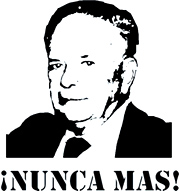
Longstanding Impunity Challenges Argentina: 4 Years Without Julio Lopez

Julio Lopez

by Marie Trigona

Julio Lopez, Luciano Arruga, Silvia Suppo – three names recently listed the doleful roll call of Argentina’s victims of state repression, a legacy left over from the bloody 1976-1983 military dictatorship. These three names have left painful reminders of the paradigm of disappearances and of how the social stigma of the crimes committed during the dictatorship has scarred Argentina and other nations which survived brutal military dictatorships.

Argentines recently commemorated the four-year anniversary of the disappearance of Julio Lopez with a demand that the torture survivor and human rights activist be found alive. After four years of searching, marches, and impunity, the cries for justice and punishment seem to have found no response from an indifferent government which claims to defend human rights. Activists also demanded information on the whereabouts of Luciano Arruga, a 16-year-old who was forcefully disappeared in January, 2009, and called for an investigation into the 2010 murder of Silvia Suppo, a human rights activist and torture survivor testifying in a landmark human rights trial. Continue reading “Longstanding Impunity Challenges Argentina: 4 Years Without Julio Lopez”

Aafia Siddiqui: Symbol or Spectacle?

by Beenish Ahmed

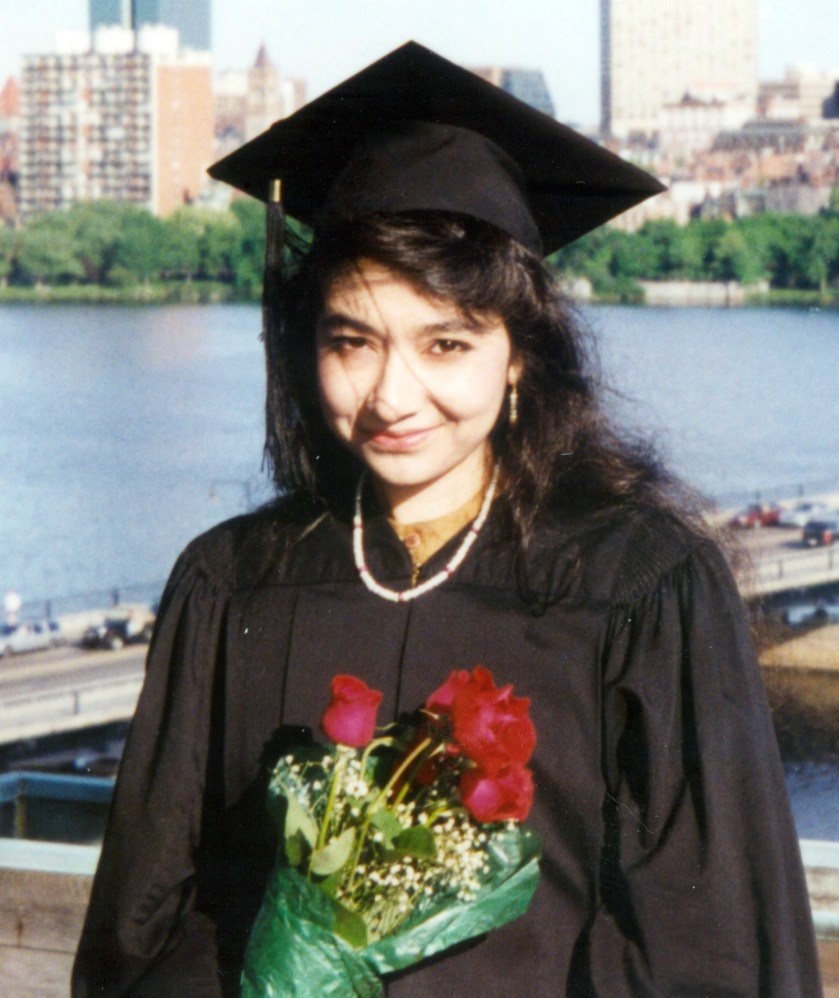
Convicted of attempted murder, Dr. Aafia Siddiqui, 38, was sentenced to 86 years in prison in New York on Thursday. The Pakistan-native was held in custody for two years after allegedly shooting at US troops and an F.B.I agent in Afghanistan with an assault rifle she grabbed from behind a curtain, unlocked, and fired before being shot in the stomach by an interpreter.
Although she infamously topped America’s most wanted list for years, most Americans would be hard pressed to comment at all on the MIT and Brandeis graduate who is due to serve decades in jail for compromising their security.

Perhaps Siddiqui’s trial has received so little attention in the US because the charges brought against her do not relate not to her’s supposed links to Al-Qaeda, or the canisters of chemicals, bomb-making manuals, and lists of American landmarks that she had been carrying at the time her detainment in Afghanistan. This has been seen by Harper’s and many others as an all too easy story, especially given the immense variance in claims made by US officials and Afghani eye-witnesses, as well as Siddiqui’s own story. Despite the questionable circumstances of her arrest, however, no evidence about her capture was allowed to surface at all in the recent trial, only furthering protest in Pakistan.

While the verdict was announced only in the regional section of the New York Times, in her own country, Siddiqui’s case become something of a cause célèbre. Many Pakistanis have long condemned what they believe to be an unjust trial based on fabricated evidence through demonstrations as well as information campaigns.

Given this divergence in understanding, it is worthwhile to ask not only who Aafia Siddiqui is, but what she has come to represent to everyday Pakistanis.

Continue reading “Aafia Siddiqui: Symbol or Spectacle?”

Omar Khadr has lost one third of his Life in US Custody

by Andy Worthington

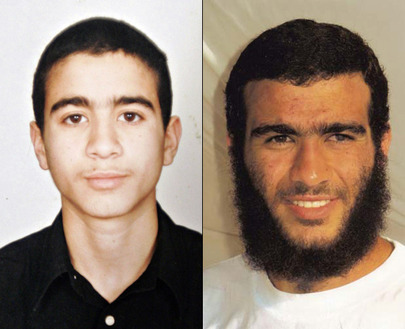
Omar Khadr, the only Canadian citizen in Guantánamo, was seized in Afghanistan on July 27, 2002, when he was just 15 years old. On September 19 he turned 24, and has grown, physically, into a man during the eight years and two months he has spent in US custody, first at Bagram airbase in Afghanistan, and, since October 2002, at Guantánamo. At heart, however, he remains a child, whose youth has been stolen from him by the US authorities responsible for detaining him, and by the Canadian government, which has refused to demand his return.

I don’t want you to reflect, however, particularly on the abuse to which he has been subjected throughout his detention, or on the US government’s shameful refusal to rehabilitate him, rather than punishing him, as required by its obligations under the Optional Protocol to the UN Convention on the Rights of the Child on the involvement of children in armed conflict, which includes the agreement that all States Parties who ratify the Protocol “[r]ecogniz[e] the special needs of those children who are particularly vulnerable to recruitment or use in hostilities,” and are “[c]onvinced of the need [for] the physical and psychosocial rehabilitation and social reintegration of children who are victims of armed conflict.”

I don’t want you to reflect particularly on the Canadian government’s shameful refusal to demand his return to his homeland, despite severe criticism by the Canadian courts, or on the Obama administration’s shameful refusal to cancel his scheduled trial by Military Commission, on war crimes charges that — even if the allegations are true — are not war crimes at all, as Lt. Col. David Frakt, the military defense attorney for another former child at Guantánamo, Mohamed Jawad (who was released last August), has explained.

Continue reading “Omar Khadr has lost one third of his Life in US Custody”

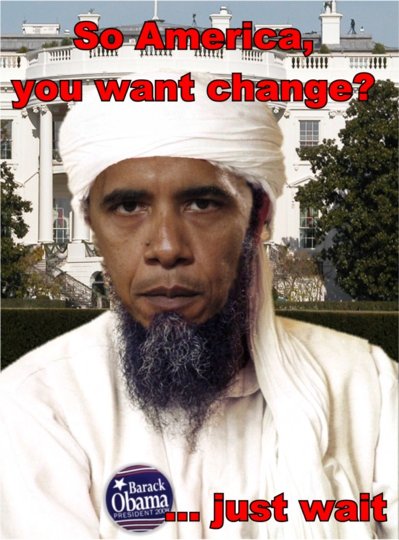
Can A Muslim Truly Be An American?

There are numerous ways to approach this question. From a legal standpoint, many Muslims are American, having been born in the United States. Many Muslim immigrants are in possession of a United States passport, an item that ideally would be the only criterion by which one is judged “American.” National identity is only partly informed by formal citizenship, however. In the United States today, as throughout its history, citizenship is invested with crucial symbolic features. Most of the symbolic features of proper American-ness involve race or religion (wherein, say, Jews or African Americans aren’t seen to be fully American ideologically or, in some cases, legally). Another, often related, feature is political belief: dissent from what politicians and corporate media deem the national interest isn’t traditionally a welcome feature of true American-ness (i.e., the normative American). In turn, the politically-mainstream white Christian is the truest American of all.

Current conceptions of the normative American can best be detected in the recent imbroglio over the “ground-zero mosque,” a histrionic misnomer popularized by right-wing media. The proposed Muslim community center two blocks from the northeastern tip of ground zero, actually called Cordoba House, has created a national frenzy that compels us to reassess the symbolic qualities of citizenship in the United States. By expressing such loud opposition to the community center, a significant portion of Americans has again reinforced a limited definition of American-ness, in this case one that excludes Muslims from the full rights of citizenship.

Continue reading “Can A Muslim Truly Be An American?”

Resistance threads

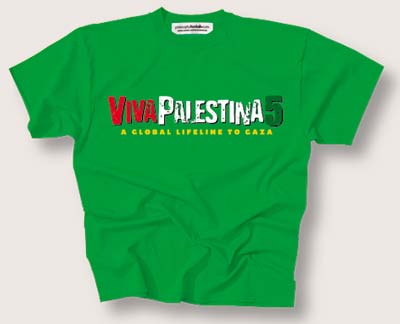
On Saturday 18 September, the fifth, and most ambitious convoy leaves for Gaza. From London, Casablanca and Doha three simultaneous routes consisting of hundreds of vehicles to break the siege. Three times in the last eighteen months Viva Palestina has broken Israel’s siege, each time successfully delivering their aid, despite Israel’s murderous assault on the Freedom Flotilla , they fully intend to deliver this time too. Our VIVA PALESTINA 5 T-shirt will be worn by all drivers and crew. Sales of the shirt help fund the convoy. We can’t all be on this incredible journey to bring vital material aid and international solidarity to Gaza but by wearing this shirt we are all convoy members.

Courtesy of the team at Philosophy Football.


Losing Britain’s Greatest Modern Day Jurist

by Saffi Ullah Ahmad

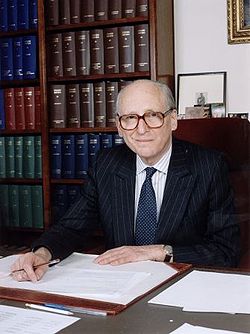
Human rights activists and lawyers are mourning Lord Thomas Bingham of Cornhill who died on Saturday, 11 September, aged 76, following a struggle with cancer. A towering figure, many consider him to have been the foremost British jurist of the modern era.

Thomas Bingham

The son of two doctors, Thomas Bingham read modern history at Balliol College, Oxford and went on to pursue a career at the bar. Recognised as a formidable opponent in the courtroom (he was recently described by a senior barrister as having an ‘alpha-plus’ mind, and by other members of the judiciary as ‘frighteningly clever’), he quickly rose to prominence in the legal world, going on to hold the three top legal posts in the country; Master of the Rolls (1992-96), Lord Chief Justice (1996-2000) and senior Law Lord (2000-2008).

Known for being a staunch advocate of judicial independence and human rights, with a fiercely independent legal mind, he was never one to shy away from challenging the government. In the aftermath of 9/11, and throughout the ‘war on terror,’ his was a prominent voice amongst Law Lords standing against the excesses of the executive. Rejecting the British Government’s arguments relating to anti-terror legislation on numerous occasions, he stood firmly against the indefinite detainment of foreign nationals without charge and the use of evidence obtained by torture in what were highly influential and lengthy judgments that resonated around the world.

As a senior judge, Lord Bingham was instrumental in the introduction of the Human Rights Act (1996), which saw the incorporation of the European Convention of Human Rights (ECHR) in to British domestic law. He was of the opinion that human rights were non-negotiable and regularly hit back at affronts to the system of due process.

Continue reading “Losing Britain’s Greatest Modern Day Jurist”

Anna Baltzer: Palestinians “come second” at peace talks

This interview first appeared at iBrattleboro.com

Anna Baltzer on "The Daily Show"

A visit to the occupied territories of Palestine can change one’s perspectives forever. Such was the case of Anna Baltzer. Baltzer is a Jewish-American granddaughter of Holocaust survivors. In 2002, she was awarded a Fulbright scholarship to teach English in Ankara, Turkey and soon after volunteered with the International Women’s Peace Service in the West Bank. There she was exposed to the Israeli occupation of Palestine. She documented human rights abuses for the IWPS, returned to Palestine/Israel over the years, and published her experiences in a book called “A Witness in Palestine: A Jewish American Woman in the Occupied Territories.”

Baltzer is a leading human rights activist on the Mideast and travels across the country to raise awareness about the Israeli-Palestine conflict. Her appearance on “The Daily Show” with Palestinian human rights activist Mustafa Barghouti was instrumental in raising awareness about life under the Israeli occupation of the West Bank and Gaza. I caught up with Baltzer and we discussed several topics including her “The Daily Show” appearance; occupation myths; Israeli apartheid and the boycott, divestment, and sanctions campaign; and the Mideast peace talks in Washington, DC.

Continue reading “Anna Baltzer: Palestinians “come second” at peace talks”

Rocking the Boat: A Brief History of Anti-Migrant Hysteria in Canada

In November, 76 Tamil refugees escaped Sri Lanka on a rusty freighter. They arrived in Victoria, where they were met by Royal Canadian Mounted Police (RCMP) and Canadian Border Services Agency (CBSA) officials, who promptly jailed them for three months on allegations of terrorism. It would be fully half a year before the CBSA would admit that it had never had any evidence… In 2008, the federal and provincial governments were forced to issue apologies for the Komagata Maru. Now, two years later, if those words are to mean anything, we cannot afford to repeat history: let them stay.

by Fathima Cader

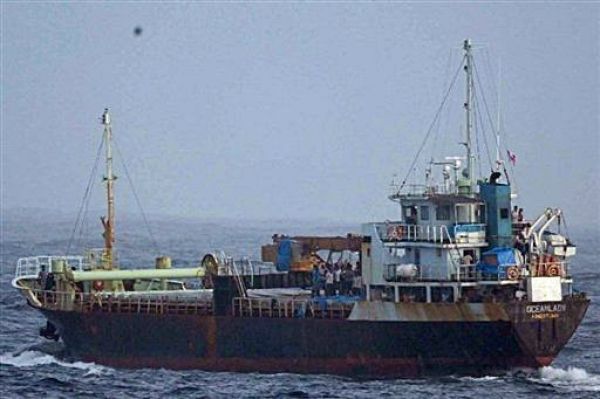
"MV Sun Sea" Uncredited Photo at: http://www.edynews.com/top-news/18-almost-500-sri-lankan-migrants-are-in-canadian-custody.html

They’re at it again.

In November, 76 Tamil refugees escaped Sri Lanka on a rusty freighter. They arrived in Victoria, where they were met by Royal Canadian Mounted Police (RCMP) and Canadian Border Services Agency (CBSA) officials, who promptly jailed them for three months on allegations of terrorism. It would be fully half a year before the CBSA would admit that it had never had any evidence.

By then, however, it was too late: anti-Tamil and anti-refugee hysteria had spread like wildfire. Now, mere weeks after that most tepid of mea culpas from the CBSA, the hysteria greeting the Tamil MV Sun Sea passengers is worse. As with the Ocean Lady, these migrants will be detained in Maple Ridge jails before their refugee claims are considered. The Conservatives have begun to create new rules to treat refugees who arrive by boat differently from others. Meanwhile, Paul Fromm, the infamous neo-Nazi, has been receiving uncritical coverage in mainstream media with his demands that the migrants be sent back.

As the paranoia grows ever more heightened, it becomes increasingly important that we resist it. The universal rights of safety and mobility must be upheld, not only for the Sun Sea migrants, but for all people fleeing violence.

Continue reading “Rocking the Boat: A Brief History of Anti-Migrant Hysteria in Canada”

Why silence over Kashmir speaks volumes

by Pankaj Mishra

Once known for its extraordinary beauty, the valley of Kashmir now hosts the biggest, bloodiest and also the most obscure military occupation in the world. With more than 80,000 people dead in an anti-India insurgency backed by Pakistan, the killings fields of Kashmir dwarf those of Palestine and Tibet. In addition to the everyday regime of arbitrary arrests, curfews, raids, and checkpoints enforced by nearly 700,000 Indian soldiers, the valley’s 4 million Muslims are exposed to extra-judicial execution, rape and torture, with such barbaric variations as live electric wires inserted into penises.

Why then does the immense human suffering of Kashmir occupy such an imperceptible place in our moral imagination? After all, the Kashmiris demanding release from the degradations of military rule couldn’t be louder and clearer. India has contained the insurgency provoked in 1989 by its rigged elections and massacres of protestors. The hundreds of thousands of demonstrators that fill the streets of Kashmir’s cities today are overwhelmingly young, many in their teens, and armed with nothing more lethal than stones. Yet the Indian state seems determined to strangle their voices as it did of the old one. Already this summer, soldiers have shot dead more than 50 protestors, most of them teenagers.

Continue reading “Why silence over Kashmir speaks volumes”