Alongside BBC correspondent David Lloyn; Richard Spencer, Middle East editor of the Daily and Sunday Telegraph; Shiraz Maher, author of Salafi-Jihadism:The History of an Idea; and Azadeh Moaveni, author of Lipstick Jihad and Honeymoon in Tehran – I was part of this panel discussing Daesh, Nusra, Assad, Saudi-Iran, and the West. (It was also the first time I saw a finished copy of our book Burning Country).
Category: Uncategorized
Mind-forged Manacles
A shorter version of this ran in The Nation earlier.
 Over a decade back, while working for an ad agency in Islamabad, I met a recently divorced young woman. The woman had grown up in the US but had submitted to her parents’ wishes when it was time to marry. Soon after the wedding, however, she discovered something amiss. The marriage could not be consummated—her husband was gay. It would be four years before she was allowed to drop the pretense and ask for a divorce.
In traditional society, marriage is a fraught prospect. It is more than the union of two individuals: for the political elite, it’s an influence multiplier; for the economic elite, it’s a corporate merger; and for the have nots, it’s a bid to have. The personal, as it were, is the political—and the social—and the economic.
The transactional character of these unions is rarely acknowledged. Material concerns are sublimated into the concept of ‘honor’, which masks marital dysfunction and serves as caveat emptor. Divorces, consequently, are rare, and divorcees disdained. Many women endure bad marriages for fear of the stigma that attends divorce.
Central to Rafia Zakaria’s The Upstairs Wife: An Intimate History of Pakistan is the story of her aunt Amina, who, after her husband takes a new wife, decides to stay in a polygamous marriage rather than suffer a divorcee’s fate. Distraught and humiliated, Amina initially returns to her parents and contemplates divorce. But her parents’ anguish and community pressure eventually make her submit and she returns to the indignity of her husband’s divided affections.
No need for conspiracy: US seeks ‘regime preservation’ in Syria
by Charles Davis
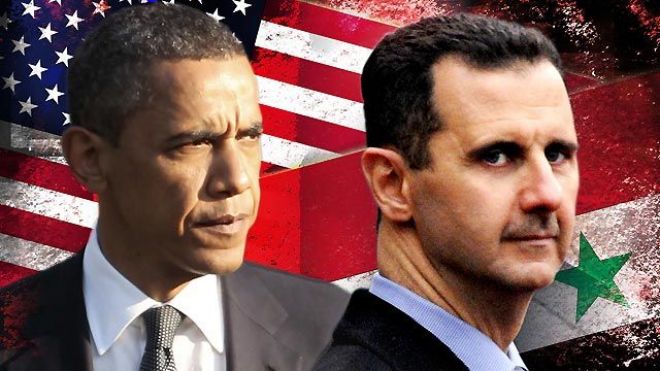
The problem I have with Seymour Hersh’s latest thinly and anonymously sourced conspiracy theory about Syria is not that I find it implausible that the U.S. government would conspire to preserve the regime of Syrian dictator Bashar al-Assad — by, in part, passing it intelligence on “jihadists” through a third party — but that we already know this is the case and need not rely on the word of a chatty “former adviser” to the Pentagon who happens to be friends with a famous journalist.
The real problem for Hersh and others like him these days is that ever since the Arab Spring came to Syria in 2011 they have cast in terms of conspiracy, abandoning class analysis to suggest it was, from the start, or damn near close it, a U.S-Israeli plot to effect regime change, not the predictable and indeed predicted result of authoritarian neoliberalism, poverty and the closing off of any means for Syrians to achieve meaningful reform through politics or pacifism.
Continue reading “No need for conspiracy: US seeks ‘regime preservation’ in Syria”
From Deep State to Islamic State
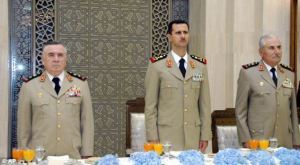 This piece was published at Newsweek Middle East edition.
In 2011, according to the ASDA’A Burson-Marsteller Arab Youth Survey, “living in a democracy” was the most important desire for 92% of respondents. A mere four years later, however, 39% of Arab youths believed democracy would never work in the Arab world, and perceived ISIS, not dictatorship, as their most pressing problem.
Powerful states seem to share the perception, bombing ISIS as a short-term gestural response to terrorism, re-embracing ‘security states’ in the name of realism – concentrating on symptoms rather than causes.
How did the bright revolutionary discourse of 2011 turn so fast to a fearful whisper? Jean-Pierre Filiu’s “From Deep State to Islamic State” – a passionate, sometimes polemical, and very timely book – examines “the repressive dynamics designed to crush any hope of democratic change, through the association of any revolutionary experience with the worst collective nightmare.”
For historical analogy, Filiu evokes the Mamluks, Egypt’s pre-Ottoman ruling caste. Descended from slaves, these warriors lived in their own fortified enclaves, and considered the lands and people under their control as personal property. Filiu sees a modern parallel in the neo-colonial elites – militarised elements of the lower and rural classes – who hijacked independence in Algeria, Egypt, and Syria (and, in different ways, in Libya, Iraq, Tunisia and Yemen).
The Syrian Jihad
 This was published at the National.
Security discourse dominates the international chatter on Syria. Most Syrians see Assad as their chief enemy – he is after all responsible for the overwhelming proportion of dead and displaced. But the Syrian people are not invited to the tables of powerful states, who are in agreement that their most pressing Syrian enemy is ‘terrorism’.
There is disagreement on who exactly the terrorists are. Vladimir Putin shares Assad’s evaluation that everyone in armed opposition is an extremist, and at least 80% of Russian bombs have therefore struck the communities opposing both Assad and ISIS. North of Aleppo, Russia has even struck the rebels while they were batttling ISIS. This wave of the ‘War on Terror’ – now led, with plenty of historical irony, by Russia and Iran – uses anti-terror rhetoric to engineer colonial solutions, just as the last wave did, and ends up promoting terror like never before.
There is no question that the moderate Syrian opposition exists, in the form of hundreds of civilian councils, sometimes directly elected, and at least 70,000 democratic-nationalist fighters. In a recent blog for the Spectator, Charles Lister, one of the very few Syria commentators to deserve the label ‘expert’, explains exactly who they are.
Lister’s book-length study “The Syrian Jihad”, on the other hand, focuses on those militias, from the Syrian Salafist to the transnational Jihadist, which cannot be considered moderate. It clarifies the factors behind the extremists’ rise to such strategic prominence, amongst them the West’s failure to properly engage with the defectors and armed civilians of the Free Syrian Army (FSA) in 2011 and 2012.
Gilbert Achcar schools RT on Syria
This is what happens when RT makes the mistake of inviting an actual Middle East expert. Gilbert Achcar of SOAS breaks the channel’s truth embargo and explains Syria to an audience which is otherwise only exposed to the ramblings of miscellaneous truthers and conspiracy nuts. Unlike John Pilger who went on RT to sing a love song to Vlad Putin, Achcar reminds the audience that the channel is merely a mouthpiece for the Russian state and that the state that destroyed Chechnya can’t possibly be expected to do anything humane in Syria.
The Sound and the Fury
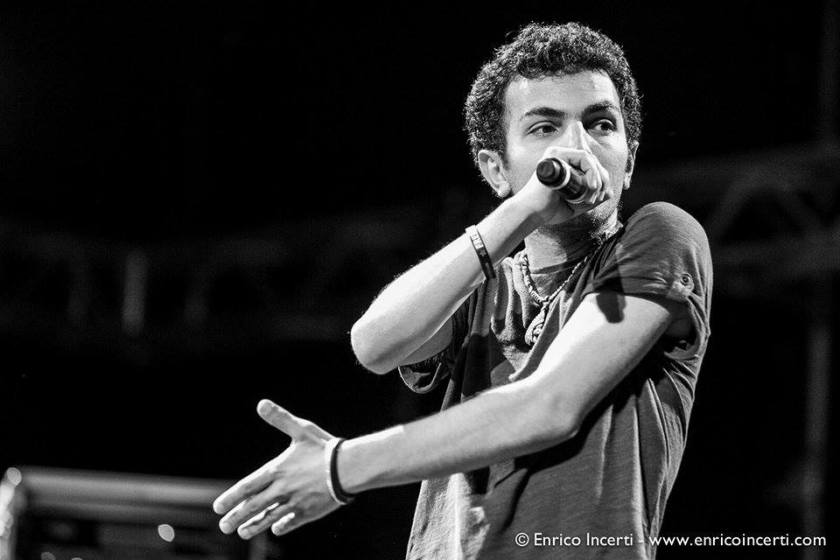 This was first published (with some great links) at the Guardian. Picture is Abu Hajar. More stories about him and many others in our forthcoming book ‘Burning Country: Syrians in Revolution and War’.
In the first heady weeks of the Arab Spring commentators made much of the role played by social media, and certainly Facebook in particular provided an indispensable tool to young revolutionaries throughout the region. But less noticed, and ultimately far more significant, was the carnivalesque explosion of popular culture in revolutionary public spaces.
The protests in Syria against Bashaar al-Assad’s dictatorship were far from grim affairs. Despite the ever-present risk of bullets, Syrians expressed their hopes for dignity and rights through slogans, graffiti, cartoons, dances and songs.
To start with, protestors tried to reach central squares, hoping to emulate the Egyptians who occupied Tahrir Square. Week after week residents of Damascus’s eastern suburbs tried to reach the capital’s Abbasiyeen Square, and were shot down in their dozens. Tens of thousands did manage to occupy the Clock Square in Homs, where they sang and prayed, but in a matter of hours security washed them out with blood.
This April 2011 massacre tolled an early funeral bell for peaceful protest as a realistic strategy. In response to the unbearable repression, the revolution gradually militarised. By the summer of 2012 war was spinning in downward spiral: the regime added sectarian provocation to its ‘scorched earth’ tactics of bombardment and siege; foreign states and transnational jihadists piled in; those refugees who could got out.
Civil revolutionaries did their best to adapt. Alongside self-organising committees and councils, Syrians set up independent news agencies, tens of radio stations and well over 60 newspapers and magazines. Kafranbel, for instance, a rural town become famous for its witty and humane slogans, broadcasts discussion, news and women’s programmes on its own ‘Radio Fresh’ – despite a recent assault by Jabhat al-Nusra fighters. And Enab Baladi (My Country’s Grapes), is a newspaper published by women in Daraya, a besieged, shelled and gassed Damascus suburb. Remarkably, the magazine focuses on unarmed civil resistance.
International Human Rights Day Marked by Association of Parents of Disappeared Persons (APDP) in Indian Occupied Kashmir
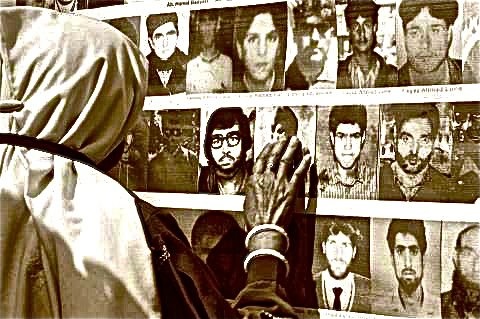
PRESS RELEASE from Association of Parents of Disappeared Persons (APDP) in Indian Occupied Kashmir
Dated: 10th Dec, 2015
International Human Rights Day is observed around the globe today on December 10. On this occasion, the Association of Parents of Disappeared Persons (APDP) pays tribute to thousands of the disappeared of Jammu and Kashmir. Around 8,000 to 10,000 cases of enforced disappearances have been reported in Jammu and Kashmir since 1989 when the freedom movement turned into an armed struggle against the Indian rule. This tribute is a reminder to the fact that we have to keep struggling until justice is delivered. In addition, while paying tribute, we reiterate that memory is out resistance and a weapon to fight against power.
Leila al-Shami on Stop the War
by Leila al-Shami
(From Leila al-Shami’s blog.)
Today, the British parliament will be voting on whether or not to join the US coalition in bombing Daesh (ISIS). During the debates the British left has outdone itself – even by its own usual standard of idiocy – to the extent it makes the Tories look progressive.
Over the past few days, demonstrations have been held in London and elsewhere to oppose the UK bombing Syria. The demonstrations were organized by the Stop the War Coalition (STW), an organization which has long adopted a counter-revolutionary position on Syria. Since the start of the uprising in 2011 STW has refused to acknowledge the agency of the oppressed Syrian people struggling against a fascist regime or to support their struggle in any form, preferring to see the current conflict only through a geopolitical lens. Their selective anti-imperialism means they’ve only ever opposed Western intervention in Syria (even when this was not a reality) and refuse to actively oppose Russian or Iranian intervention. They have never called for any action against Assad or opposed the war he has waged on the Syrian people, raining down barrel bombs and targeting civilian areas with Scud missiles for over four years. It is this war which has been the main cause of civilian deaths in Syria and which has created the vacuum and desperation giving rise to Daesh. These ‘progressives’ have consistently refused to give a platform to revolutionary Syrians. They have even, shamefully, called the police to remove Syrians present at a recent meeting. Conversely, they give non-Syrian apologists for the Assad regime a voice, people such as the odious George Galloway and massacre-denier Mother Agnes.
At the demonstrations organized by STW some present were holding Baathist flags and pictures of the mass-murderer Assad. Seriously, a blatant fascist presence was considered acceptable at a protest organized by people who describe themselves as leftists. It is no wonder that their demonstrations were small (compared to the heyday of the Iraq war demos), with no large scale Syrian or Muslim presence. I am sure many who oppose the bombing of Syria would feel alienated joining a protest organized by those who ally themselves with a regime that practices torture on an industrial scale, sodomizes its opponents with broken bottles, and gasses civilian neighbourhoods. One of the speakers at the event held last Saturday, Tariq Ali (once considered a ‘radical’, so I’m told) rhetorically called for Britain to ally itself with Assad and Russia if it wanted to defeat Daesh. This was based on his erroneous claim that Russia is actually attacking Daesh, whilst the evidence shows that the majority of Vlad the Invader’s attacks are aimed at anti-Assad forces (which have also been fighting Daesh since January 2014) and civilians in areas with no Daesh presence. As for Assad, not only has he not attacked Daesh until recently (to gain international legitimacy as a partner in the ever expanding War on Terror) but has actively facilitated its growth.
Jeremy Corbyn, the current leader of the British Labour Party who has been the Chair of STW for the past four years and has now appointed the Stalinist and Putin supporter Seumas Milne as the party’s director of communications, is giving his party’s members the choice of whether to back joining the US coalition or not. To help them make up their minds he has invited Patrick Cockburn to brief Labour MPs on Syria ahead of the vote. Patrick Cockburn openly supports the fascist mass murderer Assad, has called for Britain to ally with Assad’s imperialist sponsors Russia and Iran, has consistently slandered Syrian rebels as ‘Al Qaeda’, makes shit up in his writing like pretending to be an eyewitness to massacres which likely never happened, and recommends Donald Trump’s analysis on the Middle East. Does anyone really consider these people progressives? As an anarchist, it seems to me that the statist ideologies of both left or right have much more in common with each other than any values or principles I adhere to.
As a British Syrian who opposes any foreign power bombing Syria, I cannot help but feel disgusted that these people have hijacked the debate. The only way to defeat Daesh is to give support to local forces which are engaged in the battle with them on the ground. This must include Sunni Arab forces – the population Daesh attempts to rule. Cameron was not wrong when he said there are 70,000 moderate opposition fighters in Syria. However, the idea that these forces will join a coalition fighting Daesh which doesn’t address the main threat to Syrians – the Assad regime – is absurd. As for the anti-war left, if they are to have any relevance or moral compass, they must oppose all those who are bombing Syrians, including the Assad regime and its imperial backers, Russia and Iran. Most of all, they must listen to the voices of Syrians instead of sticking to their patronizing and unprincipled stance of inviting ‘experts’ of dubious credentials speak on their behalf.
Regardless of the outcome of today’s vote, the bombs on Syria will continue to fall.
The Legacy of Eqbal Ahmad
 Sadly, Eqbal Ahmad is not as well remembered as he should be. Stuart Schaar’s marvelous new biography, Eqbal Ahmad: Critical Outsider in a Turbulent Age, will help rectify this unfortunate fact.
Among many other endeavours, Ahmad directed the Transnational Institute in Amsterdam, collaborated with Algerian revolutionaries, edited the journal Race & Class, wrote a column for the Pakistani newspaper Dawn, and sat trial for conspiring to kidnap Henry Kissinger. He was a Third Worldist, an internationalist, and a humanist in the very best sense of those terms.
Richard Falk puts it felicitously:
Eqbal Ahmad was a remarkable human being as well as a seminal progressive political thinker. In this illuminating intellectual biography, Stuart Schaar brings his subject to life, drawing on their long, intimate friendship and shared scholarly engagement with the politics of the Middle East and the Islamic world. Above all, Ahmad grasped the toxic interplay between the maladies of postcolonialism and the persistent imperial ambitions of the West better than any of his contemporaries.
In November I had the pleasure of interviewing Schaar about his book for Middle East Dialogues, a video series produced by the Center for Middle East Studies at the University of Denver. Here it is.
 P U L S E