The Pakistani Taliban have claimed responsibility for an attack on the US consulate in Peshawar on Monday. Is Pakistan paying the price for battles waged by the United States in the region?
Chalmers Johnson is president of the Japan Policy Research Institute, a non-profit research and public affairs organization devoted to public education concerning Japan and international relations in the Pacific. He was chairman of the academic advisory committee for the PBS television series “The Pacific Century,” and he played a prominent role in the PBS “Frontline” documentary “Losing the War with Japan.” Both won Emmy awards. His most recent books are Blowback: The Costs and Consequences of American Empire (New York: Metropolitan Books, 2000); The Sorrows of Empire: Militarism, Secrecy, and the End of the Republic (New York: Metropolitan Books, 2004); and Nemesis: The Last Days of the American Republic (New York: Metropolitan Books, 2007).
More than eight years after dismantling the Taliban, the United States is still mired in Afghanistan. Indeed, last October it launched a much-hyped ‘surge’ to prevent a second Taliban takeover of Afghanistan, not imminent yet, but eminently possible.
The first dismantling of the Taliban was a cakewalk.
In 2001, the United States quickly and decisively defeated the Taliban, killed, captured or scattered their fighters, and handed over the running of Afghanistan to their rivals, mostly Uzbeks and Tajiks from the Northern Alliance.
Unaware of Pashtoon history, American commentators were pleased at the smashing victory of their military, convinced that they had consigned the Taliban to history’s graveyard.
Instead, the Taliban came back from the dead. Within months of their near-total destruction, they had regained morale, regrouped, organized, trained, and returned to fight what they saw as a foreign occupation of their country. Slowly, tenaciously they continued to build on their gains, and by 2008 they were dreaming of taking back the country they had lost in 2001.
Could this really happen? That only time will tell, but prospects for the Taliban today look better than at any time since November 2001.
An Arab-American of Lebanese descent, fluent in Arabic, Anthony Shadid was one of a handful of unembedded Western journalists reporting from Iraq during the US invasion in 2003. At the time, he was The Washington Post’s correspondent for Islamic Affairs in the Middle East.
His dispatches from Iraq were about Iraqis, about the destruction visited upon them by a war whose architects claimed that they were bringing democracy to that country. He reported the destruction and mayhem caused by this war by letting the Iraqis speak for themselves: and they spoke of their pain, their anguish, their perplexity and their anger.
For his honest reporting, for a job well done, Anthony Shadid received some of the highest accolades of his profession. In 2004 he received the Michael Kelly Award and the Pulitzer Prize for international reporting. Other honors followed, all well-deserved. He had won his spurs for reporting, not cheerleading, neither praising nor denouncing the United States. He was reporting for The Washington Post, a neoconservative newspaper.
On Jan 29, I noticed for the first time a report in The New York Times that carried Anthony Shadid’s byline. Was this a promotion? It was written from Halaichiya, a remote village in the southern tip of Iraq, untouched by the war. The village has never seen Americans before, neither troops nor diplomats.
The Zionists are prisoners of a bad dream: they must first free themselves, break free from the prison in which they can only play the part of tormentors, if they and especially their Palestinian victims are to live normal lives.
M. Shahid Alam
On January 12, the New York Times carried an article by David Brooks on Jews and Israel. It so caught my eye, I decided to bring its conservative author to my class on the economic history of the Middle East. I sent my students the link to this article, asked them to read it carefully, and come to the next class prepared to discuss and dissect its contents.
My students recalled various parts of the NYT article but no one could explain its substance. They recalled David Brooks’ focus on the singular intellectual achievements of American Jews, the enviable record of Israeli Jews as innovators and entrepreneurs, the mobility of Israel’s innovators, etc. One student even spoke of what was not in the article or in the history of Jews – centuries of Jewish struggle to create a Jewish state in Palestine.
But they offered no comments about Brooks’ motivation. Why had he decided to brag about Jewish achievements, a temptation normally eschewed by urbane Jews. In my previous class, while discussing Edward Said’s critique of Orientalism, I had discussed how knowledge is suborned by power, how it is perverted by tribalism, and how Western writers had crafted their writings about the Middle East to serve the interests of colonial powers. Not surprisingly, this critique had not yet sunk in.
I coaxed my students, asking them directly to explore if David Brooks had an axe (or more than one) to grind. Was there an elephant in the room they had missed? What was the subtext of the op-ed?
From The Nation’s press release (You can watch Democracy Now’s interview with Jeremy Scahill here):
In a stunning investigation just posted at TheNation.com, Jeremy Scahill reveals a covert military operation being run almost entirely by Blackwater, USA, a military contractor embroiled in controversy for their actions in Iraq and the Middle East. Key points from the piece:
An elite division of Blackwater, USA is running a covert, US Military operation that includes planning targeted assassinations, “snatch and grabs” and other sensitive actions inside and outside Pakistan. This is a program that not even some Senior Level Obama Administration and Pentagon officials are aware of.
Blackwater operatives are assisting in gathering intelligence to help run a secret, second and heretofore unreported, US military drone bombing campaign that runs parallel to the well-documented CIA predator strikes.
Sources for The Nation report that some non-military Blackwater employees, outside of the US Military chain of command, have obtained rolling security clearances above their approved clearances, and higher than even members of the US Congress.
Robert Greenwald and McChesney discuss Afghanistan
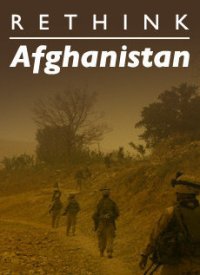
Robert Greenwald is a producer, director and political activist. Greenwald is the founder and president of Brave New Films. Under Greenwald’s direction, Brave New Films has produced a series of short political videos, including the Fox Attacks and Real McCain campaigns. Robert Greenwald’s Brave New Foundation is currently producing Rethink Afghanistan, a groundbreaking documentary being released online in real-time; the film features experts from Afghanistan, Pakistan and the U.S. discussing the United States’ flawed strategy in Afghanista




 P U L S E