Economics: doing business as if people mattered

by Robert Jensen

This article is Part 1 of a 3 part collection of essays by University of Texas at Austin Professor Robert Jensen on important issues that should be highlighted during this year’s US mid-term election campaigns.
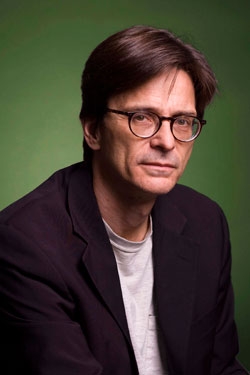
Robert Jensen

When politicians talk economics these days, they argue a lot about the budget deficit. That’s crucial to our economic future, but in the contemporary workplace there’s an equally threatening problem — the democracy deficit.

In an economy dominated by corporations, most people spend their work lives in hierarchical settings in which they have no chance to participate in the decisions that most affect their lives. The typical business structure is, in fact, authoritarian — owners and managers give orders, and workers follow them. Those in charge would like us to believe that’s the only way to organize an economy, but the cooperative movement has a different vision.

Cooperative businesses that are owned and operated by workers offer an exciting alternative to the top-down organization of most businesses. In a time of crisis, when we desperately need new ways of thinking about how to organize our economic activity, cooperatives deserve more attention.

First, the many successful cooperatives remind us that we ordinary people are quite capable of running our own lives. While we endorse democracy in the political arena, many assume it’s impossible at work. Cooperatives prove that wrong, not only by producing goods and services but by enriching the lives of the workers through a commitment to shared decision-making and responsibility.

Continue reading “Economics: doing business as if people mattered”

The Making of a Virtual Palestinian State

Mosaic Intelligence Report: October 1, 2010 — Direct talks between the Palestinians and Israel might collapse. Will Netanyahu agree to extend the settlement freeze? And, does the prospect for a Palestinian Sate remain viable?

The letter Dajani talks about was actually Dennis Ross’s initiative, who was once described by his own subordinate as ‘Israel’s lawyer’. MJ Rosenberg’s blistering take on Ross’s treacheries is a must read.

Continue reading “The Making of a Virtual Palestinian State”

Obama Loses to Military Brass

Robert Dreyfuss discusses Obama’s wars on the Alyona Show.

Bob Woodward’s new book, “Obama’s Wars”, released today points out, Obama, during the review of the war in Afghanistan at the end of last year, wanted out. Politically, his advisors, wanted out but the military branch of his national security team wanted more and didn’t give the president another option. Robert Dreyfuss contributing editor at The Nation explains that the problem lies with Obama being so inexperienced when it comes to the military that he didn’t know how to properly ask to end the war.

Obama’s UN speech ‘nothing new’

Barack Obama, the US president, has urged countries in the United Nations to get behind Middle East peace efforts in an address at the UN General Assembly. But Ali Hasan Abunimah, a Palestinian-American journalist and co-founder of Electronic Intifada, an independent web site about the Israeli-Palestinian Conflict, said Obama’s speech did not represent anything new. “That bodes very ill for the peace process that he’s so invested in,” Abunimah told Al Jazeera’s Shihab Rattansi, speaking from the US state of Indiana.

“Let’s judge him not by what he says, but what he does.”

Reese Erlich: “Stop using the word ‘terrorist'”

Defining what a terrorist is and isn’t is a major dilemma. What one may consider terrorism, another may consider resistance. So where does one draw the line? Reese Erlich tackles that topic in his latest book “Conversations with Terrorists: Middle East Leaders on Politics, Violence, and Empire.” Erlich is a veteran journalist who has covered U.S. foreign policy for decades. He has freelanced for National Public Radio, Radio Deutsche Welle, the Australian Broadcasting Corp. Radio, the Canadian Broadcasting Corp. Radio, and writes for The San Francisco Chronicle and The Dallas Morning News.
Drawing on firsthand interviews and original research, Erlich argues that yesterday’s terrorist is often today’s national leader and that today’s freedom fighter may become tomorrow’s terrorist. By branding all of American’s opponents as “terrorists,” it makes it more difficult to look beyond the individual or the political group and understand what they are really all about. I caught up with Erlich recently and here’s what he had to say.

Continue reading “Reese Erlich: “Stop using the word ‘terrorist’””

American Public Opinion and the ‘Special Relationship’

by John Mearsheimer

There is no question that the United States has a relationship with Israel that has no parallel in modern history. Washington gives Israel consistent, almost unconditional diplomatic backing and more foreign aid than any other country. In other words, Israel gets this aid even when it does things that the United States opposes, like building settlements. Furthermore, Israel is rarely criticized by American officials and certainly not by anyone who aspires to high office. Recall what happened last year to Charles Freeman, who was forced to withdraw as head of the National Intelligence Council because he had criticized certain Israeli policies and questioned the merits of the special relationship.

Steve Walt and I argue that there is no good strategic or moral rationale for this special relationship, and that it is largely due to the enormous influence of the Israel lobby. Critics of our claim maintain that the extremely tight bond between the two countries is the result of the fact that most Americans feel a special attachment to Israel. The American people, so the argument goes, are so deeply committed to supporting Israel generously and unreservedly that politicians of all persuasions have no choice but to support the special relationship.

Continue reading “American Public Opinion and the ‘Special Relationship’”

Can A Muslim Truly Be An American?

There are numerous ways to approach this question. From a legal standpoint, many Muslims are American, having been born in the United States. Many Muslim immigrants are in possession of a United States passport, an item that ideally would be the only criterion by which one is judged “American.” National identity is only partly informed by formal citizenship, however. In the United States today, as throughout its history, citizenship is invested with crucial symbolic features. Most of the symbolic features of proper American-ness involve race or religion (wherein, say, Jews or African Americans aren’t seen to be fully American ideologically or, in some cases, legally). Another, often related, feature is political belief: dissent from what politicians and corporate media deem the national interest isn’t traditionally a welcome feature of true American-ness (i.e., the normative American). In turn, the politically-mainstream white Christian is the truest American of all.

Current conceptions of the normative American can best be detected in the recent imbroglio over the “ground-zero mosque,” a histrionic misnomer popularized by right-wing media. The proposed Muslim community center two blocks from the northeastern tip of ground zero, actually called Cordoba House, has created a national frenzy that compels us to reassess the symbolic qualities of citizenship in the United States. By expressing such loud opposition to the community center, a significant portion of Americans has again reinforced a limited definition of American-ness, in this case one that excludes Muslims from the full rights of citizenship.

Continue reading “Can A Muslim Truly Be An American?”

Zionist Dialectics: Past and Future

Excerpted from Israeli Exceptionalism (Palgrave: 2009).

by M. Shahid Alam

My God! Is this the end? Is this the goal for which our fathers
have striven and for whose sake all generations have suffered?
Is this the dream of a return to Zion which our people have
dreamt for centuries: that we now come to Zion to stain its soil
with innocent blood?”

Ahad Ha’am, 1921

This study has employed a dialectical framework for analyzing the destabilizing logic of Zionism. We have examined this logic as it has unfolded through time, driven by the vision of an exclusionary colonialism, drawing into its circuit – aligned with it and against it – nations, peoples, forces, and civilizations whose actions and interactions impinge on the trajectory of Zionism, and, in turn, who are changed by this trajectory.

It would be a bit simplistic to examine the field of interactions among the different actors in this historic drama on the essentialist assumption that these actors and their interests are unchanging. Instead, we need to explore the complex ways in which the Zionists have worked – and, often have succeeded – to alter the behavior of the other political actors in this drama: and, how, in turn, the Zionists respond to these changes. Most importantly, we need to explore all the ways in which the Zionists have succeeded in mobilizing the resources of the United States and other Western powers to serve their specific objectives.

Continue reading “Zionist Dialectics: Past and Future”

Principle and Park51: Tariq Ramadan vs Leon Wieseltier

Here are two statements about the proposed Islamic Center in Manhattan — the so called ‘Ground Zero Mosque.’ One by The New Republic‘s literary editor and pro-Israel partisan Leon Wieseltier, the other by noted Muslim scholar Tariq Ramadan. I leave it to the readers to guess which statement was made by whom.

  1. “The challenge for Muslims in America is to respect the fears of ordinary people while resisting the exploitation of those fears by political parties, lobbies and sectors of the media. To meet this challenge, Muslims must reassess their own involvement, behavior and contributions in American society…Life is not only about rights to be claimed but also about collective sensibilities to be felt. It is possible to protect one’s rights while at the same time acknowledging and understanding the concerns of others…No doubt, it is the legitimate right of Muslims to build a community center near Ground Zero. Yet, I believe it is not a wise decision, considering the collective sensitivities in American society. This is a moment to go beyond rights and reach for the common good: To build it elsewhere, if possible, would be a sensible and symbolic move.”
  2. “It is odd to see conservatives suddenly espouse the moral superiority of victimhood, as it is odd to see them suddenly find an exception to their expansive view of religious freedom. Everybody has their preferred insensitivities. In matters of principle, moreover, polling is beside the point, or an alibi for the tyranny of the majority, or an invitation to demagogues to make divisiveness into a strategy, so that their targets come to seem like they are the ones standing in the way of social peace, and the “decent” thing is for them to fold. Why doesn’t Rauf just move the mosque? That would bring the ugliness to an end. But why don’t Palin and Gingrich just shut up? That, too, would bring the ugliness to an end.”

Well?

Let me assist. The first statement, telling Muslims to ‘respect’ fear and ignorance, is Ramadan’s; the second, speaking of inviolable principles, is Wieseltier’s. Ramadan’s principles are evidently more flexible. Muslims must apparently learn to live in a manner which accommodates Pamela Geller‘s prejudices.

Iraq War reparations

You thought it won’t happen. You were wrong. Finally reparations for the suffering caused by the war are in order…by the Iraqis to the United States! Yes–you heard it right. The United States–which has killed over 2.4 million Iraqis since 1991 and displaced 5 million more–will be paid $400 million by the Iraqis in war reparations.

Continue reading “Iraq War reparations”