Benedict Cumberbatch’s full length refugee appeal

Benedict Cumberbatch lends his support to a Save the Children charity single raising money for Syrian refugees.
#‎helpiscoming.

Conversations about home (at a deportation centre)—Warsan Shire

Well, I think home spat me out, the blackouts and curfews like tongue against loose tooth. God, do you know how difficult it is, to talk about the day your own city dragged you by the hair, past the old prison, past the school gates, past the burning torsos erected on poles like flags? When I meet others like me I recognise the longing, the missing, the memory of ash on their faces. No one leaves home unless home is the mouth of a shark. I’ve been carrying the old anthem in my mouth for so long that there’s no space for another song, another tongue or another language. I know a shame that shrouds, totally engulfs. I tore up and ate my own passport in an airport hotel. I’m bloated with language I can’t afford to forget.

Continue reading “Benedict Cumberbatch’s full length refugee appeal”

A Critique of Subaltern Studies and Appropriative Solidarity: A Response to ‘Dear Prof. Chatterjee, When Will You Engage with the “Discomfort” of Indian Occupied Kashmir?’

by Pothik Ghosh

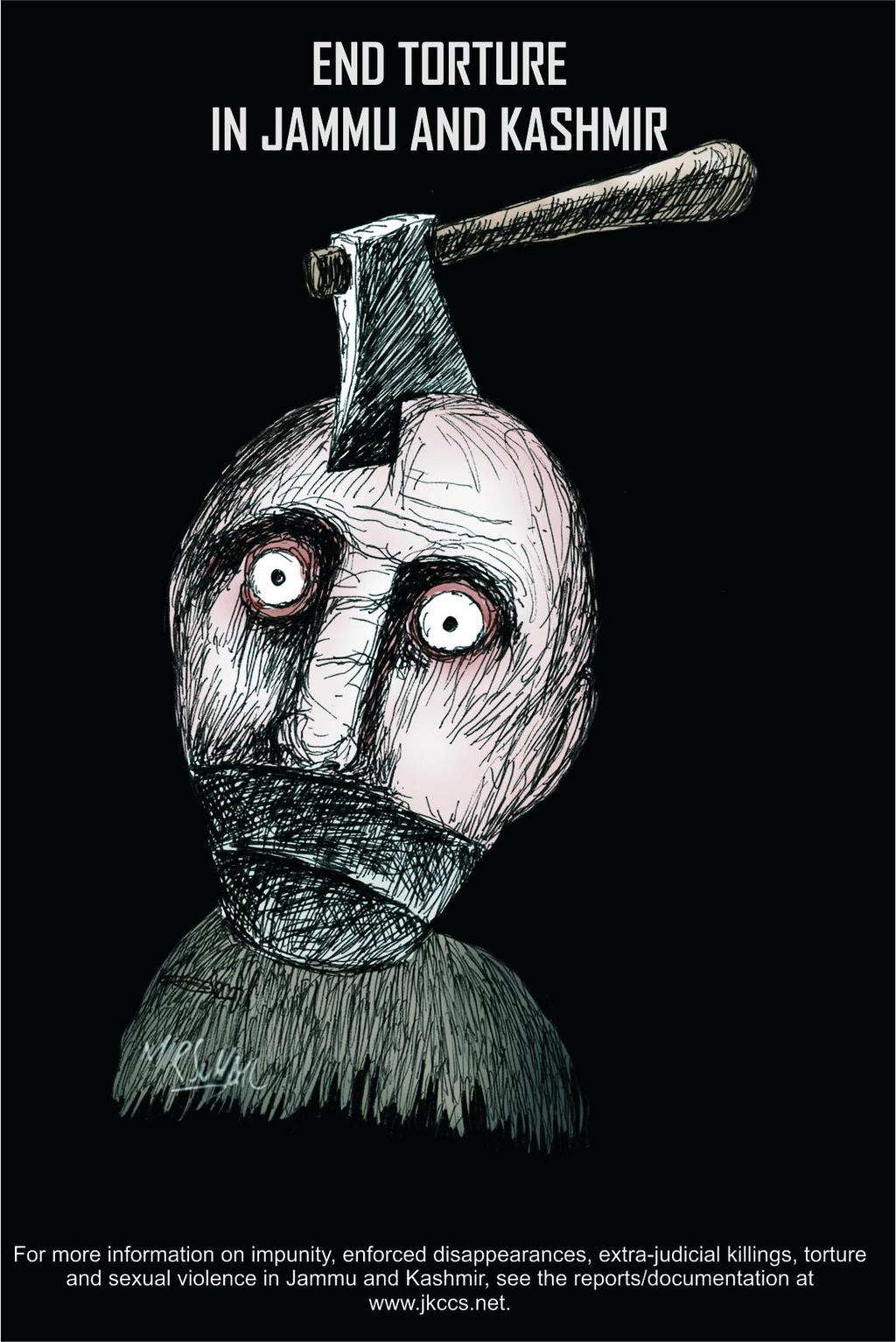
More Info on the Indian Occupation of Jammu & Kashmir at http://www.jkccs.net

A sharply combative polemic that hits the nail on the head and which must, for that reason, be hailed. However, I doubt that Chatterjee’s response, if at all he deigns to come up with one, will throw any new light on the matter, much less open new horizons. His intellectual orientation and theoretical presuppositions — which stem from his political complicity only to reinforce it – are simply incapable of that. Subalternity is a constitutive crisis of the horizon or structure of valourisation, measure, distribution and/or representation. (The operative word here is constitutive.) In such circumstances, to envisage politics in terms of affirmation of subalternity – which is precisely the theoretical and historiographical project of the Subaltern Studies collective – is to reproduce that structure and its constitutive lack or crisis. For, subalternity is the crisis of the structure of representation that is nevertheless sutured on to it. In other words, to envisage politics in terms of affirming subalternity is to reproduce the constitutive duality of the élite and the subaltern, and thus enable its continued extension through intensification. This is pretty much a continuation through intensification of the politics of passive revolution. Something the Subaltern Studies, and Chatterjee in particular, claimed to have critiqued — albeit only as one of its concrete historical moments or appearances — by precisely perpetuating its general political mode.

Continue reading “A Critique of Subaltern Studies and Appropriative Solidarity: A Response to ‘Dear Prof. Chatterjee, When Will You Engage with the “Discomfort” of Indian Occupied Kashmir?’”

Tragic Numbers

With the publication of the incredibly powerful photograph of Aylan Kurdi, the boy who drowned while fleeing the fighting in Syria, let’s hope the world pays attention to that awful war for more than one news cycle. Aylan has become the symbol of the current refugee crisis, the largest mass migration since World War II. You can see more at MarkFiore.com.

On Kashmir, Tripura and Other Such Places: Prof. Chatterjee’s Response

By Partha Chatterjee

Partha Chatterjee, professor of anthropology at Columbia University

I wholly endorse Huma Dar’s critique of the Indian state’s relation to Kashmir, even though, not being Kashmiri myself, I cannot share the position from which she writes. My declared position on the Kashmir issue has always been at odds with Indian nationalist views, as indeed have my views on the hill states of north-eastern India. Politically, I have taken every opportunity open to me to condemn the operations of the Indian security apparatus in Kashmir and the north-east. I have always argued against turning the Kashmir question into an exclusive matter of bilateral negotiation between Pakistan and India and insisted on recognizing the right of the Kashmiri people to determine its own political future. My views on the north-eastern states too are shaped by similar considerations. Those who are familiar with my critique of the Indian nationalist ideology recognize my position. Needless to say, for the last three decades, I have been condemned by Indian nationalists of every hue, including sections of the Indian Left, for holding those views. I have also realized that regardless of one’s standing in the academy, the voices of people like us in India’s public domain are utterly marginal.

I felt it necessary to bring up the question of Kashmir and Tripura in connection with my statement on the boycott of Israeli institutions only to point out that I was not employing a different standard in judging colonialist claims within the territorial state of India. That statement was obviously not the place to elaborate on my critique of the Indian state ideology. I was merely explaining my way of negotiating, as a private individual, the terrain of national and colonial power relations in which one is necessarily implicated. I do not mean my refusal to visit Kashmir or Tripura to serve as a demonstrative act of resistance, nor indeed do I mean it to be exemplary in any way. It is merely a personal ethical choice that I have never before felt it necessary to talk about in public. I did not mention in my essay the north-eastern hill states not because I accept their relation to the Indian state as unproblematic but because I did once visit those states – in the early 1970s. That visit, and the experience of being an “Indian” in Indian-occupied territory, left a deep impression on me. Since then, I have never visited Kashmir, Tripura and other such places not because I wanted to avoid observing a colonial occupation at work but because I was sure I knew exactly what I would see and yet would remain powerless to do anything about. All I have managed to do in the last forty years, besides adding my feeble voice to feeble public statements, is apologize to my friends in those places for not being able to visit them.

I fervently hope that where my generation has signally failed, another generation of young Kashmiris like Huma will, with their intelligence and commitment, succeed in changing things in those unhappy regions of India.

Note: Received via email from Ayça Çubukçu, Thurs, Sep 10, 2015 at 11:57 PM GMT.

Dear Prof. Chatterjee, When Will You Engage with the “Discomfort” of Indian Occupied Kashmir?

Please Read the Report,
Please Read the Report, “Structures of Violence,” at http://www.jkccs.net/structures-of-violence-the-indian-state-in-jammu-and-kashmir-2/…

Dear Prof. Chatterjee,

I heartily applaud your decision to boycott the colonial & apartheid state of Israel. And I do this especially as a conscientious citizen of the world and as a Kashmiri born outside of Kashmir due to the catastrophic ethnic cleansing of 1947-8, engineered by the Brahminical (though not Brahmin) Dogra ruler of the erstwhile princely state and the newly “independent” Indian State, when up to 1.1 million Muslims were massacred and forcibly exiled out of Indian Occupied Jammu & Kashmir. That means about one third of the total Muslim population of the larger princely state of J&K was eliminated from the area that came to be under Indian Occupation, by state complicity. This figure is disproportionately high given that the total population of J&K was less than one percent of the population of British India and presents a contrast to most, though not all, accounts of Partition 1947 violence in Punjab and Bengal, which was largely construed as spontaneous or unplanned. Moreover, up to 25,000 Muslim women from J&K, mostly from Jammu, were abducted and raped as a part of this genocide — a distant aunt of mine amongst them, who bore three children to an abductor. (And these women, comprising almost a quarter of the total number of women abducted during that time, though coming from less than a single percent of the overall population, never became a part of the “subcontinental” feminist accounting of the Partition, as done by Urvashi Butalia.) I reveal this in part to explain why your statement of solidarity with our fellow Palestinians, struggling to dismantle a brutal Occupation, feels even more intimate to me.

Continue reading “Dear Prof. Chatterjee, When Will You Engage with the “Discomfort” of Indian Occupied Kashmir?”

Instead of Freedom, Annihilation

'My Sect is Freedom'. Zabadani protest, 2011
‘My Sect is Freedom’. Zabadani protest, 2011

This piece was published at the Guardian.

In the last week of its Syrian rampage, ISIS bulldozed the 1500-year-old monastery of Mar Elian in al-Qaryatain and blew up the 2000-year-old temples of Baalshamin and Bel in Palmyra.

Syria’s heritage illustrates civilisational history from the Sumerians to the Ottomans. Its universal significance provoked French archeologist Andre Parrot’s comment, “Every person has two homelands… His own and Syria.” For Syrians themselves, these sites provided a palpable link to the past and, it seemed, to the future too, for they once assumed their distant descendants would also marvel at them. Such monuments were references held in common regardless of sect or politics. Like Stonehenge or Westminster Abbey, they provided a focus for nationalist pride and belonging. Naturally, they would have been central to any future tourism industry. Now they are vanishing.

Very recently the potential future looked very different. The popular revolution of 2011 announced a new age of civic activism and fearless creativity, but the regime’s savage repression led inevitably to the revolution’s militarisation, and then war.

Continue reading “Instead of Freedom, Annihilation”

Syria and the revolt against reason


434601_1
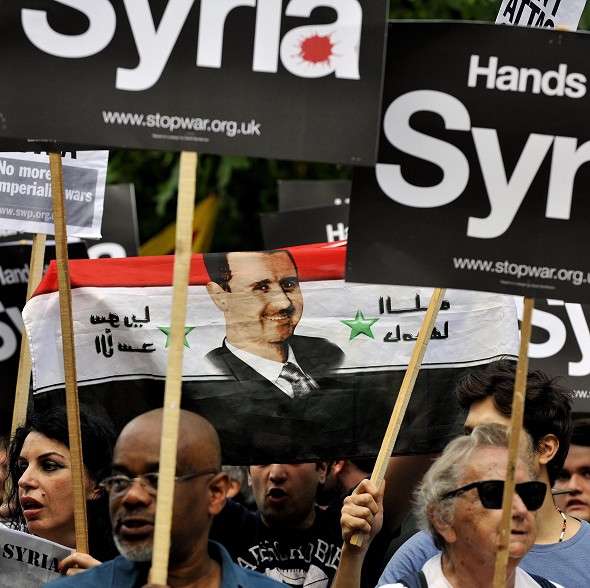
Leftist protesters carry pictures of Bashar al Assad at an “anti-war” march.

Perhaps the most humorous aspect of the latest drivel published by Jacobin in defense of the Syrian regime headed by Bashar al-Assad is the way the “anti-imperialist” author is forced by their own tautological premise to downplay the decisive role that U.S. imperialism has played in defending what appears to be a leftist revolution (with, as always, flaws) currently taking place in Syrian Kurdistan.

It’s understandable, to a degree: as one who also sympathizes with this seemingly left-libertarian project, which the author describes as a “spark of hope to many leftists in the West” – hope that is “not misplaced” – I too have been challenged by the fact that were it not for an extensive air campaign that the United States reluctantly carried out in Kobane, it might very well not exist. But while one can have doubts as to the ultimate wisdom of allying with a nation-state not known for its long-term friendships with left-wing radicals, one can’t deny that thus far that alliance has proved beneficial to the Democratic Union Party (PYD) and its militias, the all-men YPG and all-women YPJ. One can also acknowledge that while it might sully the beneficiaries’ anti-imperialist credentials to accept U.S. aid, those beneficiaries would say that in a world full of bad options they chose the least-bad one available, preferring it to genocide.

Continue reading “Syria and the revolt against reason”

The Dissolution of Past and Present

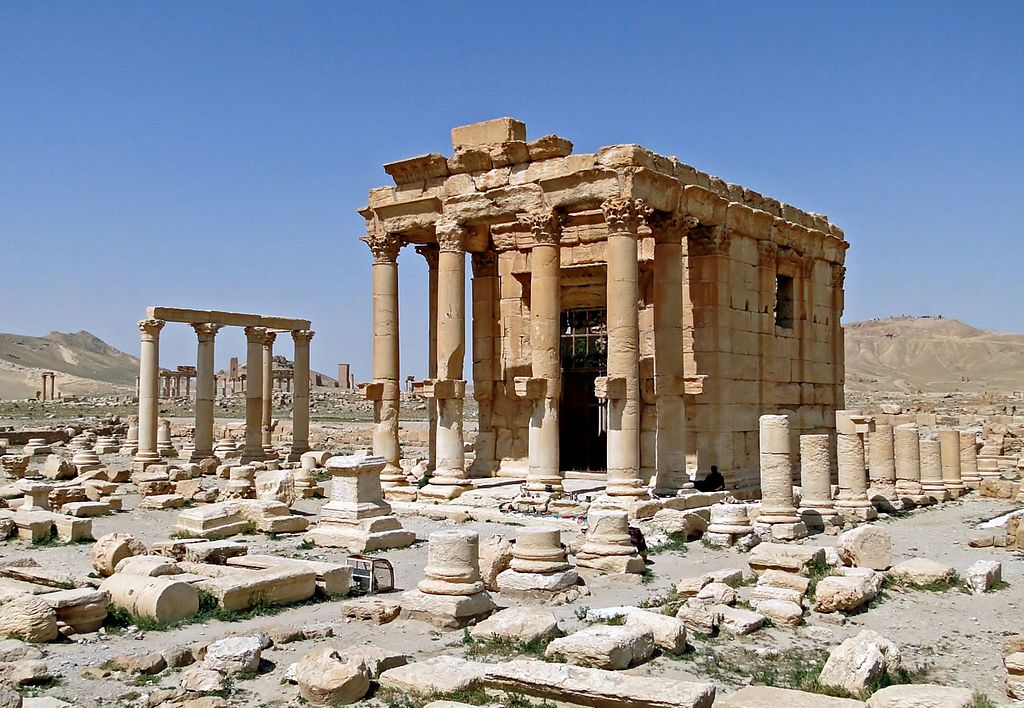
Baal-Shamin,PalmyraAn edited version of this piece was published at the National.

Zabadani, a mountain town northwest of Damascus near the Lebanese border, was one of the first Syrian towns to be liberated from the Assad regime (in January 2012) and one of the first to establish a revolutionary council. (The martyred anarchist revolutionary Omar Aziz was involved in setting up this council, as well as the council in Barzeh). Zabadani has been besieged and intermittently shelled since its liberation. And since July 3rd this year it has been subjected to a a full-scale assault by (the Iranian-backed) Lebanese Hizbullah, alongside continuous barrel bombing. Apparently the town’s 800-year-old al-Jisr mosque has been pulverised. Human losses are in the hundreds, and beyond the numbers, incalculable.

In other news, Daesh (or ISIS) has bulldozed the 1500-year-old monastery of Mar Elian in al-Qaryatain and blown up the beautiful 2000-year-old temple of Baalshamin in Palmyra. The temple once mixed Roman, Egyptian and Mesopotamian styles. Today its rubble is further evidence that there will be no resumption of Syrian normality. The people, monuments, even landscapes that Syrians once took for granted, that they assumed their grandchildren would enjoy, are disappearing for ever.

Palmyra – Queen Zenobia’s desert city – is a world heritage site and perhaps Syria’s most precious cultural jewel. Remarkably intact until recently, it provided a tangible link to antiquity and a breathtaking proof of the region’s civilisational wealth. Nationalist Syrians, whether secular or Islamist, feel the importance of such sites for communal pride and identity. Rational Syrians can at least understand their utilitarian benefit to any future tourism industry.

Neither Bashaar al-Assad nor (Daesh ‘caliph’) Abu Bakr al-Baghdadi are nationalists. Al-Baghdadi is explicit about it: “Syria is not for the Syrians,” he says, “and Iraq is not for the Iraqis.” Al-Assad’s rhetoric is still nationalist (and sectarian), but his war effort is managed by a foreign power now pushing towards the nation’s partition. Though not nationalists, both are certainly fascists obsessed with reinforcing their respective totalitarian states and eliminating any independent intellectual influence. Thus, in a flesh-and-blood echo of its slaughter of Palmyran history, Daesh tortured and publically beheaded Palmyra’s head of antiquities, 81-year-old Khaled al-Assa‘ad, perhaps because he’d refused to reveal the location of hidden treasures.

Continue reading “The Dissolution of Past and Present”

The Looting Machine: Investigating Corruption in Africa

[youtube https://www.youtube.com/watch?v=qtbypBGGY2E]

Mapping out the networks that link kleptocrats to middlemen, multinationals and markets is the key to understanding the dark side of the globalised economy. Tom Burgis, Financial Times investigations correspondent and author of a new book on the looting of Africa, discussed the tools required: following money trails, reporting from conflict zones, understanding the bigger context – and door-stepping Zimbabwe’s secret police.

Bitter Almonds

bitteralmondsAn edited version of this review appeared at the National.

This story starts with a birth and a departure, in Jerusalem in 1948. The birth is Omar Bakry’s, and it orphans him. The departure, alongside three quarters of a million others, is his forced expulsion from Palestine. “We’ll be back in a couple of weeks,” one fatefully quips.

Omar, now in the care of a neighbouring family, relocates to Damascus, where the novel unfolds through the fifties and sixties, both an engaging romance and a convincing period drama.

Lilas Taha writes in American English. My British-English ear found it difficult at first to believe in old-fashioned Arabs saving each others’ asses and getting in each others’ faces. The effect was exacerbated by occasionally clumsy dialogue. Real Palestinian-Syrians would see no need to specify, for example, “the ruling Baath Party” or “the actress Souad Hosni”. Realism is lost at moments such as these when the novel, veering into explanatory overstatement, seems too obviously an act of cultural translation. It might have been better to write a preface, or to add footnotes.

But as the pages turn, slowly but surely, the characters come entirely credibly to life. We learn a great deal about them by observing their negotiations of etiquette and social ritual as they traverse a domestic danger zone marked by deaths, difficult births, precarious marriages, and looming scandals.

The cast is close-knit. Mustafa is a farmer denied his land whose lungs are broken in a wool factory. The book’s title comes from his mouth, and provides a wisdom for the drama: “The bitter almonds make you savour the sweet ones more.” His wife Subhia, their son Shareef and daughters Huda and Nadia, make up Omar’s surrogate family.

Taha depicts them trying to make ends meet, their life in cramped quarters, male and female sleeping areas demarcated by a blanket, and the profound familiarities and festering resentments which grow in such conditions.

Continue reading “Bitter Almonds”