Bitter Almonds

bitteralmondsAn edited version of this review appeared at the National.

This story starts with a birth and a departure, in Jerusalem in 1948. The birth is Omar Bakry’s, and it orphans him. The departure, alongside three quarters of a million others, is his forced expulsion from Palestine. “We’ll be back in a couple of weeks,” one fatefully quips.

Omar, now in the care of a neighbouring family, relocates to Damascus, where the novel unfolds through the fifties and sixties, both an engaging romance and a convincing period drama.

Lilas Taha writes in American English. My British-English ear found it difficult at first to believe in old-fashioned Arabs saving each others’ asses and getting in each others’ faces. The effect was exacerbated by occasionally clumsy dialogue. Real Palestinian-Syrians would see no need to specify, for example, “the ruling Baath Party” or “the actress Souad Hosni”. Realism is lost at moments such as these when the novel, veering into explanatory overstatement, seems too obviously an act of cultural translation. It might have been better to write a preface, or to add footnotes.

But as the pages turn, slowly but surely, the characters come entirely credibly to life. We learn a great deal about them by observing their negotiations of etiquette and social ritual as they traverse a domestic danger zone marked by deaths, difficult births, precarious marriages, and looming scandals.

The cast is close-knit. Mustafa is a farmer denied his land whose lungs are broken in a wool factory. The book’s title comes from his mouth, and provides a wisdom for the drama: “The bitter almonds make you savour the sweet ones more.” His wife Subhia, their son Shareef and daughters Huda and Nadia, make up Omar’s surrogate family.

Taha depicts them trying to make ends meet, their life in cramped quarters, male and female sleeping areas demarcated by a blanket, and the profound familiarities and festering resentments which grow in such conditions.

Continue reading “Bitter Almonds”

What is the State?

Quentin Skinner’s Lecture What is the State? The question that will not go away.

Continue reading “What is the State?”

Pakistan’s Hidden Shame

Powerful Channel 4 documentary about the sexual exploitation and abuse of many thousands of poor and vulnerable children in Pakistan’s north-western city of Peshawar.

Why Iranian Dissidents Support the Nuclear Deal—In Their Own Words

Mahmoud-Dolatabadi
Iranian writer Mahmoud Dolatabadi, author of such books as The Colonel, which has been banned in Iran. (International Campaign for Human Rights in Iran)

In my new article for In These Times magazine I discuss the important International Campaign for Human Rights in Iran report High Hopes, Tempered Expectations: Views from Iran on the Nuclear Negotiations, which features interviews with an array of Iranians—former political prisoners, filmmakers, political scientists, civil rights lawyers, playwrights, journalists, actors, economists, novelists, publishers, theater directors (some of them belonging to two or more of these categories, former political prisoner being the most common)—about the nuclear agreement.

Go here to read the article. If you tweet it, please give the International Campaign for Human Rights in Iran a shout-out (@ICHRI).

The Drone Eats With Me

droneThis appeared first at The National.

Plenty of news flows out from Gaza, but very little human information. This emotional blackout bothered Ra Page, founder of Comma Press, a Manchester-based publisher producing groundbreaking short story collections. It was Comma that gave the astounding Iraqi surrealist writer Hassan Blasim his first break. Comma has published a high-quality series of literary responses to scientific innovations as well as several collections based around cities such as Tokyo, Istanbul and Liverpool. Why not Gaza too?

“My rather naive idea with The Book of Gaza,” writes Page, “was to try to inch the city ever so slightly closer to a state of familiarity, to establish it as a place and not just a name, through the simple details that a city’s literature brings with it – the referencing of street names, the name-dropping of landmarks and districts.”

The book was by no means the first literary project to aim in some way to normalise Palestinian life. Since 2008 the Palestinian Festival of Literature (Palfest), brainchild of novelist Ahdaf Soueif, has tried to reaffirm, in Edward Said’s phrase, “the power of culture over the culture of power”. In practical terms, this means transforming a literature festival into a roadshow – Jerusalem one night, Bethlehem another, Ramallah on a third… Though these places are only a few miles apart, checkpoints prevent Palestinians from travelling between them. So the guest writers travel to their audience, and at the same time learn something of Palestine’s enormous creativity. This stateless nation has boasted many great literary talents, most notably Mahmoud Darwish and Mourid Barghouti in poetry and Ghassan Kanafani in prose. Meanwhile there are burgeoning film and music (especially hip hop) scenes.

For decades writers had to smuggle their manuscripts out of Gaza to presses in Jerusalem, Cairo or Beirut. The shorter the text, the more likely it was to be published. As a result, the Strip became an “exporter of oranges and short stories.” Edited by novelist and journalist Atef Abu Saif, The Book of Gaza contains stories from three generations. It achieves both the sense of place that Page hoped for and ‘familiarity’ through its treatment of universal themes. The stories are as likely to deal with women “besieged by preconceptions” (in Najlaa Ataallah’s words) as the seige imposed by Israel. The project succeeded in ‘depoliticising’ Gaza, at least to some extent.

But then, immediately after publication, Israel launched Operation Protective Edge. Story contributors were directly affected by the assault. Writer Asmaa al-Ghoul, for instance, lost nine members of her extended family. Page was driven to this bleak conclusion: “There is no stability in Gaza on which to build a reader-familiarity.”

Continue reading “The Drone Eats With Me”

Arabs Without God

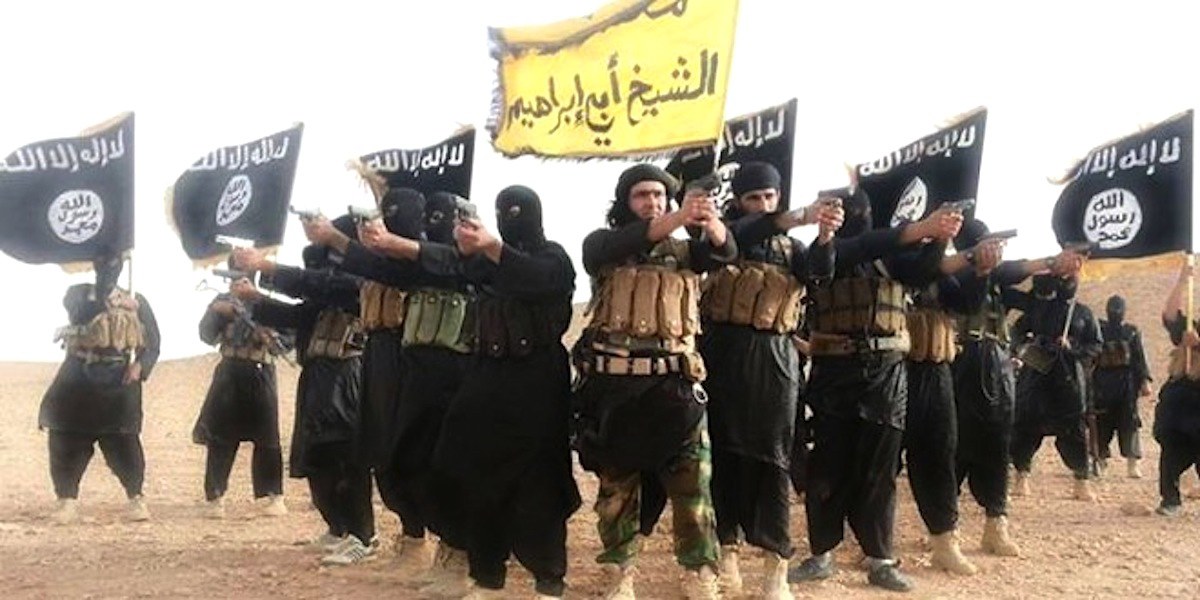
isis-flagThis was first published at NOW.

In the Arab world, the public declaration of religious disbelief is as taboo as the open profession of homosexuality. Publically-declared atheists and agnostics can wave goodbye to social respect, marriage prospects, even legal recognition. Yet a 2012 poll in Saudi Arabia – a state whose legal system equates atheism with terrorism, and which potentially applies the death penalty to apostates – found that 19% described themselves as ‘not religious’ and a further 5% as atheists.

In his new book “Arabs Without God: Atheism and Freedom of Belief in the Middle East” (soon to be translated into Arabic as ‘Arab bala Rab’) journalist Brian Whitaker interviews activist and quietist unbelievers from around the region, and investigates the pressures ranged against them. Most usefully, the book provokes a question – how can a revived Arab secularism (freed from the taint of the so-called ‘secular’ dictatorships) provide a future in which the rights of religious majorities as well as unbelieving or sectarian minorities will be respected and strengthened?

Demands to believe and submit go far beyond religion. Whitaker quotes sociologist Haleem Barakat, who noted that, like God, the Arab head of state and the Arab family patriarch require absolute respect and unquestioning compliance. “They are the shepherds, and the people are the sheep.” (This is why ‘rab’ – which means ‘Lord’ rather than only the monotheist God – is as apt a translation as ‘Allah’ for the book’s Arabic title). So intellectual atheism is perceived as an attack on family and state, and on community solidarity. The contemporary politicisation of religious identity makes unbelief akin to treason in some minds; for this reason minority sects, dissenters and atheists are frequently seen as fifth columnists, agents weakening state and nation on behalf of foreign powers.

Identity politics in the region took on its modern forms with the building of centralised nation states. Nationalism itself was an assertion of a politicised cultural identity, first against the Ottomans, then against the European empires. For the new rulers of post-independence states, a fear of disloyal communities turned to a generalised rage for homogeneity – ‘the good citizen’, depending on where they found themselves, was to be an Arab, or a Muslim, (or a Turk, or a Jew) as imagined by the state. Many states standardised dress, dialect and worship.

The state’s top-down approach to culture is infectious. Opposition groups too, whether nationalist, leftist or Islamist, have sought to emulate the rulers by seizing control of the state apparatus and imposing their vision from above.

Continue reading “Arabs Without God”

Disturbing the Peace: Intellectuals and Universities in an Illiberal Age

The late great Tony Judt delivered this call-to-arms at the Boston College on February 6, 2007.

Tony Judt, the Erich Maria Remarque Professor of European Studies at New York University, asserts that tenured university academics have a social obligation to “speak the truth in the public place.” In this Lowell Humanities Series lecture, he warns that public pressures and contemporary mores inhibit today’s intellectuals from espousing unpopular views. Controversial for advocating a combined Israeli-Palestinian state, Judt frequently contributes to the New York Review of Books and the Times Literary Supplement. His most recent book is Postwar: A History of Europe Since 1945 (Penguin Press, 2005).

The Meursault Investigation

Daoud_MeursaultInvestigation-260x390This review appeared at the Guardian.

In “The Outsider”, Albert Camus’s iconic tale of alienation, ennui and ruthless honesty, the anti-hero Meursault murders an Arab on the beach at Algiers simply because the sun gets in his eyes. “The Meursault Investigation”, Algerian journalist Kamel Daoud’s first novel, winner of the Goncourt prize and from now on an indispensable companion to Camus, is narrated by the brother of the murdered Arab.

In a frame reminiscent of Mohsin Hamid’s Reluctant Fundamentalist, the tale is told in a bar in Oran, “a city with its legs spread open towards the sea,” and addressed one-sidedly to a Western literature student. The narrator intends to construct his own story by using “the murderer’s words and expressions” like the “stones from the old houses the colonists left behind.”

According to him, the dead Arab in Camus’s book was “a brief Arab, technically ephemeral”; nameless, he “had the name of an incident”. But now we learn his name – Musa, a Moses bearing a text on his back (“The Outsider” instead of the Ten Commandments). The narrator, his brother Harun (Aaron), pays homage to, critiques, summarises, analyses, refutes, echoes, quotes and competes with “The Outsider”, and other Camus texts too. In reference to “The Myth of Sisyphus” Harun speaks of “the absurdity of my condition, which consisted in pushing a corpse to the top of a hill before it rolled down, endlessly.”

All this of course wields symbolic power. Harun is an ur-Algerian reflecting on colonialism, the legacy of thousands of Meursaults and their callous indifference to Arab life. In that sense the novel contains a definite element of the empire speaking back. Yet the narrator rejects simplistic anti-colonial allegorising. “A few decades ago,” he says, “I would have served you up the version with the prostitute slash Algerian land and the settler who abuses her with repeated rapes and violence.” But Harun has since witnessed “the post-Independence enthusiasm consume itself and the illusions collapse.” The liberated capital looks like “an outdated actress left over from the days of revolutionary theatre” (the novel overbrims with such unsettling female images).

Continue reading “The Meursault Investigation”

Gore Vidal: The Man Who Said No

Gore Vidal: The Man Who Said No (1983) is a documentary film directed, produced, and edited by Gary Conklin. The film follows famed American writer and political gadfly Gore Vidal in his quixotic campaign against incumbent California Governor Jerry Brown for the Democratic nomination for the United States Senate in 1982. Vidal and State Sen. Paul B. Carpenter each won the support of 15.1% of voters in the primary election, but were easily outdistanced by Brown, who racked up 50.7% of the vote.

Echoes of the Tearing

This very useful documentary on the Syrian revolution, in Arabic and Spanish with English subtitles, was made by a good friend (known on Facebook as Couteras Madriz), and features many of the creative and courageous activists I and Leila al-Shami interviewed for our forthcoming book. The film is particularly strong on the self-organisation of revolutionary Syrians in committees and councils, and on the counter-revolutionary challenges they face.