A young girl’s life gets turned upside-down in this tragic second a day video. Could this ever happen in the UK? This is what war does to children. Find out more at http://bit.ly/3yearson
Ibn Khaldun
Melvyn Bragg and guests Robert Hoyland, Robert Irwin and Hugh Kennedy discuss the life and ideas of the 14th-century Arab philosopher of history Ibn Khaldun.
‘Shocking’ scenes in besieged Syrian refugee camp
The head of the UN agency for Palestinian refugees spoke Tuesday of the “shocking” conditions he had seen inside a Syrian Yarmouk camp which has been under siege and bombardment for months.
For more on Yarmouk see All That Was Left of Yarmouk: Notes to an Accomplice by Talal Alyan.
The Syria Test

Tonight I’ll be joining Stephen Walt on the wonderful Radio Open Source with Christopher Lydon to debate the crisis in Syria. I rarely disagree with Steve on anything but on Syria our views diverge. Steve is a formidable interlocutor and Chris is a radio legend who knows how to cut to the heart of a subject. I am hoping that today’s debate leads to greater clarity. Here’s from Chris’s introduction:
The nightmare in Syria has slipped off the front page. Yet civilians are still dying by the hundreds every day. Thousands are dead and millions more displaced across Turkey, Lebanon, and Iraq. Petroleum “barrel bombs” have replaced sarin gas and the specter of al-Qaeda seems to hover over it all.
We’ve been there before, debating how to respond to a humanitarian crisis halfway across the world. Vietnam in the ’70s, Beirut in the ’80s, Kuwait and Bosnia in the ’90s, and of course Iraq and Afghanistan. Four months ago, Syria looked like the next in that series, with destroyers sailing to the Gulf and Tomahawk missiles armed and ready to fire. Were we right to breathe a sigh of relief, or was non-intervention a worse course than risking another quagmire?
What should we have done, what can we still do, and is it too late to pass the test in Syria?
Razan Zaitouneh: Eclipsed Jasmine
A short film about Syrian human rights activist Razan Zaitouneh, a revolutionary heroine now abducted, probably by Jaish al-Islam. Contributions from writer Samar Yazbek and activist Razan Ghazzawi.
Healthcare as a weapon in Assad’s war
My eloquent and courageous friend Dr. Rola Hallam on ways to end Assad’s war.
Simone de Beauvoir: Why I am a Feminist
An interview with Simone de Beauvoir in 1975 on Why I am a Feminist.
Zeitouna Kids in their Own Words
Mohammad Ojjeh made a short film in which the children of the Salam School for Syrian refugees in Reyhanli, Turkey, speak about their experiences and the Karam Foundation’s Zeitouna programme.
Something Worse?
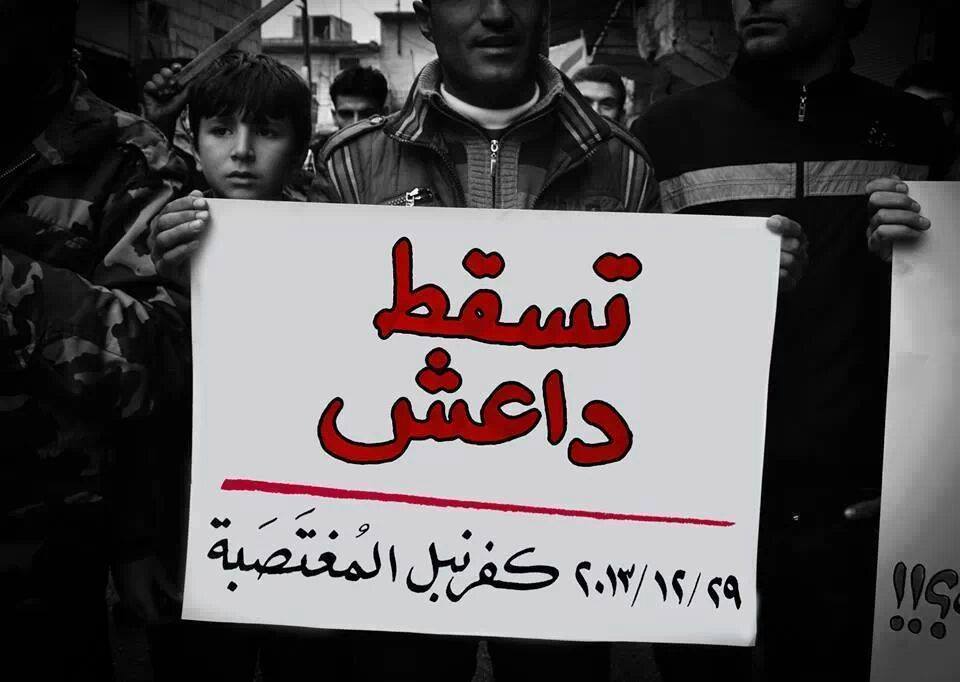
In a hotel lobby on the Turkish side of the Syrian border, Yasser Barish showed photographs of his bombed family home in Saraqeb, Idlib province. One room was still standing – the room Yasser happened to resting in on September 15th 2012 when the plane dropped its bomb. The other rooms were entirely obliterated – ground level rubble was all that remained. Yasser’s mother, grandmother, sister and brother were killed.
Saraqeb is a much fought over strategic crossroads, invaded wholescale by Assad’s army in August 2011 and March 2012. Since November 2012, the regime has had no presence in the town (though its artillery batteries remain in range). At first the Local Coordination Committee provided government, but through the spring of 2013, the al-Qa’ida-linked Islamic State of Iraq and Syria (ISIS) gradually increased its presence in the town.
Yasser told me how they took over Saraqeb. At first only ten representatives came, and they brought with them large amounts of medicine and food. They were humble and generous, and warmed the local people’s hearts. They also brought money, with which they recruited ammunition-starved and hungry local fighters. Then reinforcements arrived – “Libyans, Algerians, a lot of Iraqis, some Afghans and Turks, one white Belgian and one white American” – enough to frighten thieves into good behaviour, which at first increased the organisation’s popularity. But in May 2013 they whipped two men in a public square for an infringement of Islamic family law. In June they took absolute control, forbade drinking and smoking, and made prayer compulsory.
Yasser is part of an independent team which publishes magazines for adults and children – a sign of autonomous revolutionary success in terribly difficult circumstances. The slogan “I have the right to express my opinion” graces the cover of Zeitoun wa Zeitouna, the children’s magazine. Since the culling of his family, Yasser doesn’t care if he lives or dies. But so long as he’s here, he’s dedicated himself to improving local lives – teaching children how to read and encouraging them to tell stories and draw pictures. (The local schools, of course, are closed, and most of the teachers killed or fled.) Continue reading “Something Worse?”
A Widow of Bayada
An edited version of this piece was published by the National.
Our car turns through the crowded alleyways of single-storey breezeblock houses, foggy with coal smoke in the icy December morning. This is the poorest quarter of Reyhanli, a Turkish town just across the Syrian border, and it’s crammed with Syrian refugees.
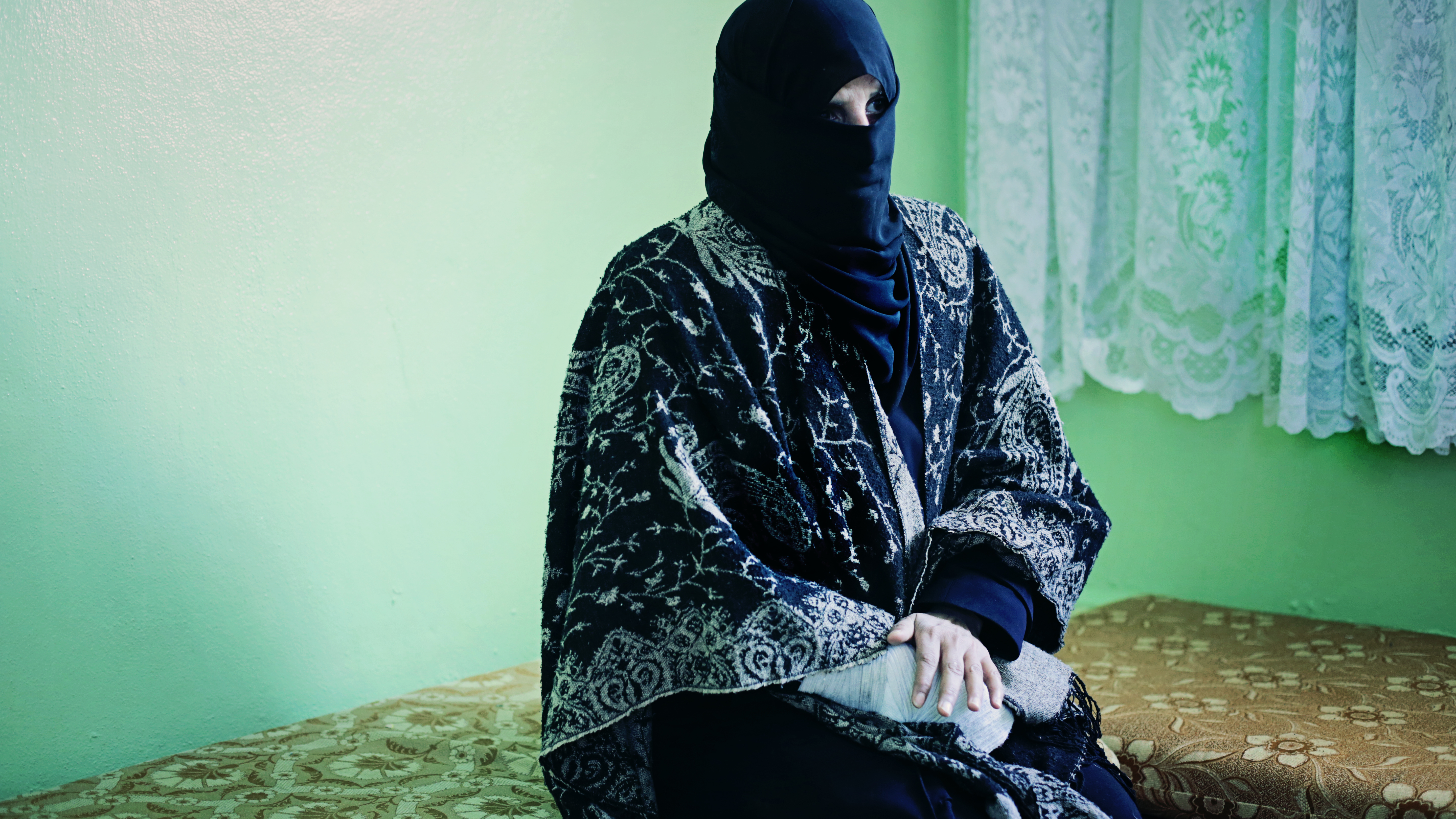
The woman whose story I’ve come to hear puts on a niqab when the camera comes out. And she prefers to be nameless, because she fears for her two married daughters still living in regime-controlled territory.
She lives in an empty, unheated house. Her son sits with us, and her small daughter shivers under a blanket. The woman is in early middle age but looks older. Her face is long, worn, and haggard, her voice pain-strained and sharp.
Her husband, born in 1972, worked with the military security for seventeen years but retired early when he needed an operation on a vertebral disc. After that he opened a roast chicken place in his Homs neighbourhood, Bayada. The family lived what his wife describes as a working-class life “of an acceptable standard”. They had six children. Bayada comprised both Sunni and Alawi families, “and the relationship between us was very good, even if the state favoured Alawis. We drank maté together. There was no problem.”
The revolution broke out less than a year after her husband’s retirement, and the newly-pressured military security began asking him to return to work. He refused. “How could he work for them? At that time Bab Dreib was being shelled. In our area there were house searches and random arrests of young men. They even took women, those who attended demonstrations and those who shouted ‘God is Greater!’ from their windows at night.”
Her husband supported the revolution and was part of a local network which helped the revolutionaries, finding shelter for those on the run and collecting food, medical supplies and money. His wife believes an Alawi neighbour informed on him. On the other hand, it was an Alawi friend who warned him that his name was on the wanted list at regime checkpoints.

