A year ago, Syrians took to the streets in peaceful protest demanding democratic change but the regime ruthlessly crushed the uprising. Empire discusses if the world powers can do anything to stop the escalation of force.
March TaxCast

We encourage readers to tune in to this excellent program produced by the Tax Justice Network. Hosted by Naomi Fowler, each 15 minute podcast follows the latest news relating to tax evasion, tax avoidance and the shadow banking system. The show will feature discussions with experts in the field to help analyse the top stories each month.
In this month’s show TaxCast covers Apple i-tax dodging, reclaiming Arab Spring country assets, the rich country club of the OECD and the ABCs of setting up letterbox companies…It’s child’s play!
Above the Drone of War, Voices for Peace
by Davis Smith-Ferri
In 1876, at the so-called Battle of the Little Bighorn when U.S. Cavalry regiments attacked an Indian village along the Little Bighorn River in Wyoming, the first casualty was a ten-year old Lakota Sioux boy named Deeds. Unaware that U.S. troops were nearby planning an attack, he and his father were combing a hillside looking for a lost pony when U.S. troops encountered and killed him. The next casualties were six Lakota women and four children, who were murdered while in a field gathering wild radish bulbs, one of the many indigenous plants that Native people depended on for their livelihood, and hardly a threatening activity.
I think of these events today because of the recent killings of Afghan civilians, not only the 17 women and children killed in villages outside Kandahar, but also two recent and less publicized atrocities resulting from NATO airstrikes that killed civilians in Kapisa Province, including eight Afghan boys who were tending their sheep. Sheepherding, of course, is an activity as integral to their livelihood as gathering indigenous plants was to Lakota people.
History of an occupation
by Jordan Flaherty
Yesterday, Al Jazeera premiered the first part of a two-part documentary I’ve been working on, focusing on the Occupy movement. The film was made for Fault Lines, the award-winning public affairs documentary program.
Watch part one of the film here, and find more information below the fold:
Syria: Songs of Defiance
This is typically excellent and courageous. The journalist is supposed to be anonymous but they haven’t disguised his voice very well.
An Al Jazeera journalist who was forced to remain anonymous for security reasons offers an unusual but compelling first-person account of a country in turmoil and a revolution in progress in this intriguing episode of People and Power.
Obama administration’s war on the US constitution
Col. Lawrence Wilkerson: Obama, Panetta and Holder undermine basic constitutional rights by justifying killing American citizens without judicial process and bypassing Congress in declaring war
Anatol Lieven at the Karachi Literature Festival
Dawn.com’s Salman Haqqi interviews Anatol Lieven, author of “Pakistan: A hard country” during the Karachi Literature Festival 2012.
Panorama – Homs: Journey into Hell
In a follow up to Panorama’s Syria: Inside the Secret Revolution they have produced Homs: Journey into Hell.
Paul Wood charts the rise and brutal suppression of the uprising in the Syrian city of Homs. What started with hope of revolution now sees refugees fleeing to escape retribution.
AIPAC Works for the 1 Percent
by Chris Hedges
The battle for justice in the Middle East is our battle. It is part of the vast, global battle against the 1 percent. It is about living rather than dying. It is about communicating rather than killing. It is about love rather than hate. It is part of the great battle against the corporate forces of death that reign over us—the fossil fuel industry, the weapons manufacturers, the security and surveillance state, the speculators on Wall Street, the oligarchic elites who assault our poor, our working men and women, our children, one in four of whom depend on food stamps to eat, the elites who are destroying our ecosystem with its trees, its air and its water and throwing into doubt our survival as a species. Illustration by Mr. Fish
What is being done in Gaza, the world’s largest open-air prison, is a pale reflection of what is slowly happening to the rest of us. It is a window into the rise of the global security state, our new governing system that the political philosopherSheldon Wolin calls “inverted totalitarianism.” It is a reflection of a world where the powerful are not bound by law, either on Wall Street or in the shattered remains of the countries we invade and occupy, including Iraq with its hundreds of thousands of dead. And one of the greatest purveyors of this demented ideology of violence for the sake of violence, this flagrant disregard for the rule of domestic and international law, is the American Israel Public Affairs Committee, or AIPAC.
Kandahar ‘killing-spree’ militarism
A call for U.S. and Afghan citizens to question the Strategic Partnership Agreement.

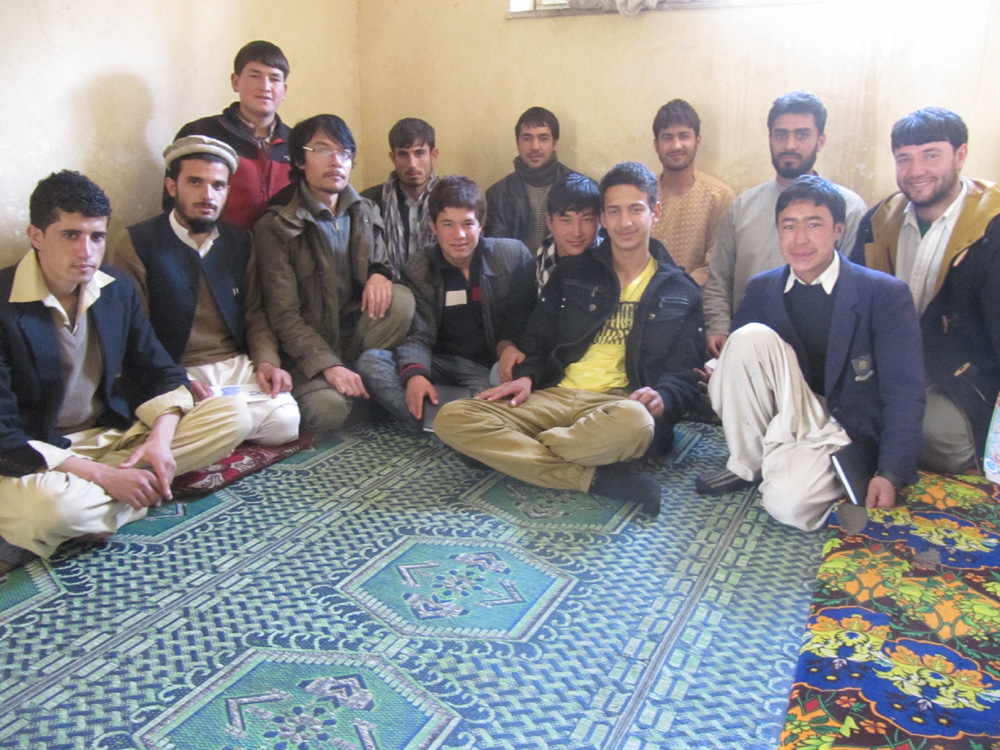
By the Afghan Youth Peace Volunteers
13th March 2012 — The Afghan Youth Peace Volunteers question the presumption that the U.S. military strategy in Afghanistan is necessary for American or Afghan peace.
Tragedies like the Kandahar killing spree which massacred 16 Afghan civilians in their sleep ( including 6 children and 3 women ) are tragedies repeated in any war, including the U.S. war in Afghanistan. This failed military strategy that is designed for U.S. power and economic interests is being sold to the U.S. electorate through the mainstream media doublespeak of ‘withdrawal’ and ‘negotiations’, but is quietly being pursued in what President Obama and President Karzai called ’progress’ towards the signing of the U.S Afghanistan Strategic Partnership Agreement. The Agreement will entrench U.S. military presence in Afghanistan till 2024 and beyond and is based on the same militarism that has resulted in the pathologicalurinating on Afghan corpses by U.S. soldiers, the morbid keeping of severed finger-trophies by the Kill Team, the burning of the Quran and many other ‘unforgiveable’ tragedies.

