Minimalism At Home, Maximalism abroad: The Curious Case of Islamophobic Anti-Islamophobia

8f54ed819732badc8cd3e9fdba223d30
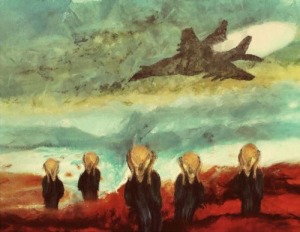
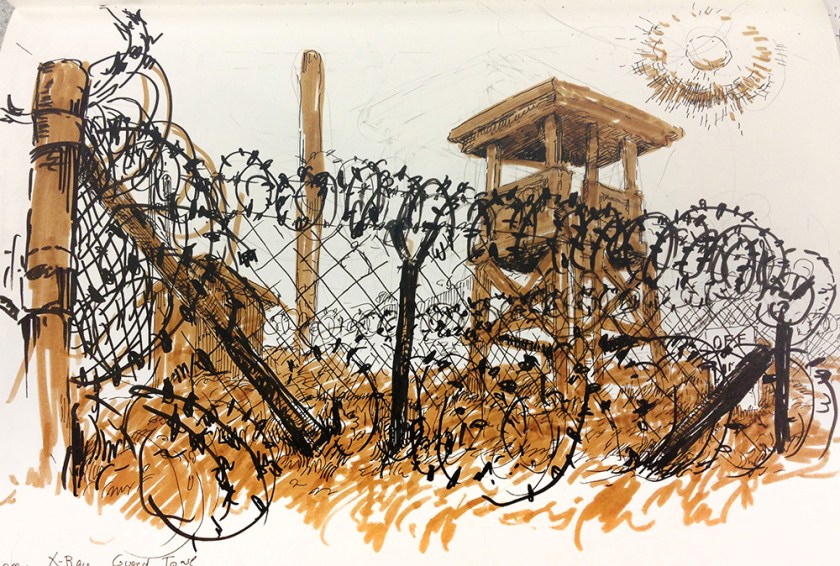
Artwork by Molly Crabapple 

Every once in a while, this space christened the Left—of whose foundational texts and core values I largely hold in regard—feels like a foreign place. The paradox is that occupying a place on the Left, a priori, is “supposed” to feel like refuge. 

A curious phenomenon I’ve come across on the Left is a politics of pro-Muslim islamophobia. Take for instance Angela Merkel’s proposition to ban the Niqab, or the face-veil. Of course, a ban would be an affront to egalitarian ideals. And a ban should be very much be opposed. But one noticeable knee-jerk reaction—even cliche—that many progressives have produced is that such an initiative would alienate German—and by extension all—Muslims, if not impel them to active opposition or radicalization. This is profoundly mistaken. There is no data that supports such a conclusion.

But it’s worth noting, first, the problematic nature of the underlying presumption: that Muslims define themselves by loyalty to tribe and religion first. Nation—and the liberal democratic values it embodies—coming last. Second, much of these discussions have the familiar feel of a “gotcha” game between a strand of Euro-American feminism that is supportive of such measures and a strand which is critical of them. What’s not accounted for is an ongoing and long-tradition of intra-Islamic debates on women’s rights—led by Muslim feminists—and secularism.

If Islamophobia is in fact a form of irrational fear, then perhaps we can presume that there’s a fear of Muslims when one is unwilling or incurious to engage with these discussions in their own terms. They speak of Muslims, but not with Muslims, or rather they’d only speak with those best tokenized. The subaltern can in fact speak, but they must say what fulfills the our constant desire for self-problematization. When the Other is invoked, he or she is held up as mirror to ourselves. Tell us about our qualities.

Frederic Jameson once wondered if capitalism can’t survive without the fantasy of a socialist utopia on the horizon. In the same breath, we can ask if imperialism and racism can’t survive without the fantasy of a non-imperialist, non-racist utopia. Not that those utopias are beyond the possible, as there’s no way to prove that. The point is that a certain dominant strand of anti-capitalist or anti-racist or anti-imperialist ideology ultimately ends up reproducing its object of negation precisely those ideologies place themselves mainly in negation, rather than in offering a way out and a positive vision. In other words, anti-islamophobia defines itself against a Big Other and eschews challenging the legitimacy of key Islamophobic premises. In form, such a politics challenges Islamophobic discourse but in substance it keeps in place and reduces the dominant signs and symbols, opting to only invert them. In practise, what contemporary anti-Islmaophobia does is to adapt better to the ever-widening goalposts determined by the Right. “Trump is a hypocrite because he didn’t ban Saudis and Egyptians in his executive order,” as some have argued.  Ergo, it shouldn’t come as a surprise that any political activity will ultimately mimic what it defines itself against. 

To gnaw at identifying the sources of the issue, one must carefully probe the singularity of the Muslim Question.

Anne Norton, author of The Muslim Question, has argued that she sees the “Muslim question as the Jewish question of our time: standing at the site where politics and ethics, philosophy and theology meet. This is the knot where the politics of class, sex, and sexuality, of culture, race, and ethnicity are entangled; the site where structures of hierarchy and subordination are anchored. It is here, on this terrain, that the question of the democratic — its resurgence or further repression — is being fought out.”

This aspect is fairly well-known and correct. But the risk of reducing the rights of the Muslim into a touchstone of progress or fraudulence of liberal democracy inevitably comes with the risk of solipsism about a question that is by no means limited to the geographic confines of the West. It is precisely failing to note the global aspect of the Muslim Question that leads to the supposedly paradoxical nature of anti-Islamophobic islamophobia. 

“si vous êtes pris dans le rêve de l’autre, vous êtes foutu.” (If you are trapped in the dream of the other, you are screwed)—Gilles Deleuze

Some on the Left attempt to speak of the global dimension—often only by obligation when an Islamist terror attack in the West takes place—but their failure to go beyond superficial gyrations indicates why the discussions of Muslims in the West is flawed.

Ranging from the bien-pensant liberal to the generic Marxist, the figure of the Muslim is akin to a transistor on a circuit board. They’re there receive and amplify the force of current exerted upon them. Accordingly, such current take form in racist exclusion, legal inequity, (neo)colonialism, or crude bombs made in the West—never indigenous oppression. If we wish to turn off violence perpetrated by the Muslim, we shall stick to the mechanistic laws of physics: just switch off the current! The active role is Western racism and imperialism, the passive role is occupied by the Muslim. We are the reason they exist in the way they exist. They have no history before we show up. We ultimately pay the price for what our governments do abroad. Sometimes it is admitted that there is a mediating ideological factor, such as Wahabist and Salafi-Jihadist ideology. But it is only “forced” upon Muslims against their will by the Saudi authorities worldwide. Of course, this too presumes that Muslims are passive actors readily vulnerable to be imbued by radicalizing influences.

After this has been established, any discussion of the radicalization of Muslims assumes the familiar feel of it approaching the end. This depoliticized framework results in the disarmament in the face of the the Islamophobic Right. As Hannah Arendt noted, “It has been one of the most unfortunate facts in the history of the Jewish people that only its enemies, and almost never its friends, understood that the Jewish ques­tion was a political one.”

If the constant rise of Islamophobia is any indicator or the fact that the fall of anti-Muslim prejudice has not been coeval with the fall in other forms of prejudice, it’s that the Islamophobic Right has been winning this battle precisely because it has politicized the Muslim Question. The Left doesn’t politicize the Muslim Question, whereas the Right does just that —though in a deliberately malevolent fashion. The Left, by definition the active agent of history, has decided that its role is to provide the Right with the driving seat on this question, opting for the role of simply opposing its every action.

Consider the dilemma: how is it that the Left is more or less opposed to the bigotry led by the Right against Syrian and Muslim refugees, but some sections of the Left are in agreement with the Right that all, or most, of the opposition to supposedly anti-Western regimes like Bashar Al-Assad’s or Muammar al-Qaddafi’s regime is led by proxy groups and/or fanatical jihadists? Why is it that it’s ubiquitous to see Leftists warn of instability if Assad is deposed, but no warnings are ever pronounced of a withdrawal of Israel occupation from the West Bank?

Examples abound. Stephen Kinzer thanks Russia for its bombing campaign, Robert Fisk, Vijay Prashad and Ajamu Baraka argue that there are “no good guys” in the opposition—despite Assad bearing the overwhelming majority of civilian casualties. Tariq Ali has called for a joint Russian-US campaign to destroy the opposition and ISIS. Jill Stein has even went as far to say that the goal of the US government is to help “restore all of Syria to control by the government.” United National Antiwar Coalition (UNAC) staged a demonstration where they carried the regime’s flag. Veterans For Peace has sent a delegation to meet Assad in his palace in Damascus. Stop The War Coalition in the U.K. has went as far as to refuse a platform for anti-Assad Syrian and even call on the police to arrest them. Examples abound.

A close inspection of the mainstream armed Syrian opposition would demonstrate that they are more or less just as fundamentalist as Hamas and Hezbollah. Leaving the fact that there are democratic and anti-sectarian elements opposed to Assad, it appears that the Syrian opposition’s curse is that they aren’t fighting Western imperialism, but Russian imperialism. Which at any rate hardly qualifies as imperialism at all in certain Left quarters. Of course, it’s hard to find an example of a Leftist voicing concern about the populations that are living under the boot fundamentalist groups like Hamas or Hezbollah. Let alone those groups’ exploitation of workers. But once the fairytale of a fanatical Syrian opposition controlled by the West has been established, the victims of those groups are recognized because they are “our victims.” Their goal is not to challenge those who are committing and justifying the largest perpetrators of crimes—of which there are plenty of on both Left and Right—but to challenge the “Western” narrative.

Minimalism for anti-Western groups and regimes, maximalism for those whose direct target is anti-Western regimes. Remaining trapped in the dreams of the Left. 

Such is the false and deadly dualism that sees Muslims as either victims or suspects, leaving no room for complexity. Such is the politics of score-settling that invokes the Other as a tool to hammer home a point, at home. Ensconced in a solipsistic ontology, they see the victims not because they recognize them in themselves, but only when they can recognize the perpetrators, who often look and speak like them. It’s the perpetrators that are relatable, not the victims. Perhaps it’s not a coincidence that the most creative anti-war slogan that one can hear in London, New York and Paris is “not in our name.” Just not in our name, we are better than this. Speaking to Israeli journalist Judith Lerner, Mahmoud Darwish noted that “Do you know why we Palestinians are famous? Because you are our enemy. The interest in us stems from the interest in the Jewish issue. The interest is in you, not in me.”

After all, how many on the Left could talk about Syria without succumbing to yelling “What about U.S. atrocities?” At this point, such a cliche should sound like “What about me?” The outside exists only as a motif to speak of the cordoned inside. Wallowing in self-problematization, one can even feel exonerated.  Navel gazing and guilt, it turns out, have a tendency to centre the Self.

More, how many on the Left staged a defence of Syrian refugees’ demands of the European Union by pointing out that Syrian refugees’ radical demands of the European Union have a direct genealogy to the chants of the Syrian uprising: “Bread, Freedom and social justice.” But the defence of Syrian refugees’ right to shelter we’ve heard from radical quarters has relied on sediments of liberal bromides such as the virtue of diversity, inclusivity and tolerance for its own sake. Difference doesn’t exist in a free floating abstract world, it resides in politics, always. In fact, Leftists who have argued that the regime of Assad is legitimate have directly contributed to the toxic environment of Islamophobia by way of opening the space for the far-right to freely argue that Syrian refugees are traitors for refusing join the supposedly secular Syrian Arab Army. To borrow Brecht’s line about the difference between robbing a bank and founding one, we could ask what is robbing Syrians’ agency to founding an anti-refugee and islamophobic politics?

In this sense, one can be simultaneously espouse an imperialist and anti-imperialist mindset. The largest radicalizing factor today in the world is the carnage in Syria and the biggest perpetrators are not Western. That fact is inescapable. 

As Edward Said noted of Joseph Conrad’s Nostromo:

All Conrad can see is a world totally dominated by the Atlantic West, in which every opposition to the West only confirms the West’s wicked power. What Conrad cannot see  is an alternative to this cruel tautology. He could neither understand that India, Africa, and South America also had lives and cultures with integrities not totally controlled by the gringo imperialists and reformers of this·· world, nor allow himself to believe that anti-imperialist independence movements were not all corrupt and in the pay of the puppet masters in London or Washington.

This ontological and epistemological weakness results in a foreclosure of any possibility for a politics. This approach fails at home precisely because it fails abroad, and vice versa. As we have seen with the near-absent knowledge of the Syrian uprising, the Left has betrayed its core historical provenance—Revolution. To try to account for the lacuna of solidarity with Syrians on the Left, some have offered despair as an entrée: “What do you propose we do? How do you know it’s going to work?” Of course none of these questions were posed to those who marched in the streets of Washington, London and Paris during the lead-up to the invasion of Iraq. Something is malfunctioning and the contradictions will eventually have to explode. To paraphrase Benjamin, the Left’s progress is but a document of barbarism.
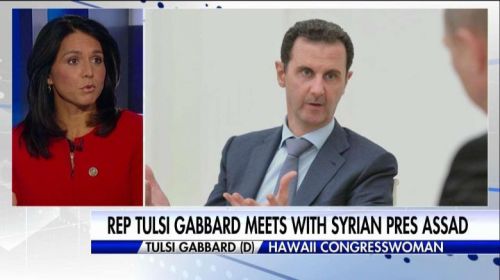
The (literal) fascists who took Tulsi Gabbard to meet Assad

gabbard-assadIt has now been widely reported that Tulsi Gabbard, a member of the US House of Representatives from Hawaii, recently met with Bashar al-Assad during a ‘fact-finding’ mission to Syria. As The Daily Beast reported:

Gabbard initially declined to say who financed her trip to Syria. However, in a press release Wednesday Gabbard revealed her delegation (which also included former Democratic Congressman Dennis Kucinich) had been “led and sponsored by” an outfit called the Arab American Community Center for Economic and Social Services (AACCESS—Ohio). Her statement added she and the rest of the delegation had been accompanied by two men, Elie and Bassam Khawam.

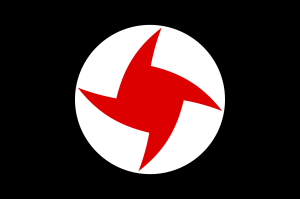
The flag of the Syrian Social Nationalist Party (SSNP) is "patterned after that of the Nazis, with the red and black in opposite places and a helix with four blades in place of a swastika"
The flag of the Syrian Social Nationalist Party (SSNP) is “patterned after that of the Nazis, with the red and black in opposite places and a helix with four blades in place of a swastika”

The Khawam brothers, it turns out, are officials in the Syrian Social Nationalist Party (SSNP), a fascist organization that actively supports the Assad regime and indeed “has dispatched its members to fight on [its] behalf,” reports The Guardian. Who exactly are the SSNP? The Daily Beast goes into some of the group’s history.

For a deeper dive into the ideological swamp Gabbard has waded into, here’s what Gilbert Achcar, Professor of Development Studies and International Relations at SOAS, University of London, wrote about the group in his 2011 book The Arabs and the Holocaust: The Arab-Israeli War of Narratives:

Continue reading “The (literal) fascists who took Tulsi Gabbard to meet Assad”

Dancing in Damascus

wissam

This review of miriam cooke’s new book was published at the Guardian.

Syria’s revolution triggered a volcano of long-repressed thought and emotion in cultural as well as political form. Independent newspapers and radio stations blossomed alongside popular poetry and street graffiti. This is a story largely untold in the West. Who knew, for instance, of the full houses, despite continuous bombardment, during Aleppo’s December 2013 theatre festival?

“Dancing in Damascus” by Arabist and critic miriam cooke (so she writes her name, uncapitalised) aims to fill the gap, surveying responses in various genres to revolution, repression, war and exile.

Dancing is construed both as metaphor for collective solidarity and debate – as Emma Goldman said, “If I can’t dance, it isn’t my revolution” – and as literal practice. At protests, Levantine dabke was elevated from ‘folklore’ to radical street-level defiance, just as popular songs were transformed into revolutionary anthems.

Cooke’s previous book “Dissident Syria” examined the regime’s pre-2011 attempts to defuse oppositional art while giving the impression of tolerance. The regime would fund films for international screening, for instance, but ban their domestic release.

souad-al-jundi

“Dancing in Damascus” describes how culture slipped the bounds of co-optation. Increasingly explicit prison novels and memoirs anticipated the uprising. Once the protests erupted, ‘artist-activists’ engaged in a “politics of insult” and irony. Shredding taboos, the Masasit Matte collective’s ‘Top Goon’ puppet shows, Ibrahim Qashoush’s songs and Ali Farzat’s cartoons targeted Bashaar al-Assad specifically. “The ability to laugh at the tyrant and his henchmen,” writes cooke, “helps to repair the brokenness of a fearful people.”

As the repression escalated, Syrians posted atrocity images in the hope they would mobilise solidarity abroad. This failed, but artistic responses to the violence helped transform trauma into “a collective, affective memory responsible to the future”.

Explicit representations of “brute physicality and raw emotion”, from mobile phone footage to Samar Yazbek’s literary reportage, soon gave way to formal experimentation. Notable examples include “Death is Hard Work”, Khaled Khalifa’s Faulknerian novel of a deferred burial, the ‘bullet films’ of the Abounaddara Collective, and Azza Hamwi’s ironic short “Art of Surviving”, about a man who turns spent ordinance into heaters, telephones, even a toilet. “We didn’t paint it,” he tells the camera, “so it stays as it arrived from Russia especially for the Syrian people.”

This section also covers full-length films such as “Return to Homs”, which follows the transformation of Abdul-Basit Sarut from star goalkeeper to protest leader to resistance fighter.

Cooke’s consideration of the role of social media is better informed than the somewhat superficial journalistic takes on the cyber aspects of the Arab Spring which filled commentary in 2011. The internet provides activists anonymity and therefore relative safety. It also offers a space in which to display and preserve art, even while Syria’s physical heritage, from Aleppo’s mosques to Palmyra’s temples, is demolished by regime bombs and jihadist vandalism. Online gallery sites archive the uprising’s creative breadth and complexity. One such is the Creative Memory of the Syrian Revolution, whose multimedia approach sometimes “connects specific elements within each genre to produce a film about the process of painting that responds to music.”

Certain digital images ‘aestheticise’ sites of destruction in order to both lament and humanise the war. The best known are works by Tammam Azzam which superimpose Klimt’s “The Kiss” on a crumbling residential block, Matisse’s circle dancers against a rubble-strewn street, and Gaugin’s Tahitian women on a refugee camp.

A section on arts produced in exile examines refugee theatre created in the youth centres of camps and urban slums. Via Skype, a cross-border Shakespeare production played by Syrian children cast Romeo in Jordan and Juliette in Homs. The performance was completed despite bombs, snipers and frequent communication cuts. The play’s conclusion was optimistically adapted. The doomed lovers threw away their poison and declared, “Enough blood! Why are you killing us? We want to live like the rest of the world!”

Through ‘applied theatre’ techniques women performed Euripides’ “Trojan Women” and so found a way to talk about the regime’s mass rape campaign. Director Yasmin Fedda incorporated the rehearsals into her prize-winning documentary “Queens of Syria”.

Of course, “Dancing in Damascus” doesn’t tell the whole story. There’s nothing on hip hop or several other important genres. The book tends to concentrate on ‘high art’ rather than the arguably more significant bottom-up production. Yet, with admirable concision and fluency, it assists what journalist Ammar al-Mamoun calls “an alternative revolutionary narrative to contest the media stories of Syrian refugees and victims”. It shows how, despite everything thrown at it, the revolution has democratised moral authority, turning artist-activists into the Arab world’s new “organic intellectuals”. As such it is an indispensable corrective to accounts which erase the Syrian people’s agency in favour of grand and often inaccurate geo-political representations. Beyond Syrian specifics, it is a testament to the essential role of culture anywhere in times of crisis.

2084: The Recurring Liberal Apocalypse

2084This was first published at the National.

The true subject of science fiction is always the present. Its imagined futures are mirrors to today’s hopes and fears. George Orwell’s “1984” simply shifted the numbers of the year in which he wrote the book – 1948 – and made a metaphor of that time’s dark politics. Likewise “2084”, the latest from Algerian novelist Boualem Sansal, is addressed to, and in some way is part of, very contemporary woes.

Sansal lays out a fantastically detailed dystopia in complex and often elegant prose. After the Great Holy War killed hundreds of millions, an absolutist theocracy has been founded by Abi the Delegate, servant of the god Yolah. Abi’s rule is secured by such institutions as the Apparatus and the Ministry of Moral Health, and displayed by frequent mass slaughters of heretics in stadia built for the purpose. The nine daily prayers are compulsory. Women must cloak themselves in thick ‘burniqabs’.

Dissent, individuality, and progress have been abolished. The future must be a strict replica of the past. All languages are banned save the state-invented ‘Abilang’.

Ati, the story’s vague hero, is sent to a sanatorium in the mountains to cure his tuberculosis. Here he hears rumours of a nearby border, a limit to Abi’s reign. The notion “that the world might be divided, divisible, and humankind might be multiple” sparks a crisis of doubt in him, and then a journey of discovery.

At times “2084” suffers from science fiction’s most common pitfall: an unwieldy listing of technical or political information describing the imagined world outweighs and obscures the necessary human information. Sansal’s characters are somewhat two-dimensional, and the plot can seem almost accidental.

It is best, therefore, not to read this as a conventional novel but as a mix of satire, fable, and polemic.

Continue reading “2084: The Recurring Liberal Apocalypse”

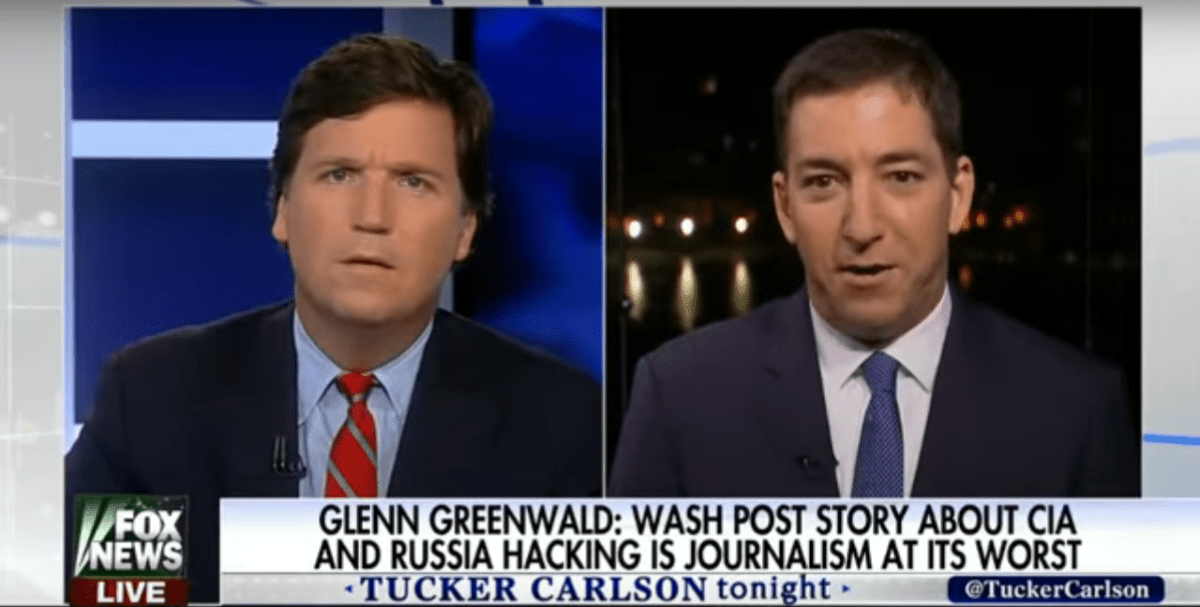
Glenn Greenwald Sides with the Deep State on Trump and Russia

When it was a race between a middling neoliberal and a neofascist buffoon, the way a certain sort of leftist with a social media presence chose to demonstrate their enviable, contrarian wisdom was to deride the former — while not endorsing the latter, mind you, but — for engaging in McCarthyist “red-baiting” against a right-wing authoritarian. It was accepted as self-evidently false, and laughably so, that the right-wing authoritarian in Moscow would seek to swing the U.S. election to an ally. Those positing that there was, in fact, something to the claim that the Russian state hacked the DNC (and selectively leaked what it found on behalf of the new Republican president) were either naively or cynically falling for a line put forward by shadowy and unelected Deep State operatives; leave it to liberals, the savvy leftist blogged, to find a way to side with the establishment against a billionaire.

Donald J. Trump defeating Hillary Clinton in the Electoral College, if not the popular vote, presented a new challenge: How to continue shitting on liberals as the most problematic threat, post November 8, at a time when an unhinged billionaire is about to get the nuclear launch codes? Glenn Greenwald of The Intercept’s approach: Keep acting like the (U.S.) Deep State that couldn’t stop Trump’s win is — I’m no supporter, but — seeking to undermine the legitimacy of a democratically elected leader, as (don’t you know) it’s done many times before, abroad. In this telling, news of Russian intervention continues to be self-evidently #FakeNews pushed by a media elite with known ties to The Agency, and the take serves a dual function: validating the absurd nonsense pushed during the election by Greenwald and his quasi-left fellow travelers, from Rania Khalek to Michael Tracey, that Trump was, relative to Killary, the candidate of peace — the man who, say what you will, didn’t want to start World War III on behalf of Jabhat al-Nusra.

Key to the argument that Trump is Salvador Allende and liberals (eyeroll) are being liberals (spit) by noting the CIA’s assessment Russia intervened in the U.S. election on the new president’s behalf is: ignoring the fact that 16 other U.S. intelligence agencies and the FBI believe it did too, disagreement coming only on the question of whether the obviously selective leaks that had an obviously partisan impact were explicitly designed to help the man that, as one Russian communist told me, the entire Russian state media was promoting as the globe’s salvation. Greenwald, for instance, along with the boys of Fairness and Accuracy in Reporting, have long posited that there’s nothing to this hacking stuff; “neither the FBI nor the CIA is on board, at least publicly” blogger Ben Norton wrote last summer, lamenting coverage of the “Russia Hack Conspiracy.”

Continue reading “Glenn Greenwald Sides with the Deep State on Trump and Russia”

Combating Al-Qaeda in Syria

Leading experts on Syria discuss strategies for combating ISIS and Al Qaeda in Syria

Continue reading “Combating Al-Qaeda in Syria”

Culture and Imperialism

A version of this first appeared in The National.

During the Cold War there was an attempt by both major powers to instrumentalise art as a means of ideological domination. The artistic landscape was fraught with political landmines. Artists had to navigate this terrain with caution. Some became willing instruments of policy, some were coerced into it, some made expedient compromises—but many were snared unwittingly.

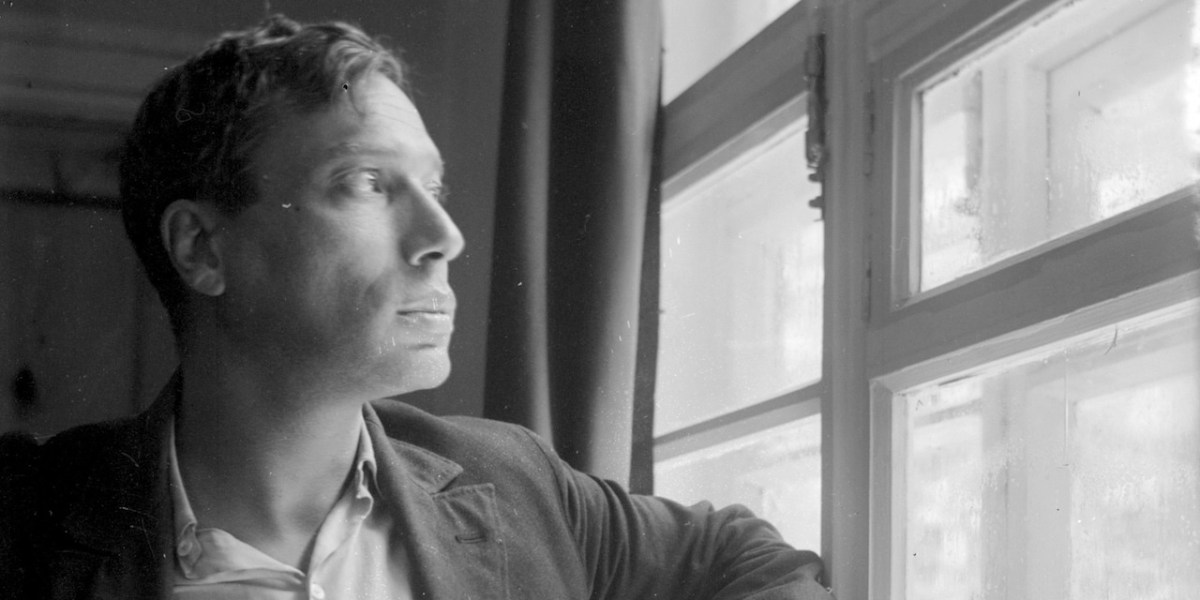
The eastern bloc’s means of control were explicit, hence better known. They were exemplified in the persecution, fear, and exile suffered by the likes of Boris Pasternak, Anna Akhmatova, Osip Mendelstam, and Alexander Solzhenitsyn. They have also been fictionalized in popular films like Henckel von Donnersmarck’s The Lives of Others.

Less known however are the means that the ‘free world’ used to engineer a favourable intellectual climate. Decidedly more tolerant of dissent than its eastern counterpart, the west developed a system of rewards and exclusion to amplify favourable voices and marginalise critical ones.

This vast apparatus was orchestrated and conducted by the analytical wing of the CIA, which in its halcyon days relied on Ivy League recruits, often with backgrounds in the humanities. Erudite and urbane, these recruits were seen as the ideal candidates to erode the seductive appeal of Soviet communism. They could counteract it through a strong anti-communist line that emphasized the western ideals of freedom and openness.

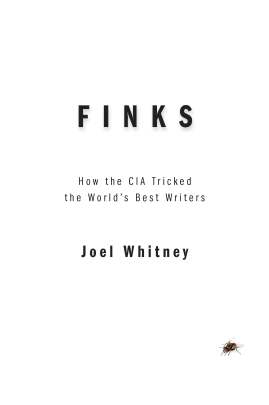
finks_cvfFinks: How the C.I.A. Tricked the World’s Best Writers is Joel Whitney’s riveting account of the CIA’s machinations to enlist some of the world’s leading writers in this ideological contest. Part literary history, part investigative journalism, the book unravels hitherto unknown details about the CIA’s vast cultural offensive.

Whitney’s story pivots around The Paris Review, a highly regarded literary publications best know for its series of interviews with literary giants such as Ernest Hemingway, William Faulkner, T. S. Eliot, Thornton Wilder, and Vladimir Nabokov, and fiction and poetry from the likes of Jean Genet, Samuel Beckett, Philip Larkin, V.S. Naipaul and Philip Roth.

But in 1953 when it was launched, one of The Paris Review’s three co-founders, the novelist Peter Mathiessen, was working for the CIA and using the magazine as cover. George Plimpton, the Review’s other co-founder, was also aware that the magazine’s benefactor, the Congress for Cultural Freedom (CCF), was heavily funded the by the CIA. The CCF sustained The Paris Review by mass purchasing its copies, syndicating its content, and paying extra for material that aligned with Cold War imperatives. The CCF also tried to influence the magazine editorially. This despite the fact that the Paris Review wasn’t even part of the large stable of magazine’s that CCF directly funded and controlled.

Continue reading “Culture and Imperialism”

Russia Is Not Iraq (and Neither Was Syria)

With right-wing authoritarians ruling in Moscow and Washington, leftists should find it easy to oppose these evil empires — but some, poisoned by pre-election contrarianism, are too busy what-abouting their evils and conflating legitimate fears of demonstrable collusion with bigoted, liberal hysteria.

“If you look, for example, at the agency that has led the way in pushing these allegations about Russia, which is the CIA…. The CIA was very aggressively in favor of Hillary Clinton’s victory. And there’s a lot of different reasons for that, but I think the primary one is that the CIA proxy war in Syria is something that Hillary Clinton had promised not just to support, but to escalate.”

— Glenn Greenwald on Democracy Now!

One thing  we really ought to sneak up on with a cloth soaked in ether, nudge into a ditch on the side of the trading route and leave behind for dead in 2016 is the notion, pushed by a social media left and libertarian fellow travelers poisoned by brand-conscious contrarianism, that Donald J. Trump — reminder: right-wing authoritarian scumbag — is a victim of liberal McCarthyist red-baiting over his fondness for a kleptocrat in Russia whose intelligence agencies worked as an arm of the Republican billionaire’s opposition research team. And buried with this notion, in a lead-lined coffin incapable of penetration by a WiFi signal, we ought to lay the accompanying dogma that to express concern about this budding geopolitical realignment (and the clear and present evidence that of course the Russian state had an interest in aiding the election of an avowed ally, and indeed did) is the product of a decidedly normie faith in the CIA that — betcha didn’t know — was wrong about Iraq.

One might have thought the alarming spectacle of an actually-going-to-be-president Trump, and his continued, open embrace of a foreign war criminal, would wake the sophists of the left from their intellectual slumber, but paradigms, like Russia as a universally loathed official enemy and Hillary as the next U.S. president, are awful hard to kick. And so the trite response to the unsurprising revelations of the Russian state’s perfectly sensible partisan hacking operations is itself lacking in shock value. This was to be expected from a left that’s only frame of reference appears to the be the 2003 invasion of Iraq, supported by the likes of Glenn Greenwald, and which long ago decided to serve penance for the crimes of the U.S. empire by reflexively countering indictments of others’ crimes with something moderately less rank than outright apologism: increasingly stale reminders that the U.S., also, meddles and bombs.

What’s lacking in the response to Russian intelligence operations — different from the U.S. variety only in that the hacked information was selectively made public — is any attempt at a counter narrative: If not them, then who? No, bumper-sticker leftism requires the centering of the U.S. for the purposes of battle-tested talking points, like: If not us, then who cares? We’ve got plenty for which to atone, mister. It’s a leftism divorced from the trials of reality and the difficulties of grappling with multiple poles of power as they actually exist in a world from which a certain brand of “left” (“pseudo-” if one prefers that to mocking quote marks) has retreated, preferring the smugness of a contrarian subculture and a reactionary (and boring) anti-liberalism with its self-satisfied truisms to truly independent socialist critique.

Another Iran, Not Iraq

The truth is Russia is not Iraq, nor is evidence that Moscow hacked and disseminated information that helped a friend akin to saying Baghdad had WMDs — and neither claim, true or not, could possibly justify U.S. militarism. The claims are dissimilar in another respect: The intelligence in the lead-up to Iraq was manufactured from the top down by political appointees that accused the CIA of housing liberals who just didn’t get that the intelligence its agents had discarded as unreliable or fake could, in fact, be useful to its boss, Dick Cheney. Today, we witness the spectacle of the CIA and the FBI and the NSA all concurring on a matter that President Barack Obama reportedly sought to delay addressing until after Trump’s election, and which (badump) doesn’t ingratiate the intelligence community to the next man that community will call “dad,” and who will have the power to dismantle it.

If there’s a historic parallel, it’s not Iraq, but Iran: As with Russia’s hacking, it was also the U.S. intelligence community’s consensus that Iran was not building nuclear weapons, a finding that didn’t please the “real men” in the Bush administration who wanted to follow up the bombing of Baghdad with airstrikes on Tehran.

But that said, did you know (I bet you didn’t) that there were, in fact, no WMDs in Iraq? It’s a reference that is damning, on the surface, for those unfamiliar with how the U.S. came to invade that country, and so those who prefer their politics superficial will return to it time and again, just as they do a narrative on Syria, the next Iraq that wasn’t.

Appearing on Democracy Now!, The Intercept’s Glenn Greenwald helpfully united both Russia and Syria in the “next Iraq” take we didn’t know we wanted but which we, as inhabitants of an evil empire, totally deserve. Asked why revelations of Russian responsibility were coming out now, Greenwald suggested we were on the road to Damascus. “There’s a lot of different reasons,” Greenwald said, “but I think the primary one is that the CIA proxy war in Syria is something that Hillary Clinton had promised not just to support, but to escalate.” The CIA, Greenwald maintained, “is attempting to undermine and subvert Trump because they never wanted him to be president in the first place, and now they’re trying to weaken and subvert his agenda, that they oppose.”

Trump, in other words, poses a challenge to the deep state because he threatened to pursue the same policy as his predecessor: regime preservation, not change, with Obama even pursuing a deal with Russia to jointly bomb Syria together. Greenwald, who failed to recognize the latter’s joint bombing plans until it was useful to deploy against liberal “Russophobic” hysterics, is here seeking to salvage his pre-election take that Trump has a “non-interventionist mindset” by portraying his non-interventionism as under assault by the deep state; when the bombs do inevitably fall, then, they can then be spun as the spoils of that deep state’s victory against a president “they never wanted.” And so, even post-November, harping on liberals and their intelligence allies as the greater evil can continue to be the woke call despite a proto-fascist’s assumption of power. Hillary, after all, would have started World War III for Jabhat al-Nusra, and it doesn’t take supporting Trump to oppose that!

End this, please. A new year and a new U.S. head of state requires more from the ironically detached left than the cock-sure scumbaggery of vapid owns of liberals and asinine comparisons to earlier , more easily understood times that only demonstrate one’s inability to accept that times change and alliances shift.

Unwanted-Pregnancy.jpg

Whatever This Is, I’m Against It

Whatever the reasons — likes and shares or an intellectual laziness that prevents them from abandoning old paradigms — it is disappointing and sad that many old comrades cannot abide their analysis, proven woke and true in the mid-2000s, being affected by new developments, like Russia no longer being red and non-U.S. imperialisms having eclipsed the American empire’s body count in the 21st century. We sneer at Democratic elites’ unwillingness to own their failures, and that perhaps explains the unwillingness to concede the reality of Russian hacking lest we excuse those failings, but the left’s most confident pundits have, like the liberals they deride, fallen into the comfortable habit of preaching to their own social media cluster, where possessing superior politics, in the abstract, is a license for not having to grapple with the world through anything but the comfortably distorting prism of ahistorical slogans.

The world, as it exists, is defined by a resurgent threat of fascism that a swathe of the left is content to challenge by blaming everyone and everything but itself, a self-defeating and self-satisfied impotence — literally nothing a leftist says or does matters because the left doesn’t hold power which is totally not its own fault in any fashion — absolving the savviest from having to wake up and notice that the Russian state is objectively bad, even if liberals say it too, and that the right-wing authoritarian who rules from Moscow is about to have an ally in Washington that his intelligence services helped elect. Instead of retreating to the comfort of takes we knew to be true in an earlier, more innocent time, when the laughter of children wasn’t at plausible risk of being extinguished by an unhinged megalomaniac with a greater-than-zero chance of firing off some nukes because he finds that laughter annoying, the left should consider that rejecting Moscow and Washington alike was leftists’ proudest moment, and that we live in a time when both empires are set to work in concert, with Syria likely to be the first testing grounds for this alliance — making it all the more easy and refreshingly unproblematic to oppose them both.

Let’s do that, not whatever it is Greenwald and his imitators think they’re doing.

Charles Davis is a journalist based in Los Angeles.

Syria and Leftwing Hasbara

Or how hawkish and dovish leftwing denialists on Syria echo hawkish and dovish Zionists on Palestine

By Sergio Pérez

While Syrians continue to lose their lives, or struggle to survive, under atrocious conditions, subjected to indiscriminate shelling and airstrikes, displaced, besieged, starved, and tortured in every conceivable way, a heated exchange of indictments has taken place among left-wingers in the stormy arena of the social media.

At the centre are some prominent, mostly Western figures of the pro-Palestinian activism, who are charged with denialism and/or accused of displaying a deafening silence on the Syrian uprising and the brutal repression that it has been facing at the hands of Assad regime—a regime, we shouldn’t forget, that is responsible for over 95% of civilian deaths and accused by the UN of crimes against humanity amount to “extermination” which “far outnumber those of ISIS militants and other jihadist groups”.The arguments that these figures have used seem to reveal, oddly enough, striking similarities to those that Zionists make in defense of Israel.

To be precise, we must distinguish two principal trends in the so-called denialist Left: the hawkish and the dovish.

Hawkish and Dovish

Detached from reality, hawkish Zionists will deny any evil inflicted by Israel on the Palestinians. When acknowledged, the evil will be justified as a collateral damage or a necessary step in the name of security and counterterrorism. Their denialism will frequently lead them to claims of forgery and fake (“Pallywood”) even in the face of insurmountable evidence to the contrary.

Detached from reality, the Geo-Stalinist anti-Imperialist Left will deny any evil inflicted by Assad and his allies on the Syrian people. When acknowledged, the evil will be justified as a collateral damage or a necessary step in the name of security and counterterrorism. Their denialism will frequently lead them to claims of fabrication (“White Helmets’ soap opera, just to force NATO to intervene”), all evidence to the contrary notwithstanding.

Partially detached from reality, dovish Zionism will acknowledge many evils inflicted by Israel on the Palestinian people, but they will all be rationalized in the name of the lesser evil, that is, the preservation of the Zionist regime and its allegedly more progressive cause (a modern, secular, supportive of minorities regime). Moreover, dovish Zionism adopts the discourse of the “moral equivalence”, that is, the idea that both Palestinian and Israelis commit crimes and must therefore resolve their differences through “diplomacy” (as if both sides are equal). But most of the time, dovish Zionists remain silent.

Partially detached from reality, dovish left denialists will acknowledge many evils inflicted by Assad and his allies on the Syrian people, but they all will be rationalized in the name of the lesser evil, that is, the preservation of the Assad regime and its allegedly more progressive cause (a modern, secular, supportive of minorities regime). Moreover, dovish denialist Left adopts the discourse of the “moral equivalence”, that is, that both pro-regime and anti-regime sides have committed crimes and all they need to do is to engage in “diplomacy”, their imbalance in power and legitimacy notwithstanding. But most of the time, dovish denialist Left remains silent.

Continue reading “Syria and Leftwing Hasbara”

The Moral Dysfunction of Assadism

By Abed Abu-Shehade (translated by Ofer Neiman)

During one of the last lectures given at the Institute for Human Sciences in Vienna before his passing, Professor Sadiq al-Azm rejected the notion that what was happening in Syria was a “civil war”. He explained that unlike the Lebanese case, in which civilians of various religions took up arms and went out to seek vengeance upon others, the Syrian case involves a struggle between the regime and civil society. Sadik does not ignore the fact that there are identity-based elements in the struggle between Alawis and Sunnis, but he stressed that the regime is the key player acting against both civilians and rebels to suppress the uprising using every means at its disposal. He added that even at its most extreme, rebel actions pale in comparison to the regime’s barrel bombs and the Russians’ bunker busters.

Syrian intellectuals have reached such a state of despair in the face of the crisis, that they have ironically proposed to the US Administration to allow the Syrian regime to use chemical weapons, as long as the latter stopped its bombings — because dying by chemical weapons is a lot ‘cleaner’, and at least no body parts would litter streets or children lie buried under rubble.

Sadik wonders how people can still dispute the legitimacy of the Syrian uprising. He compares the Syrian case to Hungary in 1956, when Hungarians rose up against the Soviet regime. But back then, no one (except for dogmatic supporters of the USSR) criticized the Hungarian people for what seems like a human act, a popular uprising against a violent regime.

Continue reading “The Moral Dysfunction of Assadism”