by Rashad Ali
“The 2022 conviction of Anwar Raslan for 27 cases of murder and 4000 cases of torture brought renewed attention to international efforts to bring to justice perpetrators of war crimes, in Syria and elsewhere. This and cases like it are being pursued in Europe under the principle of universal jurisdiction (UJ), which is predicated on the idea that some crimes are so grave that they can be tried outside of the country where they are committed (i.e. extraterritorial).”
So said Syria Justice and Accountability Centre (SJAC). But what does Islamic tradition across traditional and conservative spectrums say?
Islamic ethical and legal discourse on such matters is unclear or not spoken of among Muslims in a Western audience, particularly on the question of seeking redress from international courts, or courts outside of Muslim majority countries. It is doubtful that many Muslims know that there is such a thing as a principle of international justice or universal jurisdiction in the Islamic tradition.
In the hadīth as well as the Qur’an, we are informed that God builds his universe on justice and balance, so we must likewise be fair and just in all our dealings, and we are moreover warned against injustice and its harms. In one hadīth we are informed that God has forbidden injustice on Himself, so we should not oppress each other. Ibn Daqīq al-Īd, hadīth master and jurist explained in his book Shar’h ul-Ilmām[i] that this obligated Muslims to avoid injustice over all of creation, and injustice therefore had a universal meaning, not specific to the particular interpretations of Muslim scholars, but one which was common and customary for all.
Seeking justice therefore was not subject purely to Muslim political jurisdiction; Muslim jurists historically recognised the validity of such ideas, and in fact endorsed such political practices, as respecting international treaties and arbitration, and the rights of people to seek justice through those means. Jurists wrote about and explained specific rulings and edicts, both in what is often referred to as classical times and in contemporary works. We shall see that this is a principle and practice that not only had merit, but is arguably mandatory today in order to redress wrongs and seek such necessities as stopping war crimes and genocides, or at least curtailing them as much as possible.
In light of this I wish to explain by looking at the explicit statements and political pacts the Prophet Muhammad ﷺ undertook that there was indeed sanction for seeking your rights through all means available to you.
The Pledge of Virtue & justice (Hilf ul-Fudūl)
“Most certainly I bore witness in the house of Abdullah bin Jud’ān to a pact for virtue & justice, if I were to be called to it again I would surely have responded! It is more beloved to me than a herd of precious red camels!”
A hadīth soundly narrated by Imām Bayhaqī and Imām Ahmad[ii] with various routes and versions.
Cited here from his work on governance, al-Ahkām al-Sultāniyya[iii] by Imām Abūl Hasan Alī bin Muhammad bin Habīb al-Basrī al-Baghdādī al-Māwardī, the famous Qādī (judge), faqīh (Jurist), and scholar of the Shāfi’ī madhab (school of thought).
al-Māwardī explained the background to this pact, and its substance:
“In the times of ignorance (Jāhilīyya) [meaning prior to the prophethood of Muhammad ﷺ] leadership spread to the Quraysh, and they witnessed hegemonic behaviour and oppression become widespread, and many claims of wrongdoing, from which none could save them except a powerful executive authority (sultān qāhir). So they made a [social] contract (aqd). In order to deal effectively with the wrongs/oppression (mazālim), and to restore justice to the oppressed from their oppressors.“
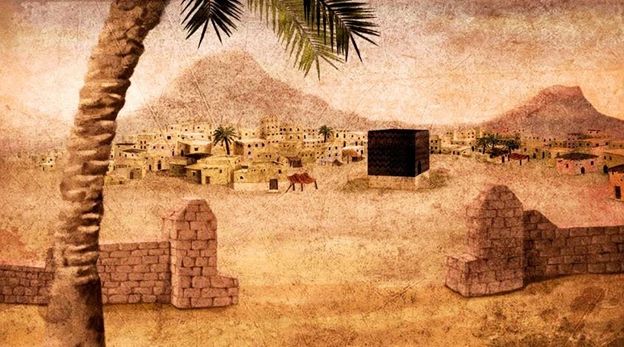
A man from Yemen had come to Mecca who was wronged and sought redress, and complained how such wrongs could take place in the sacred ‘Haram’ of Mecca. This incident reached the leaders of Quraysh. Al-Māwardī elaborates;
“So Abū Sufyān and al-Abbās bin Abdul-Mu’talib returned money to the man, and gathered the inner sanctum of the Quraysh [Ibn Kathīr[iv] in his Sīrah explains this was the leaders of tribe of Hāshim, Mu’talib, Assad bin Abdul-Uzza, Zahra bint Kilāb and apparently Taym bin Murra].
They pledged in the house of of Abdullāh bin Jud’ān to deal effectively with injustice (rad al-Mazālim) in Mecca; to not oppress anyone, nor prevent them from their rights but to secure the rights of the oppressed for them. The Messenger of God ﷺ was with them that day – before his [worldy appellation to] Prophethood – and was 15 years of age. They contracted (aqadū) the pledge of virtue & justice (hilf ul-fudūl) in the house of Abdullāh bin Jud’ān.
The Messenger ﷺ addressed his companions while recalling that situation:
“Most certainly I bore witness in the house of Abdullah bin Jud’ān to a pact for virtue & justice. If I were to be called to it again I would surely have responded! It is more beloved to me than a herd of precious red camels!””
The notable aspect from a juristic point of view though is what al-Māwardī states after:
“This, even if it was an act in the time of Jāhilīyya, was a matter of public good and a policy of taking care of affairs (siyāsa). One which became by the presence of the
Prophet ﷺ at it, and the strong affirmation of this affair, a religious injunction (hukm shar’ī) and prophetic act.”[v]
Imām Abū Abdullāh al-Qurtubī, the famous exegete (mufassir) and jurist (faqīh) explains the wisdom behind this further, that the prophet ﷺ forbade tribal pacts where one supports and fights for tribes or your allies in other tribes whether right or wrong. These were condemned, yet this was different because in the Imām’s words:
“The Wisdom (Hikma) in that is the Sharīah came to provide aid against the oppressor and sought to restore your rights from them. By granting such rights to the oppressed, in fact it obligated that as a matter of principle in the Sharīah it was a comprehensive duty, upon all morally responsible and capable of doing so, to do. In order to make for [the oppressed] a way against the oppressors, as found also in
the sound [hadīth], his ﷺ saying: “help your brother whether oppressor or oppressed”. To which they said: “O Messenger of God ﷺ [we understand] this regarding helping he that is oppressed, but how do we help the oppressor?” He said: “grab hold of his hand!” And in another narration “stop him from his tyranny! That is aiding him!”.[vi]
What did such a pact entail? Scholars of hadīth as well as specialists in Qur’ān exegesis have elaborated on this in their respective works.
Ibn ul-Athīr al-Jazarī, the hadīth master (Hāfidh) and commentator (Shārih), explains this in his compendium of the sunan collections of hadīth the ‘Jāmi’ ul-Usūl’: “In principle/origin (asl) hilf means: contracting a binding agreement (mu’āqada), and a solemn mutual oath (mu’ahada) to mutually support, and provide material aid to one another, and mutual understanding (ittifāq). What normally existed in Jāhilīyya was upon strife (fitan) and warfare between tribes and raiding(!), so for this reason these were forbidden in Islam by his saying [i.e. of the Messenger ﷺ]: “there are no pacts in Islam”. As for what existed in Jāhilīyya from such pacts for coming to the aid of the oppressed (Nasr ul-Mazlūm), maintaining of ties, like the Hilf of the nobility (Mutayyabīn) and what continued as such, this is what was spoken of when he [the Messenger] ﷺ said: “any (just) pact in Jāhilīyya is not increased in Islam but that is affirmed strongly”. What is meant is: mutual agreements upon good, supporting truth and rights (haq), and by this we reconcile the two hadīth.”[vii]
So Ibn ul-Athīr explains the apparent contradiction here by explaining what Islam condemned was the idea of my tribe and their allies right or wrong – a tribalism or nationalism or even an “us and them”, irrelevant of morality, and the justness of actions and parties. Rather they could only be based on principle, and when such pacts were made on principle, in the example given, one of justice and stopping oppression such a pact should be and in fact must be upheld and promises or “contracts”, or agreements must be fulfilled.
So the pacts across polities between different authorities were recognised by the Sharīah as valid and binding in medieval times, even with states and authorities that were not ruled by Muslims, and it was irrelevant if oppressors/wrong-doers were Muslim or non-Muslim. Such political agreements were ones which should be enforced by mutual cooperation across state-lines by all parties who had come into such agreements, especially when related to stopping tyranny and oppression; war crimes as an example, especially when reaching genocidal levels, would be an absolute necessity (darūra) recognised by the Sharīah. This is emphasised by the fact that the Prophet himself stated he would respond if the pagan leaders of Mecca, the tribal leaders of Quraysh, called him, and he would cooperate with them in bringing justice to people.
Historians noted that the companions of the Prophet upheld such a conception within their politics too. So that anyone wronged could call upon the tribes sworn to uphold this pact, and they would respond. When Walīd was the ruler of Medina, Husayn bin Ali (as) had a financial grievance where his rights were being suppressed by Walīd, so Husayn swore: “by Allah, either you rule with justice or I shall carry my sword to the Prophet’s Mosque and call on the alliance of virtue!” Abdullāh bin Zubayr (ra), another companion of the Messenger of God, said: “I too swear that if Husayn calls on us then I shall raise my sword until he gets his right justly or we die together!”.
The news reached Miswār bin Makhrama (ra) and Abdullāh bin Uthmān bin Ubaydullāh al-Taymī and they also said the same – as representatives of each tribe. When Walīd heard this he gave Husayn his right justly. This is recorded by Ibn Is’hāq the historian and biographer of the Prophet, and Imām Abūl-Abbas al-Qurtubi in his commentary on the hadīth in Sahīh Muslim.[viii]
The political connotations, seeking of justice, even for mere injustices related to individual rights and financial matters, was a part of the political and moral outlook of the companions. This was what was understood from the social contract alluded to by the Prophetic example.
International Agreements & Courts
Shaykh Wahba Zuhaylī, the jurist who specialised in comparative law, states the following in his ground breaking work ‘Athār ul-Harb fil-Fiqh al-Islāmī’, a work on international norms and law related to war, that arbitration in matters related to international disputes, war and suppression of treaty rights and agreements, particularly ones agreed to by international agreements such as on war crimes, and stopping injustice, and belligerent behaviour, was something recognised by the Sharīah. The principles (qawā’id) and aims (maqāsid) of the Sharīah, particularly reducing “spilling of blood” and “saving lives”, meant any such arbitration in line with these aims was valid. He states that the Prophet ﷺ himself appointed people to arbitrate in a well known hadīth, and that these arbitrators state explicitly that they were giving people their judgement and their word, not the word of Allah and His Messenger ﷺ , and ended in one narration with “then judge between them as you wish”. The treaties were negotiated and agreed upon, like that of the famous Treaty of Hudaybiya with the pagans of Mecca and his fledgling City-State of Medina, and enforced mutually. He cites the Mālikiyya, specifically al-Khirashī, as permitting even the non-Muslim to judge between them when there was a pressing ‘Maslaha’ (interest/need).
He explains: “what is a well known [practice] between contemporary States in agreeing to a formal plan of arbitration is that it is defined by the principles agreed to by both parties… and we do not have any conflict with such agreements from the standpoint of Islam, because for any agreement that does not violate the definitive [injunctions within] texts it is obligatory (yujib) to be faithful to them.”[ix]
He also states: “…as long as contracting parties are free to stipulate whatever conditions they choose in the agreement, there is nothing to prevent them in our view from implementing the legal principles agreed upon in judgement/arbitration in modern States.”[x]
Specifically regarding international agreements and the UN he states: “Therefore Muslims – by their membership of the United Nations… which in general (jumla) does not negate or conflict with laws of Islam, and is established overridingly (ghālib) on the basis of justice and equality or is organised by mutual agreements and treaties (mu’āhadāt)… [as such] the principles of arbitration/judgment in the International Court of Justice are not outside of these agreements by States, or international norms which all states adhere to, or a principle from principles of justice and fairness; these are matters no one disagrees with…”.[xi]
Seeking judgements from courts and states from outside states
The universality of jurisdiction in such matters would also be deemed as a necessity, and is a matter which jurists have discussed previously and in more recent times, due to necessity and public interest. Such needs and interests may require that we do so when not all Islamic standards can be met, even under a Muslim Polity when seeking an Islamic judgment on your rights. Muslims may well be required to take the judgment of a court or a judge which does not meet the ideal standards, for example a judge lacking probity or even Islam, as stated by the famous jurist and celebrated scholar of Islam, al-Ghazālī.[xii]
Dr Zuhaylī also states that a resolution of the ‘Majmā Fiqh al-Islamī’ adopted this view as a necessity today (darūra aw hāja) in one of its decisions (qirarāt) – and was agreed upon by the scholars present.[xiii] They enunciated a general principle: “when there is no court from an Islamic authority it is allowed for a state or Islamic institution to seek a court judgement from a court outside of an Islamic authority in order to seek what is valid from the Sharīah”.[xiv]
As such, criminals, war mongers and genocidal dictators who violate every single moral law and precept are naturally subject to what are deemed reasonable laws agreed upon by states and nations.
Whether this is trying war criminals for crimes they have committed or those accused of genocide, be they Israeli political and military personnel, the former Syrian government or those in other conflicts where such hideous crimes are being perpetrated such as in Sudan or Myanmar, be it in international courts, or in other states, seeking such redress is not only valid and in agreement with Islamic goals and values, but also may well be a necessity.
Epilogue
Muslims as a minority community seeking their rights and negotiating them and laws for their protection, political engagement and activism during the time of the Prophet
Ibn Kathīr[xv] brings a narration in his Sīra from Ibn Asākīr[xvi], who states it had a hasan (good) but singular (gharīb) chain that when the Muslims fled to Abyssinia seeking protection, they presented themselves to the court of the Christian Negus [King] after the Quraysh sent a delegate to ask for them to return the migrants. The Negus refused to return them back and said he would wish to hear from them.
They came to the court, refused to bow to him saying they bowed only to God, so refused to compromise the acts which were tenets of their faith. They then explained their faith and beliefs, including when prompted their belief that Jesus was a Spirit of God, bestowed on the Virgin Mary.
He promised them protection and gave them basic items such as food and clothing. He then asked whether anyone had harmed them and they said they had been harmed. It was then announced that if anyone harmed them such a person would be fined four gold pieces. They were asked is this acceptable, they replied “No!”. So the fine was doubled!
They negotiated a better deterrent as a decree/law with the Negus in his court until they were happy. They stuck to their faith. They explained their beliefs. They did not demand more than their basic interests be looked after and protected and were not to be harmed by the Negus, and his system placed measures and decrees to protect them from harm. They engaged and negotiated such a general status and specific decrees to protect them until both were happy.
When they heard of the defeat of those who were persecuting Muslims, killing them and that they had been fought and defeated, they explained they had a desire to go to join the Prophet ﷺ in his new Citadel, Madīna ul-Nabī. The Negus wished them well, and sent them on their way.[xvii]
[i] Ibn Daqīq al-Īd, Muhammad bin Alī bin Wahb al-Qushayrī, page 183, 2009, ‘Shar’h ul-Ilmām’, Dār ul-Nawādir, Kuwait-Syria-Lebanon
[ii] Musnad 1/190-1 cited by the editor of al-Ahkām al-Sultāniyya (see note iii)
[iii] al-Ahkām al-Sultāniyya wal-Wilāyāt ul-Dīniyya page 151, Dar ul-Kitāb ul-Arabi, Beirut-Lebanon 1410H/1990CE
[iv] al-Sīrah ul-Nabawī 1/259 & Ibn Hishām 1/123 – editor’s note
[v] page 151-2
[vi] see any of the prints of ‘al-Jāmi’ Ahkām ul-Qurān’, the chapter of al-Nahl verse 91
[vii] ‘Jāmi’ ul-Usūl fī Ahādīth al-Rasūl’ volume 5 page 49-50 of Imām Majd ul-Dīn Abī Sa’ādāt al-Mubārak bin Muhammad Ibn ul-Athīr al-Jazarī, Dar Ibn Kathīr Damascus/Amman – Syria/Jordan 1437H/2016CE
[viii] ’al-Mufhim limā Ashkala min Talkhīs Kitāb Muslim’ volume 6 page 483, Imām Abī’l Abbās al-Qurtubī, Dār Ibn Kathīr, Beirut-Lebanon
[ix] page 768
[x] ibid
[xi] page 769, ‘Athār ul-Harb fil-Fiqh al-Islāmī – (Dirāsat Muqārana)’, By Dr Wahba Zuhaylī, Dar el-Fikr,
Damascus-Syria 1419H/1998CE
[xii] cited by Dr Wahba Zuhaylī in his work ‘Qidāya al-Fiqh wal-Fikr al-Mu’āsir’ pages 730-732, Dār al-
Fikr, Damascus-Syria 2006
[xiii] ibid
[xiv] ibid
[xv] al-Bidāya wal-Nihāya volume 2 [part 3] pages 76-77 Imād ul-Dīn Abūl-Fidā Hāfidh Ismā’īl Ibn Kathīr al-Dimishqī died 774H (1373CE) Dār ul-Kutub ul-Ilmīyya
[xvi] there are of course many sahīh reports of this but this is a summary of that specific narration
[xvii] See fn xv



 P U L S E