Clan, State, Islamic Polity

Abdelwahab el-Affendi

Could the root causes of the Arab-Muslim ‘malaise’ be cultural? That’s what journalist Brian Whitaker suggests in his book ‘What’s Really Wrong With the Middle East’. The thesis sounds suspicious, but Whitaker isn’t a cheap Orientalist, and he uses interviews with Arabs as his raw material. The key issues his informants keep pointing to are indeed the issues that, wherever you meet them, young Arabs complain about. These include an undue emphasis on submission and obedience in the education system, at work, and in the home, the social valorisation of conformity, and a corrupt public space.

The personal is the political. The problem in every sphere is one of overbearing authority, and it’s true that this is ultimately family-based, ultimately the result of overly-narrow personal identifications. In fact, I would argue that tribalism, nepotism, sectarianism, even forced marriage and honour killing, are all manifestations of the tyranny of the clan. And the tyranny of the clan is the result of bad governance.
Continue reading “Clan, State, Islamic Polity”

The Pen and the Sword

This review was originally published at the indispensable Electronic Intifada.

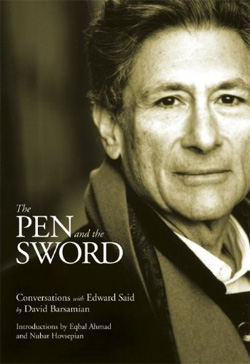
Edward Said was one of the great public intellectuals of the twentieth century – prolific, polymathic, principled, and always concerned to link theory to practice. Perhaps by virtue of his Palestinian identity, he was never an ivory tower intellectual. He never feared dirtying his hands in the messy, unwritten history of the present moment. Neither was he ever a committed member of a particular camp. Rather he offered a discomfiting, provocative, constantly critical voice. And against the postmodern grain of contemporary academia, his perspective was consistently moral, consistently worried about justice.

Said was primarily a historian of ideas. More precisely, he was interested in ‘discourse’, the stories a society tells itself and by which it (mis)understands itself and others. His landmark book “Orientalism” examined the Western narrative of empire in the Islamic Middle East, as constructed by Flaubert and Renan, Bernard Lewis and CNN. Said’s multi-disciplinary approach, his treatment of poetry, news coverage and colonial administration documents as aspects of one cultural continuum, was hugely influential in academia, helping to spawn a host of ‘postcolonial’ studies. Said’s “Culture and Imperialism” expanded the focus to include Western depictions of India, Africa, the Caribbean and Latin America, and the literary and political ‘replies’ of the colonised.

Continue reading “The Pen and the Sword”

To Vote Or Not

Steve Bell's Nick Clegg - who deserves a reward

Democracy is supposed to mean ‘government by the people’. In the ancient Greek city states all the free men (but not women or slaves) would cram the theatre for lively, informed debate on a relevant issue, and then would decide it by a show of hands. Not so today. Putting a mark on a piece of paper every five years and imagining that you run things seems like a sad parody of such activity, a demotic populism masking power rather than a popular democracy negotiating it.

In our society the most important decisions are often made by unelected movers of capital and unelected civil servants and generals. Elected officials are very often at least as loyal to the lobbies easing their way as to the voters they supposedly represent.

Continue reading “To Vote Or Not”

The Screen

Polizeiposten by Wilna Marianne Werefkin

There were no classes. Instead we marched down to the square and began to shout slogans. At first the teachers led us but soon we got into a group with no teachers and we could shout what we wanted.

Ya Blair Ya haqeer

dumak min dum al-khanzeer

O Blair, you are mud

Your blood is swine’s blood

It was hard to say the words because I was laughing so loud. Muhannad squashed his nose with his finger and oinked like a pig. 

Ya Clinton Rooh Amreeka

Hal mushkiltak ma’ Moneeka

 O Clinton Get to America

Solve your problem with Monica

That was the funniest one. Muhannad screamed in my ear about Clinton’s cigar and the Jewish woman, which was bad because a girl was next to me. He told me the story almost every day, but it was funnier this time, or maybe it felt like that because the tall girl was there and such a crowd was in the square. The sky was bright, although it was a cloudy day.

Continue reading “The Screen”

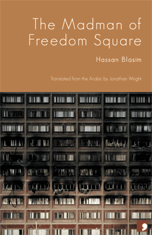
The Madman of Freedom Square

I see no need to swear an oath in order for you to believe in the strangeness of this world.”

How can imagination respond to a situation like Iraq’s, in which truth is so blatantly stranger and more horrifying than the darkest fiction? Perhaps by simply recording real stories, then sometimes allowing reality to slip a little further in the direction it’s already chosen.

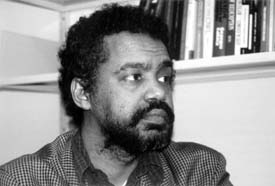
Hassan Blasim, film maker, refugee, and author of the astounding short-story collection “The Madman of Freedom Square,” has a more precise formulation:

The important thing is to observe at length, like someone contemplating committing suicide from a balcony. The other important thing is to have an imagination which is not melodramatic but malicious and extremely serious, and to have an ascetic spirit that is close to death.

Except this isn’t a formulation but a voice within a story. In another story there is a man who throws himself from a balcony – a man who clears blood and debris in the aftermath of explosions, then migrates to Holland, renames himself Carlos Fuentes, becomes a Hirsi Ali figure, more Dutch than the Dutch, and suffers nightmares. There’s a man who dreams a number which foretells not a lottery ticket but .. something else. I give away too much.

Continue reading “The Madman of Freedom Square”

Zeitoun

This review appeared in the Independent.

Abdulrahman Zeitoun was born in Jebleh, on Syria’s Mediterranean coast. Decades later and thousand of miles away he awakes from dreaming of a fishing expedition out of his childhood home: “Beside him he could hear his wife Kathy breathing, her exhalations not unlike the shushing of water against the hull of a wooden boat.” As so often in Dave Eggers’s latest novel, the docudrama “Zeitoun”, a caught image opens a window on an ocean of memory and a state of mind.

Zeitoun now lives in New Orleans, where he runs a painting and building company and owns several buildings. He’s a dedicated businessman, father, husband, and Muslim. His painter’s van is emblazoned with a rainbow, which Zeitoun soon discovers has gay associations for Americans. But he doesn’t change it. “Anyone who had a problem with rainbows, he said, would surely have trouble with Islam.”

Kathy, practical and strong-willed, was brought up a Baptist in Baton Rouge. Attracted by “the doubt sown into the faith” and “the sense of dignity embodied by the Muslim women she knew,” she converted to Islam after her failed first marriage. Some years later she married the much older Zeitoun. Eggers describes their domestic bustle and warmth, and their personal irritations. For Zeitoun, these include his children’s wastefulness and obsession with pop music, and his alienation in a family of women. Kathy is bothered by Zeitoun’s stubbornness and her own family’s Islamophobic nagging.

Continue reading “Zeitoun”

Obama Nation

Just before the weekend dies, a little music. PULSE readers may already know British-Iraqi rapper LOWKEY from his regular appearances at rallies for justice. He’s a great speaker, and a great rapper. Intelligent rhymes intelligently delivered.

A Process of Change – Nasrallah to Petraeus

It’s important to remember that Hizbullah leader Hassan Nasrallah’s speeches consist of more than mere rhetoric. One of the reasons for Nasrallah’s enormous popularity in the Arab and Muslim worlds is that, unlike other Arab leaders, he says what he means and means what he says. Hizbullah is the only force to have defeated Israel – once in 2000, when the brutal occupation of south Lebanon was brought to an end, and once in 2006, when Israeli troops attempted to reinvade in order to dismantle the resistance, but bled on the border for five weeks instead. During the 2006 war Israel bombed every TV mast it could find, but failed to put Hizbullah’s al-Manar off the air. Nasrallah spoke on al-Manar of “the Israeli warship that attacked our infrastructure, people’s homes and civilians. Look at it burn!” As Nasrallah uttered these words, a Hizbullah missile did indeed disable an Israeli warship, forcing Israel to move its fleet away from the Lebanese coast.

In mid-February 2010, Shaikh Nasrallah made a speech which may well mark a fundamental change in the Middle Eastern balance of power. The speech, quoted below, should not be read as a string of empty threats, but a signal of new weaponry and fighting capabilities.

Continue reading “A Process of Change – Nasrallah to Petraeus”

Sam Bahour on Shahid Alam

We are publishing a series of reviews and responses to PULSE contributor M. Shahid Alam’s latest work, Israeli Exceptionalism: The Destabilizing Logic of Zionism. I would recommend this clear-sighted book to any student of the origins and trajectory of Zionism. Here, Sam Bahour describes his own provocative engagement with Israeli Exceptionalism.

Israeli Exceptionalism: The Destabilizing Logic of Zionism peels the onion of Zionism to reveal how deeply flawed this ideology was and is and how it has become a destabilizing factor which puts people of the region — and arguably beyond — in serious jeopardy.

Israeli Exceptionalism is not only a must read, it is a must-think-about book. To add intellectual spice, every chapter starts with a few quotes of prominent individuals related to the topic at hand. Reading these quotes alone speak volumes of the human tragedy that Zionism evokes.

Continue reading “Sam Bahour on Shahid Alam”

Oman Again

To break up the winter I spent most of January visiting my brother-in-law and friends in Oman, where I used to live, and my sisters in Doha, Qatar.

Since Hamad bin Khalifa Aal Thani deposed his corrupt father, Qatar’s powerful oil and gas economy has expanded and diversified. The state follows an interesting and idiosyncratic foreign policy. It hosts the largest American miltary base in the Gulf, and it also hosts – against American and Arab objections – al-Jazeera. In terms of the regional ‘Resistance Front versus US-client’ dialectic, Qatar stands in the middle, and in 2008 it helped negotiate a Lebanese compromise between the two sides. Wahhabism is influential (my five-year-old niece wants to attend ballet classes, but ballet classes are banned because the costume is considered unIslamic – even for five-year-old girls in a man-free environment), yet women can vote and drive.

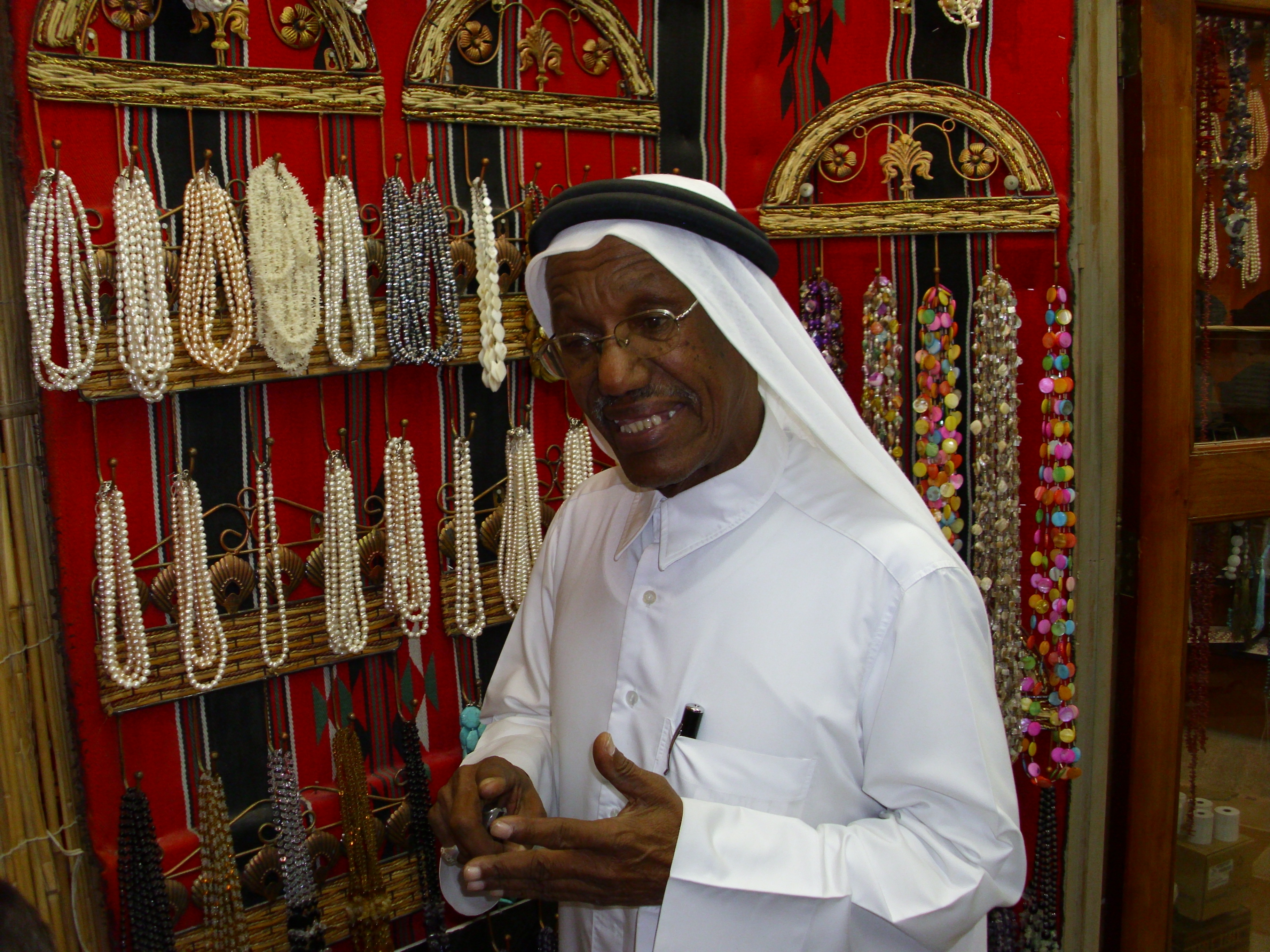
Overall, I don’t much like the place. I had a good time with my family, ate some fine meals, went to a book fair. But there’s a bad power game going on in Qatar. Nobody is smiling. I met some very pleasant Qataris – the staff in the excellent Islamic Art Museum, some men in a bowling alley, a retired pearl diver – but I also noticed many refusing to descend from their cars at the grocery shop. (Arabs often expect take-away food to be brought to the car, but not groceries.) Expatriates form a majority of the population. As elsewhere in the Gulf, expatriate wage and class status can be mapped reasonably smoothly onto ethnicity, with white Westerners on top, followed by Lebanese, then other Arabs, then Indonesians, Pakistanis and Indians. Expatriates don’t have citizenship rights, although the infrastructure depends on them. Many contemporary Qataris, in contrast to their proud grandfathers, are obese. The city is one of close walls. The surrounding desert is flat, pale, and begrimed by industry.