Sut Jhally on US Culture and Media

Sut Jhally

I have used several Media Education Foundation films in my classes and have found them to be an excellent resource for teaching. Jhally also has some perceptive comments on US media coverage of the Israel-Palestine conflict.

Sut Jhally is Professor of Communication at the University of Massachusetts at Amherst and Founder and Executive Director of the Media Education Foundation (MEF). He is one of the world’s leading scholars looking at the role played by advertising and popular culture in the processes of social control and identity construction. The author of numerous books and articles on media(including The Codes of Advertising and Enlightened Racism) he is also an award-winning teacher (a recipient of the Distinguished Teaching Award at the University of Massachusetts, where the student newspaper has also voted him “Best professor”). In addition, he has been awarded the Distinguished Outreach Award, and was selected to deliver a Distinguished Faculty Lecture in 2007.

New York Times: No conflict of interest — with the conventional wisdom

by Robert Jensen

The New York Times’ public editor wrestled this week with conflict-of-interest charges sparked by the revelation that Jerusalem bureau chief Ethan Bronner’s son had joined the Israeli army.

The executive editor of the paper responded with a sensible defense of the paper’s decision to keep Bronner in that position.

Although it had the appearance of a spirited exchange, the “debate” was a tired old diversion that keeps us from facing more important questions, not just about the Israel/Palestine conflict but about U.S. journalists’ coverage of the world. As is typical in mainstream journalists’ discussions of journalistic neutrality and objectivity, the focus on an individual obscures more important questions about the institutions for which individuals work and the powerful forces that shape those institutions’ picture of the world.

The question posed by the Times officials is framed in the narrowest terms: Could Bronner maintain his neutrality and objectivity given those family circumstances, or was that indirect connection to one side of the war “still too close for comfort,” in public editor Clark Hoyt’s words. In his Sunday column, Hoyt described Bronner as a “superb reporter” but concluded that the paper should reassign him to avoid the appearance of a conflict of interest. Executive editor Bill Keller argued that such a policy would disqualify many reporters from assignments that draw on their specialized knowledge and diminish the quality of the reporting in the paper, and concluded there is no reason to reassign Bronner.

Continue reading “New York Times: No conflict of interest — with the conventional wisdom”

Ethan Bronner’s Conflict With Impartiality

by Alison Weir

Ethan Bronner, New York Times Jerusalem Bureau chief

Ethan Bronner is the New York Times Jerusalem bureau chief. As such, he is the editor responsible for all the news coming out of Israel-Palestine. It is his job to decide what gets reported and what doesn’t; what goes in a story and what gets cut.

To a considerable degree, he determines what readers of arguably the nation’s most influential newspaper learn about Israel and its adversaries, and, especially, what they don’t.

His son just joined the Israeli army.

According to New York Times ethics guidelines, such a situation would be expected to cause significant concern. In these guidelines the Timesrepeatedly emphasizes the importance of impartiality.

This is considered so critical that the Times devotes considerable attention to “conflict of interest” (also called “conflict with impartiality”) problems, situations in which personal interest might cause a journalist to intentionally or unconsciously slant a story.

Continue reading “Ethan Bronner’s Conflict With Impartiality”

Canada’s pandering to Israel

By Ian Williams (MEI)

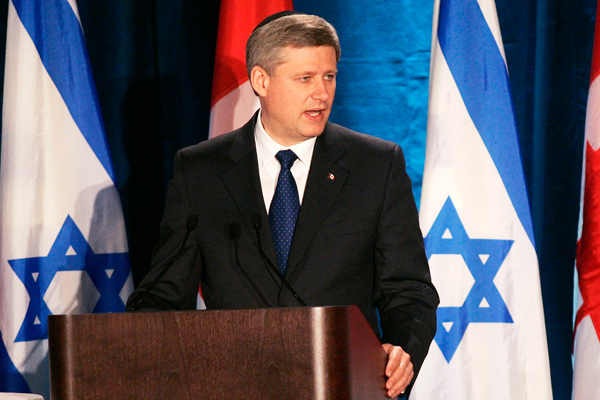
In January, Canada stopped contributing to the United Nations Relief and Works Agency (UNRWA). It is the latest in a series of decisions that have seen Ottawa ‘out-Israeling’ Washington. It had previously stopped funding KAIROS (Canadian Ecumenical Justice Initiatives), an NGO that had been supporting human rights groups in Israel and the Occupied Territories. In each case, the government of Stephen Harper seemed to be responding to, or rather pandering to, rabidly pro-Israeli Jewish groups in Canada. Israel itself has certainly never encouraged an end to the funding of UNRWA, an institution that for decades has, in effect, been paying some of the bills for the occupation.

Although camouflaged internationally by a similar drift in British and Australian policy, Ottawa has moved far from its own earlier positions, and possibly farther than either London or Canberra. Indeed, the Obama administration’s muted criticisms of Israeli policy sound relatively ferocious compared with Canada’s gestures towards the administration of Binyamin Netanyahu.

Once upon a time, Canada was a paragon of international virtue: supportive of the UN and happily putting distance between itself and its southern neighbour on the Middle East. Then came Stephen Harper. Ottawa did not join the Iraq war, but that was more a function of strong Canadian public opinion and Harper’s parlous electoral position than any considered choice.

Continue reading “Canada’s pandering to Israel”

Criminal and Accomplice

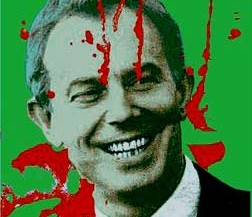
I didn’t watch Blair’s performance at the Chilcot inquiry, for health reasons, but I did read that he mentioned Iran 30 times, as in ‘the same good case for war applies to Iran’. This comes in the context of America concentrating ships and missiles in the Gulf. It is unlikely that the US will attack Iran directly, but increasingly likely that Israel will provoke a conflict. Blair may be preparing the ground for this.

Blair felt ‘responsibility but no regret’ over the destruction of Iraq which has killed over a million, created at least four million refugees, and turned a fertile land into a diseased desert. He focused on Saddam Hussain’s monstrosity, but refrained from explaining how Saddam’s most monstrous crimes were supported by his Western backers. He was allowed to refrain. He didn’t entertain the possibility that Hussain could have been deposed in other ways. He blamed Iran and al-Qa’ida, neither of which had a presence in the country before its collapse, for Iraq’s problems, and again his illogic was not questioned.

Continue reading “Criminal and Accomplice”

A Country of Words

“We travel like other people, but we return to nowhere…

We have a country of words.”

A traditional Arab media operation, according to Abdel Bari Atwan, is “characterised by editorial interference from the owners, slavishness to social hierarchies, backstabbing and nepotism.” It goes without saying that all the Arab local-national press, TV and radio stations are controlled by their respective regimes. Only in the pan-Arab sphere, beyond the control of any single regime, is there a possibility of anything better. Yet of the pan-Arab newspapers, ash-Sharq al-Awsat and al-Hayat are owned by different branches of the Saud family dictatorship, while the smaller-circulation al-Arab is part of the Libyan regime’s propaganda apparatus. Even after the satellite revolution, pan-Arab TV remains tame and partial, fattened and diluted by Gulf money, often providing its viewers a contradictory diet of Islamic and American-consumerist bubble gum. The second most famous channel in the Arab world, al-Arabiyya, is yet another mouthpiece for the Sauds (during last winter’s Gaza massacre it became known amongst Arabs as al-Ibriyya, or ‘the Hebrew’). The most famous channel, al-Jazeera, is of course the model that broke the mould. Its challenging reporting and inclusion of all sides in open debate has had a revolutionary effect on the Arabs.

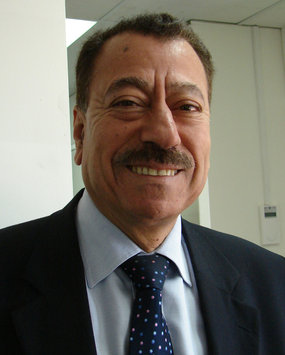
Al-Jazeera’s print equivalent is the London-based al-Quds al-Arabi, founded in 1989, seven years before al-Jazeera. It may not have the immediate impact or mass audience of al-Jazeera (it’s banned in most Arab countries) but with its cast of excellent writers, its fearless exposure of Arab regime corruption, its scoops (al-Qa’ida chooses to communicate with the world through its pages), its renowned culture section, and its refusal to bury news from Palestine behind the football results, al-Quds al-Arabi is indispensable. Rather than backstabbing, its staff have sometimes worked for no pay to keep the operation afloat. Its founder, editorialist and editor-in-chief Abdel Bari Atwan is as passionate and articulate in speech as on the page, and is admired by the Arabs for his call-a-spade-a-spade style on those TV channels which dare to host him, usually al-Jazeera Arabic and Hizbullah’s al-Manar. Atwan’s “The Secret History of al-Qa’ida” is a book-length account of his meeting with Osama bin Laden and of the development of the al-Qa’ida network. Now Atwan has written an autobiographical memoir titled with a line from a Mahmoud Darwish poem, “A Country of Words.”

Continue reading “A Country of Words”

Tony Judt’s remarkable journey

Tony Judt

UPDATE: the Guardian has a good piece by Ed Pilkington and a video of Judt speaking about his condition. He calls it ‘one of the worst diseases on the Earth’.

Tony Judt, the acclaimed English historian and author, has made a remarkable journey from his days as a volunteer for the IDF during the 1967 war to his recent transformation into one of the staunchest critics of Israel and its lobby. He outraged many old associates from his Zionist days when in 2003 he penned an eloquent call for a bi-national state in 2003. (His friendship with the late Edward Said must have likely played a part in this transformation.) He was dropped from The New Republic‘s editorial board shortly afterwards. Shortly after the Iraq war, he wrote a scathing attack on what he called Bush’s Useful Idiots — the liberal interventionists who argued for war using the language of humanitarianism and liberal values.

In 2006, when John Mearsheimer and Stephen Walt wrote their ground-breaking essay on the Israel lobby, he was one of the very few progressive Jewish voices to come to their defence, even as self-proclaimed ‘radicals’ demurred. Shortly afterwards he wrote a brilliant essay for Ha’aretz calling Israel ‘the country that wouldn’t grow up‘. He later joined John Mearsheimer in a debate organized by the London Review of Books in which they argued against apologists for the lobby. In the same year an event organized by Network 20/20 at which Judt was slated to speak was cancelled following pressure from the ADL and AJC. This prompted Mark Lilla and 114 writers and intellectuals to write a letter of protest to the ADL. Judt later recounted this incident in his appearance in an excellent Dutch documentary on the lobby. All his writings and his reflections on his journey from Zionism to universalism are collected in his 2008 book Reappraisals: Reflections on the Forgotten Twentieth Century.

Continue reading “Tony Judt’s remarkable journey”

Israeli Exceptionalism: A Grim Prognosis

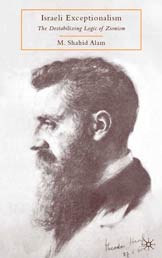
Cover Image GIFIn the coming weeks we’ll be publishing reviews and responses to M. Shahid Alam’s new book Israeli Exceptionalism: The Destabilizing Logic of Zionism (New York: Palgrave Macmillan, 2009). Following is the first from political scientist Ahrar Ahmad.

Dr. Shahid Alam is primarily an economist and an educator.  But, he is also a public intellectual, and often a lively polemicist, who writes with insight and conviction on issues dealing with culture, identity, religion, globalization, imperialism, and terrorism.  But nothing stirs his passions as intensely as the issue of the Palestinians – their dispossession, marginalization, despair.  His feelings are ardent, his language combative, his intellectual engagement prickly and zealous.  It is largely this pre-occupation that has earned him a place in David Horowitz’s book on the Hundred Most Dangerous Academics in the US (an ignominy that he probably wears as a badge of honor).  His latest book distills, clarifies and deepens much of his previous thinking on Zionism, the creation of the state of Israel, and the injustices inflicted on the Palestinians.

The trope along which this book is organized is the concept of “Exceptionalism” that is often claimed by the state of Israel, and sometimes by Jews themselves.  To Alam this is nothing other than a rhetorical device, and a moral posture, to ensure the West’s indulgence and support, to protect Israelis from any criticism, and exempt them from standards and behavioral norms that apply to other peoples.  This “exceptionalism” is derived from their Biblical covenants and the belief in their inherent “chosen-ness”, their wrenching history of suffering and persecution, their considerable achievements in science, philosophy and philanthropy, and their current status as a people allegedly besieged by Islamic fundamentalists, anti-Semitic bigots, and the barbaric and self-destructive Arabs.  To question anything about Israel is tantamount to denigrating every aspect of its special status.

Continue reading “Israeli Exceptionalism: A Grim Prognosis”

Moshe Halbertal and the Goldstone Report

Jerome Slater refutes Moshe Halbertal’s attack on the Goldstone Report published in The New Republic, an Israel Lobby mouthpiece.

Judge Goldstone in Gaza

As an academic of nearly fifty years, I take seriously that the core principle and highest calling of our profession is to seek and tell the truth, as best as one can. For those who know the full historical facts about the Israeli-Palestinian conflict, one of the most shocking and depressing phenomena is the extent to which many leading Israeli and American Jewish intellectuals and academicians ignore, conceal, or willfully deny them.

I am not speaking here of ordinary citizens, who might simply be unaware that many of the most cherished Israeli mythologies are historically unsustainable; rather I refer only to the media commentators, political scientists, historians, and even moral philosophers who regularly write about the conflict and whose distortions or outright falsifications cannot be explained away by ignorance.

What, then, does explain this situation? For some, their ideology is simply so impenetrable that the facts can’t get through. For others, I assume that they knowingly, or at least semi-knowingly, conceal the truth because they fear that revealing it will harm Israel. If so, they are also wrong about the consequences — over sixty years of Israeli repression of the Palestinians has done incalculable harm to Israel’s own best interests. In any case, no matter what their motives, the academics who seek to defend Israel against the most reasonable criticisms betray their calling.

Continue reading “Moshe Halbertal and the Goldstone Report”

Stephen Walt chooses five books on US-Israel relations

A few weeks back The Browser interviewed British author Ziauddin Sardar for its Five Books section. Among the books he selected on the theme of Travel in the Muslim World was one, The Road from Damascus, by PULSE editor Robin Yassin-Kassab. When Robin was in turn asked to choose his five on the theme of the Israel-Palestine Conflict, he chose among others John Mearsheimer and Stephen Walt’s The Israel Lobby and the US Foreign Policy. In its current interview The Browser turned to Stephen Walt — one of PULSE’s 20 top global thinkers for 2009 — to present his selection of the five most important books on the US-Israel relationship. In the following interview Walt presents his selection and explains why he chose these particular books.

Stephen M. Walt

So, we’re trying to understand how the US has come to identify so closely with Israel in recent decades, and your first book is The Israel Lobby and US Foreign Policy, which you wrote along with John Mearsheimer. Why is that on the top of your list?

The only way to understand the special relationship that now exists between the United States and Israel is to understand the critical role that a number of organisations have played in actively promoting that relationship over the last 60 years. The US has supported Israel since its founding in 1948, but it did not have the same sort of special relationship for the first 20 or so years after Israel’s creation. The US backed it in certain ways, but was also willing to put lots of pressure on it in other circumstances and didn’t provide a lot of economic or military assistance until after 1967. But today the US backs Israel no matter what it does and American politicians are careful never to say anything that is very critical of Israel, even when it is acting in ways that are contrary to US interests and values. The key to understanding this ‘special relationship’ is the operation of various groups in the Israel lobby, and our book lays out in great detail how that works, and why it’s not good for the US or Israel.

Continue reading “Stephen Walt chooses five books on US-Israel relations”