The Murder of Salmaan Taseer

Salmaan Taseer, governer of Pakistan’s Punjab province, has been shot dead by one of his own security detail for the supposed crime of defending Aasia Bibi, a Christian woman threatened with execution under Pakistan’s blasphemy law. The law was introduced by the British and given extra teeth by military dictator Zia ul-Haq, and is commonly used for the pursuit of grudges against the weak. The most disturbing aspect of Taseer’s murder is that both puritanical Deobandi and traditionalist ‘Sufi’ Barelvi religious leaderships have expressed support for it. Many Pakistanis are lionising Taseer’s murderer. For decades sections of Pakistan’s ruling elite have peddled religio-nationalist chauvinism as a stop-gap substitute for social justice. The result is today’s ugly combination of elite and mob rule. I reviewed a book by Taseer’s son here. Below, novelist Mohammed Hanif reports from Karachi:

Minutes after the murder of the governor of Pakistan’s Punjab province Salmaan Taseer I saw a veteran Urdu columnist on a news channel. He was being what, in breaking news jargon, is called a “presenter’s friend”. “It is sad of course that this has happened but . . .”

Continue reading “The Murder of Salmaan Taseer”

Pakistan in Turmoil

Looking at the smug and self-righteous face of Salman Taseer’s murderer, I was remined of George Bernard Shaw’s warning that ‘There is nothing more dangerous than the conscience of a bigot.’ I didn’t agree with Taseer on much but I agree that former Pakistani dictator Zia-ul-Haq’s Blasphemy law is a ‘black law.’ It has been used repeatedly to victimize minorities and to persecute the weak. It is a tool in the hands of the most intolerant elements in the Pakistani society. I hope the government stands firm and does away with this travesty of justice post-haste.

P.s. The Pakistani liberal intelligentsia is positively atwitter over the murder, as indeed it should be. Their protestations would be more meaningful had they shown similar outrage regarding the murder of 19 Wazirs killed on new years day in three drone strikes as part of the war which many of them support.

Rahimullah Yusufzai is a Senior Analyst with the Pakistani TV channel, Geo TV, and the Resident Editor of The News International in Peshawar, an English newspaper from Pakistan. Rahimullah has served as a correspondent for Time Magazine, BBC World Service, BBC Pashto, BBC Urdu, Geo-TV, and ABC News. Mr. Yusufzai has interviewed Osama bin Laden, Mullah Omar, and a range of other militants across the tribal areas of the Afghanistan-Pakistan border. Rahimullah joins us from Peshwar, Pakistan.

David Bromwich on Obama, the Establishment President

David Bromwich is the Sterling Professor of English at Yale, and easily the most astute observer of Barack Obama’s performance and character. He has written some of the most insightful articles on the Obama presidency in which he subjects Obama’s oratory and style to close textual and formal analysis, and highlights the various traits that are symptomatic of his approach to politics. In this wide ranging discussion with Christopher Lydon of the excellent Radio Open Source (based at Brown University’s Watson Institute) Bromwich brings his formidable analytical skills to bear on Obama’s langauge, the difference between his improptu and scripted speech, his attempts at humour, and what it reveals about the man. He also makes an interesting comparison between Obama’s style and that of former presidents such as Lincoln, Reagan and Kennedy.
Ostrich America?

by Chase Madar

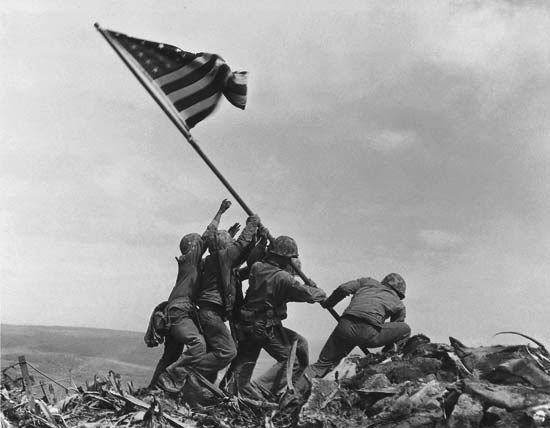
Famous photograph of the US isolating itself in Iwo Jima. (Photo: Joe Rosenthal, 1945)

Of all the received ideas that clog America’s foreign-policy discourse, none is more at variance with reality than the threat of isolationism. We have never been more engaged with every corner of the world, yet we have never been lectured more often about the consequences of “retreating within our borders.” The more countries we attack—Pakistan, Somalia, Yemen—the more dire warnings we get about national introversion. The specter of isolationism has never looked healthier.

A case in point was George W. Bush’s 2006 State of the Union address, a venue he used to tell a spine-chilling tale. With his foreign policy exploding all around him, Bush warned against an even more disastrous alternative: there were those who would “tie our hands” and have us “retreat within our borders.” From the tenor of his talk, he seemed to think that Americans were about to burn down both the Pentagon and Department of State, beat defense intellectuals into postal workers, and force every house in the land to set up a little steel foundry in the back yard—just like in the Great Leap Forward—while learning to live on grubs and wild mountain honey.

Of course, this is absurd: as many pointed out in response to this scaremongering, there are no isolationists in America—not in either political party, not in the media, and not in the academy. (The i-word is often used as a synonym for unilateralism. Here I am assigning only its most common meaning: a tendency to ignore security threats beyond territorial borders and disengage diplomatically, politically, and economically from the rest of the world.) Nevertheless, the menace of a return to geopolitical autarky is carted out whenever our sclerotically narrow foreign-policy consensus gets an unwelcome jolt. This habit of mind did not end with the exit of George W. Bush.

Continue reading “Ostrich America?”

Pakistan’s Elephantine Corruption

by Tariq Ali

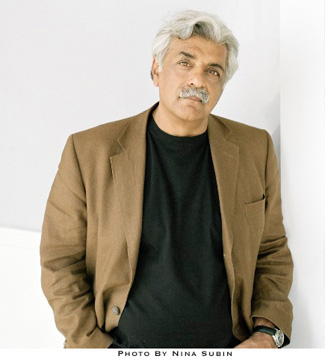
The Wikileaks confirm what we already know about Af-Pak. Pakistan is a US satrapy: its military and political leaders constitute a venal elite happy to kill and maim its people at the behest of a foreign power. The US proconsul in Islamabad, Anne Patterson, emerges as a shrewd diplomat, repeatedly warning her country of the consequences in Pakistan if they carry on as before. Amusing but hardly a surprise is Zardari reassuring the US that if he were assassinated his sister, Faryal Talpur, would replace him and all would continue as before. Always nice to know that the country is regarded by its ruler as a personal fiefdom.
Then we have the country’s military boss, General Kayani, sweetly suggesting that the Pushtun leader Asfandyar Wali Khan, a beneficiary of US funds, might be a possible president: confirmation, if any were needed, that the uniformed ones are the real power in the land, sharing it at the moment with the US Embassy.

Continue reading “Pakistan’s Elephantine Corruption”

On Songs of Blood and Sword

by Saffi Ullah Ahmad

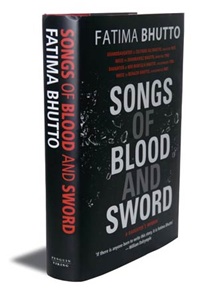
In her latest book, Songs of Blood and Sword: A Daughter’s Memoir, journalist Fatima Bhutto — better known as the niece of the late Benazir Bhutto — takes us through the dark history of one of the world’s best known political dynasties.

Fatima’s grandfather, founder of the Pakistan People’s Party (PPP) and Pakistan’s first democratically elected Prime Minister, Zuliqar Ali Bhutto, was sent to the gallows (1979) following a military coup orchestrated by General Zia Ul-Haq based on what were concocted charges, despite appeals for mercy from across the diplomatic world. As Henry Kissinger had ominously threatened some years earlier, a ‘horrible example’ was made of Mr. Bhutto. As the book’s cover informs us, in the years since Zulfiqar Ali Bhutto’s execution, all but one of his children have died; in circumstances mired in mystery, Shahnawaz Bhutto was poisoned in his flat in France (1985), Mir Murtaza Bhutto – Fatima’s father – was gunned down outside his home in Karachi (1996) and Benazir Bhutto was killed following a suicide attack in the garrison city, Rawalpindi (2007).

Above all, Songs of Blood and Sword is the tale of a grieving daughter’s frantic six year search for the truth surrounding her father’s life and death. Fatima describes a kind spirited and idealistic Murtaza, a man of the people, who had idolised Che Guevara in his youth, fittingly having adorned his bedroom walls with posters of the Cuban revolutionary. After completing studies at Harvard and an unsuccessful diplomatic battle to save his father’s life, Murtaza’s formation of a leftist guerrilla outfit bent on ousting General Zia earned him the title of a terrorist. Following the General’s own mysterious death (1988) and Benazir’s rise to power, Murtaza grew increasingly critical of his sister, who he felt had betrayed the socialist ideals upon which the PPP was founded. He eventually returned to Pakistan with political aspirations – having won a seat in a provincial assembly – only to face an uphill struggle against a hostile PPP government.

Continue reading “On Songs of Blood and Sword”

Tariq Ali assesses Obama’s record

Our dear and respected friend Tariq Ali on the Riz Khan Show.

It’s Called Dignity

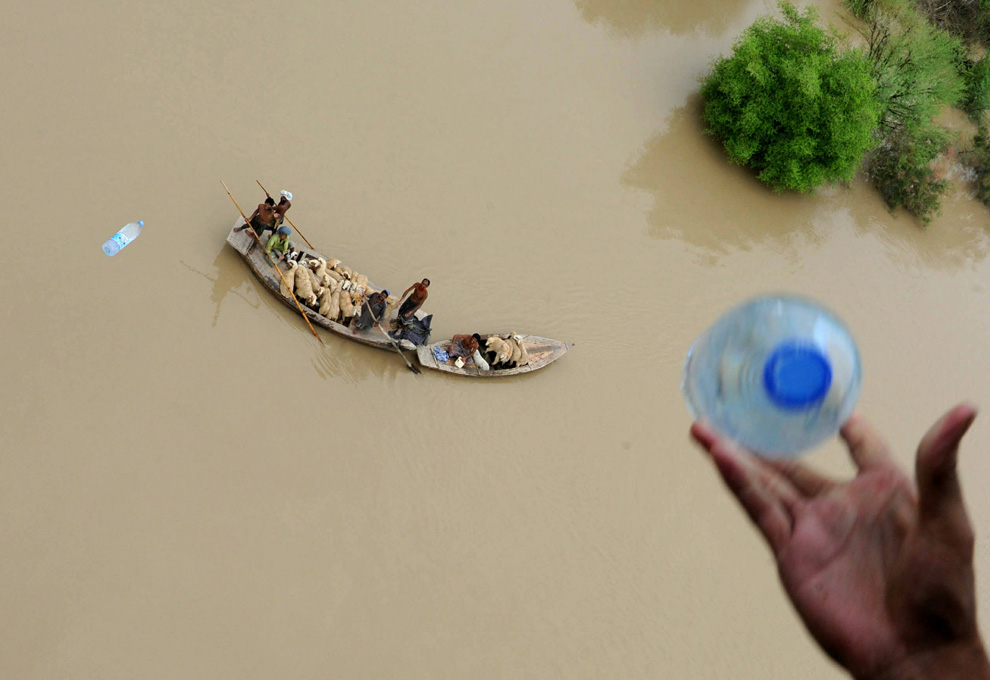
Mohammad Hanif, author of the Booker Prize-listed novel “A Case of Exploding Mangoes“, writes for the Guardian about the worsening aftermath of the floods in Pakistan and the lot of Pakistan’s poor, floods or not.

Last month, in a camp set up for flood refugees outside Pakistan’s southern city of Sukkur, a group of men and boys gathered around the medical tent complaining about the rising cases of stomach infections. “They give us food that’s too spicy,” they said.

“What do they give you?” I asked a young man.

“Korma,” he said. “But they put too many spices in it. We don’t like these spices.”

A relief worker at the camp who overheard our conversation cursed under his breath. “They get to eat korma every day and still they complain.” The implication was clear: could they afford to eat korma before this flood made them homeless? Shouldn’t they be grateful?

Continue reading “It’s Called Dignity”

Pakistan’s Food Crisis Expected to Worsen

by Aun Ali

Pakistan’s massive floods destroyed not only standing crops of the season but also vast proportions of arable land and capacities of numerous farmers to cultivate crops in the upcoming seasons. The consequences are far reaching for an impoverished country that relies heavily on its agricultural productivity and employs two-thirds of its population in this sector.
Nearly 20 million people have been directly affected, most of whom are from the rural agricultural areas and depend on agriculture to meet their food and income needs. A great number of them have been uprooted from their lands, with their household assets, investments in farm tools and animals, and food stocks all destroyed by the floods. Submerged roads and fallen bridges have disconnected access of thousands other to the rest of Pakistan. They all lack proper shelter, food, clean water, medicine, and other basic supplies. At least six million are at risk of waterborne diseases, including an estimated 3.5 million children according to U.N.

However, if the situation is terribly bad now, the worst is yet to come.

With major crops damaged or destroyed over 3.6 million hectares of cultivated land and variable food supply expected from the unaffected regions, a famine-like food crisis is imminent in many parts of the country that could be in full swing by coming spring when Pakistan’s current food stocks will start to run out. The shockwaves will be so far reaching that even the unaffected regions will not be spared.

Continue reading “Pakistan’s Food Crisis Expected to Worsen”

“Only the mood music has changed”: Tariq Ali on Obama’s presidency

OK… here’s the PULSE exclusive I’ve been working on. Hope you enjoy.

Is president Barack Obama the change America has been waiting for or is he another corporate Democrat representing elite interests?  According to Tariq Ali, very little has chanced between Obama and former president George W. Bush.  In his latest book “The Obama Syndrome: Surrender at Home, War Abroad,” Ali argues that Obama is carrying on the reckless policies of the Bush regime.  If Obama continues down this path, the Democratic Party not only face the prospect of the House & Senate in 2010 but also the presidency in 2012.  This should be a cause for concern.

I caught up with Ali during his American book tour and here’s what he had to say about the Obama presidency.

Where did the idea for this book emanate from? Why did you want to write a book about “The Obama Syndrome” and what does that refer to?

The idea occurred because I speak a lot on the United States. People ask me questions after each talk and increasingly in the past two to three years, the talk has been about Obama.  I thought a short book which essentially provided a balance sheet from the left on the mid-term would be a useful exercise. Given that he’s being attacked nonstop for being a socialist, a leftist, being a Muslim and all this nonsense that comes from the Tea Party-Fox Television alliance, I thought it was better to have a hard-headed realistic account about who the guy really is.  So my book is a critique of him, but it’s also by implication a very sharp critique of people who claim that everything Obama is doing is so radical that they can’t take it anymore.

Continue reading ““Only the mood music has changed”: Tariq Ali on Obama’s presidency”