Palestine Festival of Literature

The second annual Palestine Festival of Literature launches this month where PULSE co-editor Robin will be joining the likes of Michael Palin, Suheir Hammad, Victoria Brittan, Rajah Shehadeh and Ahdaf Soueif as one of the featured writers.

The second Palestine Festival of Literature will take place from 23-28 May 2009.

Because of the difficulties Palestinians face under military occupation in traveling around their own country, the festival group of 17 international writers will travel to its audiences in the West Bank. It will tour Ramallah, Jenin, al-Khalil/Hebron and Bethlehem. To mark Jerusalem’s status as Cultural Capital of the Arab World for 2009, the festival will begin and end in Jerusalem.

Michael Palin will be taking part in the festival this year together with Suad Amiry, Victoria Brittain, Carmen Callil, Abdulrazak Gurnah, Suheir Hammad, Nathalie Handal, Jeremy Harding, Rachel Holmes, Robin Yassin-Kassab, Brigid Keenan, Jamal Mahjoub, Henning Mankell (accompanied by his wife, Eva Bergman), Deborah Moggach, Claire Messud, Alexandra Pringle, Pru Rowlandson, Raja Shehadeh, Ahdaf Soueif and M G Vassanji.
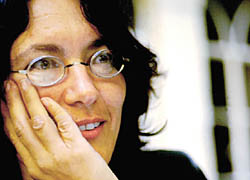
Continue reading “Palestine Festival of Literature”

Major Foreign Tests Likely Over Next 100 Days

Jim Lobe‘s prognosis for the Obama presidency’s upcoming 100 days:

While Barack Obama has clearly improved Washington’s image abroad during his first 100 days in office, the next 100 will almost certainly prove much more challenging for the new president’s foreign policy.

Putting aside the possibility that the worst economic crisis since the Great Depression could become much more severe than the White House currently anticipates, or that the swine flu currently spreading out of Mexico explodes into a modern-day version of the 1918 epidemic over the coming months, Obama will face a series of difficult decisions on how to deal with a plethora of actual and potential geo-strategic crises.

Continue reading “Major Foreign Tests Likely Over Next 100 Days”

End Palestinian demolitions in Jerusalem, UN tells Israel

A new report by the UN OCHA details the demolition of Palestinian homes in East Jerusalem and calls on Israel to immediately halt the activities. 60 000 Palestinians are at risk of being dispossessed. Rory McCarthy reports for the Guardian, in his typically bland style:

The United Nations has called on Israel to end its programme of demolishing homes in East Jerusalem and tackle a mounting housing crisis for Palestinians in the city.

Dozens of Palestinian homes in East Jerusalem are demolished each year because they do not have planning permits. Critics say the demolitions are part of an effort to extend Israeli control as Jewish settlements continue to expand. The 21-page report from the UN office for the co-ordination of humanitarian affairs is the latest round in an intensifying campaign on the issue.

Although Israel’s mayor of Jerusalem, Nir Barkat, has defended the planning policy as even-handed, the US secretary of state, Hillary Clinton, in March described demolitions as “unhelpful”. An internal report for EU diplomats, released earlier and obtained by the Guardian, described them as illegal under international law and said they “fuel bitterness and extremism”. Israel occupied East Jerusalem in the 1967 war and later unilaterally annexed it, a move not recognised by the international community.

Continue reading “End Palestinian demolitions in Jerusalem, UN tells Israel”

Manufacturing Consent for Apartheid

Ali Abunimah, author of “One Country,” discussed here, exposes One Voice, a Zionist organisation posing as pro-peace pollsters, and shows that the supposed consensus among Palestinians and Israelis for the mythical two-state solution does not exist. The one-state solution seems increasingly viable to Palestinians, and this reality may panic ‘realist’ Zionists to arrange a formal bantustan settlement during the Obama term. This is a fertile moment, argues Ali, “when no vision carries a consensus among Palestinians, underscoring the urgent need for an inclusive debate about all possible democratic outcomes.”

How do Palestinians living under Israeli military occupation and siege see their world, especially after Israel’s massacre of more than 1,400 people, mostly civilians, in the occupied Gaza Strip three months ago?

Two recent surveys shed light on this question, although one — published on 22 April by the pro-Israel organization One Voice — appears intended to influence international opinion in a direction more amenable to Israel, rather than to record faithfully the views of Palestinians or Israelis (“OV Poll: Popular Mandate for Negotiated Two State Solution,” accessed 30 April 2009). The other — a more credible survey — was published in March by the Oslo-based Fafo Institute for Applied International Studies and funded by the Norwegian government (“Surveying Palestinian opinions March 2009,” accessed 30 April 2009).

Continue reading “Manufacturing Consent for Apartheid”

Israel honours its victims of “terror attacks”

Despite completely obliterating a defenceless population in the Gaza strip earlier this year, Israel today honoured fallen IDF soldiers and “victims of terror attacks”. Speaking to mark Memorial Day, President Shimon Peres said: “This year as well, we lost the best of our boys and girls, some of whom during Operation Cast Lead.”

The Haaretz article goes to explain how the widow of the last Israeli soldier to die in combat lit a memorial flame at the ceremony. However Capt. Yehonatan Netanel did not fall at the hands of Palestinians, it is explained, but was in fact killed when Israeli forces mistakenly opened fire on his unit.

It is comforting to discover that at least someone’s death is attributed to the morally reprehensible IDF, who whitewashed their own wave of terror in the recent inquiry into soldiers’ conduct during the invasion of Gaza. Reflective of Noam Chomsky’s ‘Worthy and Unworthy Victims’, we see that Israel only recognizes one type of victim, its own; and one type of perpetrator, the Palestinian, so this admission comes as something of a milestone.

Israel’s garrison-like hilltop settlements

It is a mark of how the US media’s uncritical coverage of Israel is eroding when you see Roger Cohen in the New York Times consistently being allowed the space to describe the desolate scenes in the West Bank which are punctuated by “garrison-like settlements on hilltops”. In his latest article he writes of US Secretary of State Hillary Clinton’s visit there, in which he states: “If you’re looking for a primer of colonialism, this is not a bad place to start.” This type of language represents a promising shift in the Times’ op-ed pages.

The sparring between the United States and Israel has begun, and that’s a good thing. Israel’s interests are not served by an uncritical American administration. The Jewish state emerged less secure and less loved from Washington’s post-9/11 Israel-can-do-no-wrong policy.

The criticism of the center-right government of Prime Minister Benjamin Netanyahu has come from an unlikely source: Secretary of State Hillary Clinton. She’s transitioned with aplomb from the calculation of her interests that she made as a senator from New York to a cool assessment of U.S. interests. These do not always coincide with Israel’s.

I hear that Clinton was shocked by what she saw on her visit last month to the West Bank. This is not surprising. The transition from Israel’s first-world hustle-bustle to the donkeys, carts and idle people beyond the separation wall is brutal. If Clinton cares about one thing, it’s human suffering.

Continue reading “Israel’s garrison-like hilltop settlements”

Ahmadinejad criticism of Israel sparks UN walkout en masse

Ahmadinejad has a habit of upsetting the West, this time outrageously explaining how Palestine WAS wiped off the map.  Only to be followed by a shameful shower of Nakba deniers walking out in disgust.

The Iranian president was famously misquoted as saying he wanted Israel wiped off the map, a phrase repeated often and attributed to him incorrectly.  It was repeated so often in Israel that it became part of the political lexicon, with one cabinet minister, Meir Sheetrit, tellingly slipping up in revealing that ”we must take a neighbourhood in Gaza and wipe it off the map”.  A year later and more than just one neighbourhood has disappeared.

Do actions speak louder than misquoted words?  Not in the West it seems where Ahmadinejad remains the favourite Bond villain.

Iranian President Mahmoud Ahmadinejad criticized on Monday, April 20, Israel’s racist practices against the Palestinian people, sparking a walkout by European delegates from the UN conference on racism.

“In fact, in compensation for the dire consequences of racism in Europe, they helped bring to power the most cruel and repressive racist regime in Palestine,” Ahmadinejad told the conference.

Continue reading “Ahmadinejad criticism of Israel sparks UN walkout en masse”

Suicide Bombers and their Families

681686_02Amira Hass speaking at the University of California, Berkeley, in October 2003, on suicide bombers and their families.

Hass has gained a deep understanding of the phenomenon of suicide bombing and explains her intriguing findings; such as that often families of would-be bombers alert the police themselves, jail being preferable to the death of a loved one.

Suicide Bombers and their Families (58:04): MP3


Lost in the Buffer Zone

Editors Note: In the light of Bartlett’s recent activities and reporting, we believe there is reason to be sceptical of her commitment to truth so we cannot vouch for any of her past claims. 

Eva Bartlett’s latest report from Gaza, this time describing the struggles for survival of Palestinian farmers living in the ‘buffer zone’ border area with Israel.

“They’re always shooting at us. Every day they shoot at us,” says Alaa Samour (19), pulling aside his shirt to show a scar on his shoulder. Samour said he was shot on Dec. 28 last year by Israeli soldiers positioned along the border fence near New Abassan village, east of Khan Younis in the south of the Gaza Strip.

“We were cutting parsley like we do almost every day, and the soldiers began shooting. We started crawling away. When I got out of the line of fire I realised my shoulder was bleeding and that I had been shot.”

Continue reading “Lost in the Buffer Zone”

Changing the rules of war

An excellent article by George Bisharat, Professor of Law at Hastings College of the Law in San Francisco, on the possibly disastrous implications of Israel’s latest attack on Gaza for international law. Israel has long sought to frame its actions as falling under the legal doctrines of ‘armed conflict’ instead of ones governed by the laws of occupation – the former permitting far greater uses of force. Bisharat warns that “this shift, if accepted, would encourage occupiers to follow Israel’s lead, externalizing military control while shedding all responsibilities to occupied populations.”

The extent of Israel’s brutality against Palestinian civilians in its 22-day pounding of the Gaza Strip is gradually surfacing. Israeli soldiers are testifying to lax rules of engagement tantamount to a license to kill. One soldier commented: “That’s what is so nice, supposedly, about Gaza: You see a person on a road, walking along a path. He doesn’t have to be with a weapon, you don’t have to identify him with anything and you can just shoot him.”

What is less appreciated is how Israel is also brutalizing international law, in ways that may long outlast the demolition of Gaza.

Continue reading “Changing the rules of war”