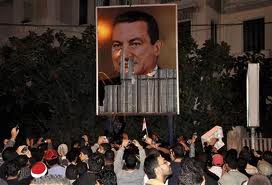
Violence continues across Bahrain

Also see this article by Marc Lynch on the Bahraini government use of sectarianism as a counterinsurgency tool.

Bahrain’s largest opposition group has urged Saudi Arabia to withdraw its forces and called for a UN inquiry into the the government’s on-going crackdown.

Clashes between security forces and anti goverment protesters continue, spilling into villages across the country.

Our special correspondent, whom we are not naming for security reasons, filed this report.

Deadly crackdown in Yemen

Yemeni security forces have opened fire at a protest in the capital Sanaa, killing at least 30 people.

It is the highest death toll in a single day after weeks of demonstrations calling for Ali Abdullah Saleh, the Yemeni president, to stand down.

Witnesses say armed men opened fire from nearby buildings as protesters gathered in Sanaa’s University Square after Friday prayers

Al Jazeera’s Alan Fisher reports.

Incalculable: The human cost of NATO’s war on Afghanistan

by Kathy Kelly

Bodies of children killed by US-Nato bombing

Recent polls suggest that while a majority of U.S. people disapprove of the war in Afghanistan, many on grounds of its horrible economic cost, only 3% took the war into account when voting in the 2010 midterm elections.  The issue of the economy weighed heavily on voters, but the war and its cost, though clear to them and clearly related to the economy in their thinking, was a far less pressing concern.

U.S. people, if they do read or hear of it, may be shocked at the apparent unconcern of the crews of two U.S. helicopter gunships, which attacked and killed nine children on a mountainside in Afghanistan’s Kunar province, shooting them “one after another” this past Tuesday March 1st.  (“The helicopters hovered over us, scanned us and we saw a green flash from the helicopters. Then they flew back high up, and in a second round they hovered over us and started shooting.” (NYT 3/2/11)).

Four of the boys were seven years old; three were eight, one was nine and the oldest was twelve.  “The children were gathering wood under a tree in the mountains near a village in the district,” said Noorullah Noori, a member of the local development council in Manogai district. “I myself was involved in the burial,” Noori said. “Yesterday we buried them.” (AP, March 2, 2011)  General Petraeus has acknowledged, and apologized for, the tragedy.

Continue reading “Incalculable: The human cost of NATO’s war on Afghanistan”

People Power in the Middle East

M. Shahid Alam

From his weekly perch at CNN, Fareed Zakaria, speculated last Sunday (or the Sunday before) whether George Bush could take credit for the events that were unfolding in Tunisia, whether this was the late fruit of the neoconservative project to bring ‘democracy’ to the Middle East.

It is quite extraordinary watching Zakaria – a Muslim born and raised in India, and scion of a leading political family – mimic with such facility the language of America’s ruling classes, and show scarce a trace of empathy for the world’s oppressed, despite his propinquity to them by reason of history and geography. He does have a bias for India, but here too he only shows a concern for India’s strategic interests, not the interests of its subjugated classes, minorities and ethnicities. This I offer only as an aside about how easy it is for members of the upper classes in countries like India, Pakistan or Egypt to slip into an American skin whenever that dissimulation offers greater personal advantages.

As a cover for deepening US control over the Middle East – here is the latest civilizing mission for you – the neoconservatives in the Bush administration argued that the Islamic world produces ‘terrorists’ because it lives under autocracies. To solve the ‘terrorist’ problem, therefore, the US would have to bring democracy to the Middle East. This demagoguery only reveals the bankruptcy of America’s political class. It is a shame when the President of the United States and his neoconservative puppet-masters peddle such absurdities without being greeted by squeals of laughter – and shouted down as hypocritical, as farcical.

Who has been the leading ally and sponsor these past decades of nearly all the despotisms in the Middle East – those of royal pedigree and others seeking to become royalties?

Regardless, the real plan of United States failed miserably. It was dispatched to its grave by a people’s resistance in Iraq, Afghanistan and Pakistan.

Continue reading “People Power in the Middle East”

An Eyewitness’ Letter to Macy Gray

Dear Macy,

Border Police officers arresting Ouday Tamimi. Picture credit: Bilal Tamimi from Joseph Dana's blog

I’ll say it again, I truly appreciate that you took your contemplations public. I can tell by what you write that you’ve been thrown into a world that its intensity is unknown to you. I write to you consistently because your heart is on your sleeve, and even though you seem to have made up your mind, I feel the doubt in every public utterance you make.

I’ll introduce myself; My name is Tali Shapiro. I’m an Israeli citizen and I just came back from the village of Nabi Salleh in the West Bank and read your latest blog post. I’m an activist that joins the weekly demonstrations in the village. There are weekly demonstrations in many villages. Though it’s a part of a movement for Palestinian human rights, each village wakes to dissent for individual reasons. Nabi Sallah has had its land annexed by the near by Halamish settlement and its water spring closed off from them by military force. Ever since then, they’ve been demonstrating.

Demonstrations in the occupied Palestinian territories come with a heavy price. Whether its the wounded and dead, or the constant harassment. Nabi Saleh has been subject to military closure, houses sprayed with putrid water (another method of “crowd dispersal”), night raids, arrests of activists (regardless of age), and torture which includes threats, beatings and contorted body positioning.

I write to you as I come back from one of these night raids. I live in Tel Aviv by choice. I choose to come to a war zone at night, to witness exactly what is being done in the name of my security:

Continue reading “An Eyewitness’ Letter to Macy Gray”

Salman Taseer Remembered

by Tariq Ali

Mumtaz Hussain Qadri smiled as he surrendered to his colleagues after shooting Salman Taseer, the governor of the Punjab, dead. Many in Pakistan seemed to support his actions; others wondered how he’d managed to get a job as a state bodyguard in the carefully screened Elite Force. Geo TV, the country’s most popular channel, reported, and the report has since been confirmed, that ‘Qadri had been kicked out of Special Branch after being declared a security risk,’ that he ‘had requested that he not be fired on but arrested alive if he managed to kill Taseer’ and that ‘many in Elite Force knew of his plans to kill Salman Taseer.’

Qadri is on his way to becoming a national hero. On his first appearance in court, he was showered with flowers by admiring Islamabad lawyers who have offered to defend him free of charge. On his way back to prison, the police allowed him to address his supporters and wave to the TV cameras. The funeral of his victim was sparsely attended: a couple of thousand mourners at most. A frightened President Zardari and numerous other politicians didn’t show up. A group of mullahs had declared that anyone attending the funeral would be regarded as guilty of blasphemy. No mullah (that includes those on the state payroll) was prepared to lead the funeral prayers. The federal minister for the interior, Rehman Malik, a creature of Zardari’s, has declared that anyone trying to tamper with or amend the blasphemy laws will be dealt with severely. In the New York Times version he said he would shoot any blasphemer himself.

Taseer’s spirited defence of Asiya Bibi, a 45-year-old Punjabi Christian peasant, falsely charged with blasphemy after an argument with two women who accused her of polluting their water by drinking out of the same receptacle, provoked an angry response from religious groups. Many in his own party felt that Taseer’s initiative was mistimed, but in Pakistan the time is never right for such campaigns. Bibi had already spent 18 months in jail. Her plight had been highlighted by the media, women had taken to the streets to defend her and Taseer and another senior politician from the Pakistan Peoples Party, Sherry Rehman, had demanded amendments to the blasphemy laws. Thirty-eight other women have been imprisoned under the same law in recent years and soon after a friendly meeting between Yousaf Gillani, the prime minister, and the leader of the supposedly moderate Jamaat-e-Islami, a member of the latter offered a reward of ten thousand dollars to whoever manages to kill Bibi.

Continue reading “Salman Taseer Remembered”

Popular Committee Leader: “My Next Letter Will Likely Be Written From Inside A Prison Cell”

Mohammad Khatib, Jawaher Abu Rahmah, Abdallah Abu Rahmah, Jonathan Pollak

New Year’s greetings from Mohammad Khatib, one of the remaining Bil’in popular committee leaders:

At the threshold of the New Year, I write to wish you a new year of freedom and liberation. This has been an unbelievable year for me in both highs and lows. A year during which I have witnessed how, despite repression, ordinary people all across Palestine take to the streets for freedom.

Continue reading “Popular Committee Leader: “My Next Letter Will Likely Be Written From Inside A Prison Cell””

New Year’s Day in Bil’in: Israel kills female protester

Press release from the Popular Struggle Coordination Committee.

Jawaher Abu Rahmah, 36, was evacuated to the Ramallah hospital yesterday after inhaling massive amounts of tear-gas during the weekly protest in Bil’in, and died of poisoning this morning. Abu Rahmah was the sister of Bassem Abu Rahmah who was also killed during a peaceful protest  in Bil’in on April 17th, 2010.

Doctors at the Ramallah hospital fought for Jawaher Abu Rahmah’s life all night at the Ramallah Hospital, but were unable to save her life. Abu Rahmah suffered from severe asphyxiation caused by tear-gas inhalation yesterday in Bil’in, and was evacuated to the Ramallah hospital unconscious. She was diagnosed as suffering from poisoning caused by the active ingredient in the tear-gas, and did not respond to treatment.

Jawaher Abu Rahmah was the sister of Bil’in activist, Bassem Abu Rahmah, who was shot dead with a high velocity tear-gas projectile during a demonstration in the village on April 17th, 2009. See here for a video of his shooting.

Continue reading “New Year’s Day in Bil’in: Israel kills female protester”

David Bromwich on Obama, the Establishment President

David Bromwich is the Sterling Professor of English at Yale, and easily the most astute observer of Barack Obama’s performance and character. He has written some of the most insightful articles on the Obama presidency in which he subjects Obama’s oratory and style to close textual and formal analysis, and highlights the various traits that are symptomatic of his approach to politics. In this wide ranging discussion with Christopher Lydon of the excellent Radio Open Source (based at Brown University’s Watson Institute) Bromwich brings his formidable analytical skills to bear on Obama’s langauge, the difference between his improptu and scripted speech, his attempts at humour, and what it reveals about the man. He also makes an interesting comparison between Obama’s style and that of former presidents such as Lincoln, Reagan and Kennedy.