by Kristin Bricker and Santiago Navarro
This article first appeared at Upside Down World.
On June 4, poet Javier Sicilia and farmer Julian LeBaron led a 500-person caravan through what one major Mexican magazine referred to as the country’s “route of blood.” Over the following week, the caravan passed through some of the most dangerous places in Mexico: Michoacan, San Luis Potosí, Zacatecas, Durango, Coahuila, Nuevo Leon, and Chihuahua. The caravan ended on June 10 in Ciudad Juarez, which Sicilia dubbed Mexico’s “epicenter of pain” because just over one-fifth of the country’s homicides occurred in that city in 2010.
One of the caravan’s principle goals was for drug war victims to network and organize. The caravan collected victims’ stories and contact information in every town it visited.
Dozens of drug war victims from across the country, such as Nepomuceno Moreno Nuñez from Ciudad Obregón, Sonora, travelled with the caravan to meet other victims and share their stories.

Moreno Nuñez (above, right, shown hugging Javier Sicilia) wants to find his son, 18-year-old Jorge Mario Moreno León, who was kidnapped and disappeared along with five friends on July 1, 2010.
Moreno Nuñez spoke with the kidnappers when they answered Jorge Mario’s cell phone. They told him that the young men were kidnapped because they collaborated with the Beltran Leyva criminal organization. “They made a mistake,” laments Moreno Nuñez. “They said that one of the boys [Mario Enrique Diaz Islas] was the son of an accomplice to the Beltran Leyvas. It’s not true.” In reality, Mario Enrique’s father, Mario Diaz Garduño, was the director of the Hermosillo municipal Health Department.
Continue reading “Photo Chronicle of Mexico’s Caravan for Peace with Justice and Dignity”
 Each day over the next week we’ll be publishing one of the six lectures on the theme of ‘Representation of the Intellectual’ that Edward Said recorded in 1993 as part of the annual BBC
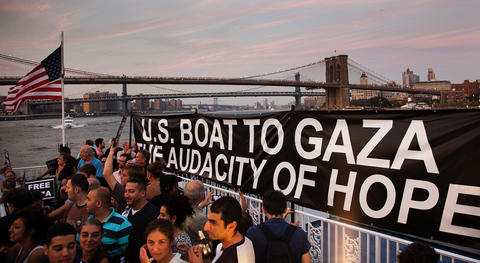 We are Illinois residents writing to you from Athens, Greece. Just before leaving the United States, we wrote to inform your office about our intent to sail on “The Audacity of Hope,” as part of the US Boat to Gaza project. In our letters, we explained why we were traveling to Gaza. We told you of our previous experiences living among Palestinians who lack access to basic necessities, such as clean water, because of the blockade. Referring to Gaza as the world’s largest open-air prison, we mentioned how hard it has been for people to rebuild after previous lethal assaults, especially the Operation Cast Lead attack which ended, after 23 days, on January 18, 2009. According to B’tselem, the foremost Israeli Human Rights Organization, Operation Cast Lead caused the deaths of 1,389 Palestinians in Gaza. Of those, 344 were children. Of the 13 Israelis who were killed, four were soldiers killed by friendly fire.


