My Coming Out Story

Maya Mikdashi writes at Jadaliyya on her personal experience with sectarianism in Lebanon:

When I say I am a “Sunni” this is what it means: it means that my father is a Sunni and that therefore, I am categorized as a “Sunni” Muslim by the Lebanese state. It means that if I have children with anyone other than a Sunni Lebanese man, those children will not be Lebanese Sunnis. It means that I can never be the Lebanese President, the Speaker of Parliament, or the Head of the Army. I suppose that my being a woman makes this point redundant. Being a Lebanese Sunni means that if I marry, I must (unless I marry a Christian abroad) receive my marriage certificate from the Sunni authorities. It means that I inherit according to the Hanafi code of personal status. It means I cannot (legally) adopt children, and that if I were to have political ambitions, I would be counted in the quota of “Sunni seats” for public office. The fact that I am a Sunni does not mean that I believe that ‘Uthman was the right man for the job, or that I pray without touching my head to a rock five times a day, or that I endorse, or gloat, over what happened in Karbala. It does not mean that I feel some sort of affinity with Sunnis in other parts of the world, or that when the Saudi King or Mufti speaks in my name I do anything other than laugh. It does not mean that I support the Bahraini regime’s brutal oppression of a democratic uprising, and it does not mean that I am “afraid” of those Iranians. It does not mean that I am anti-Hezbollah, or that I am part of a “culture of life.” Being a Lebanese Sunni doesn’t even require me to be abeliever in, and practitioner of, Islam. I am a Lebanese Sunni only because my father, and his before him, is a Lebanese Sunni from Beirut. The fact that my mother is an American Christian from a quiet tree-lined suburb does not matter. My ID and my census registration records say so.

Continue reading “My Coming Out Story”

Facebook Detox

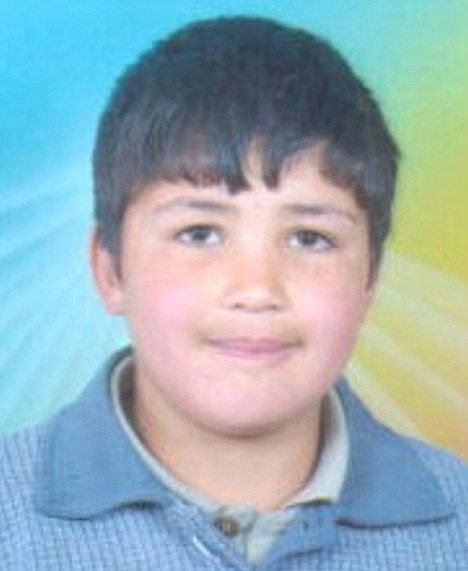
Hamza al-Khateeb

Today, following a period of Facebook madness, I deactivated my account. Unlike reefer madness, this one was a by-product of the Arab revolutions. Since January I’ve been updating statuses, liking pages, linking to articles, posting youtube videos. And, regrettably, I’ve been getting into fights. I don’t mean physical fights. My computer screen is still intact. I mean Facebook fights. Sometimes these are reasonably polite altercations; sometimes they aren’t polite at all. At all times they eat up time. Hours and hours of time. Time I could have spent reading Tolstoy or trying to play the saxophone or walking across the fields.

Getting into fights on Facebook is undoubtedly a symptom of psychological problems. I possess many social skills, diplomacy not included. I am overly passionate. Plus I am too sensitive for someone who is also a rhetorical bruiser – like a soft-jawed weakling who packs an iron fist (which sounds like Bashaar al-Asad; but this becomes too ugly). Beyond my own issues, however, Facebook presents challenges to any human being more used to communicating through the contexts fine-tuned over millenia – face to face, or in a crowded room, or by private or public letter. All these situations contain subtle mechanisms for conflict resolution or avoidance. Facebook doesn’t.

Continue reading “Facebook Detox”

Between a Rock and a Hard Country

My review of Anatol Lieven’s must-read book, originally published at IPS.

It is almost obligatory these days to subtitle books on Pakistan with some conjunction of ‘failed’, ‘dangerous’, ‘lawless’, ‘deadly’, ‘frightening’ or ‘tumultuous’. Pakistan is a ‘tinderbox’, forever on the brink, in the eye of the storm, or descending into chaos. It is an ‘Insh’allah nation’ where people passively wait for Allah. In the narrow space ‘between the mosque and the military’, there is much ‘crisis’, ‘terrorism’, ‘militancy’ and ‘global jihad.’

British author and policy analyst Anatol Lieven’s refreshingly understated title Pakistan: A Hard Country eschews emotion for description, which is fitting because the book is a 519-page myth- busting exercise.

Lieven, currently a fellow at the New America Foundation, argues that some of the alarmist claims about Pakistan are indeed true – it is a corrupt, chaotic, violent, oppressive and unjust country. But it is also a remarkably resilient one. It is not nearly as unequal as India or Nigeria, or for that matter the United States. Its security is beset by multiple insurgencies but they affect a smaller proportion of its territory than the ones India faces. Its cities are violent, but no more so than those of comparable size in Latin or even North America. It has an abysmally low rate of tax collection, but, at five percent of the GDP, it also has one of the world’s highest rates of charitable donations. It is no doubt corrupt, but this is due less to the absence of values than to the enduring grip of the old ones of loyalty to family and clan.

Continue reading “Between a Rock and a Hard Country”
Asad, Shaaban and Me

I was on BBC Radio 4′s The World Tonight again last night, again talking about Syria. Boutheina Shaaban – translator of Chinua Achebe’s excellent novel ‘Things Fall Apart’ into Arabic, but someone who has clearly forgotten the value of words – comes before me. Unfortunately the dispute over Abdullah Gul at the end (I was right) made me forget what I was talking about.

SlutWalk Lands in Tegucigalpa

This video was produced by Jesse Freeston for The Real News Network. Highlights include particularly appalling logic from Francisco Murillo Lopez, head of Honduras’ National Directorate of Criminal Investigation, according to whom an alleged increase in gender equality in the country has made it “normal to see women dying”.

United States: John Pilger film and visit banned

In early June, ZCommunications received the following open letter from independent filmmaker and journalist John Pilger to Noam Chomsky and the general public. Pilger was to speak on 15 June at the Lannan Foundation in Santa Fe. See Patrick Lannan’s subsequent explanation for the cancellation here.

* * *

Dear Noam…

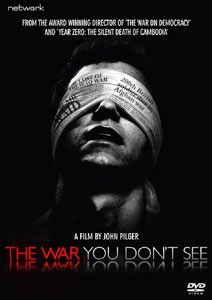
I am writing to you and a number of other friends mostly in the US to alert you to the extraordinary banning of my film on war and media, ‘The War You Don’t See’, and the abrupt cancellation of a major event at the Lannan Foundation in Santa Fe in which David Barsamian and I were to discuss free speech, US foreign policy and censorship in the media.

Lannan invited me and David over a year ago and welcomed my proposal that they also host the US premiere of ‘The War You Don’t See’, in which US and British broadcasters describe the often hidden part played by the media in the promotion of war, in Iraq and Afghanistan. The film has been widely acclaimed in the UK and Australia; the trailer and reviews are on my website www.johnpilger.com.

The banning and cancellation, which have shocked David and me, are on the personal orders of Patrick Lannan, whose wealth funds the Lannan Foundation as a liberal centre of discussion of politics and the arts. Some of you will have been there and will know the Lannan Foundation as a valuable supporter of liberal causes. Indeed, I was invited in 2002 to present a Lannan award to the broadcaster Amy Goodman.

Continue reading “United States: John Pilger film and visit banned”

The Ethical Governor

It is rather rare these days to discover art of such extraordinary creative genius that it leaves one impoverished for words. That rare moment occurred for me a couple of days back when I saw ‘The Ethical Governor,’ a short animation produced by the writer, musician and animator (or his preference: ‘electronic artist’) John Butler. It is the product of a sparkling imagination and technical virtuosity in which there are traces of Swift, Kafka, Huxley, Orwell, early Coetzee, and Philip K. Dick. Like the masters, Butler takes extant tendencies in society and brings them into sharp focus in works that combine social consciousness, perfect pitch irony, clever wordplay, subversive wit and spectacular visuals. He describes his art as ‘speculative fiction for the age of financialization’, and anyone who has delved into the world of CDOs, CDSs and SPVs will understand where he is coming from. Last year he told an interviewer:

I’m interested in human utility in the drone age.  Human redundancy in the unmanned economy.  I’m interested in the war between Finance and Humans.

I’m interested in the Universal Transaction Space we all now inhabit. […]

Speculative fiction is important because the future seems to be behind us, and nothing lies ahead. We’re just waiting for the next upgrade.

Continue reading “The Ethical Governor”

What Next?

Steve Bell's Bashaar

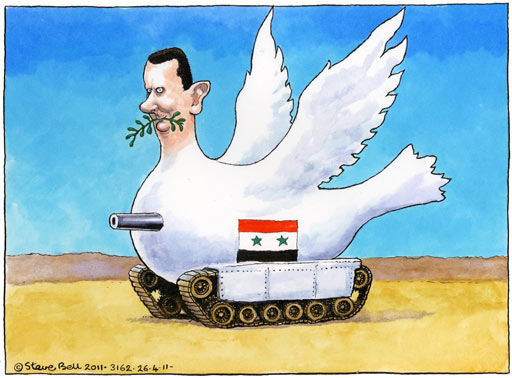
Here’s today’s Guardian article in its pre-sub-edited form.

Last January Syria seemed, along with Saudi Arabia and other Gulf states, to be amongst the least likely candidates for revolution. If President Bashaar al-Asad had run in a real election, he may well have won.

It’s difficult remembering it today: most Syrians did grudgingly credit the regime with ensuring security and prosecuting a vaguely nationalist foreign policy. It’s that keen desire for security, the overwhelming fear of Iraq-style chaos, which keeps a section of Syrians fiercely loyal to the regime even now.

To start with, although they were inspired by revolutions in Tunisia and Egypt, most protestors didn’t aim for regime change. The first demonstration – in the commercial heart of Damascus – was a response to police brutality. That one ended peacefully, but when Dera’a protested over the arrest of schoolchildren the regime spilt blood. Outraged, communities all over the country took to the streets, and met greater violence, which swelled the crowds further. A vicious circle began to spin. All the intelligence, and the nationalist pretensions, peeled away from the government to reveal a dark and thuggish core.

Continue reading “What Next?”

Don’t Look Away: The Siege of Gaza Must End

by Kathy Kelly

In late June 2011, I’m going to be a passenger on “The Audacity of Hope,” the USA boat in this summer’s international flotilla to break the illegal and deadly Israeli siege of Gaza. Organizers, supporters and passengers aim to nonviolently end the brutal collective punishment imposed on Gazan residents since 2006 when the Israeli government began a stringent air, naval and land blockade of the Gaza Strip explicitly to punish Gaza’s residents for choosing the Hamas government in a democratic election.  Both the Hamas and the Israeli governments have indiscriminately killed civilians in repeated attacks, but the vast preponderance of these outrages over the length of the conflict have been inflicted by Israeli soldiers and settlers on unarmed Palestinians.  I was witness to one such attack when last in Gaza two years ago, under heavy Israeli bombardment in a civilian neighborhood in Rafah.

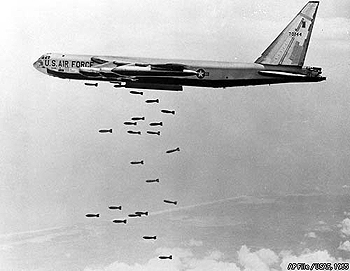
In January 2009, I lived with a family in Rafah during the final days of the “Operation Cast Lead” bombing.  We were a few streets down from an area where there was heavy bombing. Employing its ever-replenished stockpile of U.S. weapons, the Israeli government sought to destroy tunnels beneath the Egyptian border through which food, medicine, badly-needed building supplies, and possibly a few weapons as well were evading the internationally condemned blockade and entering Gaza.

Continue reading “Don’t Look Away: The Siege of Gaza Must End”