
Pacified
by Kathy Kelly
If the U.S. public looked long and hard into a mirror reflecting the civilian atrocities that have occurred in Afghanistan, over the past ten months, we would see ourselves as people who have collaborated with and paid for war crimes committed against innocent civilians who meant us no harm.
Two reporters, Jerome Starkey (the Times UK), and David Lindorff, (Counterpunch), have persistently drawn attention to U.S. war crimes committed in Afghanistan. Makers of the film “Rethinking Afghanistan” have steadily provided updates about the suffering endured by Afghan civilians. Here is a short list of atrocities that have occurred in the months since General McChrystal assumed his post in Afghanistan.
December 26th, 2009: US-led forces, (whether soldiers or “security contractors” (mercenaries) is still uncertain), raided a home in Kunar Province and pulled eight young men out of their beds, handcuffed them, and gunned them down execution-style. The Pentagon initially reported that the victims had been running a bomb factory, although distraught villagers were willing to swear that the victims, youngsters, aged 11 – 18, were just seven normal schoolboys and one shepherd boy. Following courageous reporting by Jerome Starkey, the U.S. military carried out its own investigation and on February 24th, 2010, issued an apology, attesting to the boys’ innocence.
Zeitoun
This review appeared in the Independent.
 Abdulrahman Zeitoun was born in Jebleh, on Syria’s Mediterranean coast. Decades later and thousand of miles away he awakes from dreaming of a fishing expedition out of his childhood home: “Beside him he could hear his wife Kathy breathing, her exhalations not unlike the shushing of water against the hull of a wooden boat.” As so often in Dave Eggers’s latest novel, the docudrama “Zeitoun”, a caught image opens a window on an ocean of memory and a state of mind.
Zeitoun now lives in New Orleans, where he runs a painting and building company and owns several buildings. He’s a dedicated businessman, father, husband, and Muslim. His painter’s van is emblazoned with a rainbow, which Zeitoun soon discovers has gay associations for Americans. But he doesn’t change it. “Anyone who had a problem with rainbows, he said, would surely have trouble with Islam.”
Kathy, practical and strong-willed, was brought up a Baptist in Baton Rouge. Attracted by “the doubt sown into the faith” and “the sense of dignity embodied by the Muslim women she knew,” she converted to Islam after her failed first marriage. Some years later she married the much older Zeitoun. Eggers describes their domestic bustle and warmth, and their personal irritations. For Zeitoun, these include his children’s wastefulness and obsession with pop music, and his alienation in a family of women. Kathy is bothered by Zeitoun’s stubbornness and her own family’s Islamophobic nagging.
The End of the American Empire
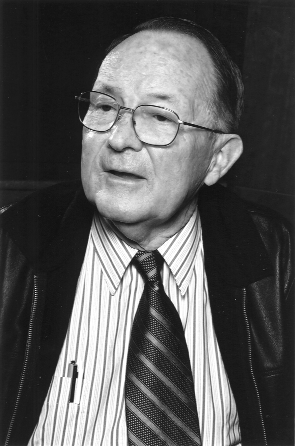 Chalmers Johnson on Media Matters with Bob McChesney.
Chalmers Johnson is president of the Japan Policy Research Institute, a non-profit research and public affairs organization devoted to public education concerning Japan and international relations in the Pacific. He was chairman of the academic advisory committee for the PBS television series “The Pacific Century,” and he played a prominent role in the PBS “Frontline” documentary “Losing the War with Japan.” Both won Emmy awards. His most recent books are Blowback: The Costs and Consequences of American Empire (New York: Metropolitan Books, 2000); The Sorrows of Empire: Militarism, Secrecy, and the End of the Republic (New York: Metropolitan Books, 2004); and Nemesis: The Last Days of the American Republic (New York: Metropolitan Books, 2007).
Zionists Against Zion?
By M. Shahid Alam
Zionists have worked hard and cleverly for their successes, but their cause has been greatly advanced at each stage by the logic of their colonial project aimed at the creation of a Jewish settler state at the very center of the Islamicate.
Most importantly, Zionism created a geopolitical realignment of great importance. It brought together two strands of the Western world, previously at odds – Christians and Jews – to join their forces against the Islamicate.
At every stage in its history, Israel has ratcheted its power by unleashing forces, even negative forces, that it has then turned to its advantage. Power, intelligence and luck have played into this.
Obama Nation
Just before the weekend dies, a little music. PULSE readers may already know British-Iraqi rapper LOWKEY from his regular appearances at rallies for justice. He’s a great speaker, and a great rapper. Intelligent rhymes intelligently delivered.
Mohammed Omer denied from entering US (updated)
UPDATE: Success! See Haymarket Books Press Release (appended below in full): International Pressure Campaign Brings Award-winning Palestinian Journalist Allowed Entry to the U.S.
 I’m late posting this. But nevertheless, it’s still important.
Award-winning journalist Mohammed Omer is being denied from entering the US. The US consulate in the Netherlands is holding his visa application for an extended period of time and has led to a cancellation of his US speaking tour. Omer was scheduled to speak with Ali Abunimah in Chicago on April 5. Abunimah has more on the story at his Web site Electronic Intifada. The US Consulate did not provide an explanation as to why they denied his visa and the only American media source (that I know of ) that’s raising a concern is The Progressive.
Omer was to visit Houston, Santa Fe and Chicago, where local publisher Haymarket Books was to host his Newberry Library event, “Reflections on Life and War in Gaza,” alongside a broad set of interfaith religious, community and political organizations.
Rather than cancel the meeting, organizers are calling on supporters to write letters and emails calling for the US consulate’s approval of Omer’s visa.
Continue reading “Mohammed Omer denied from entering US (updated)”
The Only Democracy in the Middle East: 26.3.2010
In heavy rain and under heavy threat, all the weekly demonstration insistently ensued, across the West Bank. The village of Al Ma’asara demonstrated against the latest arrest and torture of the local demonstration organizer, Omar Alaaeddin:
Continue reading “The Only Democracy in the Middle East: 26.3.2010”
ESRC, Islamophobia, and the British sense of humour
 A couple of years back a leading Scots philosopher, a friend, applied for funding to the Economic and Social Research Council (ESRC), the main public research-funding body in the UK, to study the tradition of non-violence in Islam. After much delay, he received a letter from the ESRC in which an anonymous reviewer informed him that his bid had been rejected because ‘there is no tradition of non-violence in Islam’.
On 23 March 2010, the British Home Office’s counter-terrorism communications unit RICU announced its top 20 most influential “pro-Islamic” political bloggers. Topping the list are Ali Eteraz and the Angry Arab News Service. Eteraz is a US-based writer, an aggressive self-promoter, who is known less for his ‘pro-Islamic’ views than for his self-conscious cultivation of a ‘moderate’ image which has included forging friendly ties with the notoriously Islamophobic hate site Harry’s Place. Angry Arab News Service is run by As’ad AbuKhalil, a California-based Lebanese anarchist, and atheist. AbuKhalil’s daily output includes ritual denunciations of clerics and Islamists from North Africa to Saudi Arabia. He is an all opportunities offender (sometimes indiscriminately so).
The list was compiled based on research conducted by one David Stevens of Nottingham University whose work, according to his website, is focued ‘within the area of contemporary normative political philosophy’. The man obviously gazes from such Olympian heights that he can’t distinguish between the Pope and a pagan. And to his funders, it appears not to matter.
So who commissioned this exercise in fatuity? Why the ESRC of course.
Continue reading “ESRC, Islamophobia, and the British sense of humour”
Leaving al-Tanf
When hundreds of Palestinians fled Iraq in 2006, no country in the Middle East would accept them. The UN eventually set up tent camps in ‘no man’s land’ between the Iraq-Syria border. While the camps were supposed to be a ‘temporary’ solution, it was not until the end of 2009 that a small number of refugees were finally granted permission to move to Italy, while others were told they would be transferred to refugee camps in the region. Edith Champagn’s Leaving Al Tanf documents the stories of several Palestinian refugees as they prepare to uproot their lives yet again, compelling us to think about how the idea of home, and of time and waiting is experienced by those whose lives have overwhelmingly been marked by uncertainty, liminality, and loss.

