Stephen Colbert was recently on a USO tour of Iraq to entertain the illegal occupiers of the country. The show however went far beyond entertainment, and verged on pro-war propaganda. Among other things it included interviews with Ray Odierno, the fellow whose units according to Thomas Ricks were responsible for much of the abuses in the initial phase of the war, and with the Kurdish boot-licker they have installed as Iraq’s deputy prime minister, a truly execrable creature. Surprisingly, no one has spoken out against this supposed enlightened ‘liberal’ whitewashing Bush’s genocidal war. That is, until now. Here is Danny Schechter, the News Dissector’s open letter to Colbert.
Operation Iraqi Stephen
Dear Stephen Strong:
Welcome home, soldier. Your week in Iraq is all over, but the war, of course, isn’t. At least your presence there reminded us that Americans troops are still there. I am sure your presence gave them something fun to do, but hey, Nation, shouldn’t we think a little deeper about this fused exercise in military promotion and self-promotion?
Al Franken went on such a tour when Bush was in command although I noticed that W appears along with other former POTUS’s to endorse your cheerleading for our “service members.”
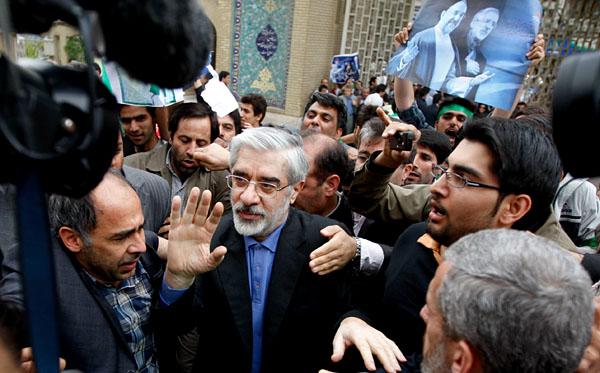
I imagine that many PULSE readers, like me, hope that Iran is able to preserve the anti-imperialist character of its revolution while ridding itself of the more oppressive aspects, such as dress codes, morality police, and harassment of intellectuals. In these elections, Mousavi certainly seemed the more intelligent and diplomatic of the candidates. The commander of the Revolutionary Guard’s announcement even before votes were counted that a ‘popular revolution’ would not be tolerated seems to suggest that the election results have in fact been rigged. Yet nothing is clear. Mousavi’s campaign was aimed at the merchant class and the liberal bourgeoisie – no more than a third of the population. And Mousavi received about a third of the votes.
Abbas Barzegar believes Ahmedinejad won the election fair and square, and that Iranian and Western commentators indulge in wishful thinking when they find this incredible. “Observers,” he writes, “would do us a favour by taking a deeper look into Iranian society, giving us a more accurate picture of the very organic religious structures of the country, and dispensing with the narrative of liberal inevitability.”
I have been in Iran for exactly one week covering the 2009 Iranian election carnival. Since I arrived, few here doubted that the incumbent firebrand President Mahmoud Ahmedinejad would win. My airport cab driver reminded me that the president had visited every province twice in the last four years – “Iran isn’t Tehran,” he said. Even when I asked Mousavi supporters if their man could really carry more than capital, their responses were filled with an Obamasque provisional optimism – “Yes we can”, “I hope so”, “If you vote.” So the question occupying the international media, “How did Mousavi lose?” seems to be less a problem of the Iranian election commission and more a matter of bad perception rooted in the stubborn refusal to understand the role of religion in Iran.
I love it when Arab Christians have names like Omar. It shows, on their fathers’ part, a rejection of the sectarianism which cripples us. I know of a Christian family in Beirut which named its eldest son Jihad, and Muslim families with sons called Fidel and Guevara. Omar is not merely a specifically Muslim name; it’s more particularly a Sunni name, disliked by some Shia for theological-historical reasons. Omar is not a good name to have written on your ID card while driving through a Shia-militia-controlled area of Baghdad. But I know an Iraqi Shia woman whose brother is called Omar, because her father rejected the whole sorry sectarian business.
By and large, the Palestinians have avoided the curse. It’s still the case that if you ask a Palestinian whether he’s Muslim or Christian he responds, “Palestinian!” I mention this because our guide from Amman to the Allenby Bridge was a Palestinian Christian called Omar, and because the Palestinians, unlike their enemies, are proud of their diversity and pluralism.
Swaying in the bus aisle, Omar explained that Jordanian officers would check our passports but would not stamp them. “The Jordanian government has recognised Israel, but not Israeli control over the West Bank. Why are there Israeli police on the border and not Palestinians? Jordan recognises this as a crossing, but not a border.”
Surely Omar was pleased that, since the peace agreement, he could visit his family in Bethlehem? Not really: “Jordan allows every Israeli to come here. They get visas automatically when they come in. But we have to apply at the Israeli embassy, where they treat us badly, and 95% of applications are refused. I tried to go in for my uncle’s funeral, but they wouldn’t let me. This is the balanced peace we have with our neighbours.”
The Jordanian side of the crossing takes less than ten minutes. Omar collects our passports to flash at an officer while we drink water in the shade. Then back onto the bus, without Omar, and over the bridge.
This week from CounterSpin – “Barack Obama has either been currying favor with Muslims or extending an olive branch in the Middle East depending on which media you consume. We’ll talk with Phyllis Bennis of the Institute for Policy Studies about Obama’s major speech in Cairo, and the size of the gap between words and actions.”
As Iranians go to the polls to repudiate (it seems) some of the most pernicious aspects of Ahmadinejad’s rule, America’s Iran point man continues to make Ahmadinejad look like a reasonable peacenik.
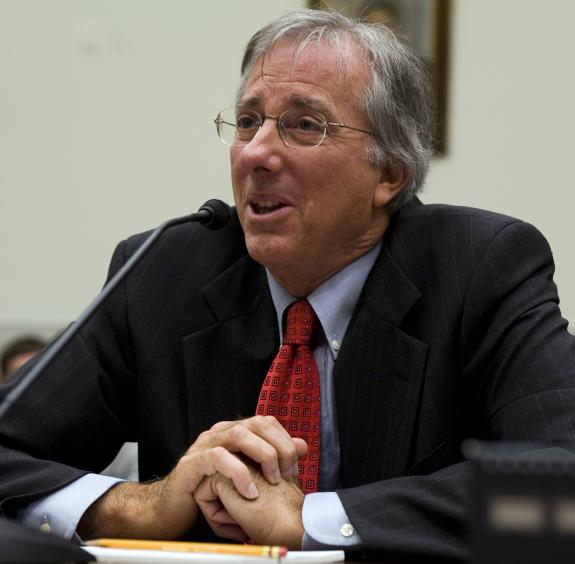
The newly released book by Dennis Ross, President Obama’s special adviser on Iran, reads like a how-to manual for launching a war on Iran, marketing the war successfully, and making sure the Iranians cop all the blame for it. Ross will have none of Bush’s incompetent warmongering on flimsy pretenses of democracy and WMD’s; when Ross launches his illegal war on Iran, it will be stage-managed to within an inch of its life.
“Tougher policies – either militarily or meaningful containment – will be easier to sell internationally and domestically if we have diplomatically tried to resolve our differences with Iran in a serious and credible fashion,” writes Ross.
Note that there is no way to read this sentence but to see that the goal is to attack Iran. America trying to diplomatically resolve its differences with Iran is not a goal in itself; it is merely a means to more easily sell war and sanctions.
In his latest column, John Pilger de-codes the Obama’s “historic” speech in Cairo “reaching out to the Muslim world”. However seductive, its content was as morally bankrupt as any of Bush’s spiels.
At 7.30 in the morning on 3 June, a seven-month-old baby died in the intensive care unit of the European Gaza Hospital in the Gaza Strip. His name was Zein Ad-Din Mohammed Zu’rob, and he was suffering from a lung infection which was treatable.
Denied basic equipment, the doctors in Gaza could do nothing. For weeks, the child’s parents had sought a permit from the Israelis to allow them to take him to a hospital in Jerusalem, where he would have been saved. Like many desperately sick people who apply for these permits, the parents were told they had never applied. Even if they had arrived at the Erez Crossing with an Israeli document in their hands, the odds are that they would have been turned back for refusing the demands of officials to spy or collaborate in some way.
Paul Findley, member of Congress, 1960-83, author of They Dare to Speak Out: People and Institutions Confront Israel’s Lobby, presents a rather optimistic view of Obama’s Cairo speech and actions to date.
He believes Obama is a long-range planner heading for a showdown with the Israel lobby. I don’t share his enthusiasm for Obama or for the two state solution. After all, even if it happens, what type of two state solution can Palestinians really expect?
As a Capitol Hill insider with long, close experience with Middle Eastern affairs and the American Israel Public Affairs Committee, Israel’s principal lobby in Washington, I believe I can explain why Barack Obama, as president-elect, chose Rahm Emanuel as his chief-of-staff and Hillary Clinton as secretary of state. I am not an Obama insider. This is my analysis, based on strong evidence that the president is a careful, long-range planner.
9 June 2009, Waziristan — In Jayne Anne Phillips’ Lark and Termite, the skies over Korea, in 1950, are described in this way:
“The planes always come…like planets on rotation. A timed bloodletting, with different excuses.”
The most recent plane to attack the Pakistani village of Khaisor (according to a Waziristan resident who asked me to withhold his name) came twenty days ago, on May 20th, 2009. A U.S. drone airplane fired a missile at the village at 4:30 AM, killing 14 women and children and 2 elders, wounding eleven.
For those who refuse to accept the brutal reality on the ground, the Human Sciences Research Council of South Africa has produced a new detailed legal report which confirms “that Israel is practicing both colonialism and apartheid in the Occupied Palestinian Territories (OPT).” The study was commissioned to “test the hypothesis posed by Professor John Dugard in the report he presented to the UN Human Rights Council in January 2007, in his capacity as UN Special Rapporteur on the human rights situation in the OPT:
Israel is clearly in military occupation of the OPT. At the same time, elements of the occupation constitute forms of colonialism and of apartheid, which are contrary to international law. What are the legal consequences of a regime of prolonged occupation with features of colonialism and apartheid for the occupied people, the Occupying Power and third States?
On the specific question of colonialism the report unambiguously states that:
“Five issues, which are unlawful in themselves, taken together make it evident that Israel’s rule in the OPT has assumed such a colonial character: namely, violations of the territorial integrity of occupied territory; depriving the population of occupied territory of the capacity for selfgovernance; integrating the economy of occupied territory into that of the occupant; breaching the principle of permanent sovereignty over natural resources in relation to the occupied territory; and denying the population of occupied territory the right freely to express, develop and practice its culture” (pp. 15-16). Furthermore, “Israel’s annexation of East Jerusalem is manifestly an act based on colonial intent” (ibid.).
Concerning the charge of apartheid, the report states:
By examining Israel’s practices in the light of Article 2 of the Apartheid Convention, this study concludes that Israel has introduced a system of apartheid in the OPT (p. 17)




 P U L S E