“I cannot keep silent … Disaster follows disaster; the land lies in ruins … My people are fools; they do not know me.” Jeremiah 4:19
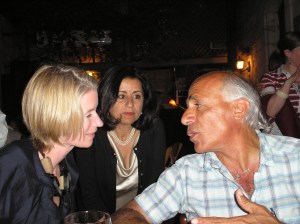
Mordechai Vanunu is a Moroccan Jew, born in Marrakesh. Today he credits his humanity to having been born in an Arab country rather than in the Jewish state. He was nine when he was taken to Israel. He attended an ultra orthodox school, and after his military service became a nuclear technician at the Dimona plant. At this time his anti-Zionist politics developed. Later he flirted with Buddhism, converted to Christianity, and in London in 1986 told the Sunday Times what he knew of Israel’s nuclear weapons programme, backing his claims with photographic evidence.
He was then caught in a ‘honey trap’, lured by a beautiful woman from London to Italy, drugged and kidnapped in Rome by Mossad (with the connivance of British, French and Italian intelligence services), and brought back to Israel, where he served 18 years in prison for his truth-telling, twelve of them in solitary confinement. He says he survived because of his strong will (“the first thing I did in prison was give up smoking”), and by playing opera records. He refused to converse with the only human beings available – his guards. His lawyer describes him as “the most stubborn, principled, and tough person I have ever met.”
Debborah Moggach and Suheir Hammad respond to conditions in Hebron/al-Khalil
More on Palfest. Deborah Moggach, author of 16 novels and the screenplay for ‘Pride and Prejudice’, describes her week on the West Bank, below. It is important that this is on the Books pages, rather than the news pages, of the Guardian – culture offers an opportunity to reach people beyond the usual channels. Read to the end for Sousan Hammad’s beautifully-written piece on the literature festival.
I’m still recovering from a tumultuous week in Palestine where, between 23 and 28 May, 16 writers from around the world took part in the Palestine Festival of Literature (Palfest). It was started last year by Ahdaf Soueif as a way of bringing poets, journalists, publishers and novelists to the occupied territories to celebrate, in Edward Said’s words, “the power of culture over the culture of power”. There’s nothing else quite like it: due to the restrictions on movement, it is we, the visitors, who bring the mountain to Muhammad, travelling around in a bus visiting towns in the West Bank to do readings with Palestinian writers, stage music and poetry events, conduct workshops with students and visit refugee camps. This year’s group included Michael Palin, Henning Mankell, Claire Messud, Jamal Mahjoub, Abdulrazak Gurnah and the dazzling poet/performer Suheir Hammad.
Jennifer Loewenstein writes that policy continuity from the previous administration in fact persists in Obama’s proclamations: “Barack Obama has sent Benjamin Netanyahu the message he most seeks, whether Netanyahu recognizes it or not: continue your colonial-settler project as you have been doing; just change the vocabulary you use to describe it.”
Benjamin Netanyahu and Barack Obama have one thing very much in common: both of them have nearly the same vision for the future of “Palestine”. They may not recognize it yet, but sooner or later, whether Netanyahu remains in power or is replaced by someone who speaks Dove-Liberalese better, they will shake hands and agree that the only thing that really separated them in the early months of President Obama’s administration was semantics: the language each man used to describe what he saw for the future of Palestine, or “the Israeli-Palestinian conflict” – a phrase that suggests there are two sides each with a grievance that equals or cancels out the other’s and that makes a just resolution so difficult to formulate.
And here’s one more on Obama’s speech in Cairo. Adam Morrow and Khaled Moussa Al-Omrani of IPS give an overview of what human rights activists in Cairo think of “the speech no other president could make” as Jonathan Freedland put it in his typically deferential commentary in the Guardian. As opposed to seeing the speech as “sensitive, supple and sophisticated” (Freedland), opposition journalist and reform campaigner Abdel-Halim Kandil argues that “Obama’s visit was a show of support for both the dictatorial Egyptian regime and the criminal policies of Israel regarding the Palestinians…It represents an acknowledgement of Egypt’s role in serving U.S. and Israeli policy objectives, while totally overlooking the regime’s dismal record on human rights and political reform.” For more on this, see Ann’s analysis of the spectrum of responses to the speech posted below.
Egyptian officials are lining up to praise U.S. President Barack Obama’s address to the Islamic world delivered in Cairo Thursday. But local campaigners for political reform say the speech was disappointingly light on the issues of democracy and human rights.
“Obama spoke very briefly and in very general terms on these two subjects,” opposition journalist and reform campaigner Abdel-Halim Kandil told IPS. “Despite the hype, Obama’s speech was little more than an exercise in public relations.”
Mahmood Mamdani is a renowned African scholar (of Indian origin) who was ranked by Foreign Policy magazine as one of the world’s 100 leading public intellectuals. Earlier this week he delivered the following lecture at The School of Oriental and African Studies (SOAS) to promote his new book Saviors and Survivors: Darfur, Politics and the War on Terror.
Suheir Hammad is one of the Palfest participants who deserves a post to herself. A Palestinian-American, Suheir was born to refugee parents in Amman. She spent her first years in civil war Beirut before moving to Brooklyn, where drugs and gang wars raged. She is a poet, prosewriter and actress. Her poetry erases any distance between the personal and political, and is humane, passionate and particular. Greatly influenced in its rhythm, diction and pacing by New York hip hop, it fits snugly into the tradition of Palestinian oral delivery exemplified by the late poet Mahmoud Darwish.
Suheir stars in the film Salt of this Sea, but it is surely time someone directed her in a poetry performance DVD. You have to hear her read to really appreciate what she does. A good place to start is the poem First Writing Since, which concerns 9/11. Here is We Spend the Fourth of July in Bed. And one for Rachel Corrie. Here is part one and part two of an al-Jazeera International interview, and here she is reading for Palfest in Ramallah. I hope the Palfest film-makers have more to come. The most powerful part of her reading in Ramallah – powerful enough to bring the audience to tears – was her series of poems for Gaza:
Jeremy Harding describes Suheir as “a younger, image-conscious, thoughtful militant for Palestine, one of a new generation who do the writing, while the Israelis oblige by extending the wall.”
Watching Obama in Cairo (AHMAD GHARABLI/AFP/Getty Images)
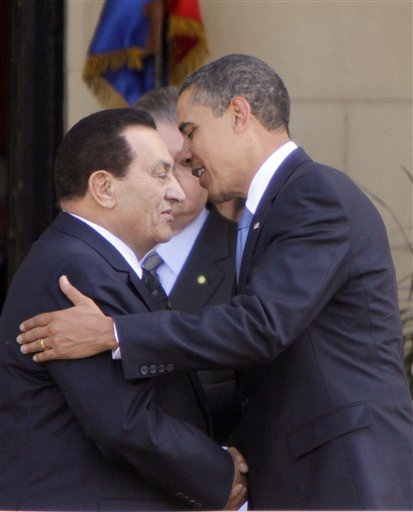
Personally, I found it unpleasant to see Obama lecturing the Arabs, and the handpicked audience clapping ecstatically whenever the President (rather like Napoleon in Cairo) made an Islamic allusion. Most depressingly, Obama’s address was heavily influenced by the Bernard Lewis school of Orientalism – Arab and Muslim anger is caused by the cultural trauma of modernity and a “self-defeating focus on the past,” rather than by present realities, such as the ethnic cleansing of Palestine, the occupations of Iraq and Afghanistan, the destabilisation of Pakistan and Somalia, the unwelcome military bases in the Muslim world, and the support of dictatorial regimes such as Mubarak’s. Obama’s assumptions repeated falsities, such as the notion that Arab regimes focus on Palestine to distract the people from their own failings. In fact the Arab regimes do everything they can to take the focus off Palestine, as the Palestinian tragedy is the key symbol of the bankruptcy of the client regimes. And Obama mocked violent resistance while not saying a word about the 1400 just killed in Gaza or the million slaughtered in Iraq.
The best response I’ve seen to the speech is by Ali Abunimah, posted here at PULSE, who studies Obama’s phrases well: “Suffered in pursuit of a homeland? The pain of dislocation? They already had a homeland. They suffered from being ethnically cleansed and dispossessed of it and prevented from returning on the grounds that they are from the wrong ethno-national group. Why is that still so hard to say?”
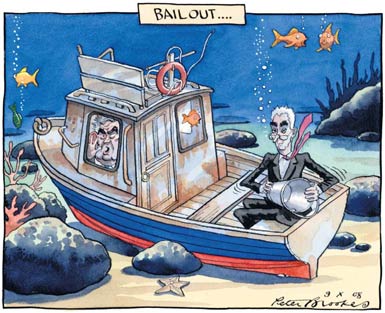
In an excellent, thorough investigation of the financial crisis in the last issue of the London Review of Books, John Lanchester had presented the scrapping of pensions in the public sector as a worst case scenario. Looks like it has already started to happen in the private sector with Barclays scrapping the pensions of its 17,000 employees. This does not, of course, affect the President Bob Diamond who last year raked in £21 m, nor does it affect the rest of the the 1,500 best paid employees. Here is Lanchester (however, let me warn that this piece is more than 14,000 words long, so you better have a good strong copy of coffee and plenty of free time before diving in; also, I’ve appended a reader’s letter correcting an accounting error made by the author):
It’s a moment of confusion and loathing that most of us have experienced. You’re in a shop. It’s time to pay. You reach for your purse or wallet and take out your last note. Something about it doesn’t feel quite right. It’s the wrong shape or the wrong colour and the design is odd too and the note just doesn’t seem right and . . . By now you’ve realised: oh shit! It’s the dreaded Scottish banknote! Tentatively, shyly – or briskly, brazenly, according to character – you proffer the note. One of three things then happens. If you’re lucky, the tradesperson takes the note without demur. Unusual, but it does sometimes happen. If you’re less lucky, he or she takes the note with all the good grace of someone accepting delivery of a four-week-dead haddock. If you’re less lucky still, he or she will flatly refuse your money. And here’s the really annoying part: he or she would be well within his or her rights, because Scottish banknotes are not legal tender. ‘Legal tender’ is defined as any financial instrument which cannot be refused in settlement of a debt. Bank of England notes are legal tender in England and Wales, and Bank of England coins are legal tender throughout the UK, but no paper currency is. The bizarre fact of the matter is that Scottish banknotes are promissory notes, with the same legal status as cheques and debit cards.
These feared and despised instruments, whose history has long been of interest to economists, come in three varieties from three issuing banks: the Bank of Scotland, the Royal Bank of Scotland and the Clydesdale Bank. Small countries with big ambitions but few natural resources need ingenious banking systems. The history of the Netherlands, Venice, Florence and Scotland show this – and so does the tragic recent story of Iceland. ‘In the 17th century, when English and European commerce was expanding by leaps and bounds,’ James Buchan wrote in Frozen Desire, ‘the best Scots minds felt acutely the shortage of . . . what we’d now call working capital; and Scots promoters were at the forefront of banking schemes in both London and Edinburgh, culminating in the foundation of the Bank of England in 1694 and the Bank of Scotland in 1695.’ The powers down south, however, came to think – or pretended to think – that the Bank of Scotland was too close to the Jacobites, and so in 1727 friends of prime minister Walpole set up the Royal Bank of Scotland.
Ali Abunimah puts a bit of perspective on Obama’s call for a “new beginning” by taking to task the US President’s reference to “America and Islam”. This is the same old terminology in use by the Americans which refers to the former as a “concrete specific place”, with the latter reducing over a billion people to a “single, coherent entity” (to borrow a phrase from Edward Said).
Once you strip away the mujamalat – the courtesies exchanged between guest and host – the substance of President Obama’s speech in Cairo indicates there is likely to be little real change in US policy. It is not necessary to divine Obama’s intentions – he may be utterly sincere and I believe he is. It is his analysis and prescriptions that in most regards maintain flawed American policies intact.
Though he pledged to “speak the truth as best I can”, there was much the president left out. He spoke of tension between “America and Islam” – the former a concrete specific place, the latter a vague construct subsuming peoples, practices, histories and countries more varied than similar.
The web, writes Palfest participant Jeremy Harding, is one of the few places where Palestinians, losing ground by the day to the realities of occupation and settlement, can make their aspirations plain. Jeremy’s first diary piece on Palestine is here.
A good way to grasp what’s happening to East Jerusalem and the Occupied Territories is from the air. Google Earth can do that for you, but there’s a history of contention: in 2006, users created tags for Palestinian villages that were destroyed during the war of 1948-49; the following year Fatah’s al-Aqsa Brigades were said to be checking potential Israeli military targets against Google Earth pictures; last year there was a controversy over the Israeli coastal town of Kiryat Yam, when a user called Thameen Darby posted a note claiming it was formerly a Palestinian locality ‘evacuated and destroyed after the 1948 Arab-Israeli war’. Kiryat Yam, its residents protested as they reached for the nearest lawyer, was built in the 1930s.

 Benjamin Netanyahu and Barack Obama have one thing very much in common: both of them have nearly the same vision for the future of “Palestine”. They may not recognize it yet, but sooner or later, whether Netanyahu remains in power or is replaced by someone who speaks Dove-Liberalese better, they will shake hands and agree that the only thing that really separated them in the early months of President Obama’s administration was semantics: the language each man used to describe what he saw for the future of Palestine, or “the Israeli-Palestinian conflict” – a phrase that suggests there are two sides each with a grievance that equals or cancels out the other’s and that makes a just resolution so difficult to formulate.

![[Attribution 2.5 UK: Scotland]](https://i0.wp.com/i.creativecommons.org/l/by/2.5/scotland/88x31.png "[Attribution 2.5 UK: Scotland]")


 P U L S E