My latest for Guernica Magazine.

Earlier this month, the British street artist Banksy produced a video on Syria that attracted over five million viewers in three days. At a time of intensifying state repression, the target of Bansky’s satire was not the regime in Damascus but its opponents. By contrast, the most watched video from the chemical attack in August, showing a traumatized young survivor, managed only half a million hits in over a month.
Six weeks after the attacks on Ghouta that killed hundreds of civilians, regime forces have choked off food supplies to the targeted neighborhoods. Survivors of the chemical attack are now facing the threat of starvation. Children have been reduced to eating leaves; and clerics have issued fatwas allowing people to eat cats and dogs.
The belated discovery of the Syrian conflict by “anti-imperialists” after the US government threatened war inspired impassioned commentary. The strangulation of its vulnerable population has occasioned silence. But dog whistles from issue-surfing provocateurs like Banksy are unexceptional; they merit closer scrutiny when they come from respected essayists like David Bromwich.
In a recent front-page article for the London Review of Books, Bromwich identifies many rogues in the Syrian drama: Barack Obama, John Kerry, Saudi Arabia, Qatar, “the jihadists”. But conspicuously absent is Assad’s Baathist regime. Vladimir Putin is the closest Bromwich admits to a hero. The Syrian people are denied even a cameo.


 A towering intellect, a moral giant, a master of prose, and an outstanding historian, Tony Judt did what only the greatest of thinkers do: he constantly evolved. More significantly, he never succumbed to orthodoxies, he was always on
  An exemplary scholar, Chalmers Johnson metamorphosed from a hardline Cold Warrior into one of the most formidable critics of US militarism, mapping America’s expanding imperium of bases and spotlighting the fraying edges of its republic. His 2000 book Blowback was as prophetic as his subsequent books The Sorrows of Empire and Nemesis were prescient. His longtime JPRI associate Steve Clemons has described him as the ‘acknowledged godfather of the conceptualization of the “
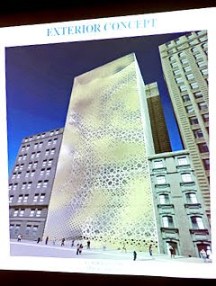 When Nancy Pelosi said the power and money backing the anti-Muslim protests in New York and elsewhere should be investigated, she had in mind the simplest of political questions. Who benefits? In this case, who benefits from a spectacle of words and images that suggest that right-wing populism in America has now taken a definitively anti-Muslim tone? The message of these protests against more than one mosque is that the fight to defeat al Qaeda has become a war against Islam.
 Will the summer of 2010 be remembered as the time when we turned into a nation of sleepwalkers? We have heard reports of the intrusion of the state into everyday life, and of miscarriages of American power abroad. The reports made a stir, but as suddenly as they came they were gone. The last two weeks of July saw two such stories on almost successive days.
 P U L S E