The Privatization of War: Scahill reports 121,000 contractors in Afghanistan

During an interview with Riz Khan on December 21st Jeremy Scahill reported that the Obama administration has surpassed the Bush era’s privatization of war, having nearly doubled the number of security contractors in Afghanistan over the past several months. Amongst the contracting firms who remain in Afghanistan is Blackwater (now operating under the name XE)a firm that Scahill describes as “one of the most powerful private actors in the so called War on Terror.

In a series of reports for The Nation in November and December of 2009, Scahill revealed that “members of an elite division of Blackwater are at the center of a secret program in which they plan targeted assassinations of suspected Taliban and Al Qaeda operatives” both inside and outside of Pakistan. Despite public indictments, Blackwater continues to work for the State Department without oversight.

Continue reading “The Privatization of War: Scahill reports 121,000 contractors in Afghanistan”

Pakistan’s ‘Oral’ Society

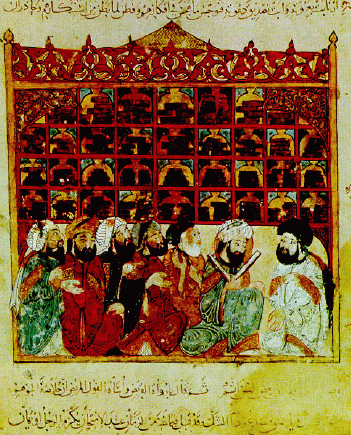
Public library of Hulwan, Baghdad

M. Shahid Alam

(Note: This essay was written nearly twenty years back, in April 1991. A great many changes have come to Pakistan since then, but I am afraid that the observations I had made then about ‘orality’ of Pakistani discourse still hold true. Pakistan’s best young minds do not go where their hearts and their talents lead them. Instead, overwhelmingly, they still pursue job security. Sadly, education – even for the brightest – is still mostly vocational education. With the introduction of multiple private cable channels, however, orality has entered a new age. The oral discourse, previously confined to drawing rooms and campuses, is now led by ‘talking heads’ in television studios. Is this discourse now more solidly rooted than before in the written word, in history and the social and natural sciences? I doubt it: and why should it? Pakistan’s brown Sahibs continue to drag the country deeper into dependency; they work overtime to trap Pakistanis in the most superficial consumerism, without the capital, technology and skills that support this malaise in developed Western societies. In other words, Pakistan is still caught in the disease that Jalal Al-i Ahmad had described in his book, Gharbzadagi Occidentotis: A Plague from the West.)

I first became aware of differences between ‘oral’ and ‘literate’ societies when I returned to Pakistan in 1979 – after an absence of some five years in the United States and Canada – to take up a fellowship at the Applied Economics Research Center, affiliated to the University of Karachi.

Continue reading “Pakistan’s ‘Oral’ Society”

Long Live Gaza: Remembering one year since the massacre

Hello Resistance, meet Resistance…..

In Volume I of History of Sexuality, Michel Foucault famously notes:

Where there is power, there is resistance, and yet, or rather consequently, this resistance is never in a position of exteriority in relation to power.

Earlier this month, Foreign Policy magazine published their “First Annual List of the Top 100 Global Thinkers.” Notably, the list included figures like Dick Cheney, General Petraeus, Larry Summers, Salam Fayyad and Ahmed Rashid – a combination of people that many, including those of us here at PULSE, felt fell short of exemplifying what FP claimed it was doing: presenting a list of  ‘thinkers’.

Continue reading “Hello Resistance, meet Resistance…..”

Foreign Policy shoots back on Global Thinkers

Foreign Policy editor Joshua Keating is generous in referring to PULSE’s 20 Top Global Thinkers of 2009 list as ‘a welcome addition to the conversation‘. FP has certainly ignited a debate around its choices in its inaugural global thinkers list.

Keating misses our point, however, in part because he misreads our argument. It is clear from our post that we are referring specifically to the incongruity of having individuals such as Dick Cheney, General Petraeus, Larry Summers, Thomas Friedman, Bernard-Henri Lévy, Ayaan Hirsi Ali, Salam Fayyad, The Kagans and Ahmed Rashid on a list of thinkers.  We surmised that it may have to do with the fact that the main thrust of their work aligns with the US military and economic agenda worldwide. We could not have been referring to FP’s entire list, since, as Keating correctly notes, several of our choices overlap with FP’s, and there are others on the list that we actually respect and admire.

Continue reading “Foreign Policy shoots back on Global Thinkers”

Five Books on Syria; Batatu on the Peasants

Inspired by the Browser interview concerning my five favourite books on Israel-Palestine, I’ve come up with a list of five on Syria. These are all books available in English, so my selection is inevitably skewed. I’ll name them, then talk at length about the first on the list, the Batatu book.

Hanna Batatu

1.  Hanna Batatu. “Syria’s Peasantry, the Descendants of its Lesser Rural Notables, and Their Politics.”

2. Patrick Seale. “Asad: The Struggle for the Middle East.”

As essential for understanding power machinations in the US, the USSR, Palestine, Israel and Lebanon as in Syria, this is a biography of Syria’s ruthless, inscrutable, masterful dictator, Hafez al-Asad. Nation builder or gangster, as you will, but surely the most important Syrian of the 20th century.

3. Samuel Lyde. “The Asian Mystery Illustrated in the History, Religion, and Present State of the Ansaireeh or Nusairis of Syria.”

Continue reading “Five Books on Syria; Batatu on the Peasants”

PULSE: 20 Top Global Thinkers of 2009

On 30 November 2009 Foreign Policy magazine published its ‘Top 100 Global Thinkers’ list. We were naturally skeptical since the selection included Dick Cheney, General Petraeus, Larry Summers, Thomas Friedman, Bernard-Henri Lévy, David Kilcullen, Ayaan Hirsi Ali, Salam Fayyad, The Kagan Family (yes, all of them) and Ahmed Rashid among others.  We don’t consider any of these people thinkers, let alone having global significance, and we couldn’t help but notice that the main thrust of all their work aligns with the global military and economic agenda of the US government. In response we asked twelve of our writers and editors to nominate their Top 20 global thinkers of 2009.  Our criteria included choosing those who inspire critical thinking, as well as those who have been able to buck received wisdom and shape public debate.  Always agreeing with their statements and positions was not a requisite, but in all cases our selections involved nominating those who have spurred people to challenge or enhance their own thinking in different ways.  The following is our unranked list.

Update: See Foreign Policy’s response, our rejoinder, and our reflections on the debate. (Also see our 20 Top Global Media Figures of 2009)

Arundhati Roy
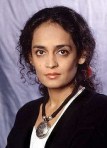
The top nominee when it came to number of votes among PULSE contributors, Indian writer and activist Arundhati Roy is as much known for her non-fictional political work as she is for her award-winning fiction. She is a spokesperson of the alter-globalization movement and a critic of hegemonial US foreign policy, as well as vocal on behalf of the anti-nuclear and environmental movements both in India and abroad. She is also a staunch critic of the repressive Indian policies in Kashmir. Most recently a contributor to We Are One: A Celebration of Tribal Peoples (October 2009), Roy continues to be passionately engaged and eloquently outspoken in building a social movement towards developing alternatives. Her latest book is Listening to Grasshoppers: Field Notes on Democracy.

Continue reading “PULSE: 20 Top Global Thinkers of 2009”

Why is Democracy Now shielding “war for oil” against reality?

In its headlines for December 14, Democracy Now followed the report on Blair’s confession about his committment to regime change in Iraq regardless of the absence of WMDs, with this:

Iraq Signs Oil Deals with 10 Foreign Companies

Blair’s comments come just as Iraq has signed a series of major oil deals. A two-day auction ended Saturday with ten foreign companies winning access to Iraq’s massive reserves. The oil giant Royal Dutch Shell won the rights to the Manjoon oilfield near Basra, one of the world’s largest. The US-based Exxon Mobil and Occidental Petroleum also submitted winning bids.

The wording is careful: it appears to suggest a connection between what Blair said and the Iraqi oil contracts. The war in other words was for oil. That is a remrkable conclusion to draw from news about an auction in which US companies were the big losers (hence DN’s careful choice of the words ‘foreign companies’). Unless Democracy Now is suggesting that the US waged a war for Russia, Norway and China — biggest winners in the auction — it is not clear why it continues to insist on the discredited “war for oil” argument? Why is it so difficult to admit who actually conceived the war?

Continue reading “Why is Democracy Now shielding “war for oil” against reality?”

Mahmood Mamdani: State Formation and Conflict

Mahmood Mamdani on state formation and conflict in Sudan. This lecture is a couple of years old (from 2007), but highly informative.

This is what the Only Democracy in the Middle East Looks Like

This Friday, International Human Rights Day was marked for the first time in Israel. In Tel-Aviv, some 5000 people marched in a general human-rights march. It was a quiet event that was covered very favorably and widely by the press. What wasn’t being covered by the press? The second March to Sheikh Jarrah, which ended up with 24 arrests and one demonstrator in the hospital.

Putting Sheik Jarrah in Context
In 1875- Ottoman times- the Committee of the Sephardic Ethnic Group bought these lands. There was a small Jewish community living there until they gradually started fleeing, during the violence, in the area, during the 1920’s and 30’s and up until 1948. From 1948 to 1967, the land was under Jordanian control. At that time, 28 Palestinian refugee families were given lodging on this land by the Jordanian government, under the condition that they give up their UNRWA benefits and pay symbolic rent, for three years, by which time the houses will be passed under their names. The last part never happened.

Continue reading “This is what the Only Democracy in the Middle East Looks Like”